Projects
 Our Offers
 Dedicated team
 Blog
 Academy
 About Us
SEO2 min read
What is SXO?
The world of digital marketing is constantly evolving, with new approaches and techniques emerging all the time. One of those newer approaches is SXO, or search experience optimization.
But what exactly is SXO, and how can it help your business stand out online? The Webflow agency Gemeos breaks it down below.
What is SXO?
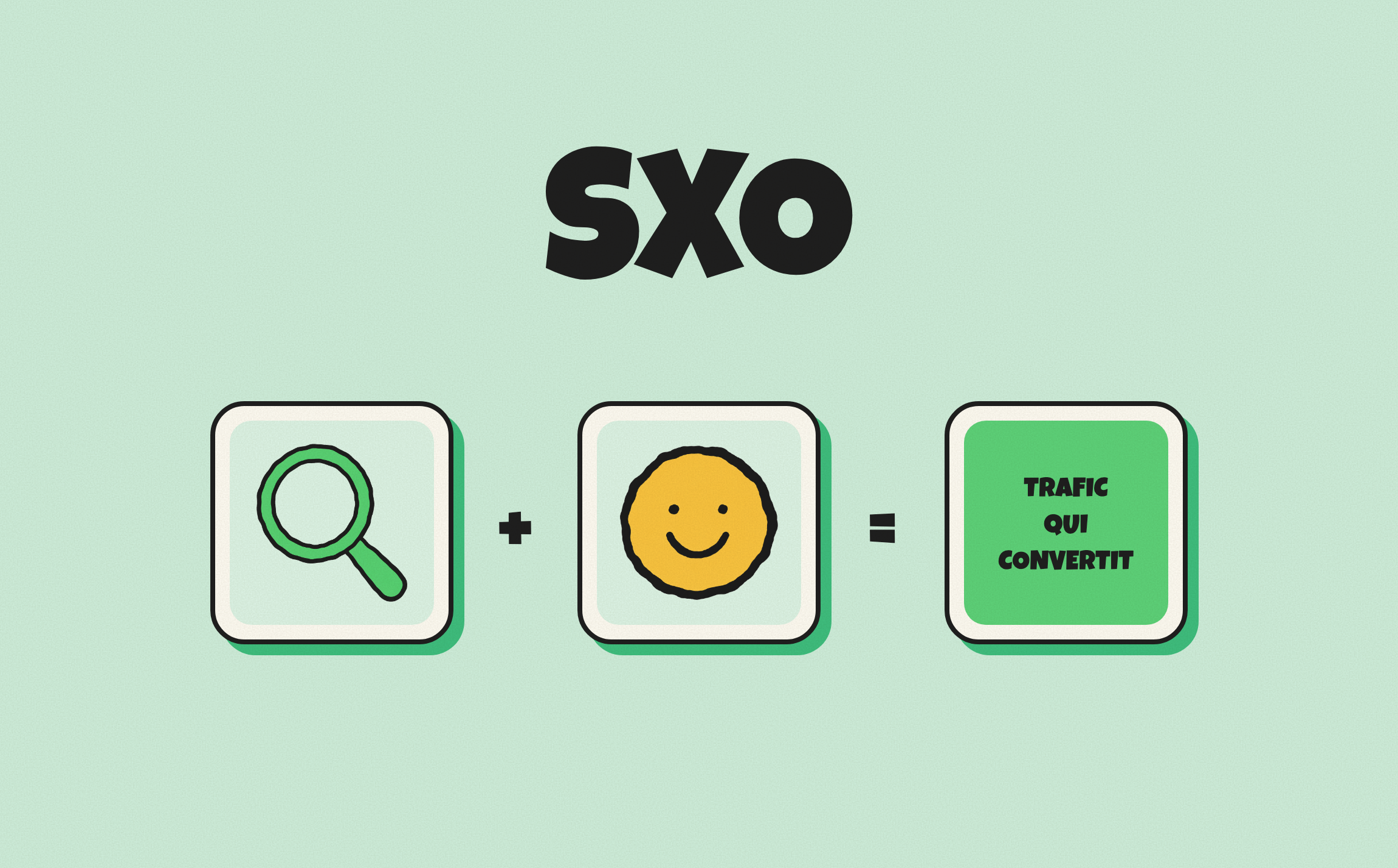
SXO is a new approach to digital marketing that focuses on user experience and search to improve a website’s visibility and online performance. SXO combines search engine optimization (what we do with our Webflow SEO agency) and user experience (UX) optimization to create a seamless, consistent experience on a website.
In other words, SXO is a holistic approach that takes both the technical and user experience aspects of a website into account.
SXO aims to improve the user experience while increasing a website’s visibility and online performance. It does this by optimizing the following elements:
- Website structure
- Content quality
- Page load speed
- Mobile friendliness
- User experience
Why is SXO important for your business?
SXO matters for your business because it helps you improve your website’s user experience, which can lead to higher conversions and more sales. Here are a few reasons why SXO is important for your business:
| User Experience Improvement | SXO focuses on creating a smooth, consistent user experience on a website. This can help improve the overall user experience, which can increase time on site and reduce bounce rate. |
| Higher Conversion Rates | By improving the user experience, SXO can also help increase conversion rates. If users have a positive experience on your website, they’re more likely to make a purchase or fill out a contact form. |
| Better Search Engine Rankings | SXO combines search engine optimization and user experience to improve a website’s online visibility. This can help improve search rankings, which can increase your website’s visibility and traffic. |
How do you implement an SXO strategy?
Although SXO is a relatively new approach, there are already tools and resources available to help you implement it on your website.
Here are a few steps to get started:
Analyze your website
Start by analyzing your website to identify areas that could be improved in terms of user experience and SEO.
Use tools like Google Analytics to track your website data, including time on site, bounce rate, and conversion rate.
Choose a simplified design
A simplified design can help improve your website’s user experience. Avoid distracting elements or anything that slows down your site’s load speed.
Keep the layout simple and easy to navigate so users can quickly find the information they’re looking for.
Create quality content
Content quality is essential for both user experience and search optimization. Make sure your content is informative, well written, and tailored to your target audience.
Use relevant keywords to help improve your search rankings.
Our work















Optimize page load speed
Page load speed is an important factor for both user experience and SEO.
Use tools like Page Speed Insight, GTmetrix, or Pingdom to analyze your website’s load speed and identify areas for improvement.

Make sure your site is 100% responsive
More and more users browse websites on mobile devices, so it’s important to make sure your site is mobile-friendly.
Make sure your website is easy to navigate on smaller screens and loads quickly on mobile devices.
Test and optimize
Once you’ve made improvements to your website, it’s important to test and optimize regularly.
Use tools like Google Optimize to test different versions of your website and determine what works best for your target audience.
Conclusion
SXO is a holistic approach to digital marketing that focuses on user experience and search to improve a website’s visibility and online performance.
By using user experience and search optimization techniques, you can improve your users’ experience, increase conversion rates, and improve search rankings.
By following the simple steps to implement SXO on your website, you can improve your website’s user experience and help your business stand out online.
SXO FAQ
What’s the difference between SXO and SEO?
SXO and SEO are similar, but SXO focuses on user experience in addition to search engine optimization.
In other words, SXO takes a website’s user experience aspects into account, along with the technical aspects, to create a seamless, consistent experience.
Why is SXO important for my business?
SXO matters for your business because it helps you improve your website’s user experience, which can lead to higher conversions and more sales.
By improving the user experience, you can also improve search rankings, which can increase your website’s visibility and traffic.
How can I start using SXO on my website?
To start using SXO on your website, begin by analyzing your site to identify areas that could be improved in terms of user experience and SEO.
Choose a simplified design, create quality content, optimize page load speed, and make sure your site is mobile-friendly.
Test and optimize regularly to make sure your website delivers a seamless, consistent user experience.
What are the advantages of SXO compared with the traditional SEO approach?
The advantage of SXO over the traditional SEO approach is that it takes user experience into account alongside the technical aspects to improve a website’s visibility and online performance.
This can lead to higher conversion rates and more sales, as well as better search rankings.
SXO in 2026 - Key takeaways
| Concept / Steps | Description |
|---|---|
| SXO Definition | SXO combines SEO and user experience (UX) to deliver both online visibility and performance. It aims to create a smooth, consistent, and optimized experience. (Search optimization + user experience optimization.) |
| Why does it matter? | - Improves user experience (UX): more time on site, lower bounce rate - Increases conversion rate (CRO): clearer journey, easier action - Improves rankings: better visibility through SEO that’s built into UX |
| How do you implement it? | - Analyze your site (Analytics, bounce rate, conversions) - Adopt a simplified, clean design with no distractions - Create quality, well-structured content - Optimize load speed (PageSpeed Insights, GTmetrix, etc.) - Ensure smooth, responsive mobile navigation (responsive site) - Test and optimize continuously (e.g., A/B testing with Google Optimize) |
| Conclusion | SXO is a holistic approach that combines SEO and UX to improve user experience, conversion rates, and search visibility. |