Projects
 Our Offers
 Dedicated team
 Blog
 Academy
 About Us
Paradox: web development for an AI coaching ecosystem
Paradox brings coaching, behavioral science and AI together in its programs. Across Paradox OS, One and Obsidian, the challenge was to differentiate the sales pages without fragmenting the brand.
Gemeos supports this ecosystem as a web agency for training platforms: art direction for each offer, Webflow interfaces, maintenance and long-term SEO/GEO.
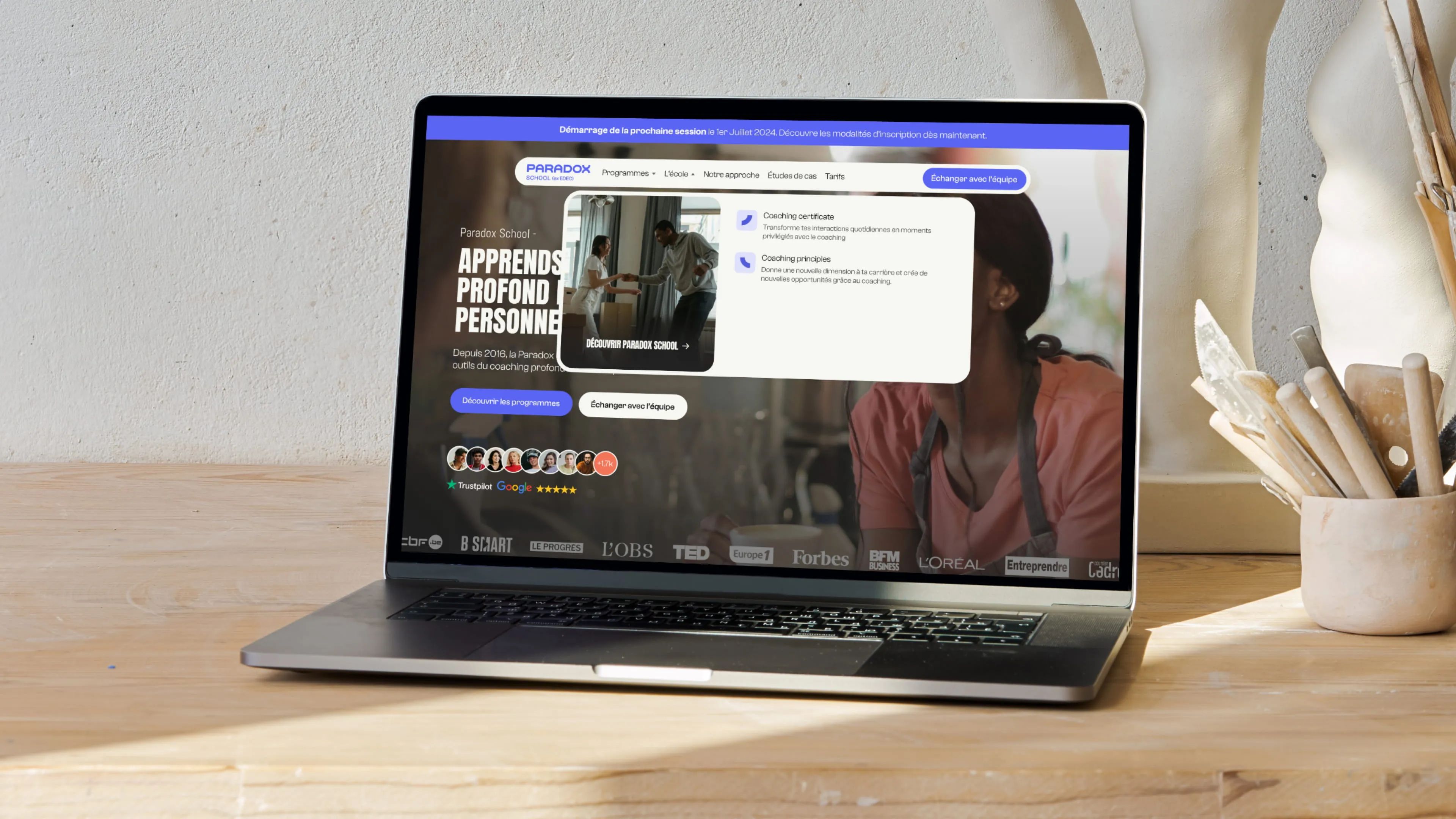
Running several coaching programs under one consistent brand
Paradox has gradually built a coaching and training ecosystem that combines behavioral science, artificial intelligence and masterclasses. Paradox OS, Paradox One, Finances OS and Obsidian address different moments and needs. The website had to give each program its own identity and sales pitch while keeping it recognizable as part of the same whole.
The collaboration with Gemeos continues with each launch: art direction for every offer, design of the sales pages, VSL journeys and sign-up pages, then Webflow development and maintenance. Long-term SEO/GEO support complements the work on conversion journeys and strategic content.
- Industry
- Education
- Healthcare
Art Direction
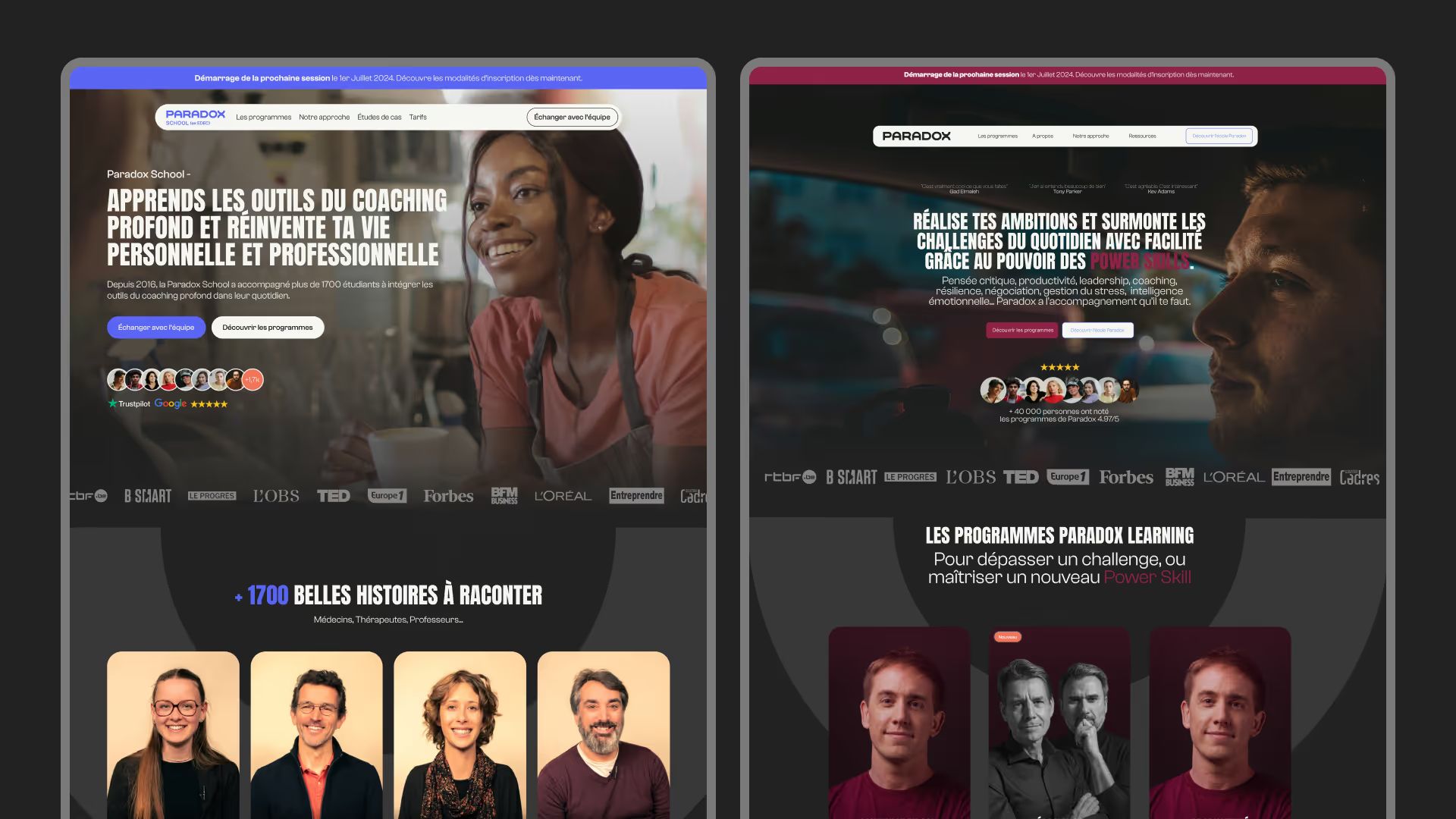
A visual territory for each product, with brand-wide consistency
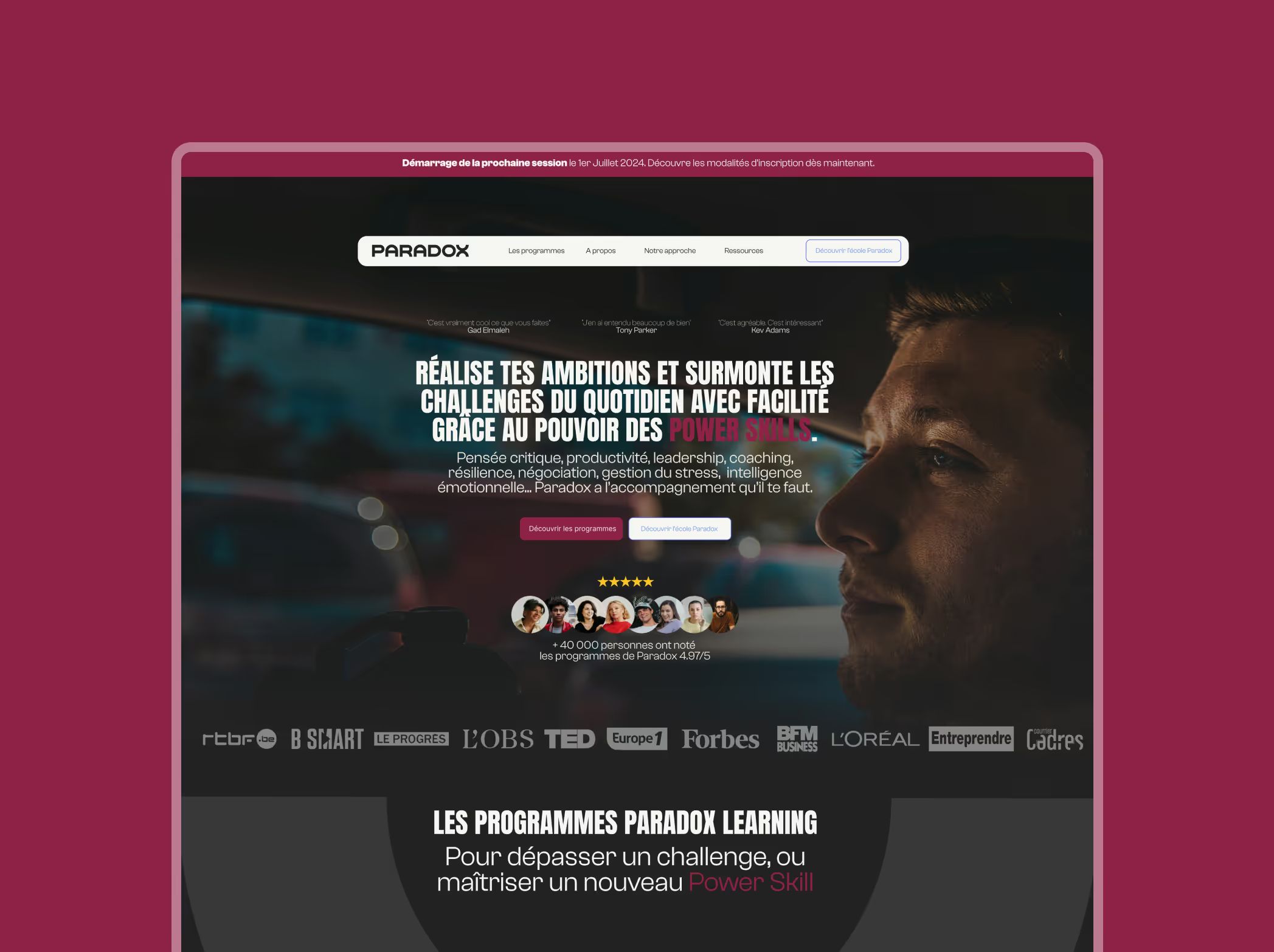
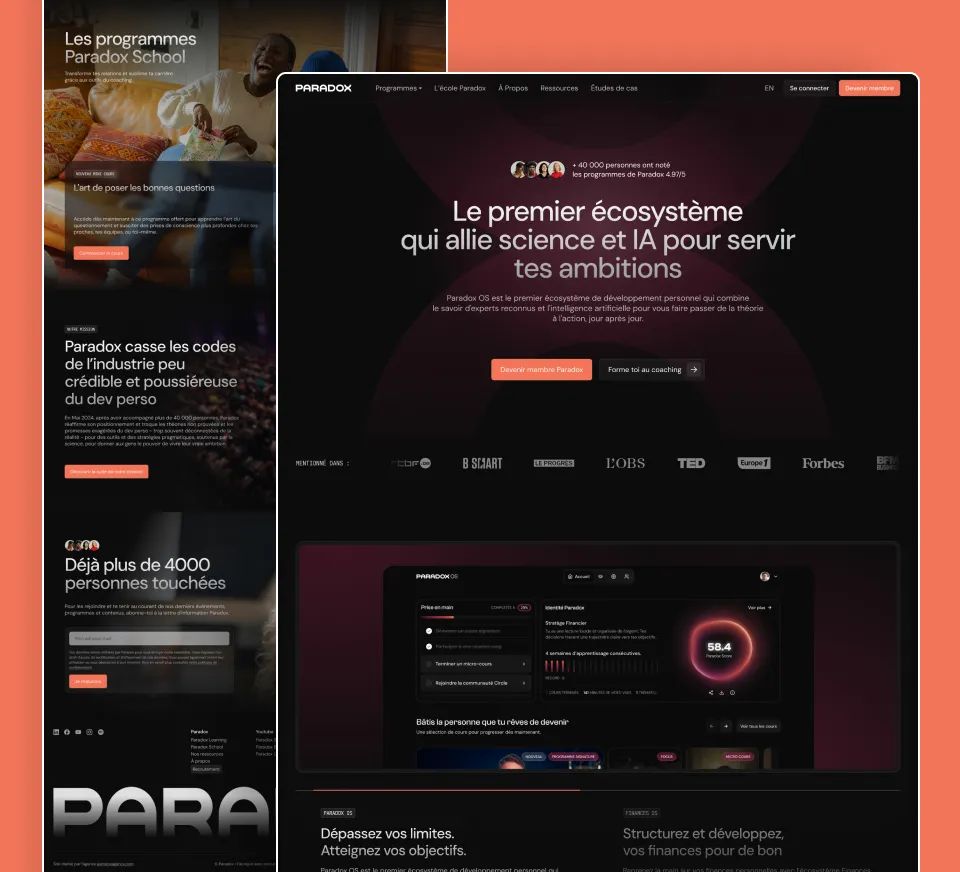
Paradox has multiple offers with distinct positioning — Paradox OS, Paradox One, Finances OS, Paradox Obsidian — and each one needed its own visual signature while still feeling instantly recognizable across the full ecosystem. That was the challenge Gemeos took on across every page.
For Paradox Obsidian, creating a new visual territory was the most ambitious part of the project: a scroll-driven visual progression that starts with the raw heat of lava and gradually shifts into the deep black of obsidian. A deliberate choice to symbolize the move from raw energy to mastery — and give this premium offer a radically different identity from the other products. Hover effects on key elements amplify that sense of living texture without ever weighing down the experience.
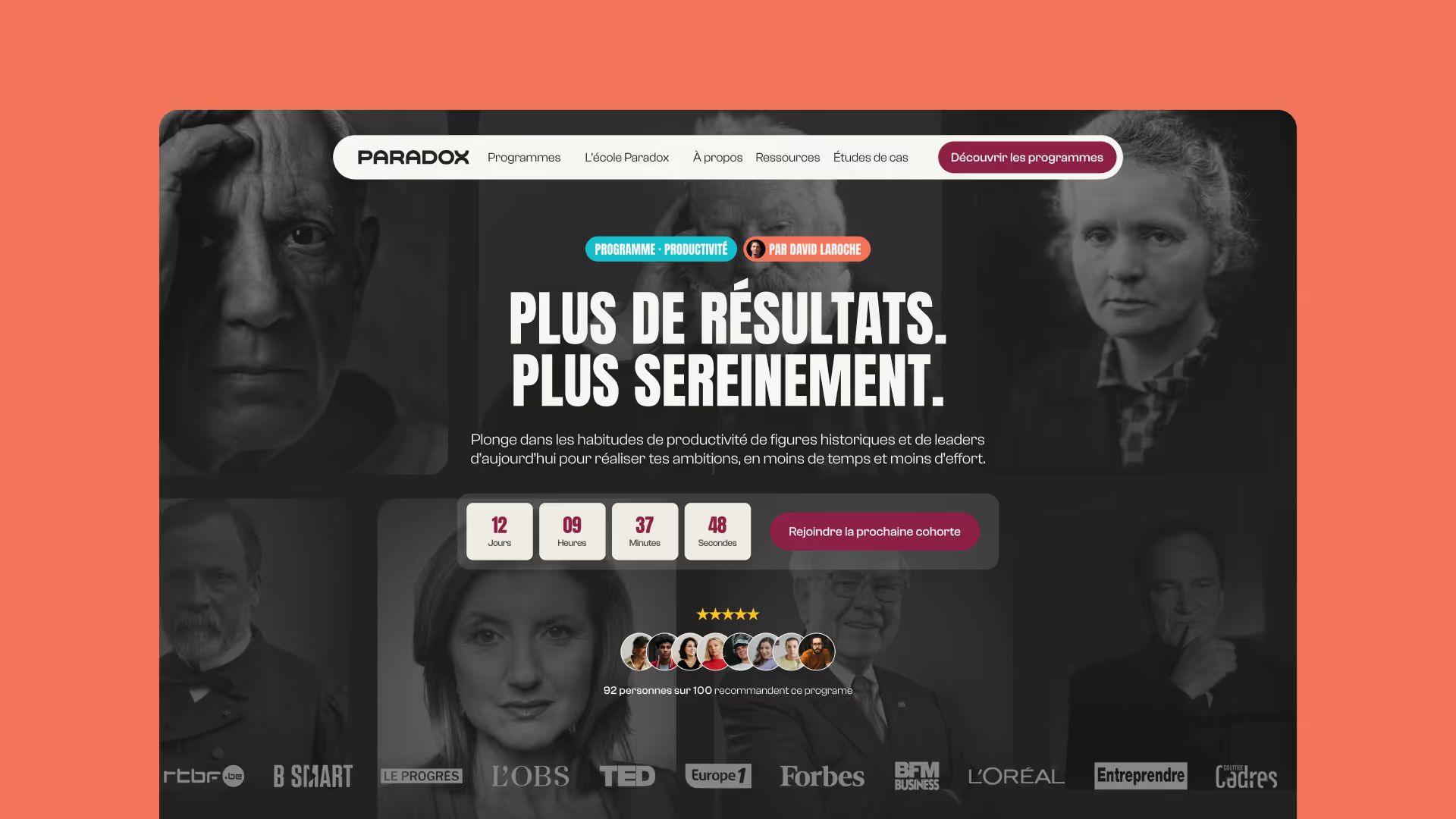
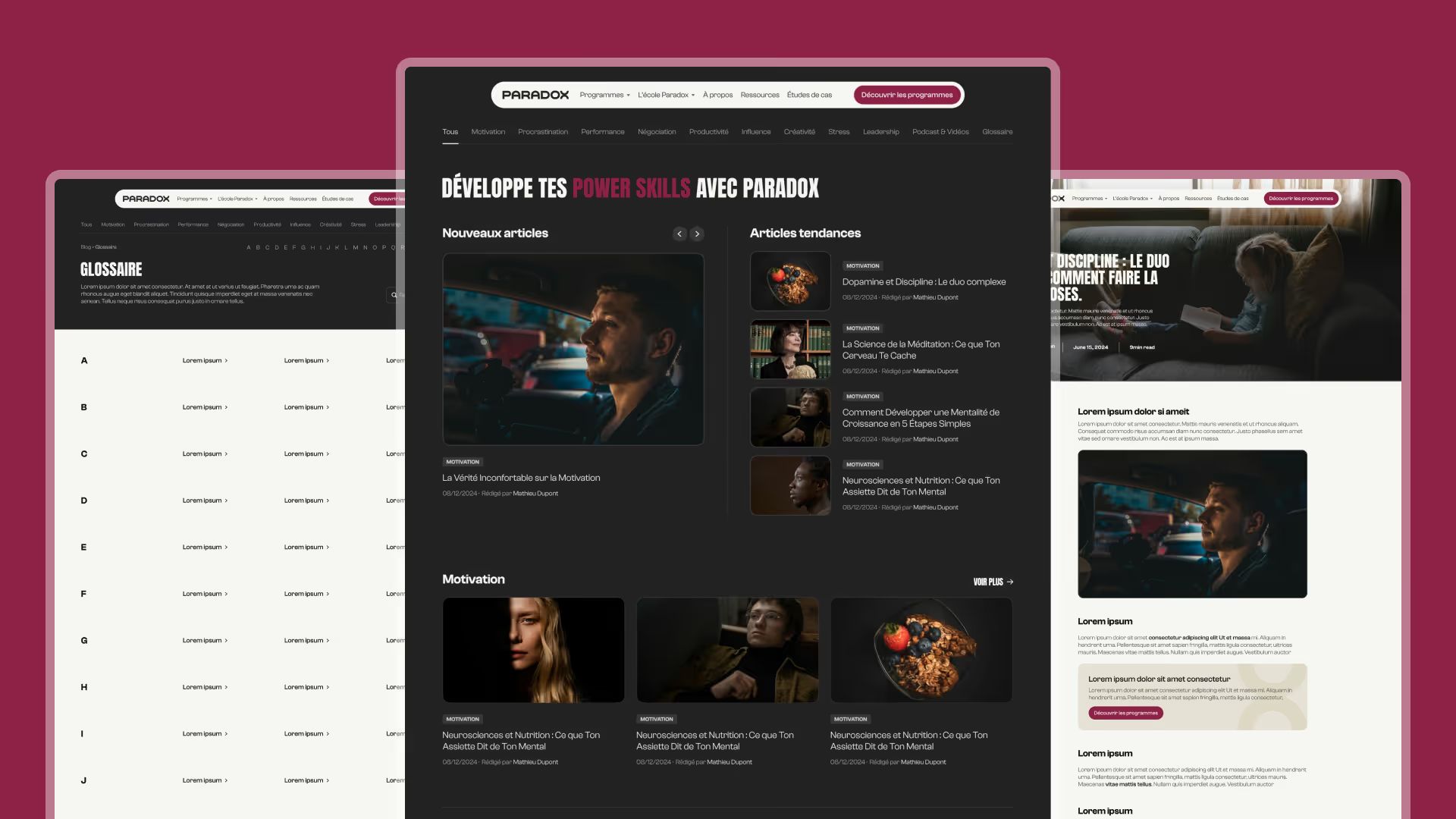
For the other products, the art direction relies on bold typography, a visual hierarchy built to guide the eye toward conversion, and image treatment — photos, mockups, masterclass libraries — that anchors the premium content promise before the visitor even reads a line.

UI Design
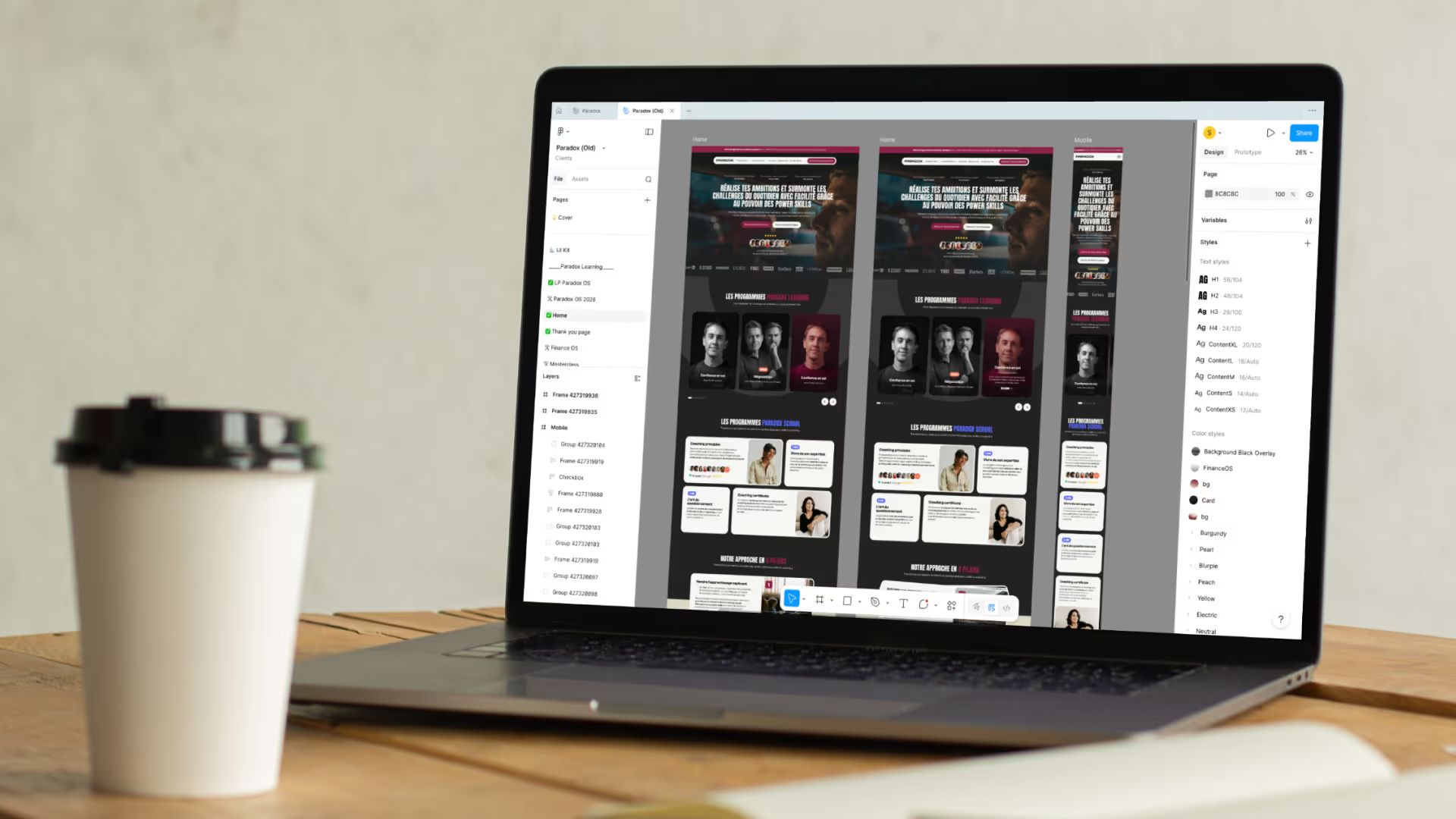
Interfaces designed for every stage of the funnel
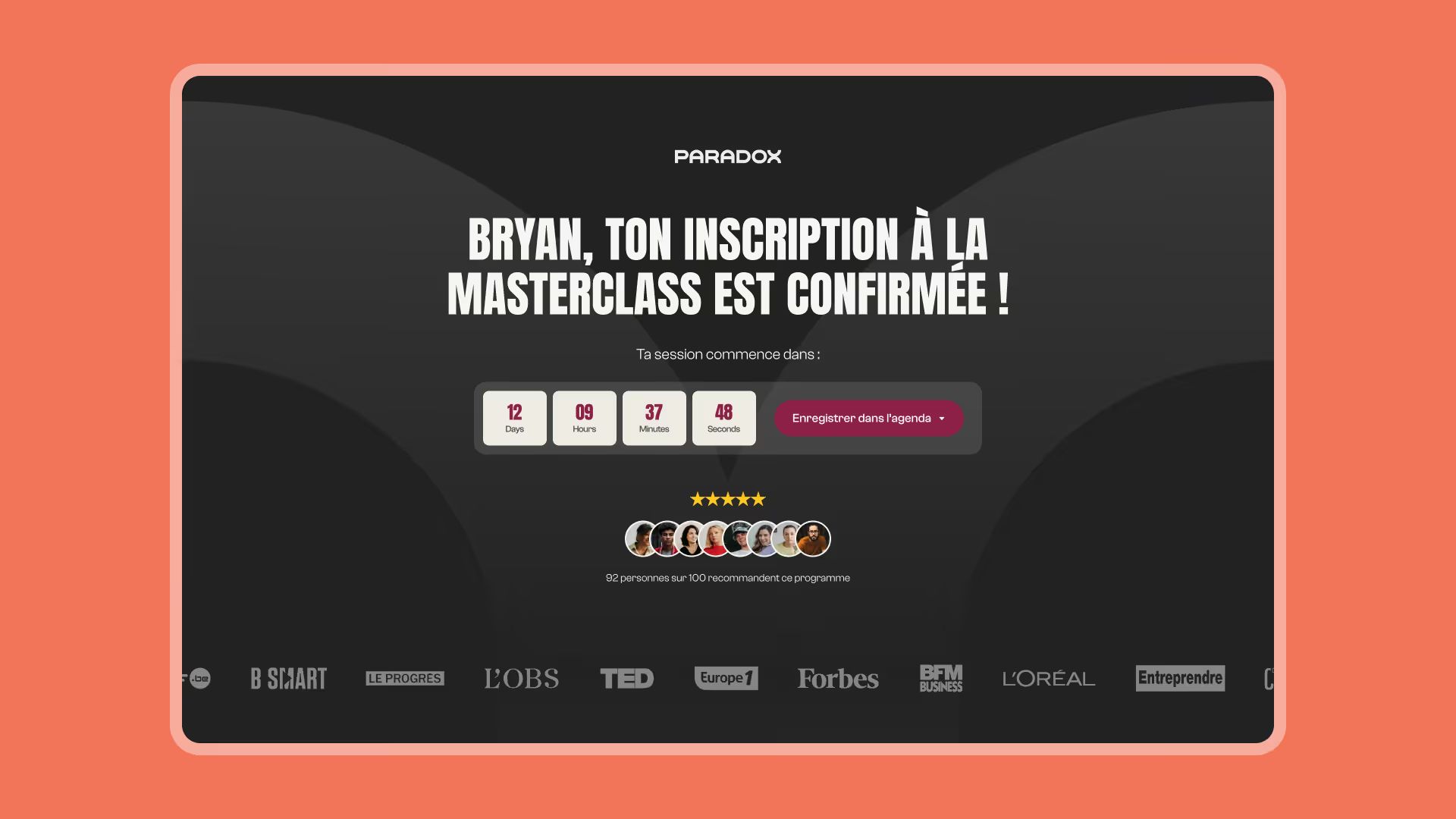
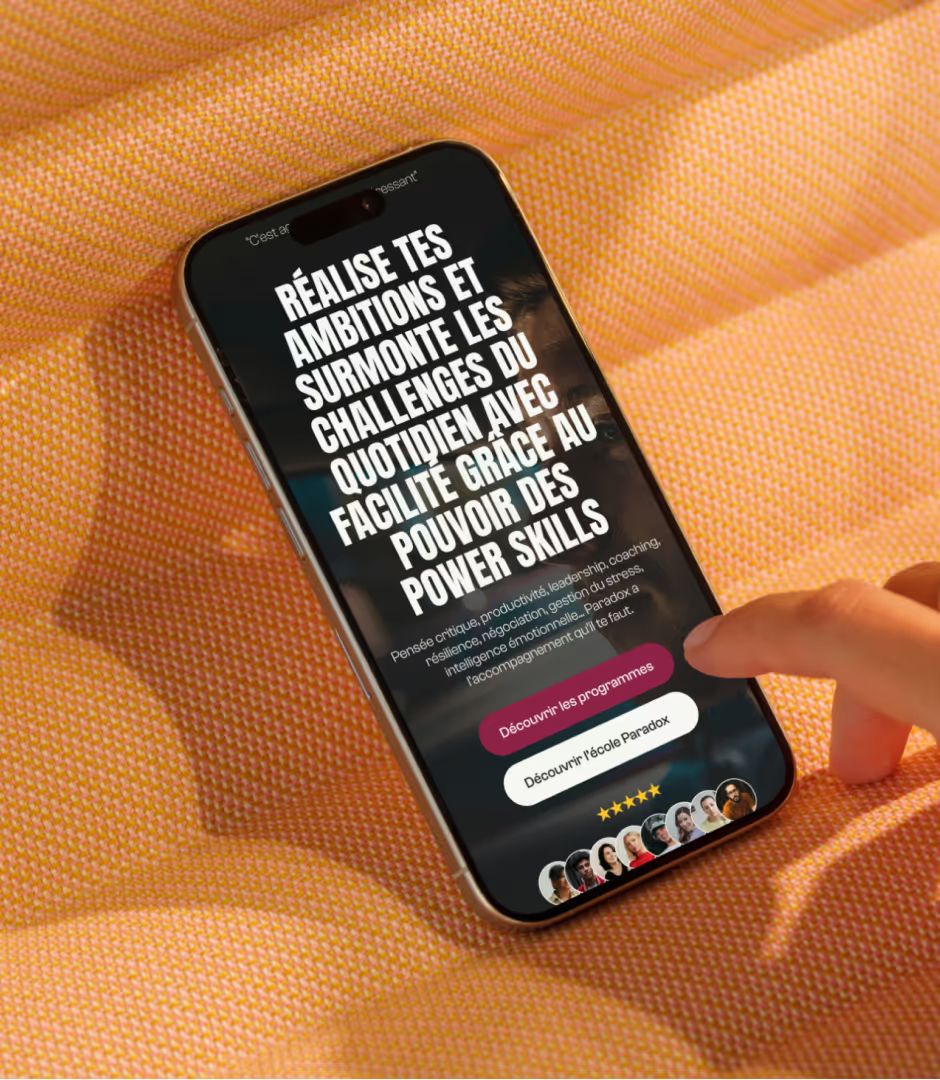
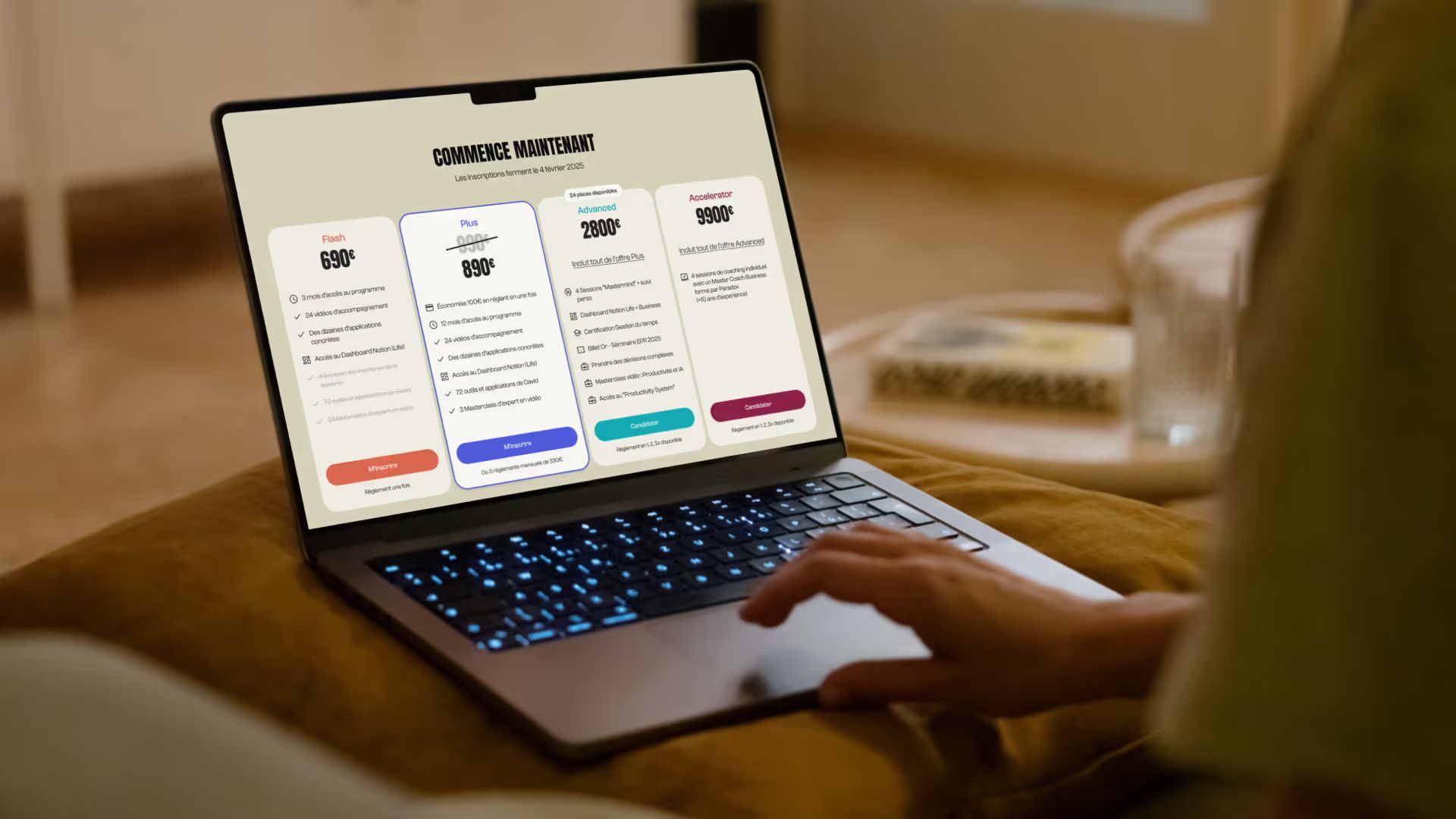
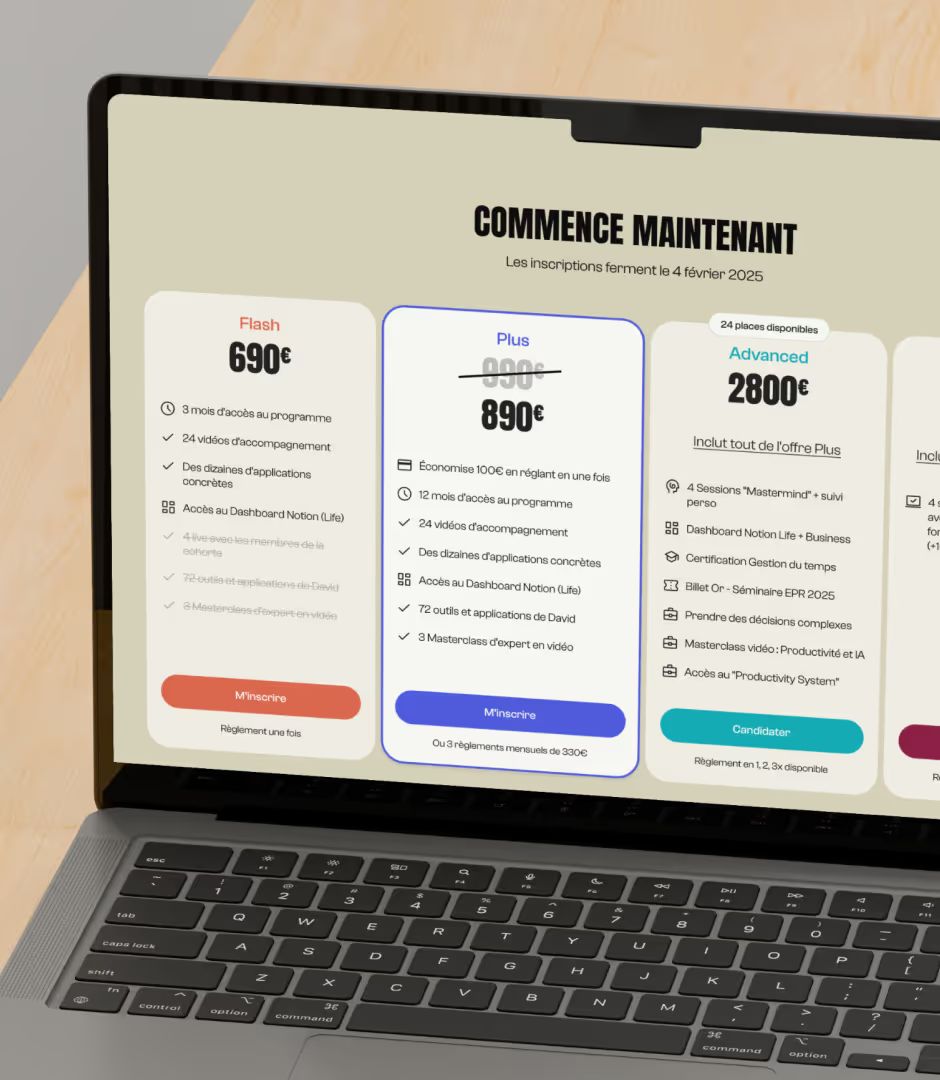
Over more than a year of collaboration, Gemeos designed every Webflow page for Paradox. That includes the main sales pages (Paradox OS, Paradox One, Finances OS, Paradox Obsidian), opt-in pages, multiple VSL page variations, and thank-you pages. Every interface is mobile-first, with a sharp focus on friction points, decision moments, and keeping the core arguments readable on small screens.
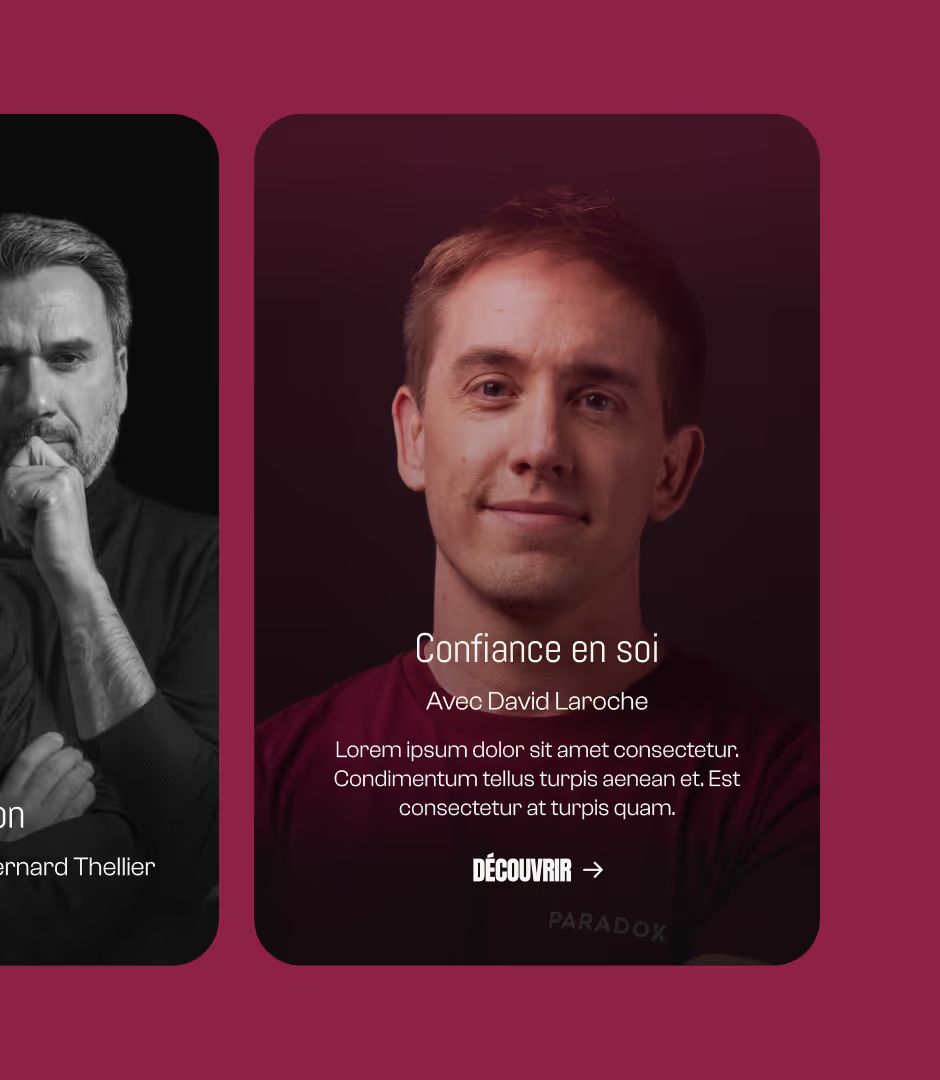
The key sections — pricing with a monthly/annual toggle, masterclass library, video testimonials hosted on a CDN, FAQ accordions — are designed to pack in value without ever overwhelming the visitor. Everything is delivered in Figma with integration-ready specs and the assets needed for a pixel-perfect build.
Architecture, Testing, and Conversion-Led Iteration
The product design work for Paradox goes beyond screen design. It’s the user experience architecture itself, continuously refined and reworked across every page.
For Paradox OS One, three full page variants were designed and A/B tested in Optibase to identify the highest-performing structure. For the "Psychology of Money" webinars, four headline variants were tested — with one technical constraint solved by Gemeos: since eWebinar thank-you pages don’t allow third-party scripts, a custom thank-you page was built directly in Webflow to host Optibase and track conversions cleanly.
The journeys are structured around the key conversion points — checkout CTA, pricing section, social proof block with masterclasses and testimonials — with placement decisions sharpened from iteration to iteration, based on client feedback and behavioral data.






Webflow Development
A full site maintained in Webflow, with a technical stack built to handle the load
The entire site has been built and maintained by Gemeos in Webflow for more than a year. The scope includes the main sales pages, VSL funnels (four active variants), opt-in pages, custom thank-you pages, and new offers rolling out now, like Paradox Obsidian.
Every page matches the Figma specs pixel for pixel. Custom interactions are coded directly. The pricing section hover effect uses CSS Anchor Positioning, a modern property that’s been tested and validated cross-browser — Chrome, Safari, and mobile Firefox. Entrance animations, sticky banners, accordions, and pricing toggles are all implemented without heavy third-party libraries to keep performance sharp.
Third-party integrations — eWebinar, Vidalytics, Hubspot — are visually overridden to match the art direction without compromising rendering or tracking. Testimonial videos and long-form content are delivered through CloudFront CDN, which makes it possible to load heavy assets without hurting the site’s Core Web Vitals.
On the tracking side, the stack is rock solid: UTMs flow end to end all the way to checkout (pxscheckout.paradox.io), the duplicate _gl parameter bug from GA4 cross-domain tracking is fixed, and URLs are cleaned up after load. Attribution rules are documented and standardized — first-click/last-click logic, cookie TTL, and UTM overwrite policy. On VSL pages, email handling in the URL — required by Vidalytics to tie video behavior to a HubSpot contact — got special treatment: a raw HTML form injects the email into the redirect URL without triggering double view counts.
| Technical Scope | Details |
|---|---|
| Pages built | paradox-os, paradox-one, finances-os, vsl-paradox-os (×4), paradox-obsidian, opt-in pages, custom thank-you pages |
| Custom interactions | CSS Anchor Positioning, pricing toggle, sticky banner, accordions, Obsidian hover |
| Integrated embeds | eWebinar, Vidalytics, Hubspot (full art direction override) |
| Videos & assets | CloudFront CDN hosting, seamless integration with no CWV impact |
| Client-side tracking | End-to-end UTMs, GA4 cross-domain, _gl bug fix, documented attribution rules |
| Technical SEO | 301 redirects, indexation/deindexation management, optimized slugs, clean sitemap |
Growth & Tracking
A measurement infrastructure built to lose zero data in the funnel
Tracking a platform like Paradox is structurally complex: multi-domain funnels (paradox.io → pxscheckout.paradox.io), a mixed stack of automation tools (HubSpot, Vidalytics, eWebinar, Make), and ad platforms (Meta, Google Ads) with different attribution needs. The risk: data disappearing as users move from one domain to another, conversions not being reported, and media decisions based on bad numbers.
Gemeos built a solid tracking architecture across the entire funnel. The foundation: client-side GTM paired with server-side GTM via Addingwell as the single source of truth for Meta and Google Ads — gradually replacing Make, which was pushing offline events without deduplication. Addingwell also acts as an alternate CDN to bypass ad blockers, making sure visitor events still reach the server even when third-party scripts get blocked.
For Meta, Conversion Events are configured and stabilized from server-side GTM. For Google Ads, online conversions are sent cleanly from the server-side container. Cross-channel attribution is documented in a structured tagging plan: named events, variables, trigger rules, and conversion windows.
For A/B testing, Optibase is the chosen tool. Tests are run page by page, with custom thank-you pages built in Webflow to work around the tracking limits of third-party webinar tools (eWebinar, Vidalytics), which don’t allow script injection on their redirect pages.
| Topic | Solution Implemented |
|---|---|
| Server-side tracking | Server-side GTM via Addingwell — single source for Meta + Google Ads, AdBlock bypass |
| Cross-domain attribution | End-to-end standardized UTMs, first-party cookies, documented first/last-click rules |
| Vidalytics + email in URL | Raw HTML form for email injection without double view counting |
| Meta & Google conversions | Events configured from server-side GTM, Make replacement, deduplication |
| A/B testing | Optibase — custom Webflow thank-you pages to track webinar conversions |
| Tagging plan | Structured document: events, variables, naming, trigger rules |


SEO/GEO
An organic presence built for the long haul, optimized for search engines and AI models
Gemeos runs a dual monthly retainer on paradox.io: an editorial SEO retainer and a "Boost" retainer to accelerate visibility on priority topics. The strategy is built for the long term and aligned with Paradox’s positioning around high-volume themes: personal development, coaching, applied AI for performance, and mindset.
Every sales page gets optimized at the source: title tags and meta descriptions calibrated by funnel, consistent semantic markup, structured slugs, and precise control over indexed vs. deindexed pages based on conversion goals. A continuously maintained 301 redirect plan preserves SEO value during redesigns or URL changes. Blog articles go live regularly to expand the brand’s semantic reach and capture search intent that complements the sales pages.
On the GEO side, the content is structured to maximize the odds of being cited by LLMs like ChatGPT, Perplexity, or Google AI Overview: answer-ready formats (FAQ, definitions, lists), dense named entities, and explicit conceptual links between the products and their benefits. The goal is for Paradox to be the answer these models surface — not just one result among many.
| Lever | Actions |
|---|---|
| On-page SEO | Funnel-specific tags, semantic markup, slugs, meta |
| Technical SEO | Ongoing 301 redirects, index/deindex management, clean sitemap |
| Content | Monthly blog articles on key themes (coaching, AI, performance, mindset) |
| GEO | Content structured for citation by LLMs (ChatGPT, Perplexity, Google AIO) |


Our latest projects
+250 companies
supported
Websites designed and developed with












You're going to working with us, guaranteed
Ready to launch
your business?
Let’s f*****G GO !!