Projects
 Our Offers
 Dedicated team
 Blog
 Academy
 About Us
Website redesign for Openeat: alternative to meal vouchers
Openeat offers an alternative to meal vouchers, with no physical card and no payroll deduction. This difference had to be clearly explained to HR and finance departments used to traditional solutions.
Openeat entrusted Gemeos, web agency specialized in HR solutions, with its art direction, UI, Webflow development and SEO structure.
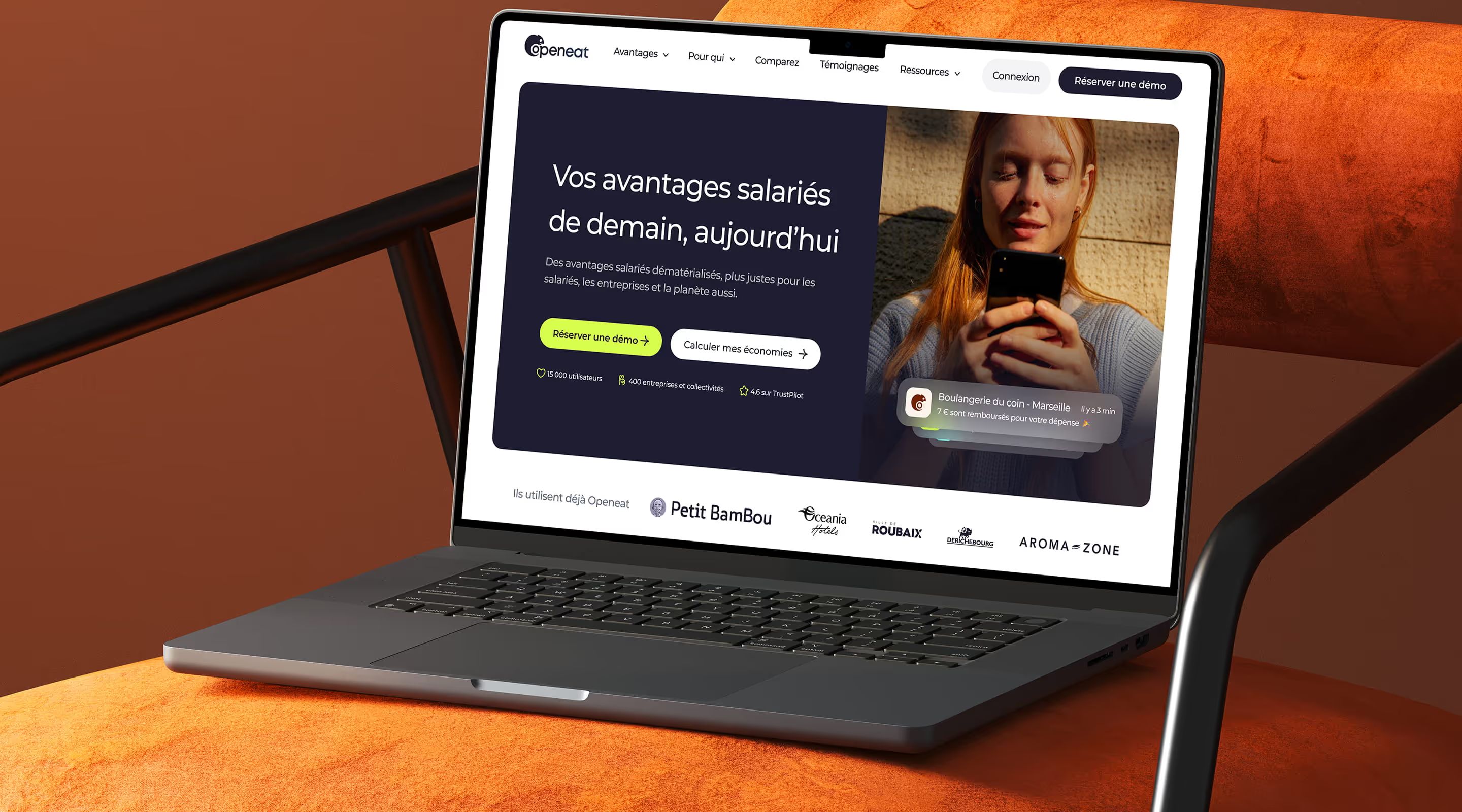
Explaining meal vouchers to HR decision-makers
Openeat develops an alternative meal voucher solution for companies. Its positioning is based on a simplified experience, with no physical card and no payroll deduction. As part of repositioning the offer, the website had to better explain how the scheme works and answer the questions of HR and finance managers.
Gemeos worked on the art direction, UI design and page hierarchy to convey this value proposition, then built the website in Webflow. SEO was taken into account to structure content useful to companies comparing meal voucher solutions.
- Industry
- Saas
- Services
- Artistic Direction
- UX/UI Design
- Development
- SEO
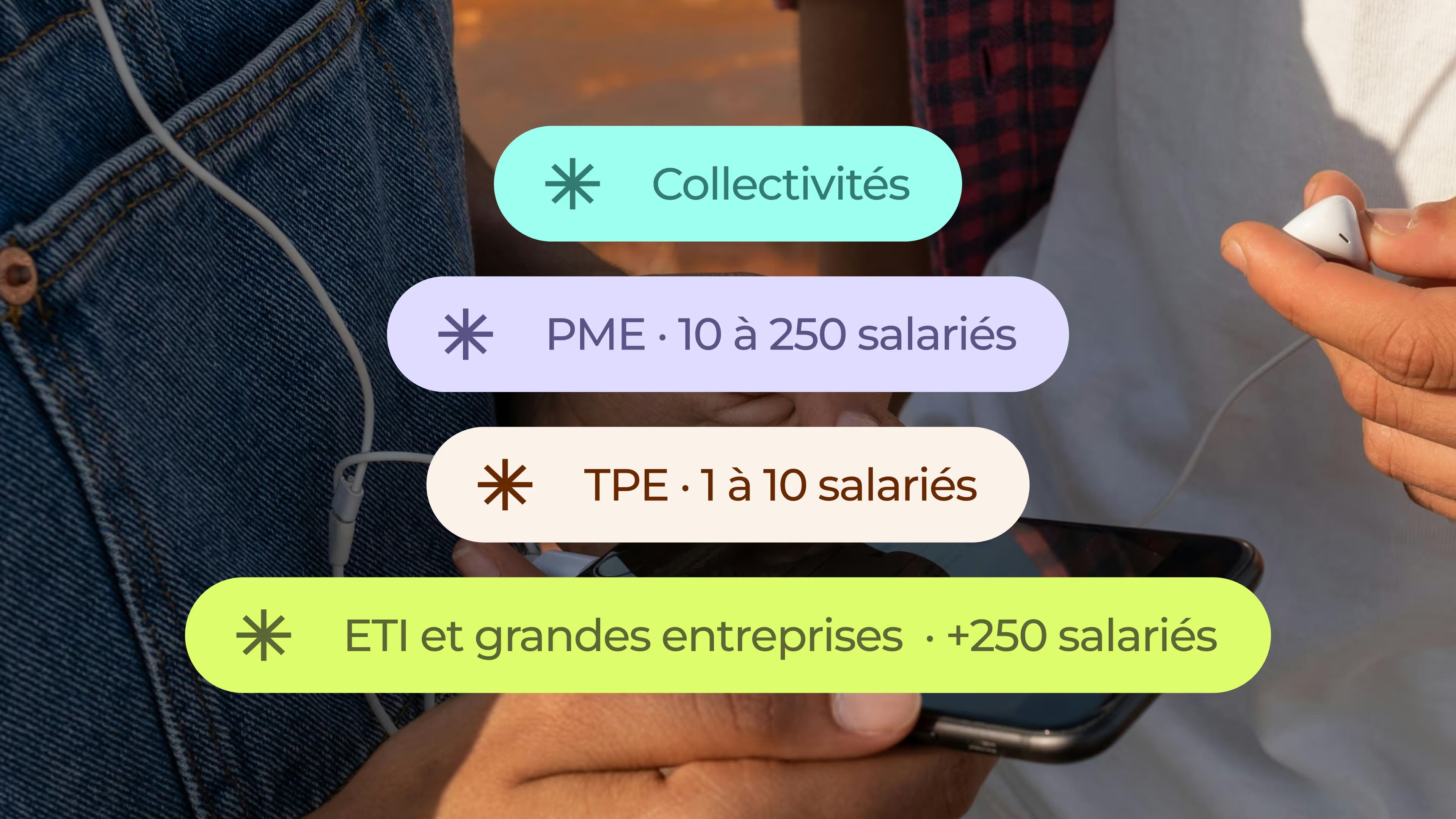
Art Direction
A visual direction that breaks from industry norms
All meal voucher solutions play the same game: institutional green, generic visuals, corporate tone. Openeat’s brief was clear, stand out without losing sight of their B2B audience.
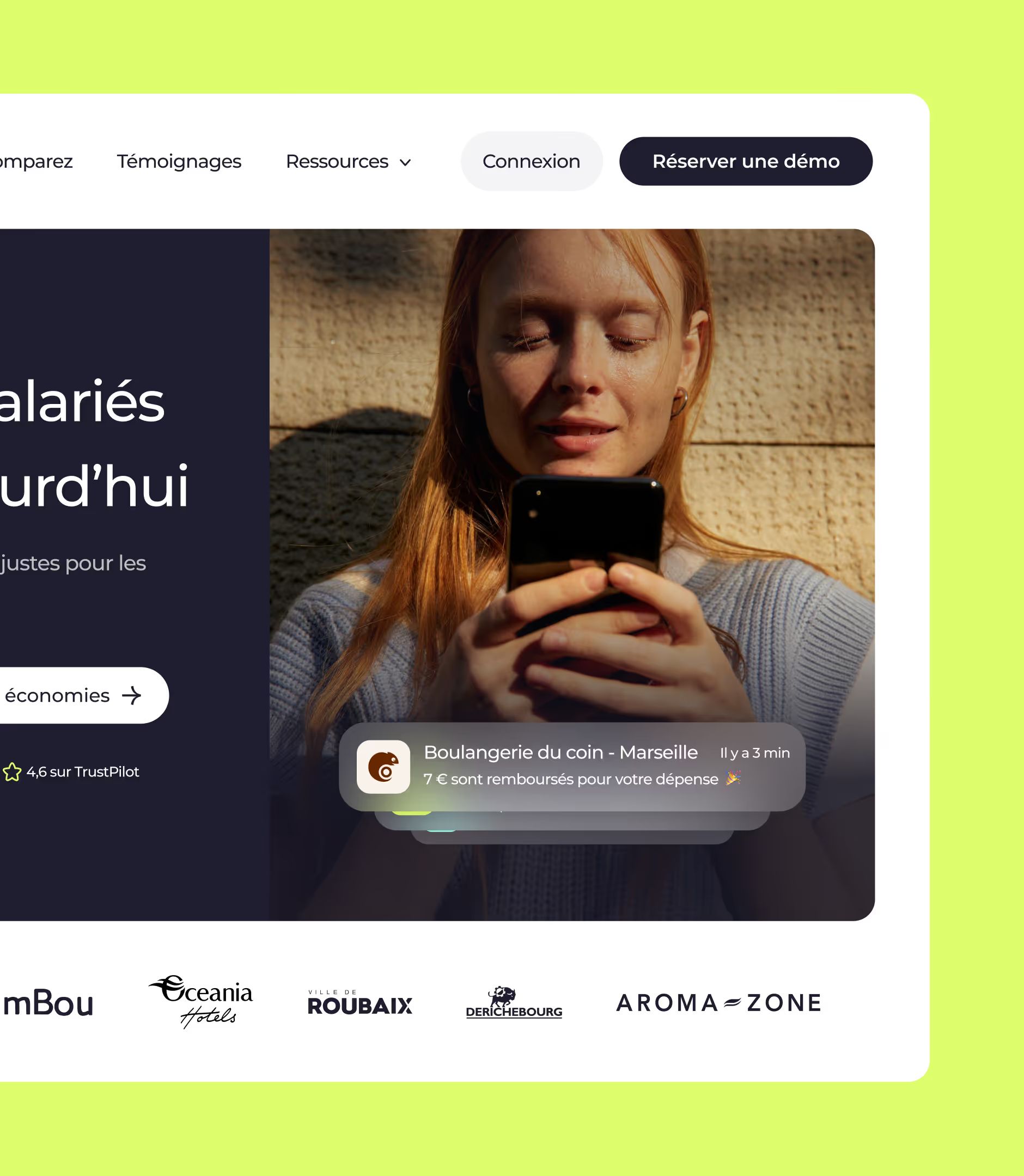
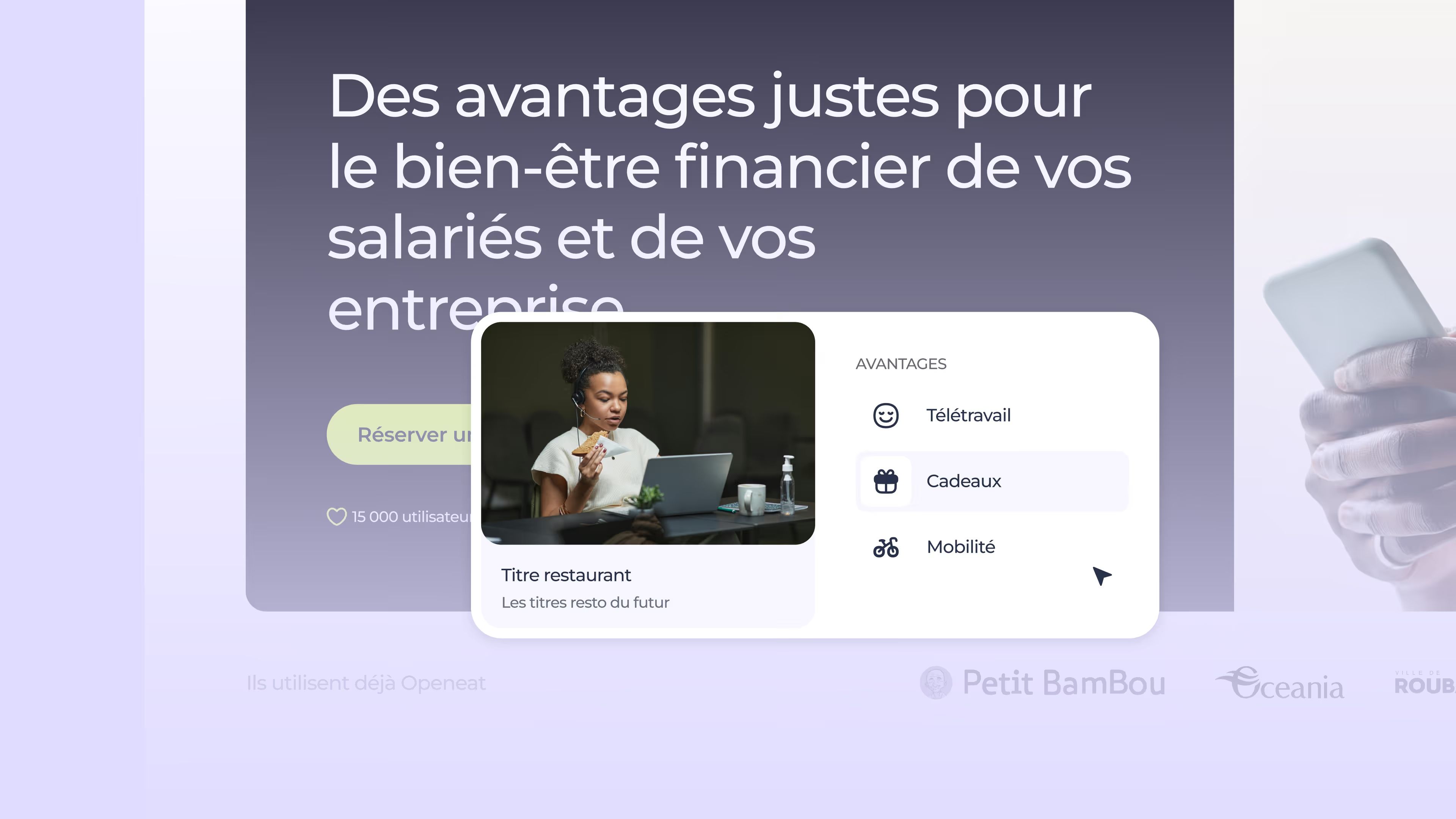
We explored several art direction routes before locking in a visual system built around clarity, dense information, and a warm visual feel that cuts through the usual coldness of the HR space.
The result: a site identity that reads like a competitive edge, not an institutional brochure.
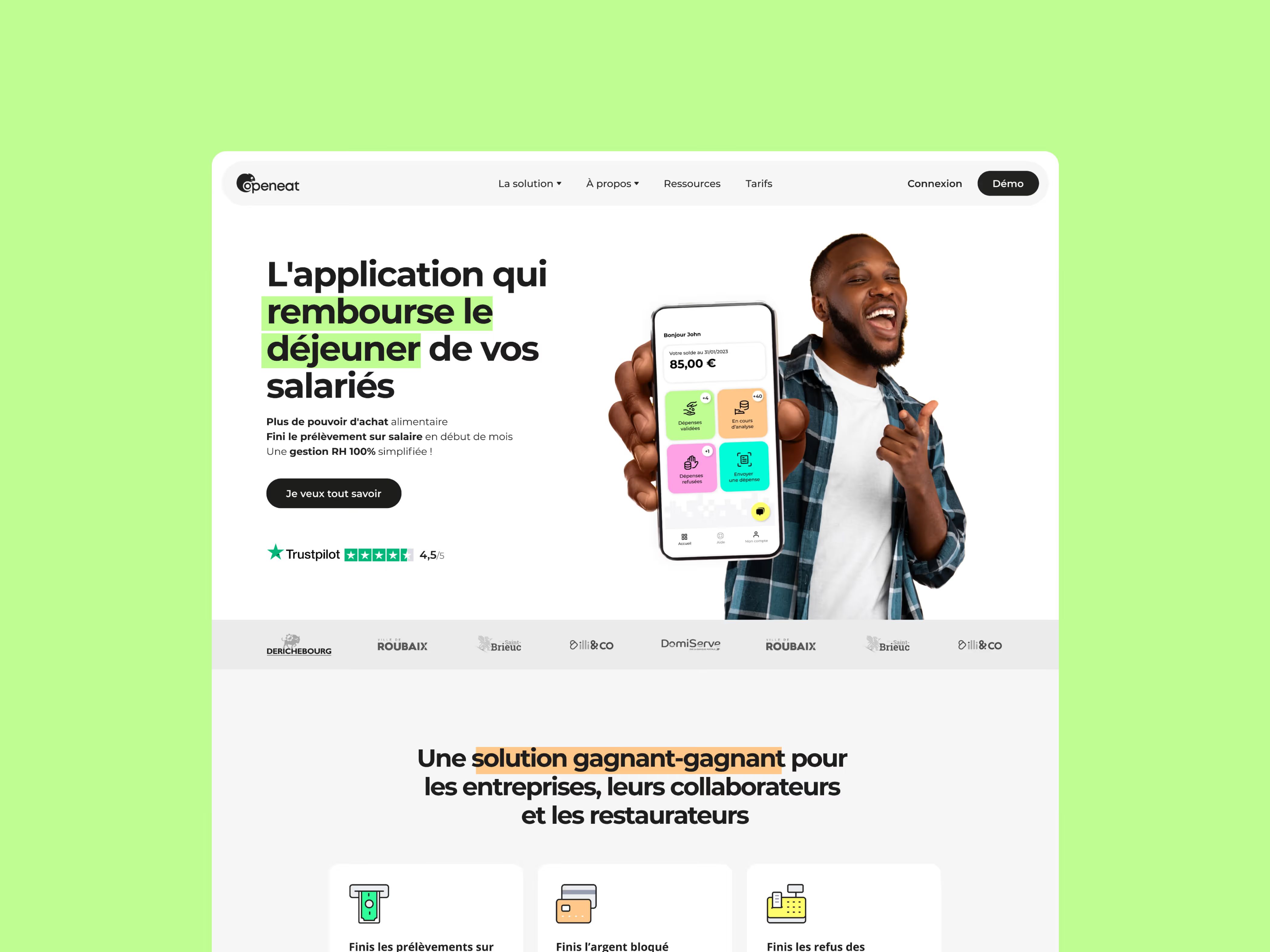
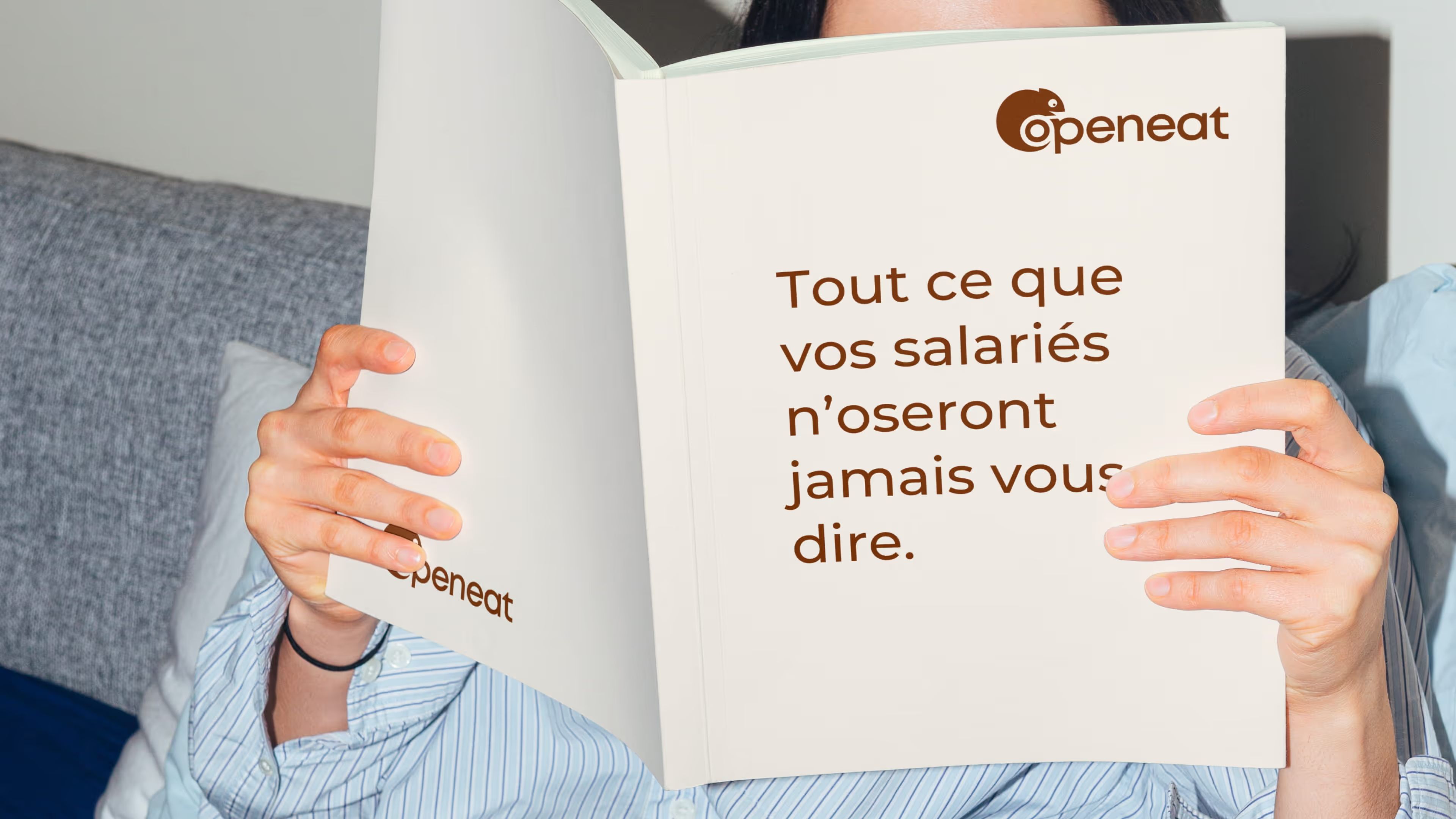
Before • Employee Advocacy
The visual system leans into immediate proximity with employees. But the “app” positioning can slow down buying decisions from HR leaders or executives who are looking for a professional solution, not a mobile app.
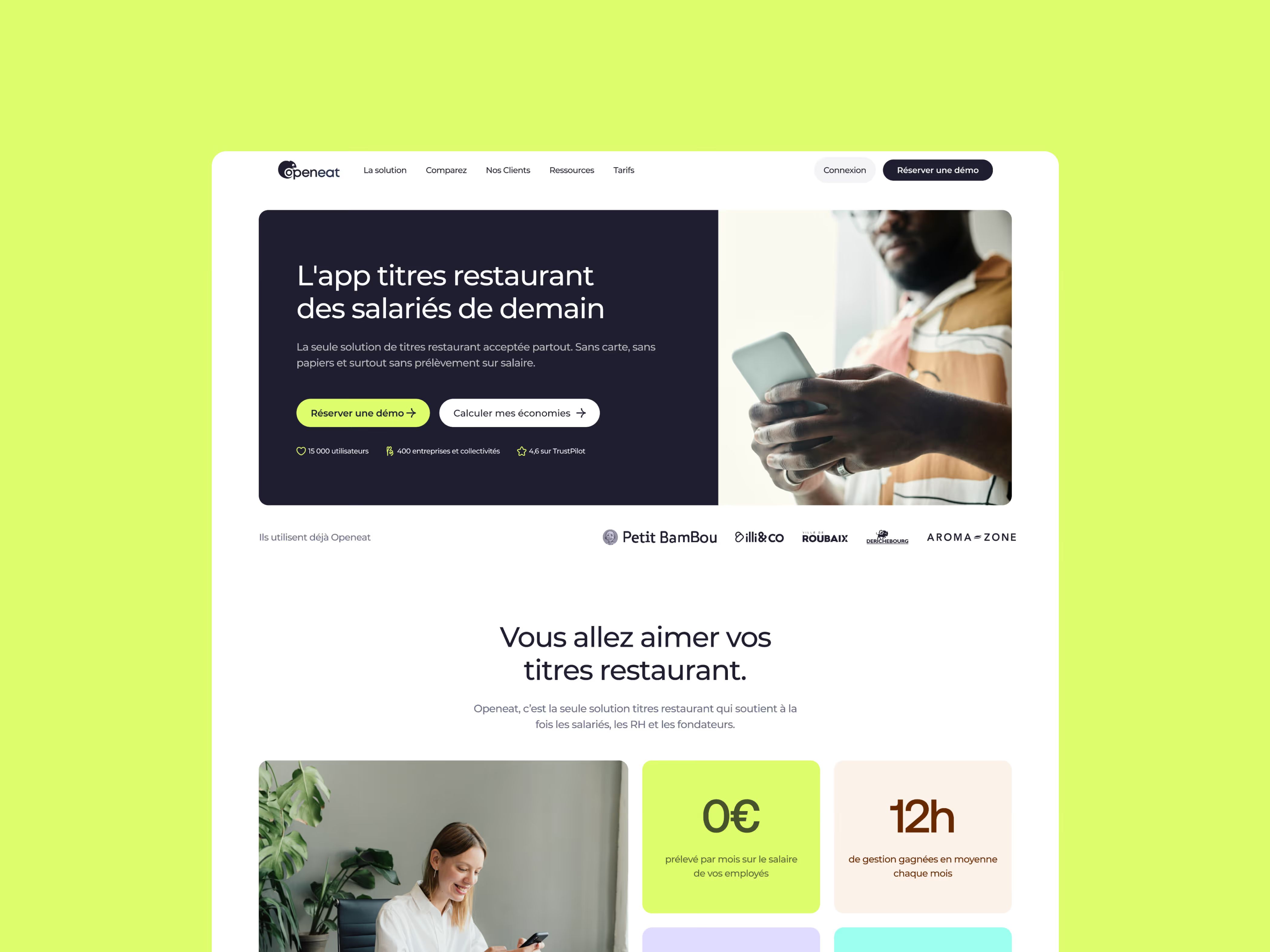
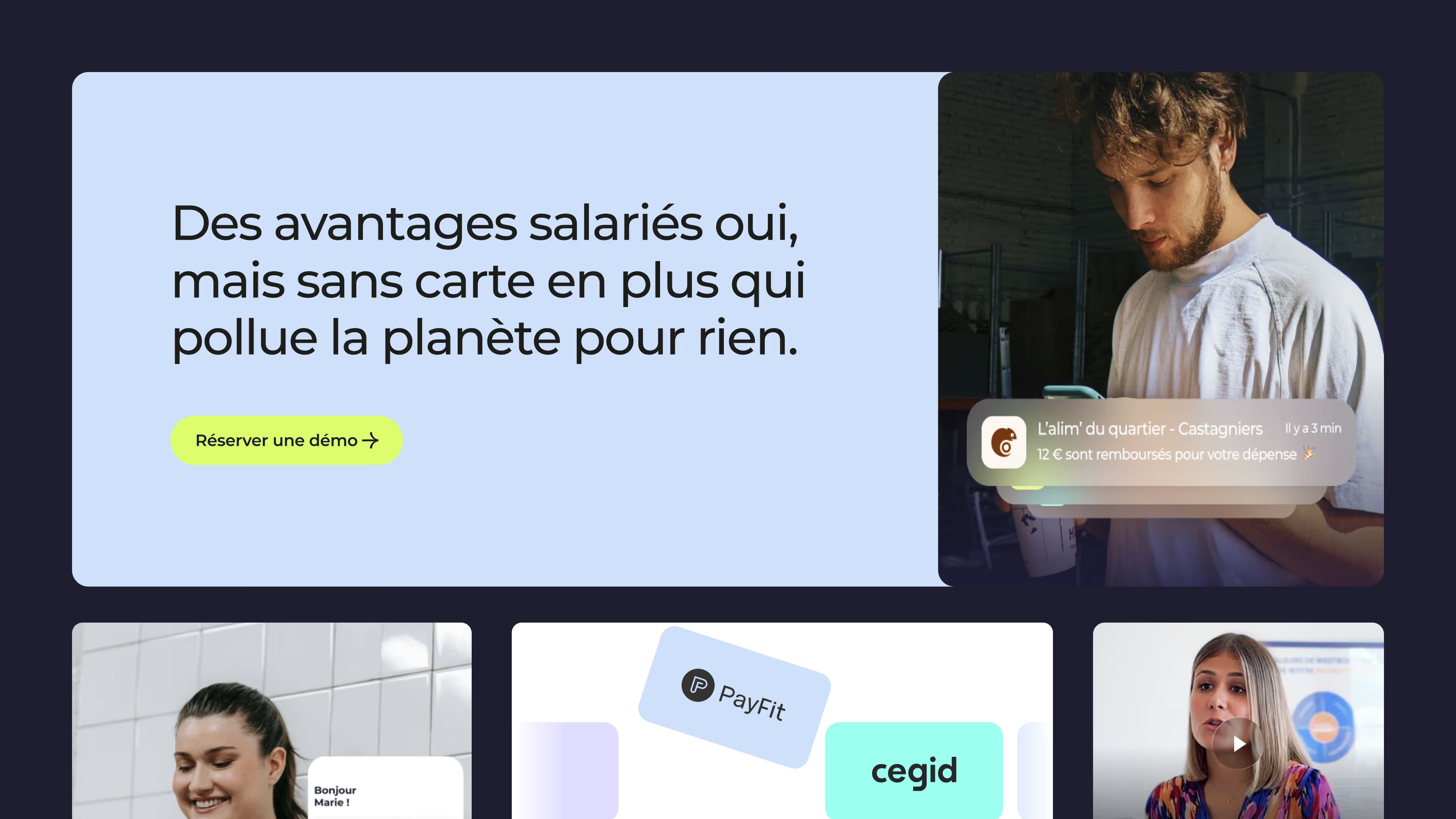
After • The SaaS That Grew
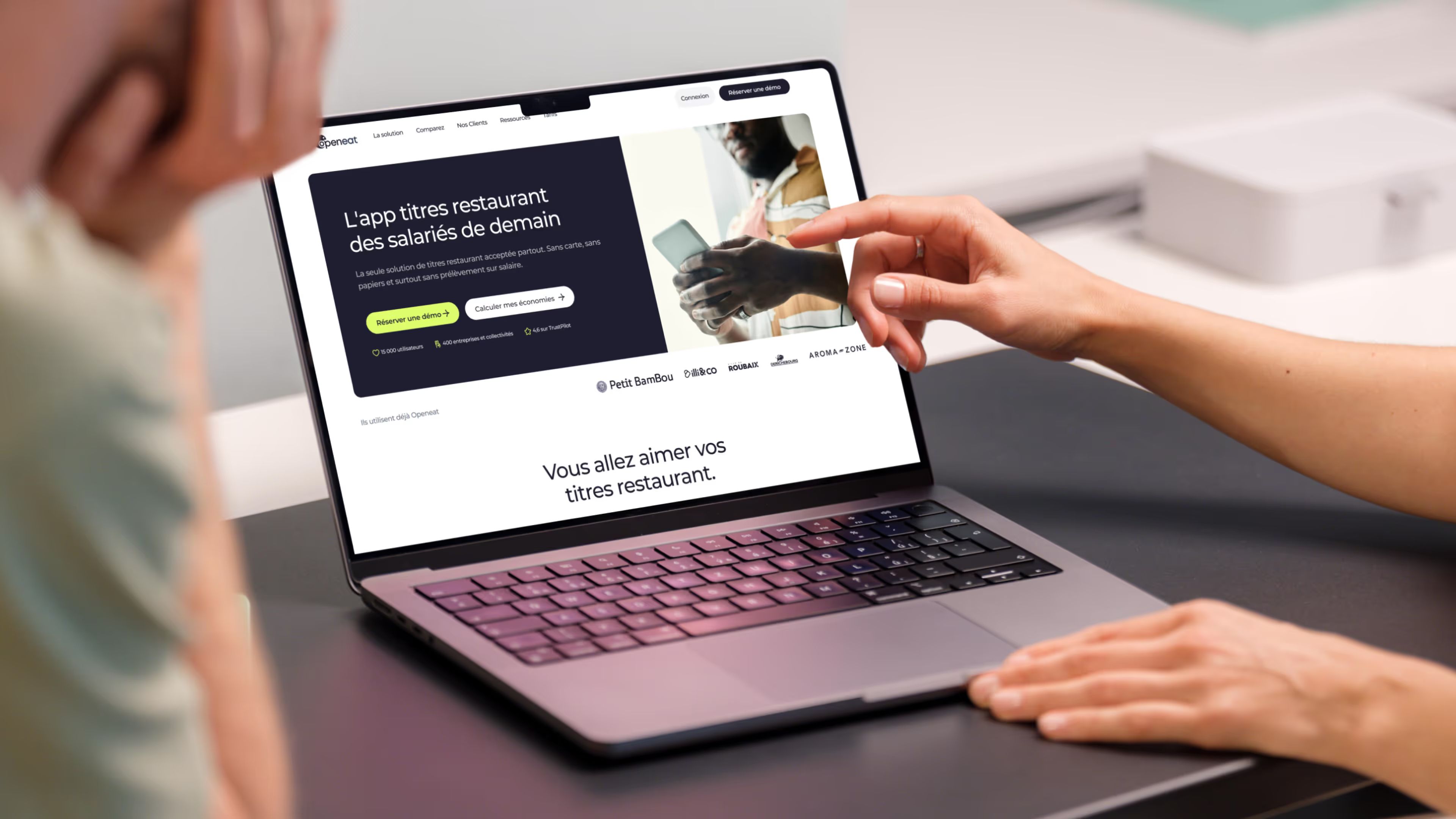
The new version makes a clear pivot toward the buyer audience: HR leaders and executives. The dark card block immediately anchors authority. “The employee meal voucher app for tomorrow’s workforce” is no longer an emotional promise. It’s a market position.
UI Design
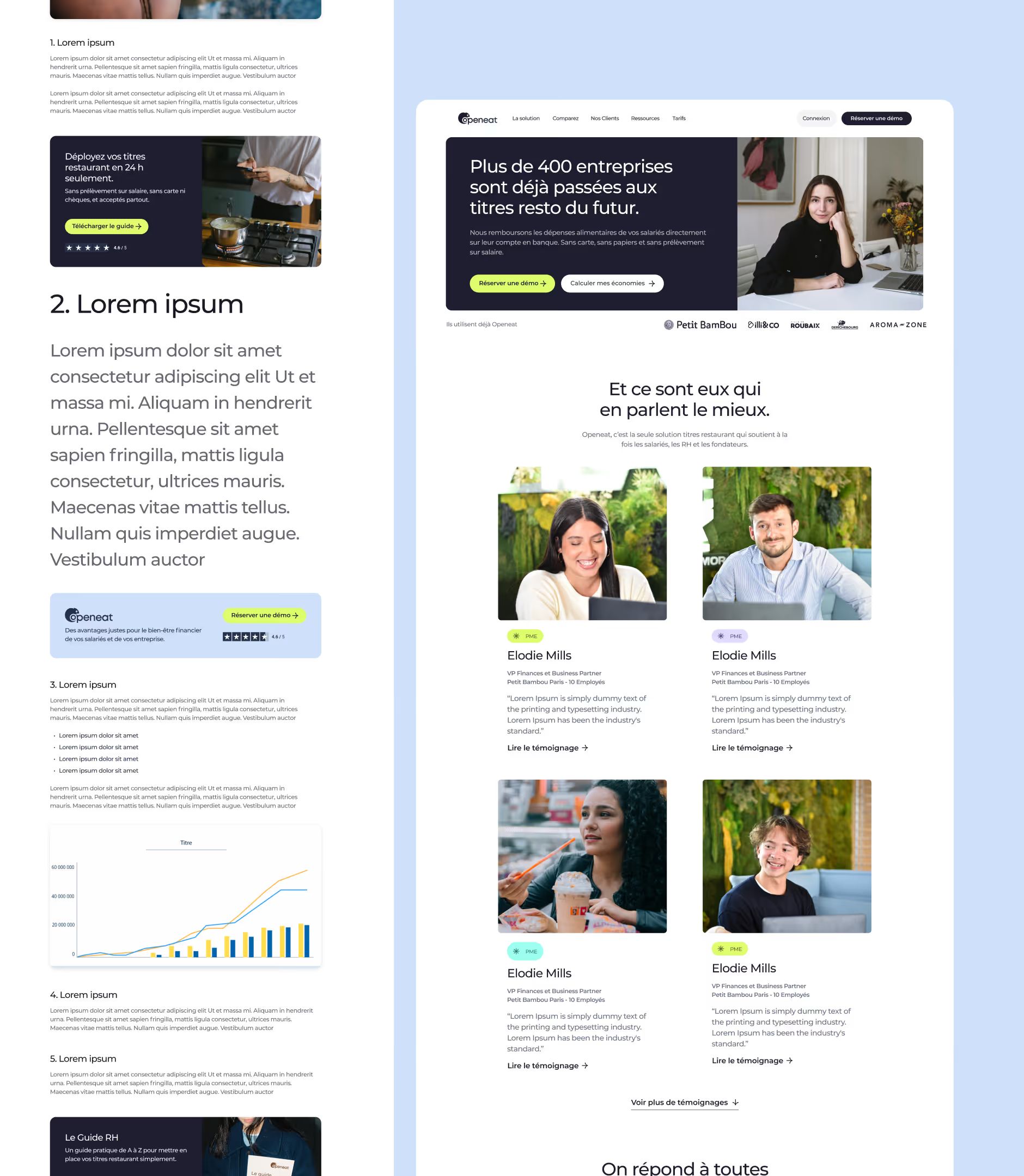
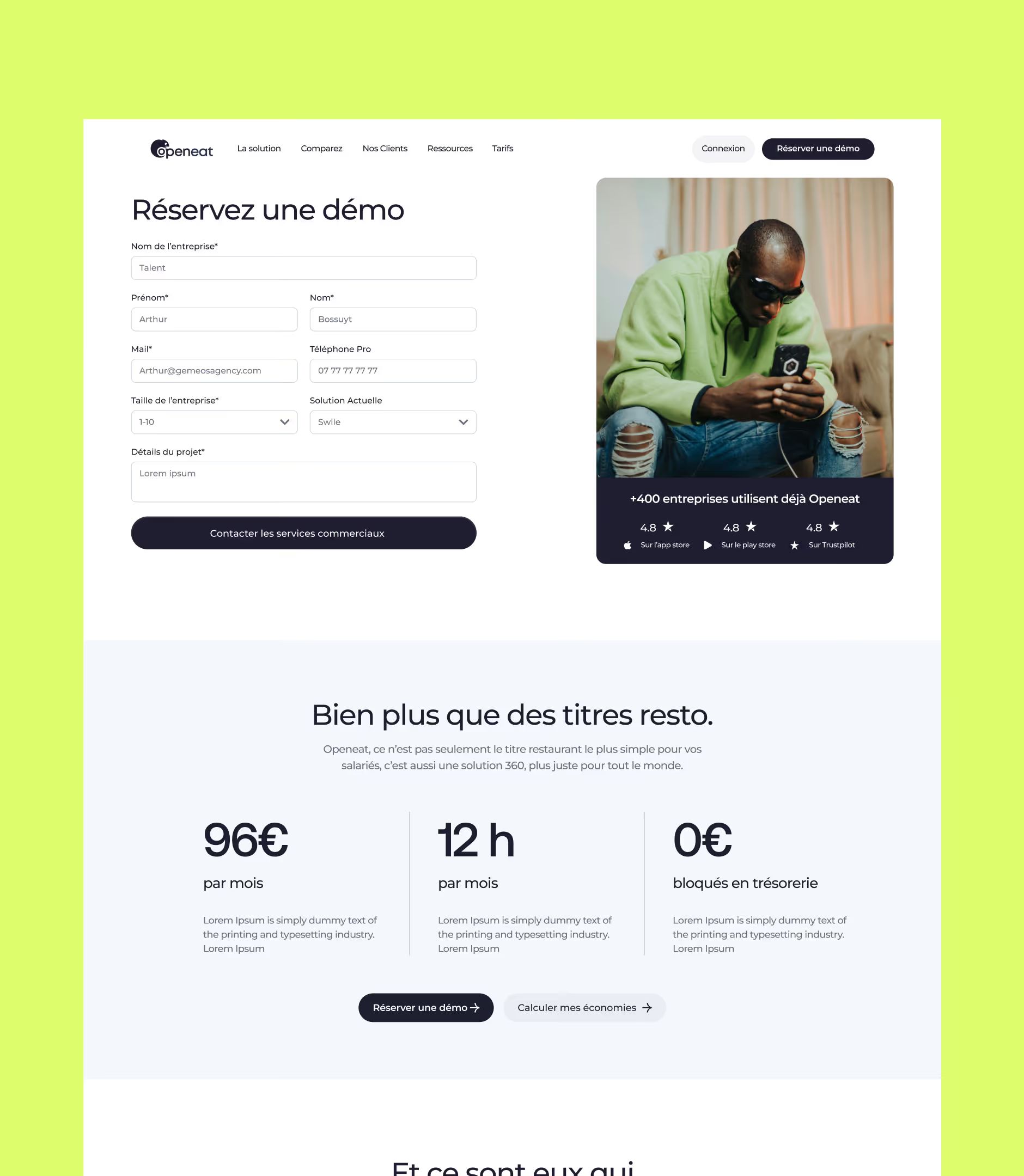
A component system built to scale
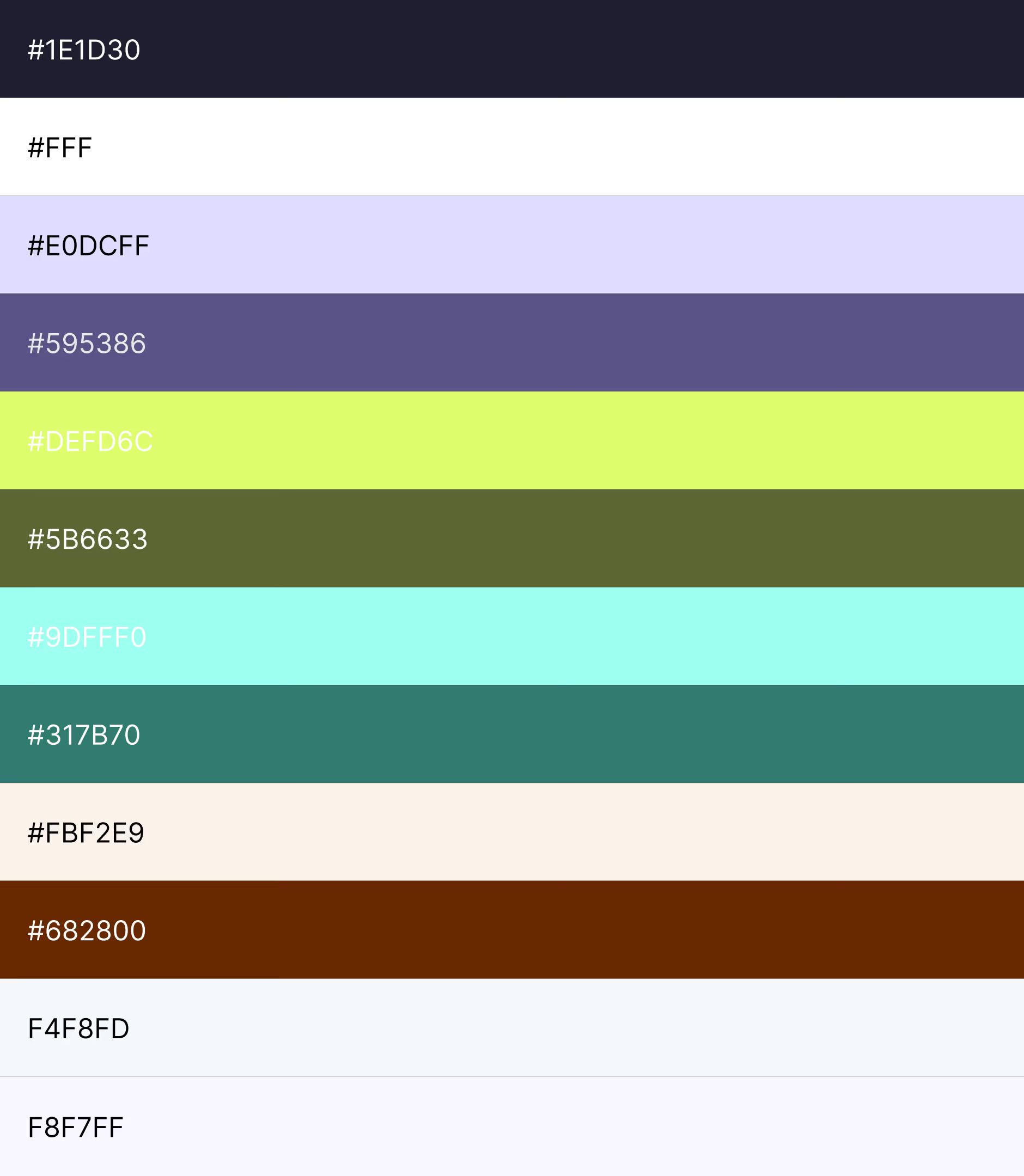
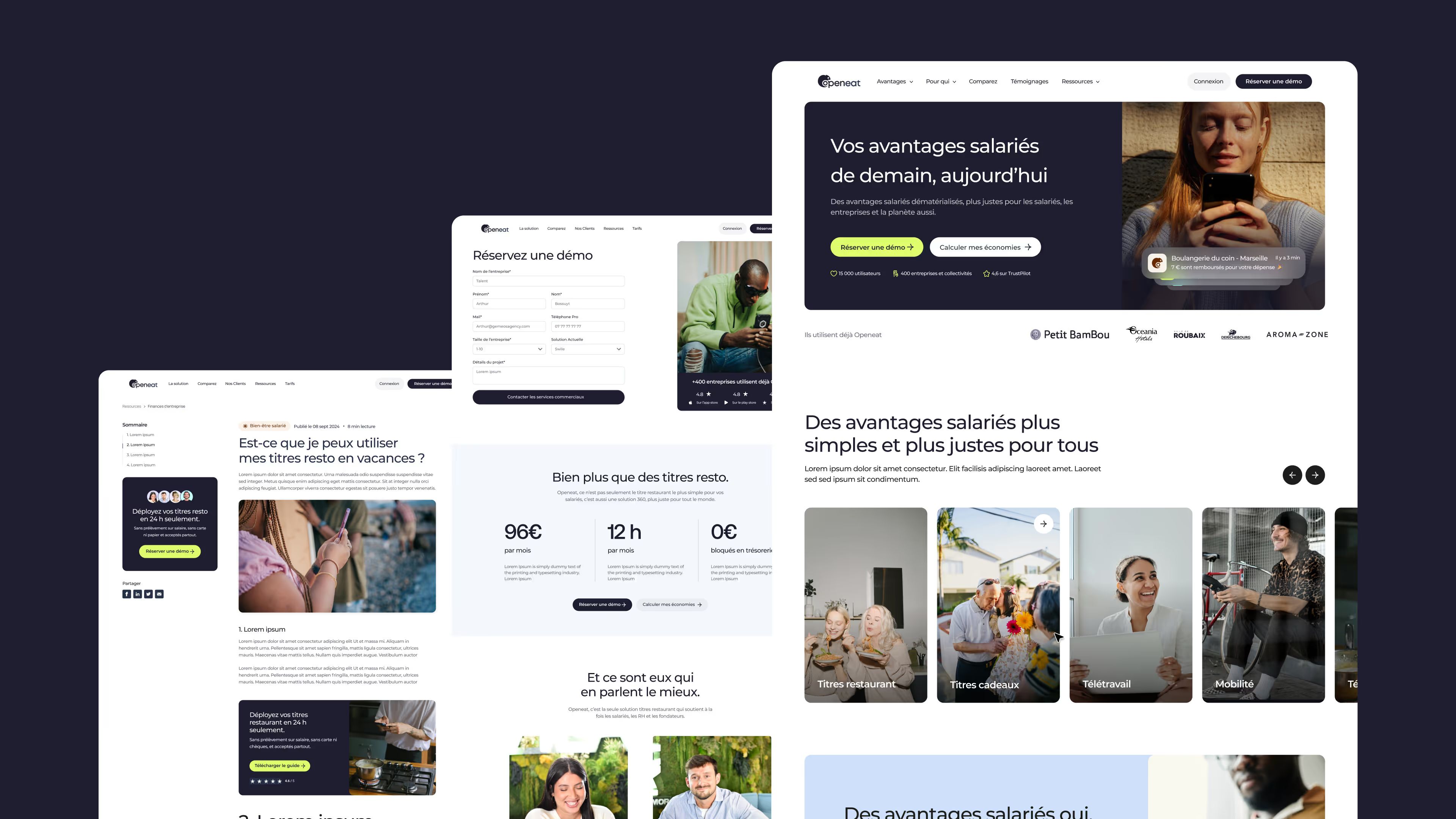
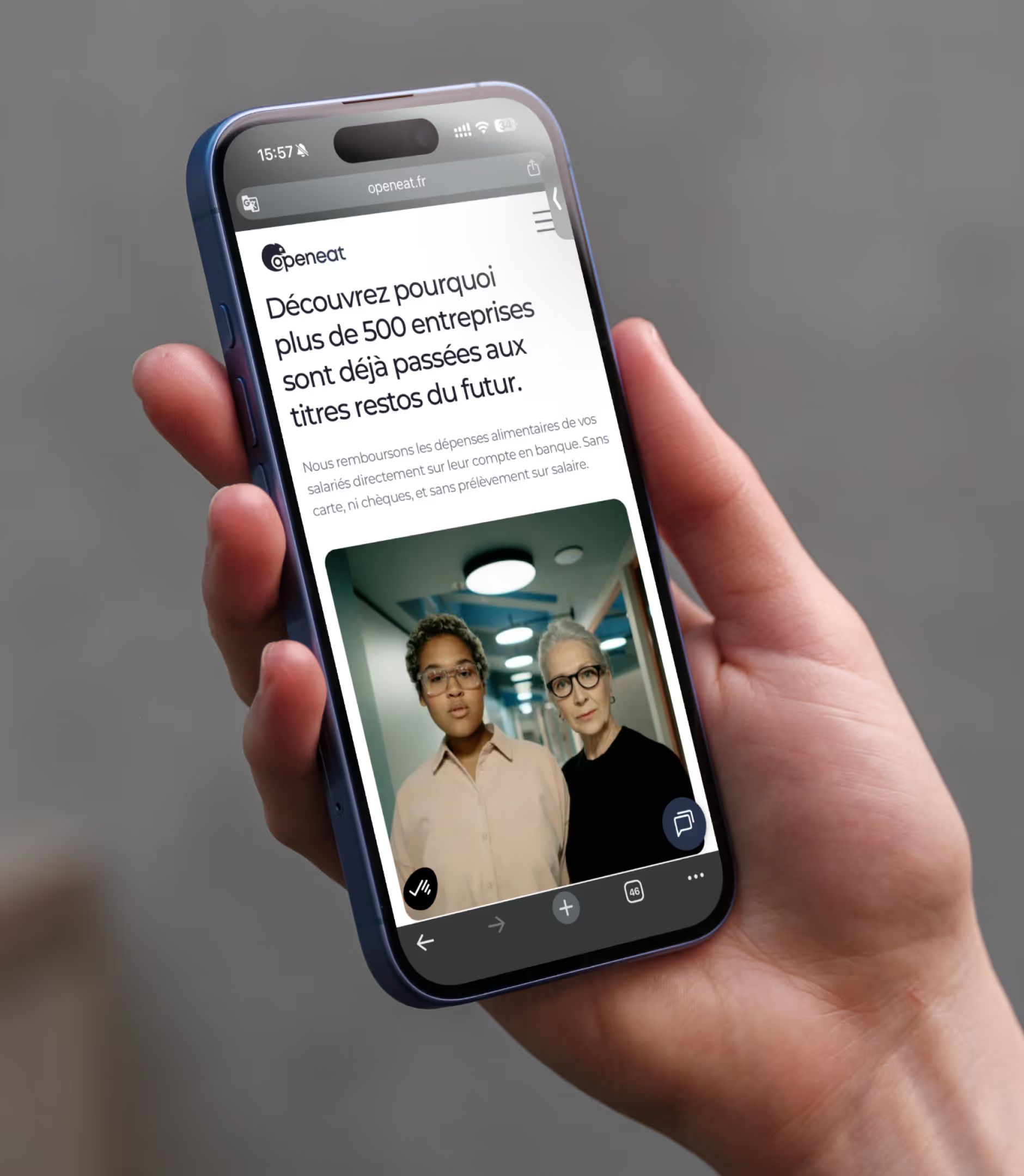
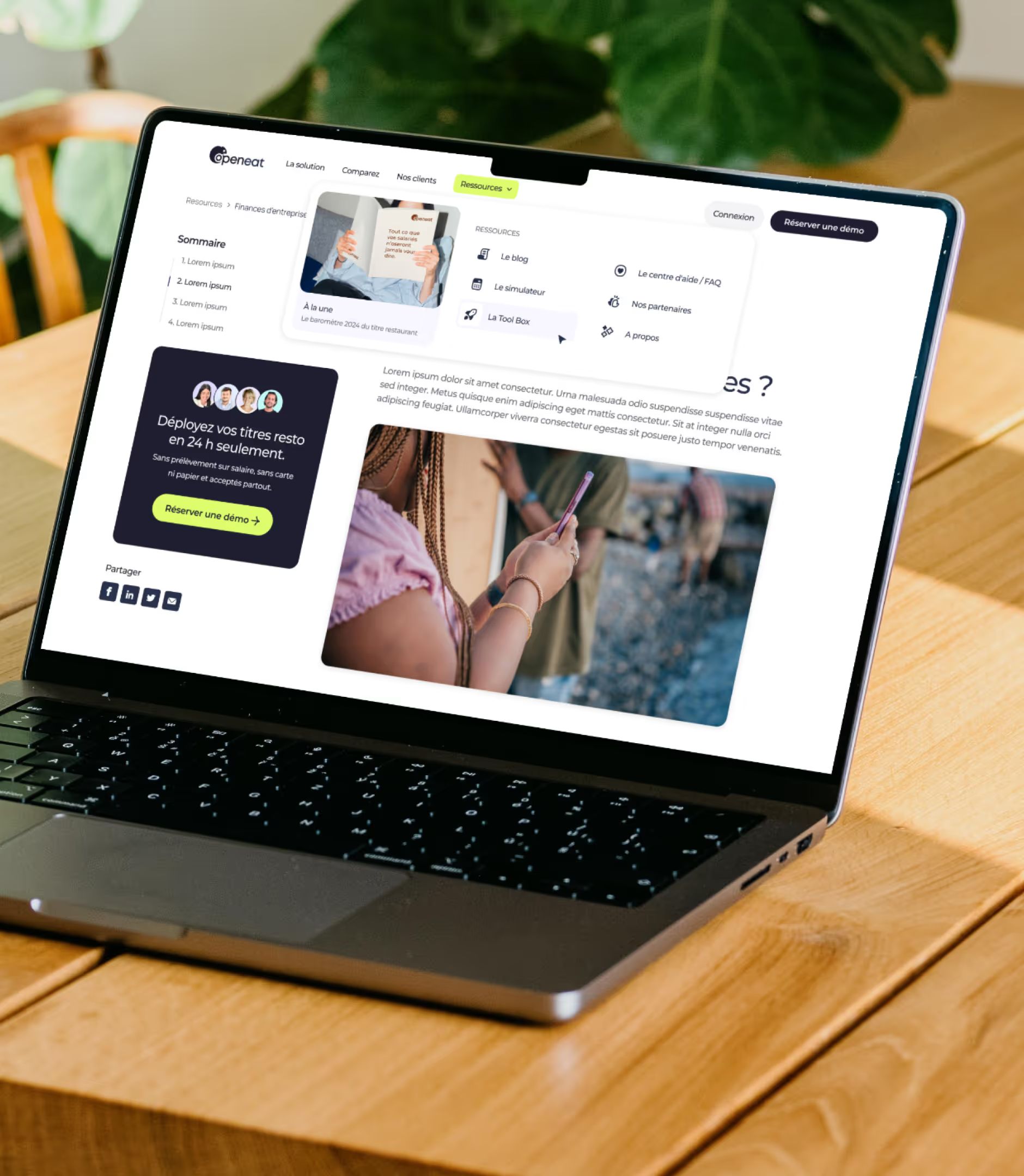
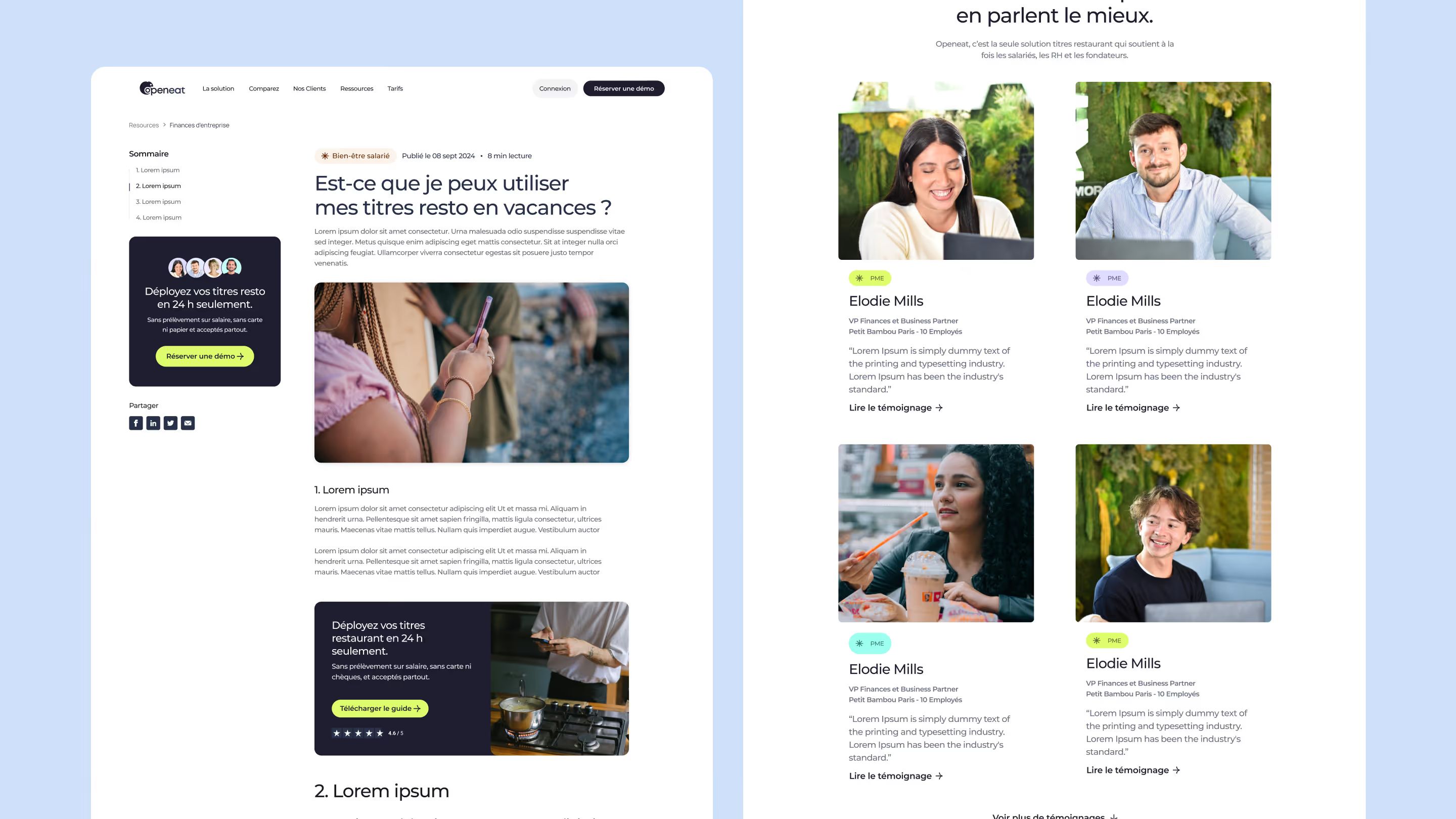
Design doesn't stop at the homepage. Openeat has a dense content ecosystem: category blog, toolbox, webinars, customer testimonials, simulator, FAQ, partner pages. We designed a complete UI Kit, typography, colors, spacing, interactive states, that brings all of these surfaces together in one coherent system.
Each template was designed to stand on its own while staying inside the same system. The goal: any new page the Openeat team creates keeps the same level of visual quality, with no design support needed.


Webflow Development
A CMS architecture that gives the client full ownership
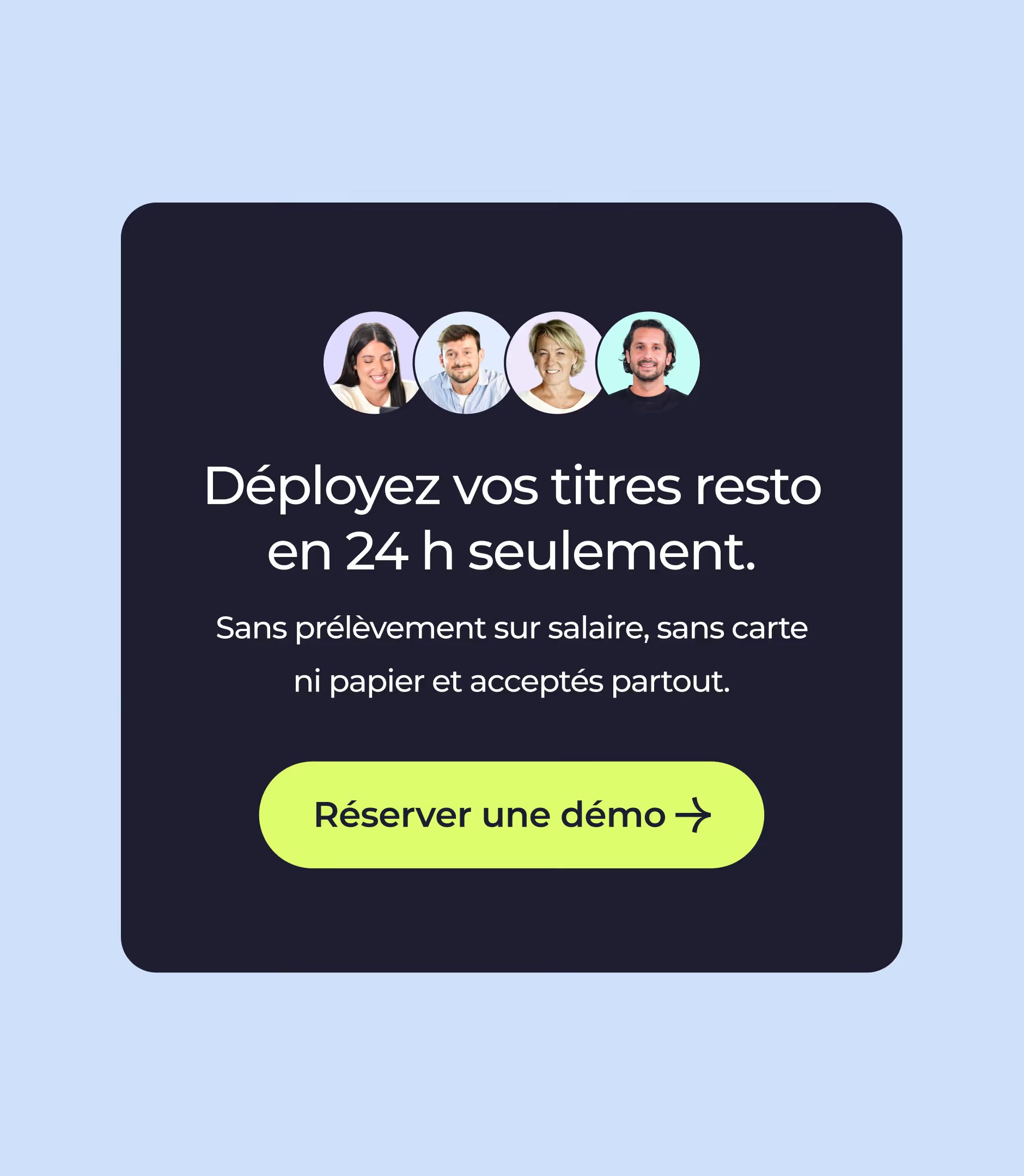
The Webflow build was delivered on a multilingual foundation, with CMS collections structured around each content type: blog articles (categorized), webinars with an embedded video player, customer testimonials, toolbox resources, and partner pages. Each collection was designed so Openeat’s marketing team could add, edit, or archive content without touching code. Interactions, animations, and UI micro-details were faithfully recreated from Figma. The launch included DNS setup (OVH → Webflow), tracking integration (multi-level UTM, Microsoft Clarity), and full handoff training, today, the client manages the site completely on their own.
| Technical Component | Detail |
|---|---|
| CMS Collections | Blog, Webinars, Toolbox, Testimonials, Partners |
| Webinar Video Player | Embedded integration (Contrast) on a dedicated template |
| Tracking | Multi-source UTM, Microsoft Clarity, custom events |
| DNS & Launch | OVH → Webflow migration, A record setup |
| Training | Full handoff at launch, client 100% independent |
SEO/GEO
A semantic architecture built to dominate the SERPs and AI answers
Openeat’s SEO doesn’t stop at a few title tags. We built a full content architecture around the “meal vouchers” semantic cluster: pillar pages, categorized blog articles (deep dives, HR guides, regulatory updates), a structured FAQ, resource pages, and a toolbox. Every template was optimized for SXO, user experience and search visibility are handled at the same time, not in two separate steps.
On the technical side, the week 10 SEO audit covered: Hn tags, dynamic metadata through the CMS, URL structure, contextual internal linking, semantic HTML markup, load times, and Core Web Vitals.
GEO Optimization (Generative Engine Optimization)
As LLMs gain ground in search results (Google AI Overviews, ChatGPT, Perplexity), we structured Openeat’s content so AI models can read it and extract it cleanly. That means direct answers to questions inside the articles, explicit Q&A structures, dense semantic markup, and lexical consistency across the entire corpus. The goal: make Openeat the go-to reference when an HR professional asks an AI about meal vouchers.
| Lever | Action completed |
|---|---|
| Semantic architecture | “Meal vouchers” cluster: pillars + articles + FAQ + toolbox |
| Technical SEO | Dynamic tags via CMS, clean URLs, internal linking |
| SXO | UX and SEO optimization handled together from the design stage |
| Core Web Vitals | Performance audit and optimization before launch |
| GEO | Q&A structure, consistent language, content extractable by LLMs |
| Content training | Openeat team trained on on-page SEO best practices |


Our latest projects
+250 companies
supported
Websites designed and developed with











You're going to working with us, guaranteed
Ready to launch
your business?
Let’s f*****G GO !!