SEO / GEO
Structuring content for search engines and LLMs
Médéré’s SEO strategy rests on two complementary pillars: capturing qualified traffic from healthcare professionals looking for DPC training, and becoming a trusted source cited by conversational AI.
Architecture and internal linking
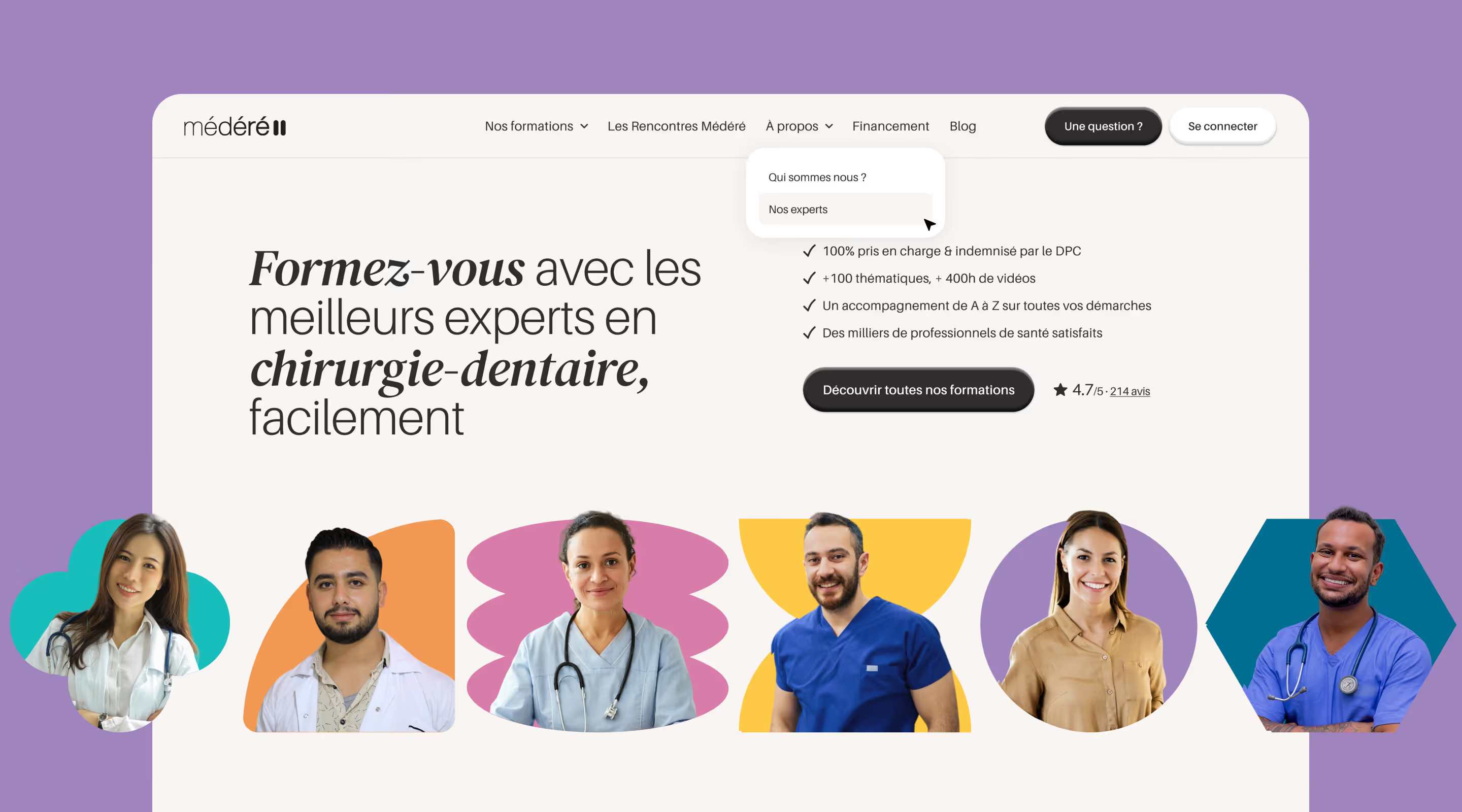
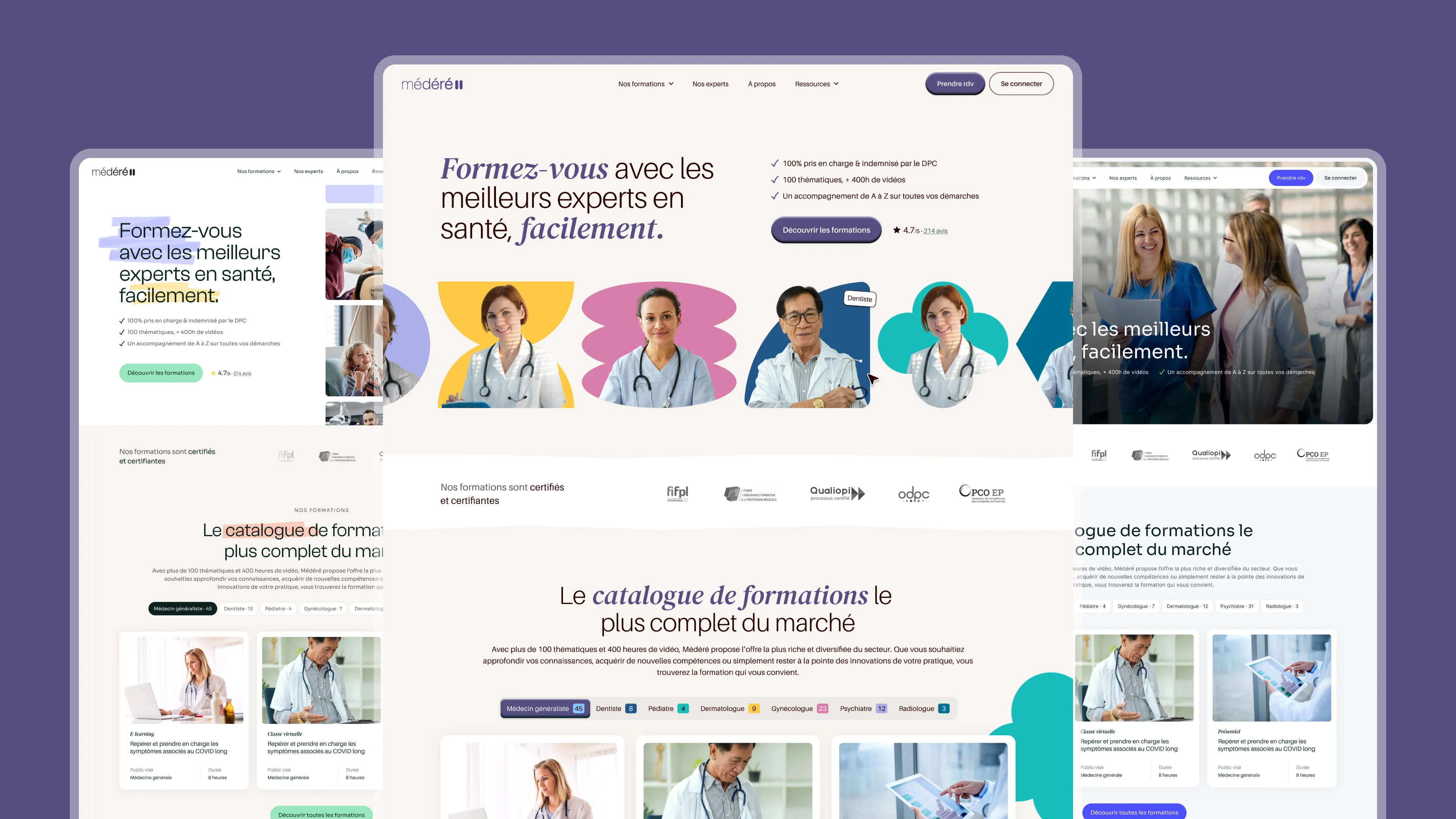
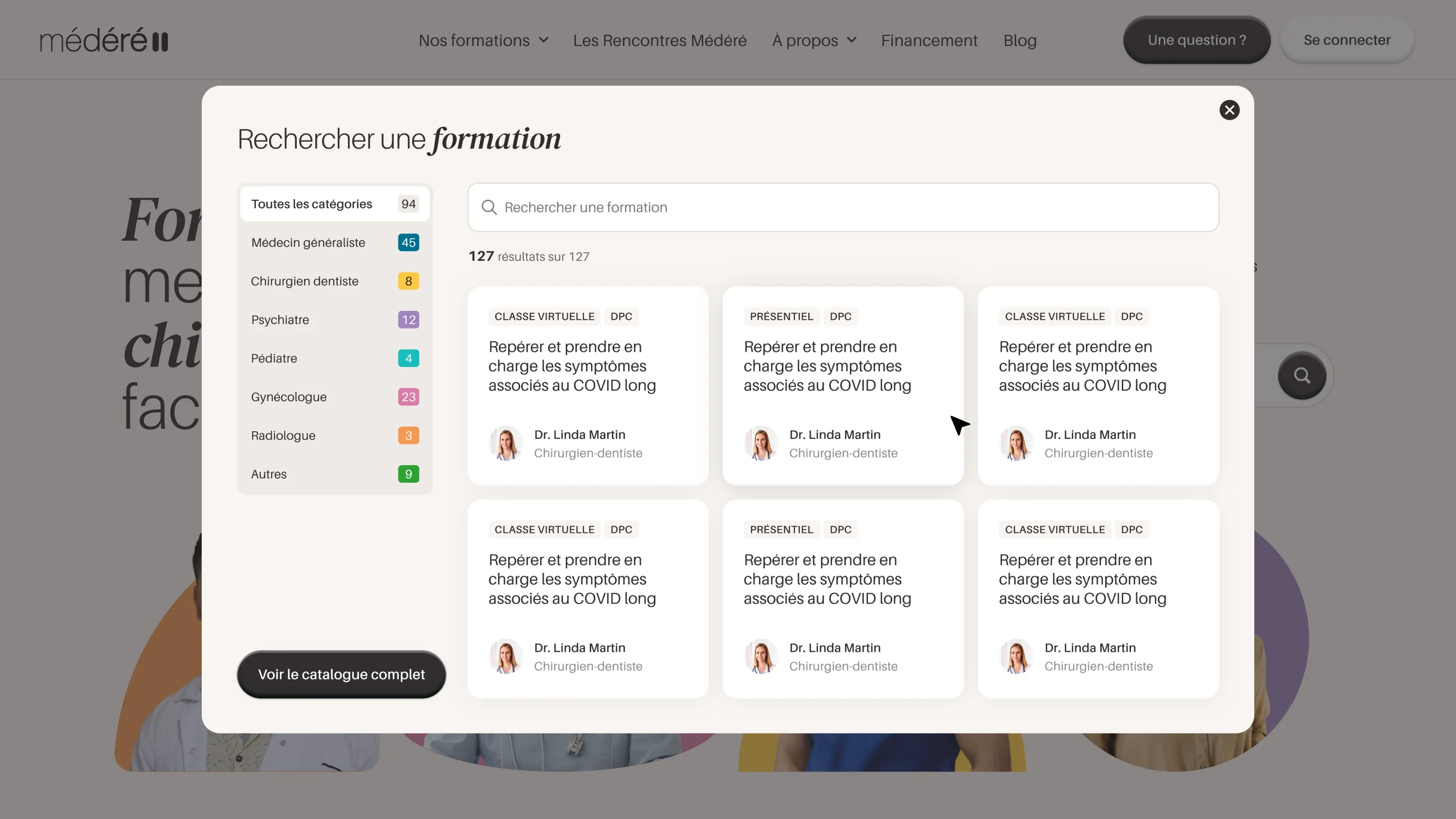
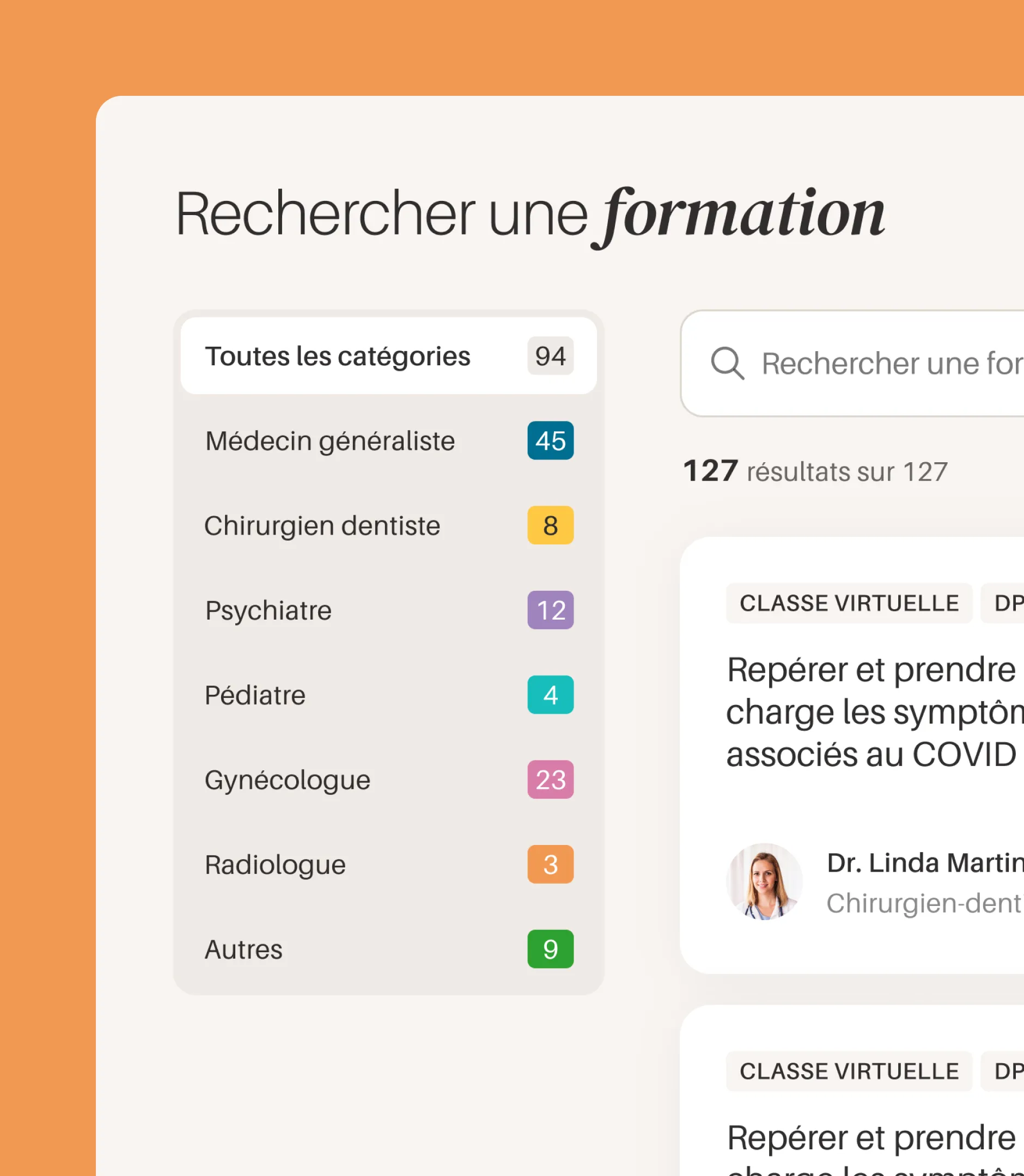
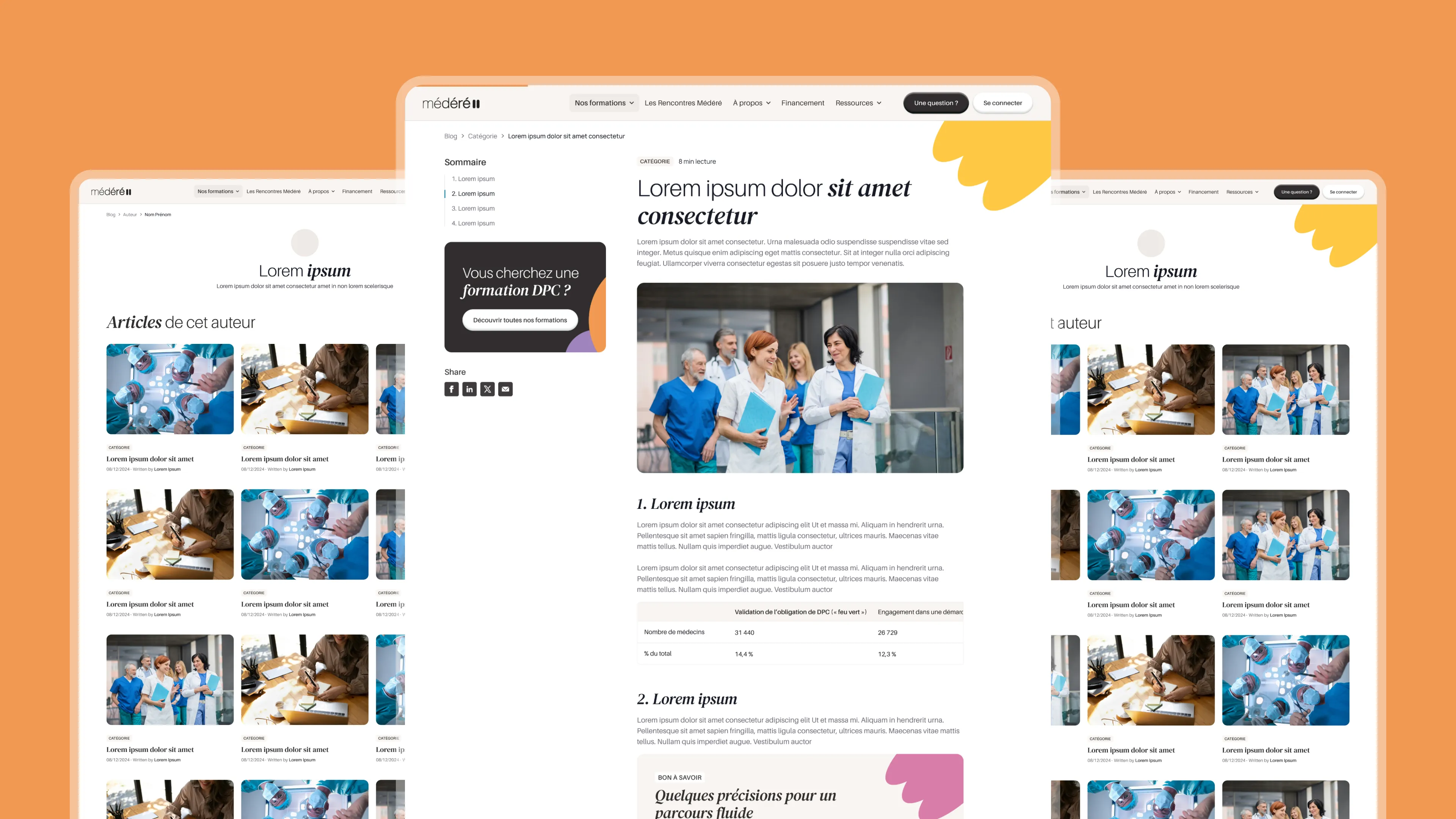
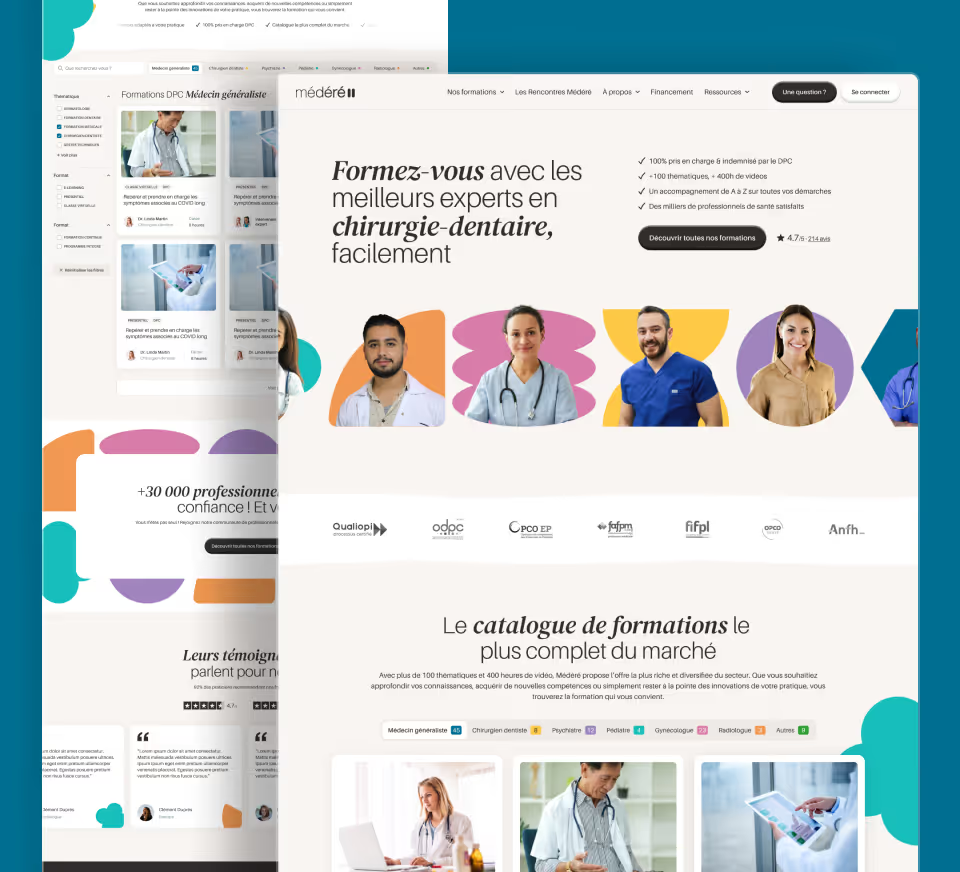
The site’s URL structure was designed to mirror the exact semantics of industry searches (/formations/chirurgien-dentiste, /formations/psychiatre). Each specialty page targets a specific search intent, with title tags and meta descriptions optimized for organic click-through rate. The editorial blog publishes content built around high-intent long-tail queries: DPC guides, procedure billing, and taxes for private-practice doctors.
Structured data
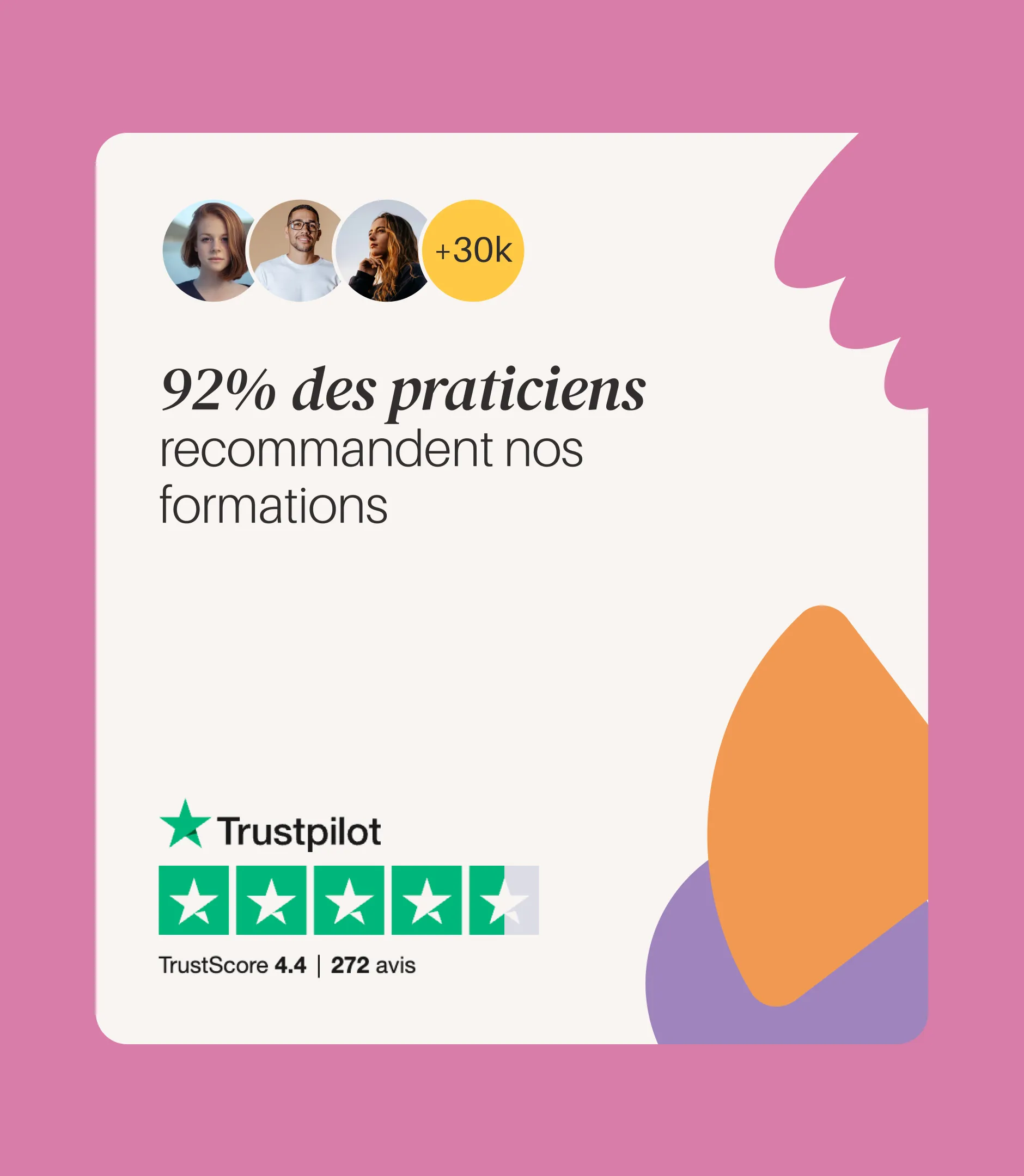
Schema.org markup was implemented to classify training programs (Course, EducationalOrganization), FAQs (FAQPage), and reviews (AggregateRating). These tags help search engines display rich snippets — ratings, common questions — directly in the SERPs, boosting visibility without relying on rank alone.
GEO optimization (Generative Engine Optimization)
LLMs (ChatGPT, Perplexity, Gemini) have become a direct discovery channel for healthcare professionals looking for information about DPC. To make sure Médéré gets cited in answers to those queries, the content was structured so AI can easily extract and attribute it:
- Clear, standalone definitions of sector-specific terms (DPC, ANDPC, three-year requirement, Qualiopi)
- A structured FAQ with complete, sourced answers
- Specialty pages built as reference resources, not just sales-driven landing pages
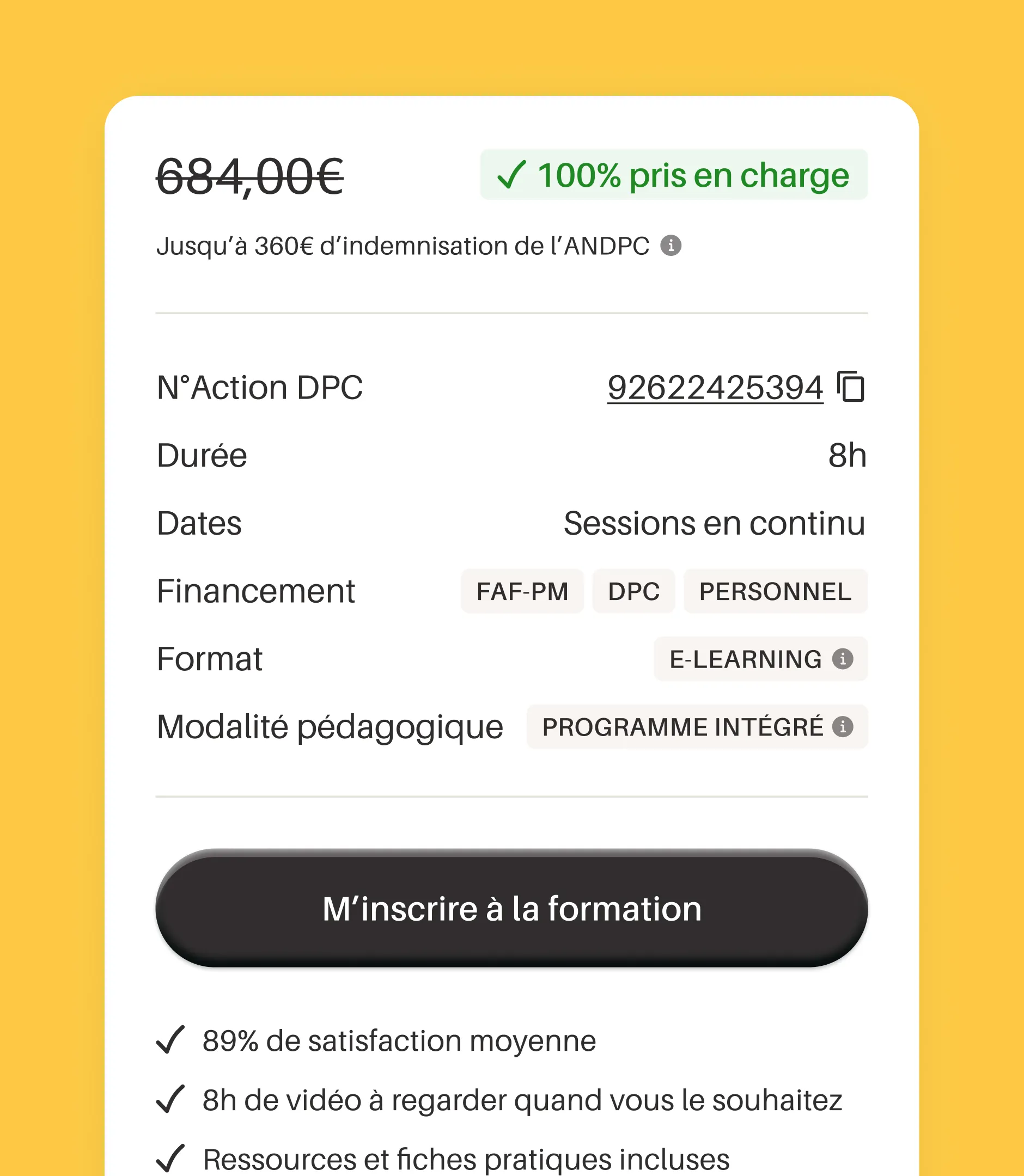
- Fact-based content brought to the front (ANDPC approval number, verifiable stats, trainer names with official titles)
This approach helps Médéré show up in generated answers when a practitioner asks an AI assistant a question about their DPC training.