Top 10 best netlinking platforms in 2026
For a French buyer already proficient in SEO, Linkuma takes first place in our 2026 ranking thanks to its accessibility, free SEO support, and strong balance between price and ease of deployment. RocketLinks takes second place for the breadth of its catalog and its versatility, ahead of Develink. The ranking still changes depending on the need: WhitePress is particularly strong for international campaigns and Getfluence for premium media. We compared catalogs, qualification data, public pricing, support, and the ability to manage a campaign without reducing backlink quality to a simple authority score.
This comparison is editorial: Gemeos does not own any of the ranked platforms. It is also important to distinguish market practices from Google's guidelines. Marketplaces make it possible to purchase sponsored articles and links, but Google considers links bought primarily to manipulate rankings to be link spam. This does not make these platforms useless; it simply means you need to know what you are buying, why you are buying it, and how the risk is managed within an SEO strategy.
.avif)
article summary
- Linkuma is our #1 choice for its accessible pricing, free SEO support, and ease of use.
- RocketLinks takes second place thanks to the breadth of its catalog, its maturity, and its campaign management options.
- Develink completes the podium with strong qualification data, monitoring features, and the option to delegate part of a campaign.
- WhitePress is the best-suited platform for international campaigns, with 144,000+ sites and 36 languages announced.
- Price alone says little about link quality, and an agency becomes useful when sourcing, selection, and monitoring need to be delegated.
Want to take it further? Ask:
What is a netlinking platform?
A netlinking platform is a marketplace that connects advertisers looking to secure publications or backlinks with site publishers who accept sponsored content. Buyers can compare media outlets based on their niche, metrics, traffic, price, or country. The platform typically centralizes the brief, payment, tracking, and sometimes content writing.
What is the best netlinking platform in 2026?
Linkuma takes first place in our 2026 ranking. The platform stands out for very accessible entry prices, a catalog of exclusive sites, and free SEO support, including for small budgets. RocketLinks comes just behind thanks to the breadth of its catalog and its versatility, while Develink completes the podium with a more structured approach, detailed qualification data, monitoring, and human support. Ereferer also remains a very accessible option when budget is the main criterion.
There is no single "best" platform in absolute terms. The right solution depends on the number of links you need to buy, the target countries, the level of control desired, the time available to qualify sites, and your ability to manage a consistent link profile.
Comparison of the best netlinking platforms
The figures below correspond to public information displayed by the platforms when available. Catalog sizes are self-reported and are not perfectly comparable, as some platforms count sites, while others count media outlets, offers, or available pages.
Our ranking of the 10 best netlinking platforms
1. Linkuma
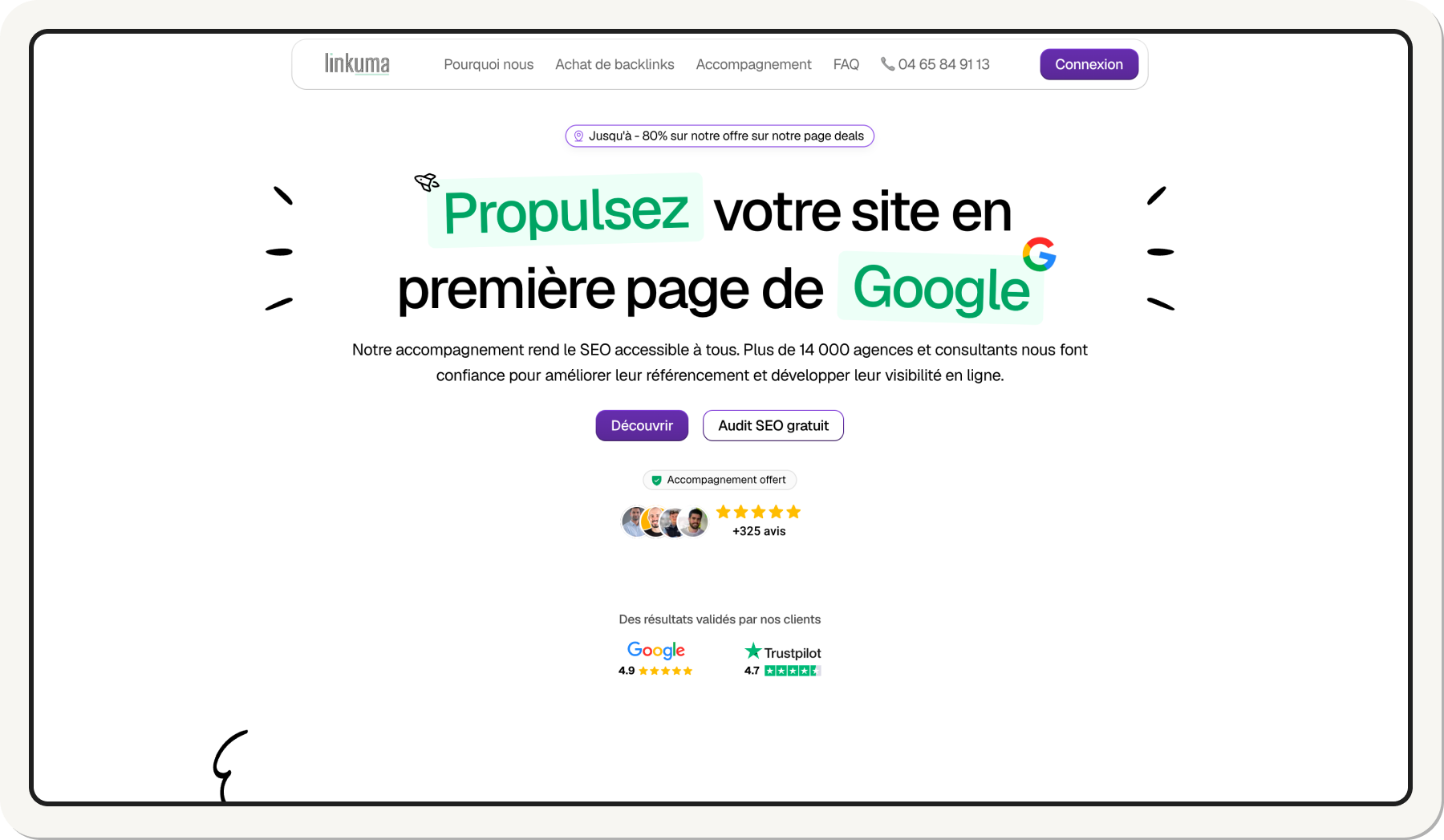
Linkuma is a French platform that highlights a catalog of exclusive sites organized by topic. It stands out for highly accessible packages and free SEO support, including for small budgets.
Catalog: exclusive sites advertised.
Pricing: Starter at €7 excl. VAT, Linkuma at €10 excl. VAT, Boost at €30 excl. VAT, then a marketplace with prices varying by site.
Support: free SEO support, backlink-profile audit, and help selecting placements.
Best for: small businesses, consultants, and SEO professionals who want to start with low spend while still being able to ask for human guidance.
Strengths:
- Entry prices among the lowest on the market.
- Catalog advertised as exclusive.
- Support included with no minimum order.
- Indexing guarantee advertised with replacement.
Things to watch: the figures and benefits above come from Linkuma itself. Its blog also ranks Linkuma #1 in its own comparison, so this self-assessment is not independent proof of superiority. The €7 and €10 offers should also be assessed site by site.
Our verdict: Linkuma now takes first place in our ranking thanks to its strong balance of accessibility, support, and ease of use. It is particularly well suited to consultants, small agencies, and SMEs that want to launch or scale a campaign without a high entry ticket.
2. RocketLinks
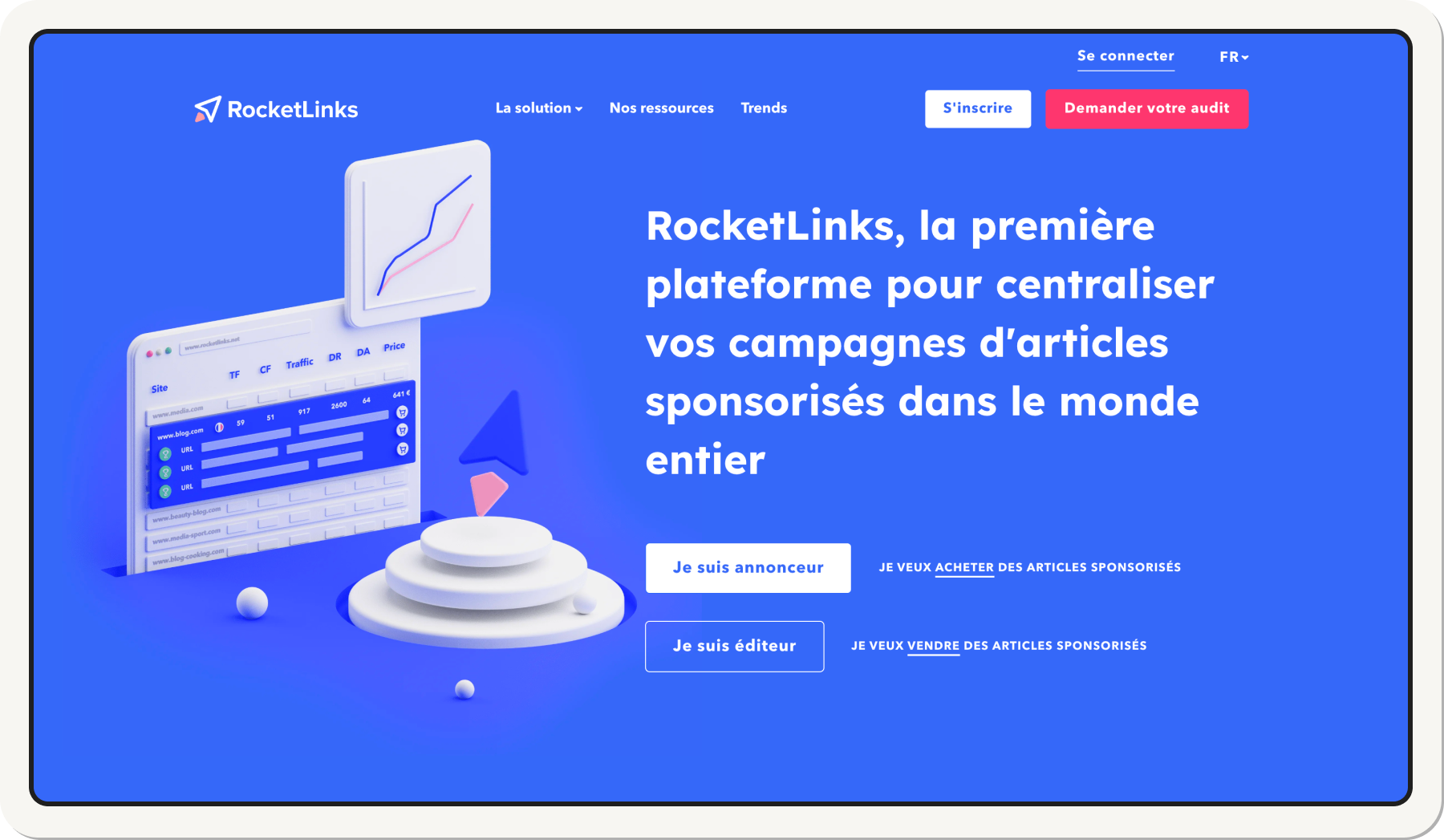
RocketLinks is a long-standing French sponsored-article platform launched in 2010. It advertises more than 200,000 blogs and press sites, 5,000 new articles per month, and more than 1,000 new media outlets added each month. Its positioning goes beyond simple link buying: the platform centralizes sourcing, orders, billing, monitoring, and premium-media operations.
Catalog: more than 200,000 blogs and press sites advertised, across all countries and topics.
Pricing: varies by media outlet. RocketLinks says it negotiates prices that are often lower than direct rates, without publishing a universal price grid.
Support: self-service, support for brands and agencies, audits, and sourcing on request.
Best for: SEO teams and agencies that want to centralize a high volume of campaigns, compare a wide range of media, and use advanced management options.
Strengths:
- Very broad international catalog.
- Ability to work with existing articles that are already ranking or generating traffic.
- Daily publication monitoring and centralized billing.
- Support suited to both agencies and advertisers.
Things to watch: the size of the catalog can become a drawback if qualification is rushed. Thematic relevance, organic traffic, site trajectory, and editorial quality still need to be checked case by case.
Our verdict: RocketLinks takes second place for its versatility and maturity. It remains our most balanced option when one user needs to manage niche sites, press outlets, several countries, and different budget levels.
3. Develink
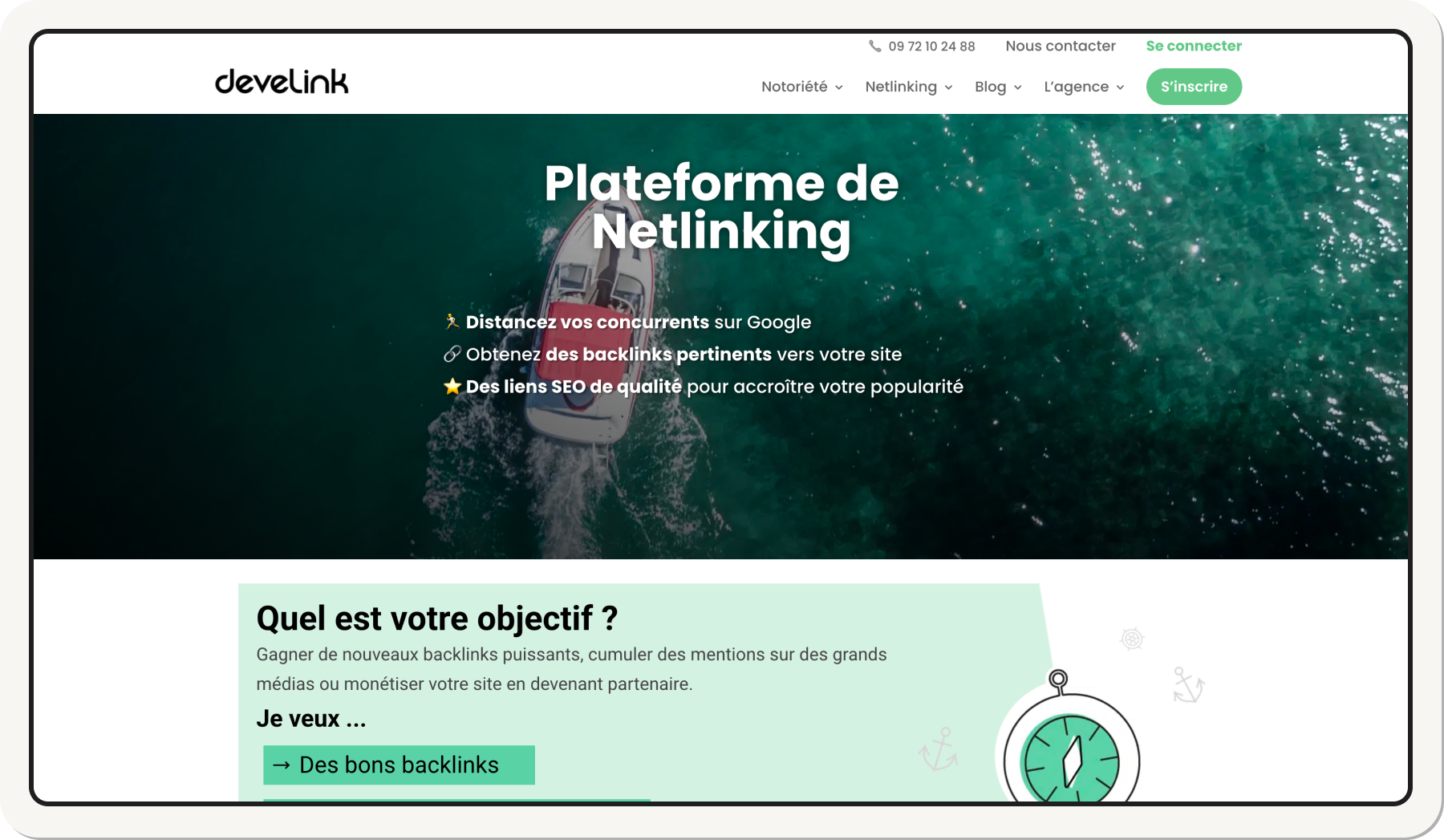
Develink combines a netlinking marketplace with support. The platform puts data at the center of the decision process: Semrush and Majestic metrics, Develscore, top 100 keywords, ranking trends, and link-indexation monitoring.
Catalog: more than 20,000 publishers advertised.
Pricing: public example of around €80 including copywriting for a DR 30 site with 2,000 traffic; major-media co-citation around €500 excl. VAT; dedicated operation around €1,200. Average recommended monthly budget for a managed project: €800 excl. VAT.
Support: self-service, dedicated advisor, campaign management, copywriting, monitoring, and reporting.
Best for: SEO professionals who want to keep control over placement selection while having detailed data and optional human support.
Strengths:
- Cross-qualification using several data sources.
- Monitoring of indexation and backlink presence.
- Published price examples that make budgeting easier.
- Option to delegate media planning and campaign management.
Things to watch: DR, Trust Flow, and proprietary scores are still third-party metrics. Even with extensive data, you should review the site, its ranking pages, its history, and its editorial fit before ordering.
Our verdict: Develink ranks third for the quality of its decision-making framework. It is a strong option when you want to avoid a raw catalog and retain concrete signals on site health and link monitoring.
4. Ereferer
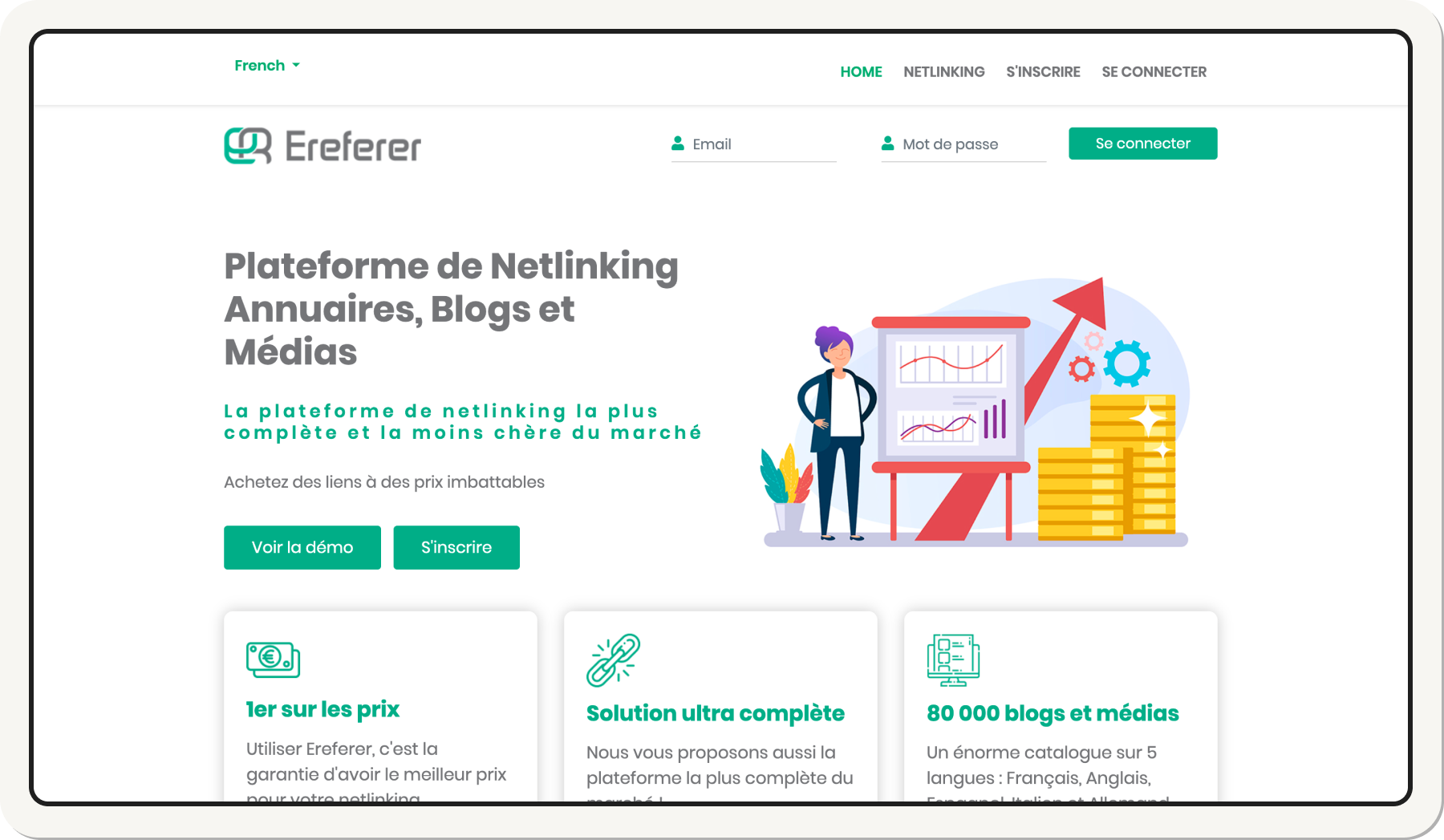
Ereferer is one of the best-known platforms for buying links on a tight budget. It advertises more than 80,000 blogs and media outlets as well as 300 directories. The platform also offers copywriting or the option to provide your own content.
Catalog: more than 80,000 blogs and media outlets, plus 300 directories advertised.
Pricing: sponsored articles from €10; directory submissions from €1.85. More premium media can cost several hundred euros.
Support: mainly self-service, with copywriting and review options.
Best for: consultants, small agencies, and SMEs that want access to many opportunities with a limited initial budget.
Strengths:
- Very accessible entry price.
- Large catalog with many quality and price levels.
- Option to provide your own article or delegate writing.
- Interface suited to recurring purchases.
Things to watch: a very low price is not an SEO advantage in itself. On the cheapest offers, selection should be especially strict: real traffic, indexed pages, history, topical relevance, content quality, and outbound-link profile.
Our verdict: Ereferer ranks fourth because it offers a great deal of freedom and an excellent budget entry point. It is more attractive to an experienced buyer than to someone looking for a heavily pre-qualified selection.
5. WhitePress
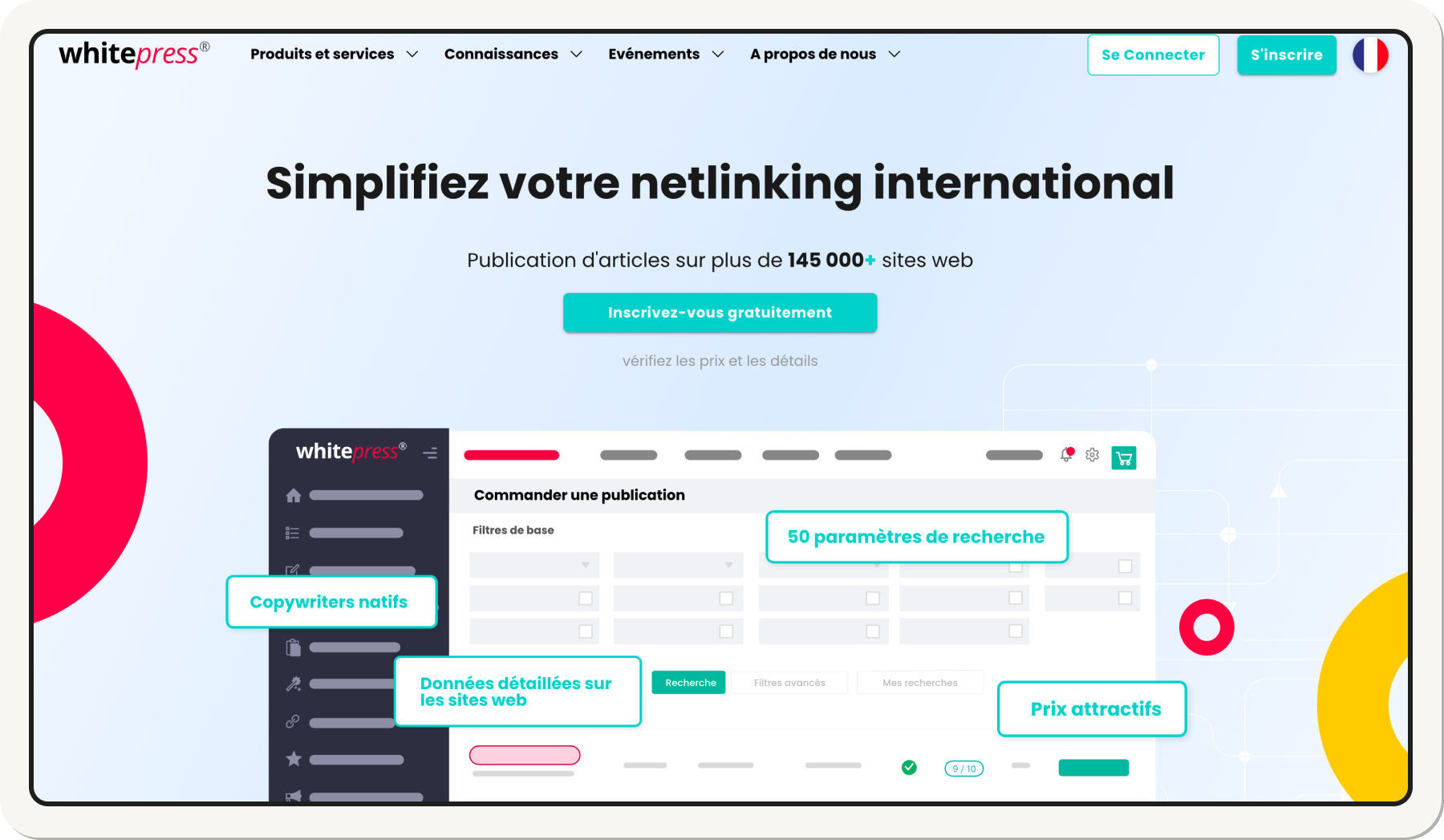
WhitePress is an international article-publication and link-building platform. It advertises more than 144,000 sites, more than 380,000 offers, 36 languages, and around 30,000 clients. Its main advantage is the ability to centralize multilingual campaigns in a single interface.
Catalog: 144,000+ sites and 380,000+ offers advertised.
Pricing: pay-as-you-go. Prices are visible in the catalog and vary by media outlet, country, and option.
Support: self-service with local teams and help building international campaigns.
Best for: businesses, agencies, and multilingual sites that need to purchase publications in several countries without multiplying suppliers.
Strengths:
- Particularly broad international coverage.
- 36 languages managed in the platform and for content production.
- Rich catalog with filters and qualification data.
- Centralized purchasing, currencies, and international projects.
Things to watch: a large international catalog can hide major quality differences between countries. Metrics and editorial standards should be adapted to the target market rather than applied uniformly.
Our verdict: WhitePress takes fifth place overall but remains our first choice for international campaigns. If your needs span five or ten countries, its operational advantage can outweigh its general ranking.
6. SEMJuice
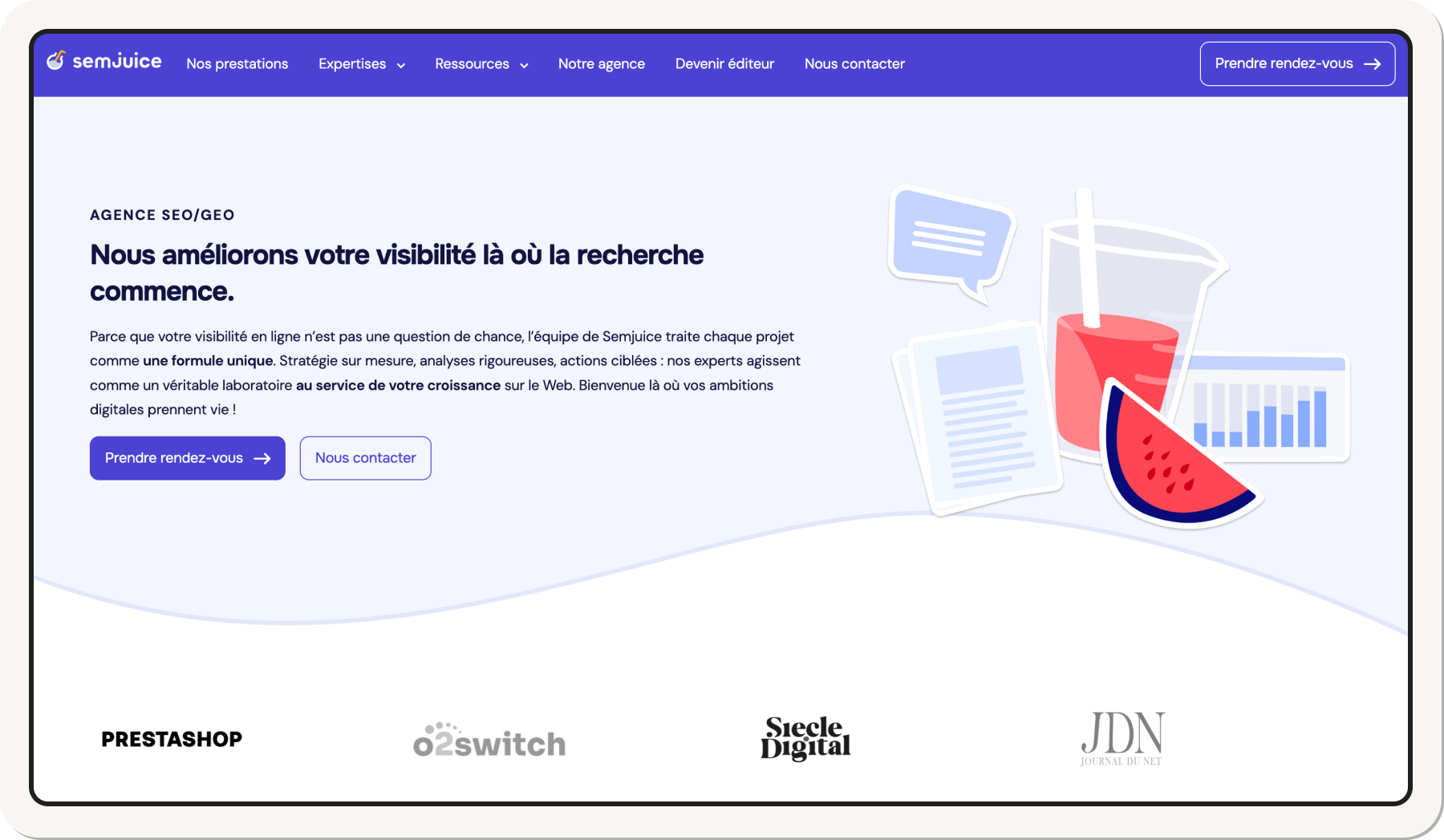
SEMJuice structures its offering around a proprietary score, JuiceFlow, and link categories tied to price levels. The platform can be used to order articles and also relies on an SEO team to build more structured campaigns.
Catalog: available through the platform; the company does not highlight one single number of sites on the verified pricing page.
Pricing: €25 excl. VAT for the “strawberry” directory category; €50–65 for “grape”; €100–115 for “kiwi”; €190–210 for “orange”; €355–375 for “pineapple”; €525–550 for “watermelon”; custom campaigns from €700 excl. VAT.
Support: self-service and SEO support to define the strategy and link mix.
Best for: advertisers who want a readable pricing grid and a relatively standardized campaign framework.
Strengths:
- Very detailed public pricing.
- Support available for strategy and link selection.
- Several power and budget levels.
- Complementary with NextLevel for working with already-ranking pages.
Things to watch: JuiceFlow remains a proprietary score. It makes internal catalog comparisons easier, but it should not replace analysis of traffic, topic, content, and the site’s link profile.
Our verdict: SEMJuice ranks sixth for the clarity of its offer and its support. Its category-based logic is practical for budgeting, provided the score is not treated as an absolute measure of quality.
7. Getfluence
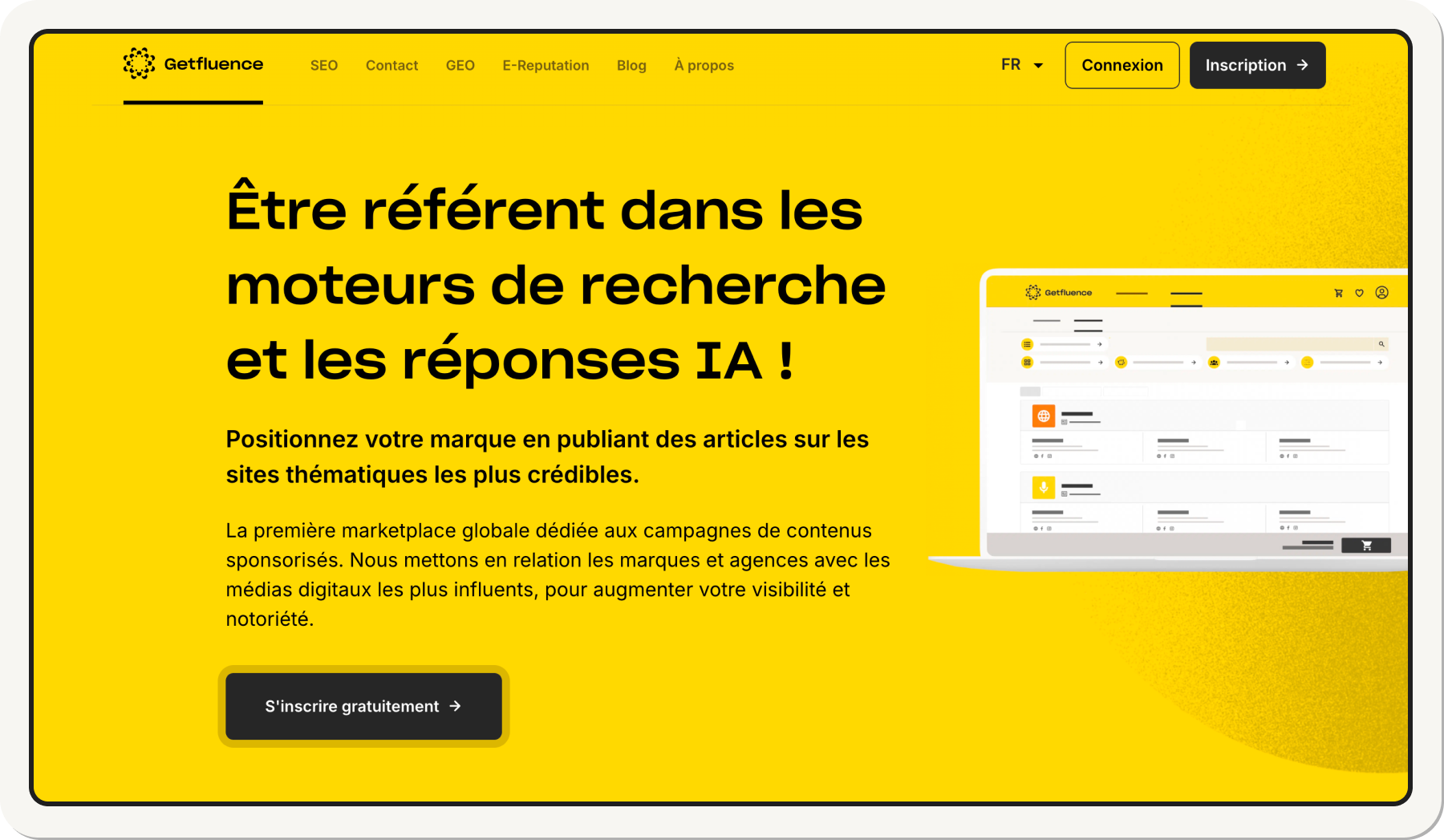
Getfluence is a marketplace focused on premium media and sponsored content. It advertises more than 70,000 premium publishers worldwide and sits at the intersection of netlinking, brand awareness, online reputation, and brand content.
Catalog: 70,000+ premium publishers advertised worldwide.
Pricing: free access, payment per publication; prices vary by media outlet and offer.
Support: self-service with the option to hand campaigns to Get+ experts.
Best for: brands and agencies looking for recognized media outlets, editorial visibility, and backlinks that also contribute to brand awareness.
Strengths:
- Clear focus on premium media.
- International coverage.
- Centralized brief, publication, and billing.
- Relevant when SEO and brand visibility need to be worked on together.
Things to watch: costs can be high if the only goal is to acquire a large number of referring domains. A publication on a recognized media outlet should be assessed for visibility, relevance, and brand value, not only for the backlink.
Our verdict: Getfluence ranks seventh in a ranking focused on pure netlinking, but moves up significantly when the campaign also targets brand awareness or presence in recognized media.
8. Paper.club
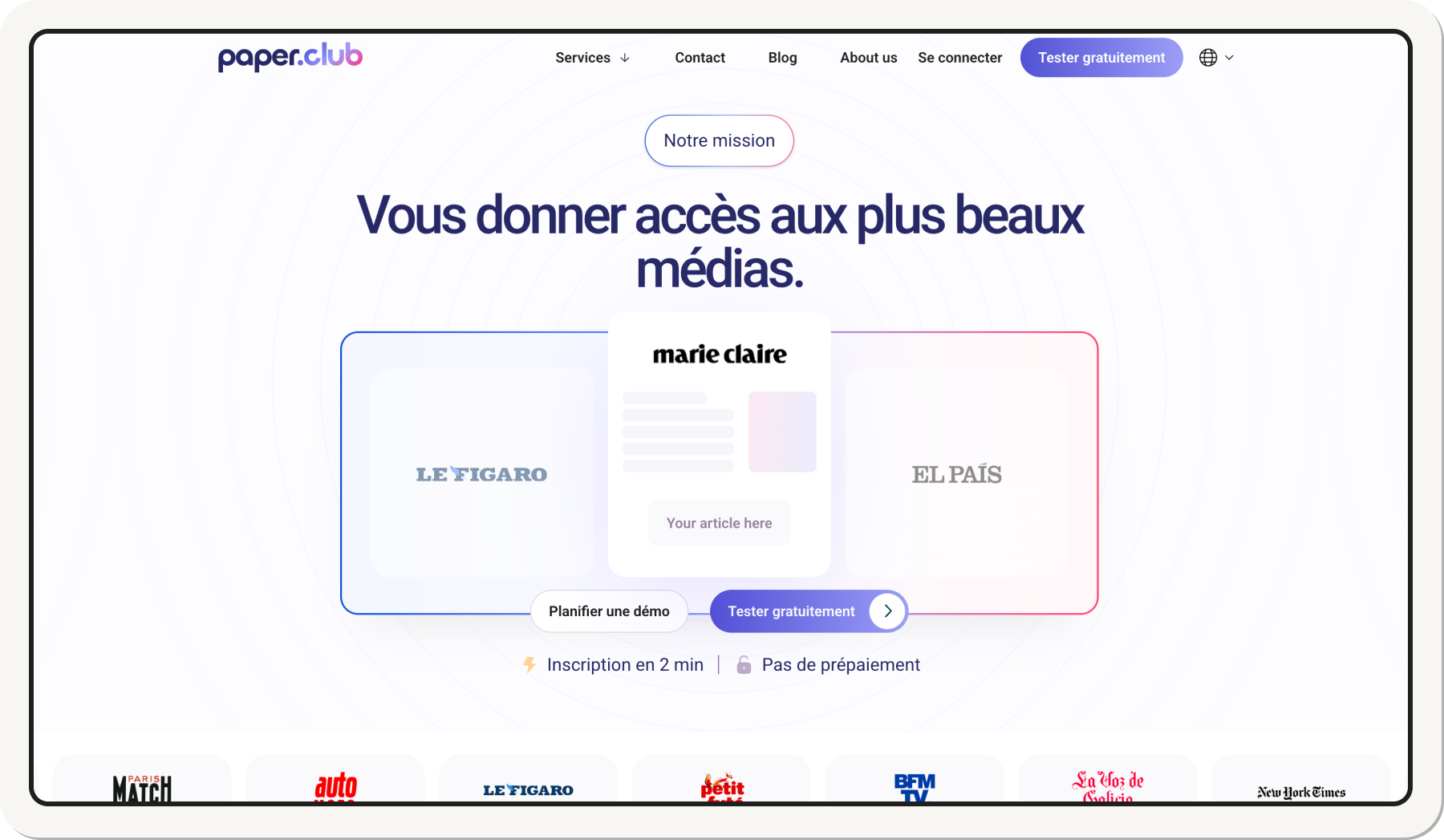
Paper.club is a sponsored-content marketplace that advertises around 120,000 media outlets. The account is free with no subscription: users pay for their orders. The platform highlights a large catalog and use cases that now go beyond traditional SEO, including brand visibility and generative search engines.
Catalog: 120,000 media outlets advertised.
Pricing: free account, no subscription; prices vary by media outlet and order.
Support: self-service marketplace with a team and selection features.
Best for: advertisers who want to explore a large media catalog and combine netlinking, sponsored content, and brand visibility.
Strengths:
- Very large advertised catalog.
- Access without a subscription.
- Good coverage of topics and media outlets.
- Positioning that includes SEO, brand awareness, and new search engines.
Things to watch: Paper.club is part of the Eskimoz group. Eskimoz also publishes a platform ranking that places Paper Club first. This ownership link does not invalidate the product, but readers should keep it in mind when evaluating that source as a comparator.
Our verdict: Paper.club takes eighth place. The product has a substantial catalog, but our ranking gives more weight here to platforms whose management data, pricing, or specialization are easier to compare publicly.
9. NextLevel
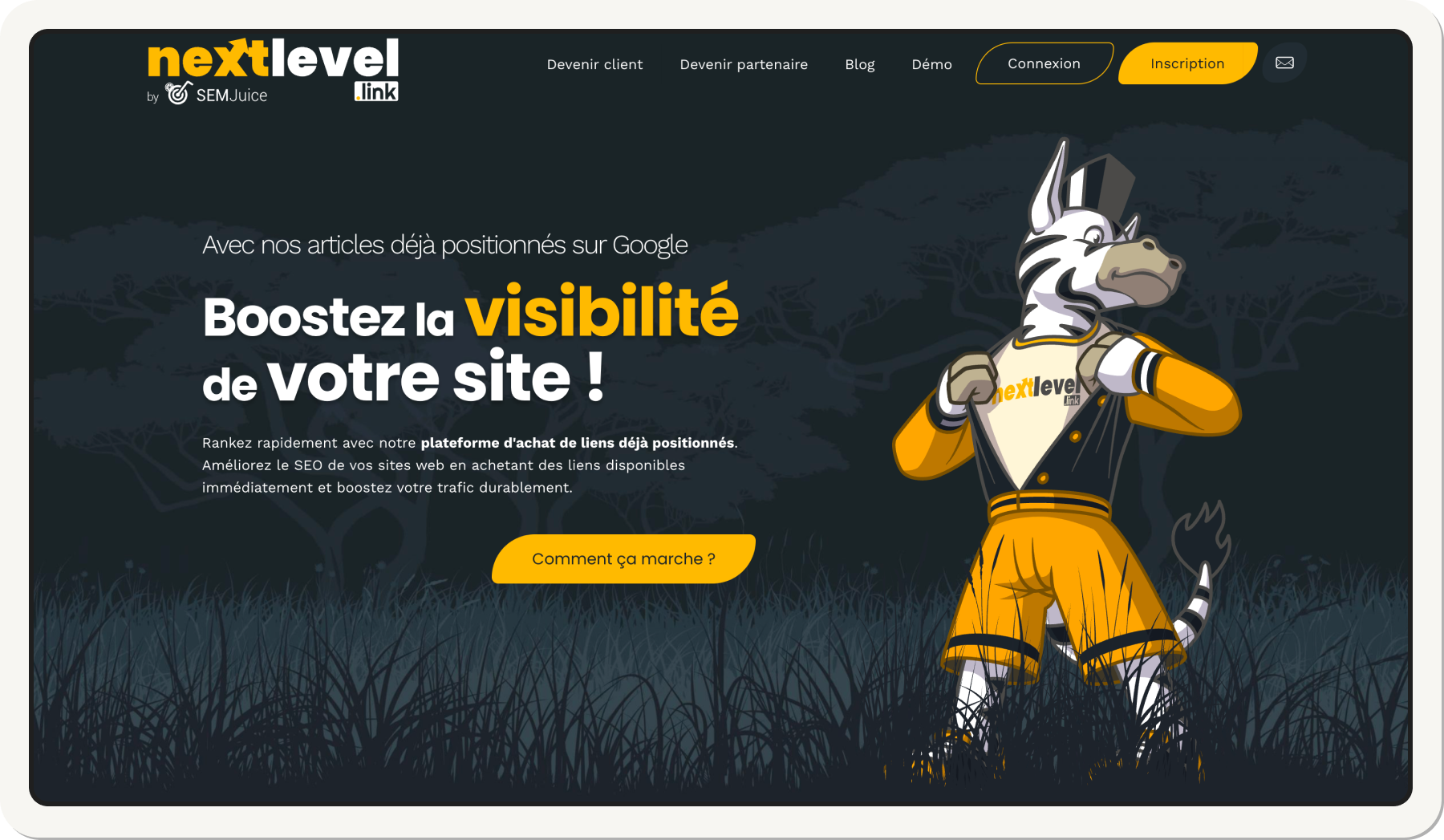
NextLevel by SEMJuice takes a different approach: rather than systematically ordering a new article, users look for pages that are already ranking for keywords and can purchase a backlink within them. The model is therefore less about the raw size of a catalog and more about selecting a page that is already visible for a relevant query.
Catalog: the platform references already-ranking pages and lets users search them by keyword.
Pricing: varies depending on the page, its rankings, strength, and topic.
Support: self-service with advertised free strategic support.
Best for: advanced SEO professionals who want to buy a link within a page that is already visible on Google rather than systematically creating a new article.
Strengths:
- Selection centered on already-ranking pages.
- Search by keywords and intentions.
- Complementary approach to campaigns based on new articles.
- Strategic support available.
Things to watch: a page ranking today can lose visibility tomorrow. You should check history, site stability, URL relevance, and traffic trends, not only its position at the time of purchase.
Our verdict: NextLevel ranks ninth because its use case is more specialized. For an experienced SEO looking for an insertion inside already-performing content, that specialization can instead make it a priority option.
10. LinksGarden
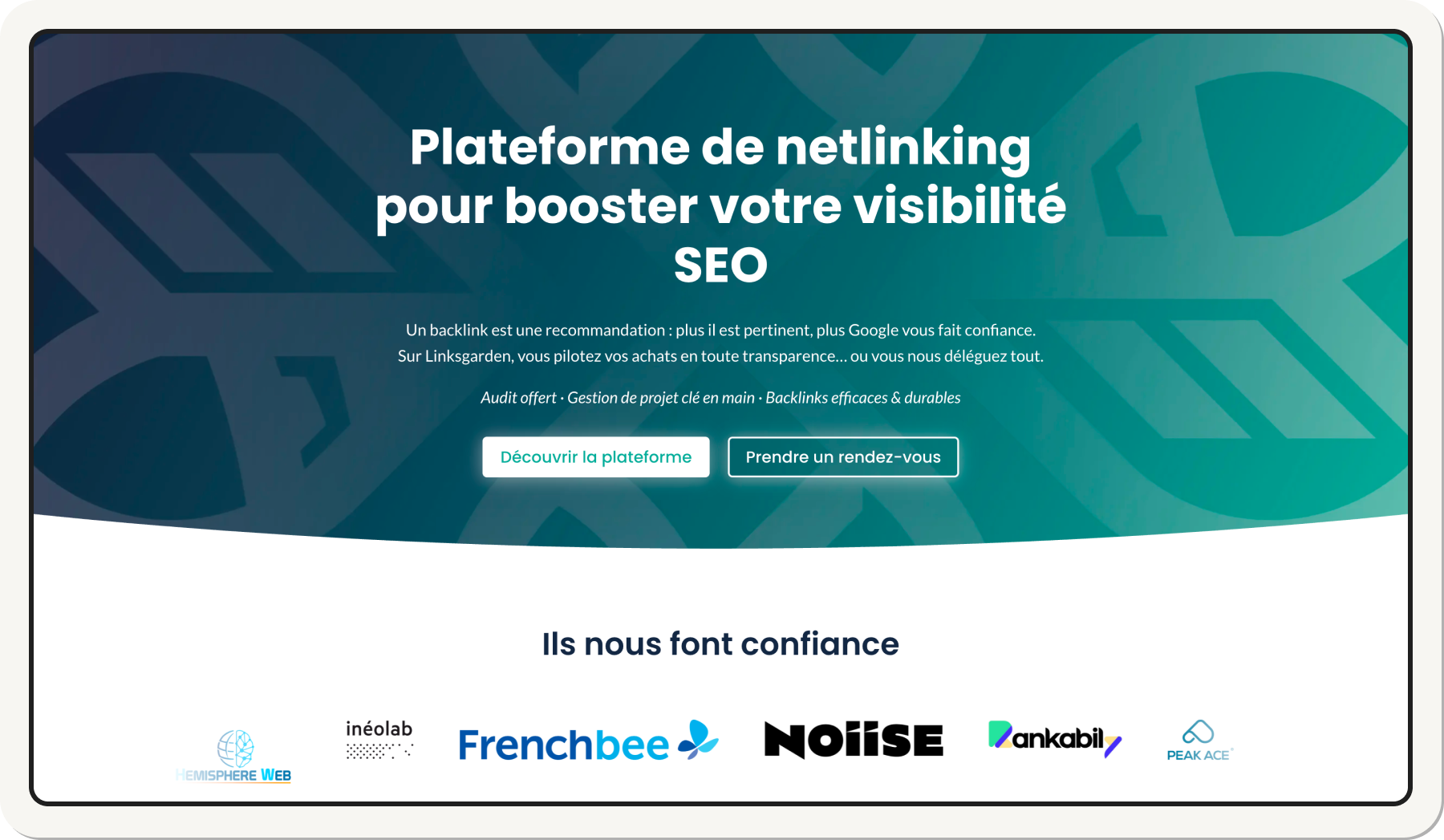
LinksGarden combines a platform with project management. The company advertises a network of 3,000 exclusive sites and says it has supported more than 700 businesses, agencies, and freelancers since 2019. Its promise is built on themed sites, included copywriting, and the option to delegate the campaign.
Catalog: 3,000 exclusive sites advertised.
Pricing: €10 to €100 excl. VAT, including copywriting, for the presented range; other needs available with support.
Support: self-service or project management with a dedicated SEO expert.
Best for: SMEs and consultants looking for a tighter network, accessible prices, and the option to delegate part of the work.
Strengths:
- Network advertised as exclusive and themed.
- Public price range with copywriting included.
- Project management available.
- Link-presence guarantee and human support.
Things to watch: an exclusive network can be useful for accessing placements unavailable elsewhere, but you should pay attention to the real diversity of owners, technical footprints, and link profiles when several publications come from the same ecosystem.
Our verdict: LinksGarden rounds out the Top 10 with a coherent positioning for tighter budgets. Its catalog is smaller than those of the leaders, but support and clear pricing partly compensate for that difference.
How did we select these platforms?
Real traffic and visibility of the proposed sites
A good referring domain is not just about its number of backlinks. We prioritize platforms that allow you to see organic traffic, ranked keywords, position trends, and, ideally, the exact page where the link will be published. A site that shows high authority but has lost most of its visibility should be analyzed with caution.
Trust Flow, Citation Flow, DR, and DA: signals, not the absolute truth
Trust Flow and Citation Flow come from Majestic, Domain Rating from Ahrefs, and Domain Authority from Moz. None of these scores are Google metrics. They are useful for quickly comparing domains, but they can be manipulated and do not indicate whether a site is truly relevant to your page. The best filter remains a cross-analysis of: theme, traffic, keywords, editorial quality, outbound links, history, and consistency with your existing link profile.
Diversity and editorial quality of the catalog
A catalog of 100,000 media outlets is not automatically superior to a catalog of 6,000 sites. Value depends on the number of domains that are truly relevant to your sector, their independence, the quality of their content, and the ability to vary site types. A backlink strategy is better served by diversifying useful domains than by accumulating similar links.
Human support
The most interesting platforms do not all cater to the same level of autonomy. For an experienced consultant, a catalog, filters, and good data may be enough. For a marketing team that buys few links, the presence of an account manager, an initial audit, or oversight of the media plan reduces the risk of decisions based solely on price.
Pricing transparency
We have prioritized platforms that make their business model clear: price per publication, pricing tiers by site level, cost examples, or free access to the catalog. The prices shown in this article are observed benchmarks, not a universal scale. Two backlinks at €100 can have very different values depending on the media outlet, the page, the content, and the link environment.
No conflict of interest in our ranking
Gemeos is an SEO agency, not a marketplace. It therefore does not appear in this Top 10, which only compares netlinking platforms. The order chosen is based on usage, verified public data, and suitability for different buyer profiles.
How does a netlinking marketplace work?
Functionality varies by solution: some are entirely self-service, while others add a layer of consulting, sourcing, copywriting, or campaign management. In any case, the quality of the selection remains more important than the volume of publications ordered.
The risks of netlinking and how to reduce them
Google and sponsored links: what is the framework?
Google states in its spam policies that paid links intended to influence rankings do not comply with its guidelines. For advertising or sponsored placements, Google recommends using rel="sponsored" or rel="nofollow". A netlinking platform must therefore be evaluated with this framework in mind.
Algorithmic neutralization vs. manual action: what is the difference?
Google's systems can neutralize the value of links they deem artificial, without specific notification. A manual action is different: it appears in Search Console when a Google team determines that a site is violating its rules. In both cases, no platform can guarantee that a link will produce a lasting ranking effect.
The risk of private blog networks
A network of sites is not automatically problematic, but it becomes fragile when domains share the same footprints, have little real traffic, weak content, and a high concentration of sponsored posts. The diversity of owners, technologies, traffic sources, and editorial profiles therefore remains a useful criterion to verify.
Why diversify your link anchors
There is no official "safe" anchor ratio. However, a concentration of exact commercial anchors can make a profile look less natural. Brand, URL, descriptive, and semi-optimized phrasings must above all remain consistent with the editorial context of each publication.
Should you limit the speed of backlink acquisition?
Google does not publish a maximum number of links to acquire per month. A spike in links can be natural following a news event, a study, or a launch. The signal to watch is the consistency of the profile: identical anchors, same networks, irrelevant pages, or a pattern repeated without editorial justification.
How much does a netlinking strategy cost?
There is no reliable average price for "a backlink" without specifying the type of site. Public rates verified in this comparison range from €7 at Linkuma or €10 at Ereferer to over €500 for certain SEMJuice categories. Develink also publishes examples around €500 excl. tax for a co-citation on a major media outlet and approximately €1,200 for a dedicated campaign. Getfluence, RocketLinks, and WhitePress operate more with variable rates depending on the media.
These amounts primarily illustrate the breadth of the market. A cheap link on a site with no audience can be too expensive if it provides no value; a publication costing several hundred euros can be reasonable if it combines a real audience, credibility, brand visibility, and a strong editorial context.
Price of a backlink or sponsored article
To compare two offers, look at the total cost of publication: whether writing is included, content length, guarantee duration, insertion in a new or existing article, page traffic, media quality, and any platform fees. Price comparison only makes sense if the media outlets are comparable.
What monthly budget should you plan for?
The budget depends on the level of competition, the number of truly relevant opportunities, and the value of the pages involved. Develink publishes a recommended average monthly budget of €800 excl. tax for its project mode, but this figure describes their specific offer and does not constitute a market standard.
Why be wary of abnormally low prices
A low price does not automatically imply a bad site. It may come from an industrialized model or a media outlet with low demand. The lower the price, the more important it becomes to examine the traffic, editorial quality, indexing, and domain stability before comparing the offer to a more expensive publication.
How to choose the best netlinking platform for your needs?
- Start by checking the organic traffic and visibility trends of the proposed sites.
- Cross-reference third-party metrics with thematic relevance and content quality.
- Look at the actual diversity of the catalog in your sector, not just its total size.
- Compare the level of transparency regarding rates, terms, and publication duration.
- Evaluate the support available if your team does not want to manage everything via self-service.
- For international campaigns, check the languages, markets covered, and the presence of local teams.
- Finally, keep Google's rules on paid placements in your decision-making framework.
Netlinking platform or SEO agency: which should you choose?
A self-service platform is often the best choice if you already know how to analyze a domain, select relevant media, and track a campaign. In this case, you are primarily paying for access to the catalog and the publications themselves. An agency adds a service fee, but handles the scoping, sourcing, selection, and monitoring for you.
If you prefer to delegate this decision-making layer, a netlinking agency may be more suitable than using a marketplace alone. The two models are not mutually exclusive: an agency may itself use several platforms to broaden its sourcing while keeping strategy and validation in-house.
Key takeaways before you choose
Linkuma takes first place in our selection for its accessibility, free SEO support, and ease of use. RocketLinks remains the most versatile solution for managing a very large catalog, Develink is the most convincing for combining data and support, Ereferer remains one of the most accessible options, and WhitePress is the most structured for international campaigns. But even the best catalog does not replace placement qualification: editorial context, real visibility, and fit with the project remain decisive.
Also, keep the Google framework in mind. Platforms are useful tools for centralizing publications, but they do not create a risk-free zone outside of search guidelines. The quality of your management matters more than the raw number of links ordered.
FAQ
What is the best netlinking platform?
Linkuma takes first place in our overall ranking for its accessible pricing, free SEO support, and ease of use. RocketLinks ranks second for the breadth of its catalog and versatility, Develink third for data and support, Ereferer remains relevant for small budgets, WhitePress for international campaigns, and Getfluence for premium media.
What is netlinking?
Netlinking refers to actions taken to obtain links from other sites to your own. These backlinks can come from press relations, partnerships, naturally cited content, or sponsored posts. Their value depends heavily on relevance, quality, and context.
Can netlinking lead to a Google penalty?
Links created primarily to influence rankings can fall under Google's definition of link spam. Their systems may neutralize their effect, and manual actions are possible. For advertising or sponsored placements, Google recommends using rel="sponsored" or rel="nofollow".
How much does a backlink cost in France?
Rates observed in August 2026 range from under €10 for some entry-level offers to several hundred euros, or even over €1,000 for certain media operations. There is no useful average price without specifying the site's quality, traffic, audience, type of publication, and included services.
What is the difference between a netlinking platform and an agency?
A platform provides access to a catalog and tools to manage publications. The user generally remains responsible for the strategy and selection. An agency also charges for analysis, sourcing, management, and monitoring. Self-service is better suited for teams that already have this expertise in-house.
Can you do netlinking without risk?
It is possible to reduce risks by prioritizing relevant editorial links, press relations, genuinely cited content, and, for paid placements, the attributes recommended by Google. However, no one can guarantee that a paid link campaign intended to influence rankings is completely risk-free.
Good to know
Heading
Lorem ipsum dolor sit amet, consectetur adipiscing elit. Suspendisse varius enim in eros elementum tristique. Duis cursus, mi quis viverra ornare, eros dolor interdum nulla, ut commodo diam libero vitae erat. Aenean faucibus nibh et justo cursus id rutrum lorem imperdiet. Nunc ut sem vitae risus tristique posuere.


.avif)




Lorem ipsum
Lorem ipsum dolor sit amet, consectetur adipiscing elit, sed do eiusmod tempor incididunt ut labore et dolore magna aliqua. Ut enim ad minim veniam, quis nostrud exercitation ullamco laboris nisi ut aliquip ex ea commodo consequat. Duis aute irure dolor in reprehenderit in voluptate velit esse cillum dolore eu fugiat nulla pariatur.