How to Identify and Fix SEO Cannibalization
Learn how to detect and fix SEO cannibalization: when two pages on your website compete for the same keywords and split your authority.
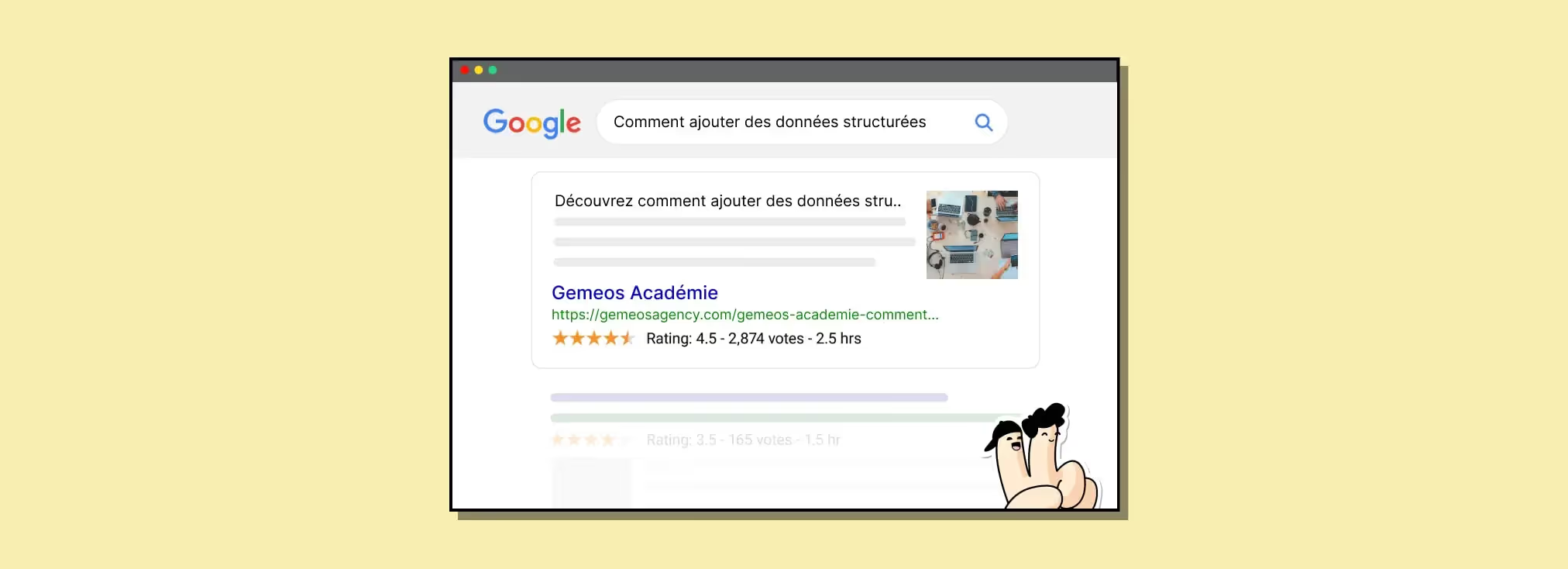
SEO cannibalization is when two or more pages on your website target the same keywords and compete against each other in Google results. The result: neither page ranks properly. Sandro, cofounder of Gemeos Webflow agency, shows you how to spot it and fix it.
Why cannibalization is a problem
When Google finds two similar pages on your site, it doesn’t know which one to prioritize. It may switch between them from one day to the next, or even pick the less relevant one. The authority that could strengthen one strong page gets split across several weak ones.
- Unstable rankings that are hard to improve
- Internal PageRank spread across multiple URLs
- Lower click-through rate if Google shows the wrong page
- Harder to push one specific target page up the rankings
1. Spot cannibalization with Search Console
In Search Console, go to "Performance" > "Queries". Type a target keyword into the "Query contains" filter. Click the "Pages" tab: if several URLs appear for that keyword, you may have cannibalization.
Repeat the process for your 10 to 20 most strategic keywords.
2. Spot cannibalization with Screaming Frog
Once the crawl is done, export all pages ("Internal" tab > "Export"). In a spreadsheet, review the Title Tags and H1s: pages with very similar titles on related topics are suspicious. Also compare the meta descriptions.
3. Pick the "winning" page
For each group of cannibalized pages, choose one main page. Criteria: the one with the most inbound backlinks, the best ranking history, the most complete content, and the cleanest URL.
4. Apply the right fix
Depending on the case, several solutions are available:
- 301 redirect: if the secondary page adds no value, redirect it to the main page. The most radical solution, but also the most effective
- Canonical tag: if the secondary page needs to stay accessible (for UX or navigation) but shouldn’t be indexed, add a canonical tag pointing to the main page
- Content merge: combine the two pages into one more complete page, then redirect the old one to the new one
- Intent differentiation: if the two pages actually target different search intents, refocus each one on its own intent
| Situation | Recommended solution |
|---|---|
| Duplicate page with no added value | 301 redirect to the main page |
| Useful page that needs to stay live (UX) | Canonical tag to the main page |
| Two pages with complementary content | Merge into one enriched page + 301 |
| Distinct search intents | Rewrite and differentiate each page |
| CMS tag/category page | Noindex or canonical to the pillar page |
5. Check the result in Search Console
After the fix, submit the affected URLs in Search Console via "URL Inspection" > "Request indexing". Wait 2 to 4 weeks and check that the main page is consolidating its rankings.
Conclusion
SEO cannibalization is often silent: sites build it up naturally by publishing content without a clear map first. A quarterly audit is enough to keep it under control.
- Use case 1: a blog with several articles on similar topics written at different times
- Use case 2: an e-commerce site with category pages and tag pages cannibalizing each other
- Use case 3: an agency site with service pages that are too similar (e.g. "SEO" and "organic search optimization")
Good to know
Heading
Lorem ipsum dolor sit amet, consectetur adipiscing elit. Suspendisse varius enim in eros elementum tristique. Duis cursus, mi quis viverra ornare, eros dolor interdum nulla, ut commodo diam libero vitae erat. Aenean faucibus nibh et justo cursus id rutrum lorem imperdiet. Nunc ut sem vitae risus tristique posuere.


.avif)








Lorem ipsum
Lorem ipsum dolor sit amet, consectetur adipiscing elit, sed do eiusmod tempor incididunt ut labore et dolore magna aliqua. Ut enim ad minim veniam, quis nostrud exercitation ullamco laboris nisi ut aliquip ex ea commodo consequat. Duis aute irure dolor in reprehenderit in voluptate velit esse cillum dolore eu fugiat nulla pariatur.