How Do Fintech Comparison Pages Outrank Aggregators?
How a fintech builds comparison pages that beat aggregators on their own target queries: the page types to create, the ideal structure, technical SEO, editorial angle, and a comparative content cluster.

article summary
- Aggregators dominate through scale and authority, but their generic content creates opportunities for fintechs.
- The most useful pages compare an offer with a competitor, a category, a specific profile, or precise criteria.
- A strong page combines a summary table, reader qualification, third-party proof, sourced data, and measured CTAs.
- The tone should remain neutral, acknowledge the offer’s limitations, and meet the E-E-A-T expectations of financial content.
- A well-linked, regularly updated comparison cluster that can be partially industrialized can capture highly qualified long-tail searches.
Want to take it further? Ask:
Why aggregators dominate comparison queries — and how to push them down
On financial comparison queries, the same names always show up at the top of Google results: Meilleurtaux, LeLynx, MoneyVox, Boursorama Banque comparatifs. These aggregators have built massive domain authority, a long indexing history, and a content volume most fintechs can’t match at scale. Trying to beat them at their own game with the same weapons is a losing strategy.
The right strategy is not a head-on fight. It’s about finding the comparison queries where their generic content falls short, their updates are slow, or their product expertise is too shallow. Those are exactly the queries where a well-positioned fintech can outrank them.
The structural edge of aggregators: volume, authority, age
Aggregators have three compounding advantages that are hard to attack directly. Domain authority: Domain Authority scores from 60 to 80, built over years of backlinks and traffic. Volume: thousands of comparison pages that create a mass effect in Google’s index. Age: 10- to 15-year indexing histories on some queries. Together, these three factors let mediocre content rank on queries where newer, higher-quality content can’t break through.
Their weak spots: generic content, slow updates, weak E-E-A-T in niches
Aggregators are constrained by a business model that pushes them to cover breadth over depth. Their content on specific niches (a particular SCPI category, a specific investor profile, a product feature) is often shallow and updated irregularly. Their E-E-A-T (Experience, Expertise, Authoritativeness, Trustworthiness) in those niches is weak: no identified author with real subject-matter expertise, no proprietary data, no unique perspective.
That’s exactly where a fintech can win. In its core niche, it has product expertise, proprietary data, and credibility the generalist aggregator will never have.
The opportunity window for a well-positioned fintech
The opportunity window exists precisely at the intersection of three conditions: a comparison query with real search volume, insufficient aggregator content on that query, and a fintech with stronger product expertise on the topic. Identifying those intersections is the first strategic step before building a single comparison page.
The types of comparison pages to create
Not all comparison pages are equal in terms of SEO potential, legal risk, and conversion impact. Before you build, choosing the right page type for each search intent is critical. Our guide on site architecture for financial companies breaks down how to fit these pages into a coherent overall structure.
The “us vs direct competitor” page: the most effective, the riskiest
Format: “[Your fintech] vs [Competitor]”. This is the page that captures the highest commercial-intent queries: a prospect searching “[Fintech A] vs [Fintech B]” is in the final decision stage. They’re comparing two options they’ve already shortlisted. Built well, this page can convert at exceptional rates.
The risk: potential disparagement if the content is biased, and possible pushback from the competitor if the comparisons are inaccurate. The absolute rule: be factual, cite sources, and be honest about your own limitations. A page that gives the competitor no advantages loses all credibility and all E-E-A-T in the eyes of Google and the reader.
The “us vs solution category” page: softer, just as effective
Format: “[Your fintech] vs [generic category]” (e.g. “Finary vs traditional banking apps”). This approach avoids the legal risks of direct naming while still capturing high-volume queries. It also lets you position yourself within a more favorable comparison frame by choosing the competitor category whose weaknesses are most obvious relative to your own positioning.
The “best [product] for [profile]” page: capture selection intent
“Best savings app for young professionals,” “Best investment platform for beginners.” These pages target high-intent queries without naming a competitor directly. They let the fintech position itself as the natural recommendation for a specific profile, with a more neutral editorial angle and better E-E-A-T compatibility.
The criteria-comparison page: for high-volume queries
“How to compare investment app management fees,” “What to look for when choosing an online PEA.” These educational pages capture top-of-funnel queries with high volume. They don’t compare players directly, but they define the comparison criteria and naturally steer those criteria toward the fintech’s strengths.
The structure of a comparison page that ranks and converts
The structure of an effective comparison page isn’t intuitive. It has to answer the comparison search intent, send strong SEO signals to Google, and guide the prospect toward a decision without sounding biased. Those three goals may seem contradictory. They aren’t if the page is built in the right order. To go deeper on conversion-focused copy, our guide on how to write a landing page that converts breaks down the key mechanisms.
The comparison table at the top of the page: essential for featured snippets
The comparison table should appear in the first third of the page, before any editorial expansion. That’s what the prospect wants in a comparison phase: an immediate visual summary of the key differences. It’s also what Google pulls for featured snippets and rich tables in search results. The table should include the most searched criteria for this product category: fees, key features, licenses, Trustpilot rating, mobile availability.
The “who it’s for” section: qualify the prospect on the page
After the table, add a short section that explicitly explains which profile each option is best suited for. “Our solution is ideal if... The competitor’s solution is better if...”. That apparent honesty is one of the most effective ways to build trust and E-E-A-T. A prospect who reads this section and sees themselves in the “ideal for our solution” profile is pre-qualified and pre-convinced.
{usecases}
Third-party proof: reviews, ratings, comparative studies
In finance, third-party proof is the strongest credibility lever on a comparison page. Trustpilot ratings with a link to the source, comparisons from industry studies (AMF, specialist publications), verified app store reviews: every third-party proof reduces the perception of bias and strengthens E-E-A-T. Including visible update dates is essential to keep credibility intact over time.
The differentiated CTA: close on “why,” not on “choose us”
The CTA on a comparison page should not be “Choose [your fintech]” or “Free sign-up.” Those phrases break the page’s perceived neutrality and shift the content from editorial to sales. A differentiated CTA extends the comparison angle: “See why [profile] chooses [fintech],” “See how [fintech] compares on [key criterion].” Conversion happens by extending the logic of the page, not by contradicting it.
Content and editorial angle: how to stand out without disparaging
The editorial angle of a fintech comparison page is its main competitive advantage against aggregators. An aggregator produces neutral, generic content because it depends on subscriptions from all the players it compares. A fintech, on the other hand, can take a position, share proprietary data, and bring a perspective nobody else can offer. But that freedom has limits you shouldn’t cross.
The golden rule: be honest about your own limitations
The most counterintuitive, and most effective, rule: explicitly mention the cases where the competitor’s solution is better than yours. “If you’re looking for an offer with integrated property management, [competitor] offers this feature, which we don’t have yet.” That honesty does two things at once: it massively strengthens the credibility of the entire page, and it filters out prospects who don’t fit the target profile, reducing post-acquisition churn.
Highlight your strengths without attacking the competitor
The difference between highlighting an advantage and attacking a competitor comes down to wording. “Our management fees are 0.3% versus a sector average of 0.8%” is factual and sourced: that’s an advantage. “Our competitor charges hidden fees” is an attack: it’s legally risky and counterproductive for E-E-A-T. The rule: talk about yourself in numbers, talk about the competitor only in verifiable facts.
Use third-party data
Third-party data is the strongest argument on a comparison page. A Trustpilot rating of 4.7/5 across 2,300 reviews is a fact nobody can dispute. An AMF study on average industry fees lets you contextualize your own pricing without directly attacking a competitor. Rankings from specialist media (Mieux Vivre Votre Argent, L'Express Finance) provide high-authority third-party proof.
The tone that works: expert and neutral, not salesy
The tone of an effective fintech comparison page is that of an independent expert who did the comparison for the reader. No sales hype, no superlatives about yourself, no minimizing the competition. A factual, structured register, with sourced data and a clear conclusion. That’s exactly the tone a qualified financial prospect expects from a credible source.
Technical SEO for comparison pages in finance
The editorial substance of a comparison page isn’t enough. Without rigorous technical SEO setup, even excellent content will struggle to outrank aggregators on competitive queries. Our guide to 9 steps to optimize your Webflow site for SEO covers all the applicable technical settings.
Query targeting: long tail vs head terms
Comparative head terms (“best PEA,” “life insurance comparison”) are dominated by aggregators with domain authority most fintechs can’t challenge in the short term. The winning strategy is to start with comparative long-tail queries: “best PEA for active investors with no brokerage fees,” “SCPI comparison with returns above 5% in 2026.” These queries have lower volume but more accessible competition and a more precise buying intent. Once you rank on the long tail, the accumulated topical authority lets you gradually attack more competitive queries.
Schema.org for comparison pages
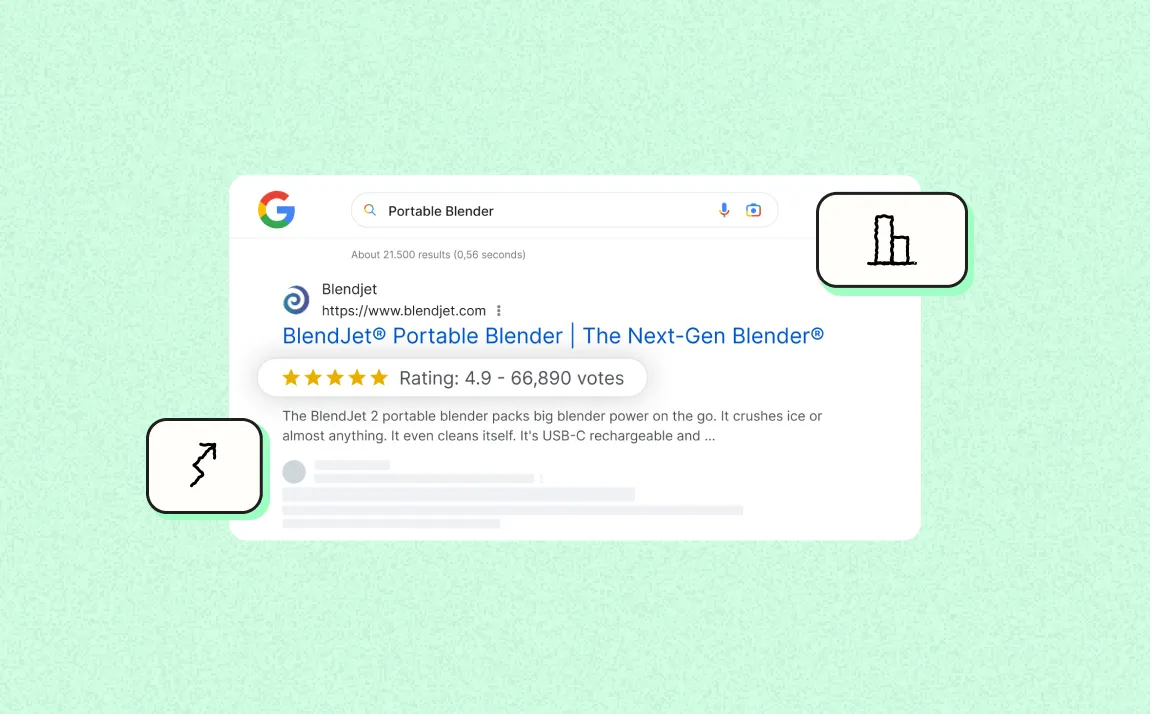
The most relevant schemas for financial comparison pages: FAQPage (for the Q&A sections at the bottom of the page), Product (if the page compares a specific product with defined attributes), and Review (if sourced reviews are included). These schemas feed Google rich results and increase click-through rates from search results, regardless of position.
Internal linking from product pages and blog articles
Comparison pages should receive internal links from product pages and thematically related blog articles. A product page for a PEA should link to the “PEA vs life insurance” comparison page. An article about retirement planning should link to the “best PEA for retirement planning” page. This internal linking strengthens the authority of comparison pages and speeds up indexing.
Freshness management: update the data regularly
Financial comparison pages have a limited lifespan without updates. Fees change, features evolve, Trustpilot ratings fluctuate. A comparison page with 18-month-old data is not only inaccurate: Google penalizes it on YMYL queries, where freshness is a direct ranking signal. Setting up a quarterly review process for comparison data is non-negotiable.
{cta}
Content strategy: build a comparison cluster
A standalone comparison page has less impact than a coherent cluster of comparison pages. Topical authority is built through content volume and consistency around the same subject. A fintech that publishes 10 well-linked comparison pages around its core theme sends Google a sector expertise signal that the generalist aggregator can’t replicate in that niche.
The pillar comparison page and its satellite pages
Recommended structure: one pillar page that covers the main comparison exhaustively (“Complete guide: how to choose your investment platform in 2026”), and 4 to 8 satellite pages that go deeper into specific subtopics (comparison on fees only, comparison for a specific profile, comparison on a key feature). Each satellite links to the pillar page. The pillar page links to all satellites. This star-shaped linking structure concentrates authority on the pillar page and lifts the satellites too.
Cover the full comparative long tail around one theme
Comparative long tail is nearly endless for a fintech with a differentiated offer. Every comparison criterion, every user profile, every use case can generate a satellite page. The goal is not to cover everything at once: it’s to map the most-searched comparison intents and cover them progressively, starting with the ones where competition is weakest.
How programmatic SEO helps scale comparisons
When the number of comparison pages exceeds 20 to 30, programmatic SEO becomes relevant to industrialize production. A structured database of competitors or compared products, paired with a comparison page template, makes it possible to generate hundreds of pages with distinct content for each criterion. Our guide on programmatic SEO for financial products explains when and how to make that shift.
The mistakes that make comparison pages fail
Fintech comparison pages that fail in SEO always share the same mistakes. Identifying them before you build is more effective than fixing them afterward.
Explicitly disparaging a competitor
This is the most common and most expensive mistake. An unsourced negative claim about a competitor exposes you to legal risk (disparagement) and destroys the page’s E-E-A-T. Google detects biased content and penalizes it on YMYL queries. The rule: every claim about a competitor must be sourced, factual, and verifiable by a third party.
Outdated or unsourced data
A comparison page with 2023 data in 2026 is actively harmful. It misleads the prospect and signals to Google that the content isn’t maintained. Every comparison data point (fees, features, ratings) must have a cited source and a visible last-checked date. Without that sourcing work, the page will never meet E-E-A-T requirements on YMYL queries.
A page that’s too short and adds no editorial value
A 300-word comparison page with a table and a CTA has no chance of dislodging an aggregator on a competitive query. The minimum threshold for a comparison page aiming for the top 5 on a query with volume: 1,000 to 1,500 words of editorial content, in addition to the table. That content has to bring real value: context, nuance, use cases, proprietary data.
An overly aggressive CTA that breaks perceived neutrality
A CTA like “Open your account now” or “Join 50,000 users” at the bottom of a comparison page immediately tells the reader the content was biased from the start. That break in neutrality destroys the credibility built across the page and reduces conversions. The CTA has to match the page’s editorial register: factual, oriented toward the next logical step in the prospect journey.
What we build at Gemeos for fintechs
On the fintech projects Gemeos supports, comparison pages are consistently among the site’s highest-ROI pages. Not because they convert the most directly, but because they capture prospects in the final decision stage, with a very high qualification rate.
Our approach to this kind of page: Webflow build for native technical SEO control (dynamic title tags, Schema.org in JSON-LD, update dates in CMS fields), editorial content written with an expert and neutral angle, pure HTML comparison table for featured snippet compatibility, and integration into a thematic cluster with structured internal linking. For fintechs that want to cover a large comparison volume, the shift to programmatic SEO is planned from the architecture stage. Our guide on Webflow for financial companies explains why this stack is the most effective for this type of project.
FAQ
Can you explicitly name competitors on a comparison page?
Yes, as long as every claim about the competitor is factual, sourced, and verifiable. French law allows comparative advertising (article L. 121-8 of the Consumer Code) under strict conditions: the comparison must concern essential, verifiable, and objective characteristics. In practice: comparing officially published fees is allowed. Claiming a competitor’s offer is “misleading” or “low quality” without proof is disparagement. When in doubt, have a lawyer review the content before publishing.
How long should a fintech comparison page be?
The minimum viable length for a competitive query is 1,000 to 1,500 words of editorial content, in addition to the comparison table. For highly competitive head terms (against strong aggregators), 2,000 to 3,000 words with detailed sections by criterion are necessary. For low-competition long-tail queries, 800 to 1,000 words is enough as long as the content is dense with added value.
Are comparison pages legally risky in finance?
The risk is real but manageable with a rigorous approach. The three rules to follow: every claim about a competitor must be sourced (link to the official source), comparison data must be up to date (visible verification date), and the page must include a note stating that conditions may change and that the reader should verify information directly with the providers. These precautions reduce legal risk to nearly zero while keeping editorial credibility intact.
How do you keep comparison pages up to date without spending hours on them?
The solution is structural, not manual. In Webflow CMS, store comparison data (fees, features, ratings) in collection fields updated quarterly. Updates take a few minutes in the CMS interface and instantly propagate across all pages that reference those fields. For larger volumes, automated syncing from an Airtable base via Make reduces maintenance time to nearly zero.
Can a newer fintech rank for competitive comparison queries?
Not immediately on head terms, but quickly on the long tail. A fintech with a Domain Authority of 20 to 30 can rank in the top 5 for long-tail comparison queries with 100 to 500 monthly searches within 2 to 4 months of SEO work. Those initial positions generate qualified traffic, organic backlinks, and domain authority growth that then lets you gradually attack more competitive queries.
What to remember
As a Webflow agency specialized in SEO and growth for financial companies, Gemeos helps fintechs build comparison SEO systems that last. Beating aggregators on their own queries isn’t a budget question: it’s a question of depth of expertise, editorial rigor, and technical structure. Three advantages a well-positioned fintech naturally has over a generalist aggregator.
Good to know
Heading
Lorem ipsum dolor sit amet, consectetur adipiscing elit. Suspendisse varius enim in eros elementum tristique. Duis cursus, mi quis viverra ornare, eros dolor interdum nulla, ut commodo diam libero vitae erat. Aenean faucibus nibh et justo cursus id rutrum lorem imperdiet. Nunc ut sem vitae risus tristique posuere.










Lorem ipsum
Lorem ipsum dolor sit amet, consectetur adipiscing elit, sed do eiusmod tempor incididunt ut labore et dolore magna aliqua. Ut enim ad minim veniam, quis nostrud exercitation ullamco laboris nisi ut aliquip ex ea commodo consequat. Duis aute irure dolor in reprehenderit in voluptate velit esse cillum dolore eu fugiat nulla pariatur.


.webp)