What information do candidates expect from an HR website today?
Candidates often compare several job openings and several companies. The website should reduce the grey areas that would otherwise force them to search elsewhere or wait for a first interview.

article summary
- The HR website should clearly distinguish candidate, client, and employee journeys.
- Employer branding should be demonstrated through evidence, not only declarative values.
- Role and team content should help candidates picture themselves in the company.
- Forms should remain appropriate to the candidate’s level of intent.
- The website should be able to evolve with job openings, teams, and recruitment campaigns.
Want to take it further? Ask:
Understand the role and responsibilities
Job titles can be misleading. The main responsibilities, priorities, and interactions should be clear enough. An HR web agency should translate this logic into the site architecture, content, and user journeys.
Candidates should understand what they will actually do day to day.
A credible job description clearly defines the real scope of the role: responsibilities, reporting line, key stakeholders, level of autonomy, and the criteria that help candidates picture their daily work.
Understand the working environment
Location, remote work, schedule, working hours when they are important, and any travel requirements should be presented clearly.
This information avoids applications that are incompatible with the practical constraints of the role.
Salary, when it can be disclosed, genuinely available benefits, and working conditions are concrete comparison criteria. They prevent all reassurance from relying on vague cultural promises.
Understand the recruitment process
The number of stages, types of interviews, and an indicative timeline can be explained when the company is able to stick to them.
Transparency reduces uncertainty and helps candidates prepare better.
Presenting the recruitment stages helps candidates anticipate the effort involved: HR interview, manager discussion, possible practical assignment, and final decision. The website should only announce a timeline if the organization can reasonably meet it.
Picture yourself within the team
The manager, team, team size, adjacent roles, and ways of working can be presented concisely.
These elements are often more useful than a long institutional presentation.
A team photo, the manager’s role, and a few examples of recent projects provide far more context than a series of slogans about culture or kindness.
Assess culture and career prospects
Candidates look for information about management, progression, training, and projects.
The website should prioritize evidence over slogans.
Apply without friction
The application form should work well on mobile and avoid asking for information already included in the CV.
Candidates should know what happens after they submit the form.
To measure the candidate journey, it is more useful to track job views, application starts, drop-offs, and completed applications than to focus only on overall career-site traffic.
Make job conditions easy to compare before applying
Candidates should be able to compare two opportunities without waiting for a first interview to discover the key conditions. Salary or salary range when publishable, location, remote-work policy, schedule, reporting line, recruitment stages, and role expectations should be presented with the same level of clarity from one job posting to another. This consistency reduces poorly matched applications and improves the quality of conversations with recruiters.
| Information | What it helps candidates verify | Writing rule |
|---|---|---|
| Compensation | Fit with expectations | Clear range when publishable |
| Location and remote work | Real constraints of the role | Avoid vague wording |
| Recruitment process | Effort and timeline to expect | Stages and stakeholders |
| Team and management | Day-to-day environment | Concrete details, not slogans |
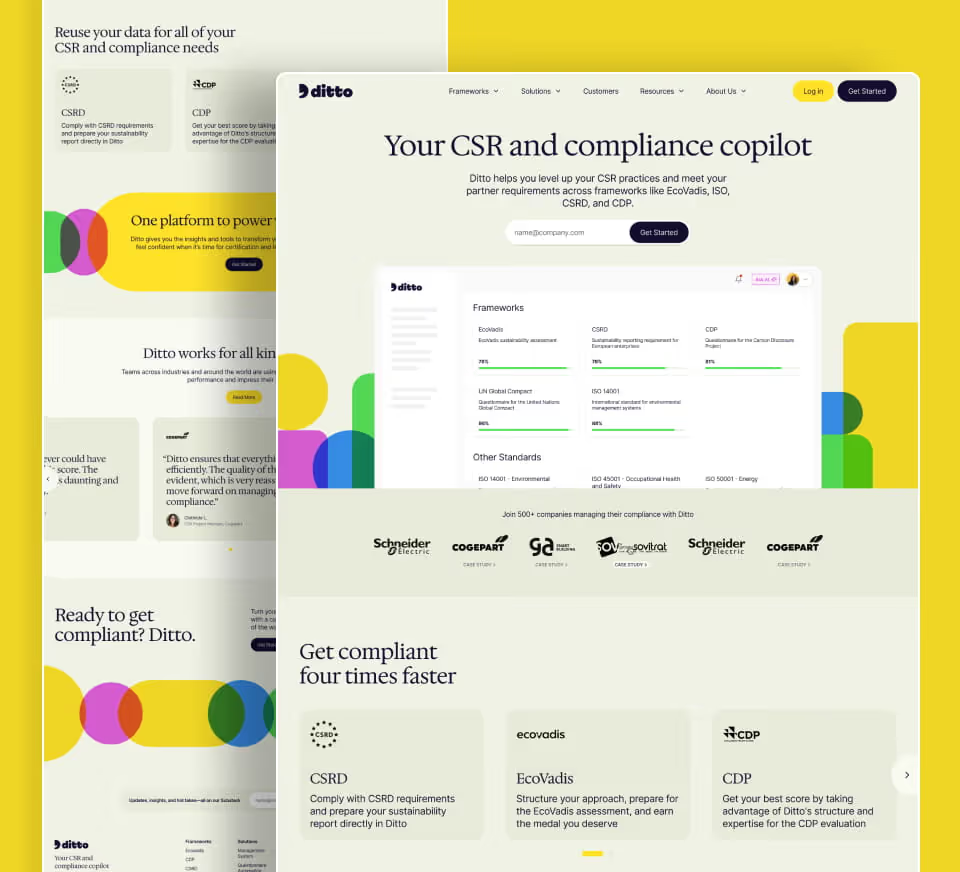
A useful HR website does not try to make every role look better than it is. It reduces uncertainty early enough for candidates to decide whether the position, work environment, and recruitment process match their expectations. This transparency strengthens employer branding while helping HR teams avoid qualifying applicants who are incompatible with the role’s real constraints. An HR website that attracts both talent and companies should extend this transparency across all journeys. The Kalent case study can also serve as a reference for how an HR platform can be presented within a complete digital ecosystem.
Candidates want to understand the role before applying
An effective job posting is not just a title and a list of tasks. Candidates want to understand the context of the role, the team, the responsibilities, the priorities, and the conditions in which they will work.
An HR web agency should therefore organize content around the questions candidates ask before applying. The careers website should help candidates self-qualify, not simply increase clicks on “Apply”.
Present responsibilities with enough context
A long task list can still feel abstract.
The website should explain the role within the organization, the main objectives, and how the person will interact with other teams.
This helps candidates understand what will genuinely be part of their daily work.
Clarify the non-negotiable criteria
Skills, experience, language, location, or specific constraints should be separated from simple preferences.
A list of fifteen criteria presented at the same level can discourage relevant candidates.
Non-negotiable requirements should be identified clearly.
Present the team
Candidates want to know who they will work with.
A presentation of the team, manager, or day-to-day setup can make the opportunity more tangible.
There is no need for long biographies, but a few details provide useful context.
Explain the working model
Remote work, office presence, working hours, travel, and hybrid organization strongly influence the decision.
This information should be precise and consistent with reality.
Ambiguity discovered late in the process significantly damages the candidate experience.
Present compensation when the company can do so
A salary range or benchmarks can help candidates position themselves.
When this information is not published, the website should at least avoid vague wording that creates a false impression of transparency.
Benefits can complement compensation, but they should not replace it in the messaging.
Explain the recruitment stages
The number of interviews, types of discussions, and people involved can be presented.
The website should avoid promising an overly precise timeline when the process varies.
What matters most is helping candidates understand how their application will be handled.
Present the projects
Technical, product, or creative candidates often want to understand what they may work on.
The website can show projects, challenges, or working environments without revealing confidential information.
This strengthens projection and understanding of the role.
Build employer branding with proof
Values, autonomy, progression, and collaboration should be connected to actual practices.
A company that highlights feedback can explain the rituals or processes it uses.
A case such as Kalent can also illustrate the importance of a digital journey that makes the employer value proposition understandable and credible.
Create role-family pages
When several positions belong to the same job family, a dedicated page can present the context, skills, and career paths.
Current openings can then link back to that page.
This structure avoids repeating the same information in every job posting.
Make mobile applications simple
Candidates should be able to view a job, attach their CV, and submit an application from a smartphone.
Fields that repeat information already included in the CV should be limited.
Mandatory account creation can cause significant drop-off.
Present important policies
Mobility, inclusion, training, parental policies, or remote work may matter depending on the company.
These topics should be presented through concrete practices.
A generic statement without examples adds little trust.
Plan for spontaneous applications
A spontaneous application only makes sense if the company has a process to handle it.
Otherwise, the website can offer job alerts or direct candidates to current openings.
Collecting CVs without follow-up damages the experience.
Address international candidates
If the company recruits internationally, working language, mobility, visas, or location may require dedicated information.
These details should only be added when the company can genuinely support such candidates.
They help reduce incompatible applications.
Measure application quality
The number of CVs received is not enough.
Tracking can measure job views, clicks, form starts, and completed applications.
HR teams should then connect this data to candidate quality and actual hires.
Checklist: information candidates expect
- Responsibilities and duties.
- Non-negotiable criteria.
- Team and manager.
- Working model.
- Recruitment stages.
- Compensation or available conditions.
- A clear next step.
Present the information that helps candidates picture the medium term
Beyond the immediate role, candidates often want to understand what they can learn, who they will collaborate with, and how their role may evolve.
The website can present training programs, internal mobility options, or real career paths when they exist.
These possibilities should not be turned into systematic promises. Concrete examples are more credible than a general statement about “rapid progression”.
Make benefits easy to compare
Benefits should be explained precisely: number of remote-work days, leave policy, training budget, or other genuinely available schemes.
A list of icons without detail easily creates ambiguity.
Candidates should be able to distinguish what is guaranteed, what depends on the role, and what varies by location.
Explain the recruitment timeline
Even when an exact deadline cannot be promised, candidates can be informed about the general pace of the process.
The website can explain that a first response comes after the application has been reviewed or that certain stages are grouped within a given period.
This transparency reduces follow-up requests and improves how the process is perceived.
Show what management is really like
Management style strongly influences the decision.
Feedback, autonomy, frequency of check-ins, or team organization can be described using real examples.
The messaging should match what candidates will actually experience after joining.
Connect HR content to open roles
A team interview, job-family page, or culture article should make it easy to return to the relevant vacancies.
This internal linking turns employer-brand content into a practical recruitment tool.
It prevents editorial pages from becoming disconnected from operational hiring needs.
Consistency between promise and reality remains essential to preserve candidate trust.
Give candidates visibility into the recruitment process
Candidates also want to know what happens after they submit their CV. Number of stages, indicative timing, interview types, and stakeholders can be explained without making the process overly rigid.
This transparency reduces uncertainty and helps prevent qualified candidates from dropping out simply because they do not know how much time or energy the recruitment process will require.
Clarify response times
Providing an indicative response time after application and explaining the next steps also reduces uncertainty and improves the candidate experience, even when the response is not immediate.
FAQ
What information do candidates expect on an HR website?
They want to understand the responsibilities, criteria, team, working model, recruitment process, and main conditions before applying.
Should salary be displayed?
When the company can do so, a salary range improves transparency and helps candidates self-qualify. Benefits should not replace this information when it is available.
How should remote work be presented?
The website should state the actual policy, expected office presence, and any constraints. Vague wording can create significant frustration later in the process.
What should be explained about the recruitment process?
The number of stages, interview types, and people involved can be presented without promising timelines the company cannot guarantee.
Is a role-family page useful?
Yes, when the company regularly recruits for a family of roles. It helps present the context, skills, and career paths without repeating the same information in every job posting.
Which KPIs should be tracked?
Job views, application starts, completed applications, candidate quality, and application sources help assess the real performance of the careers website.
Good to know
Heading
Lorem ipsum dolor sit amet, consectetur adipiscing elit. Suspendisse varius enim in eros elementum tristique. Duis cursus, mi quis viverra ornare, eros dolor interdum nulla, ut commodo diam libero vitae erat. Aenean faucibus nibh et justo cursus id rutrum lorem imperdiet. Nunc ut sem vitae risus tristique posuere.





Lorem ipsum
Lorem ipsum dolor sit amet, consectetur adipiscing elit, sed do eiusmod tempor incididunt ut labore et dolore magna aliqua. Ut enim ad minim veniam, quis nostrud exercitation ullamco laboris nisi ut aliquip ex ea commodo consequat. Duis aute irure dolor in reprehenderit in voluptate velit esse cillum dolore eu fugiat nulla pariatur.