How can an estate agency website reassure sellers and buyers?
On an estate agency website, trust is built before the first call. Sellers check that the agency can value, market and defend their property; buyers check that the information is reliable and the viewing process is clear.
These two audiences do not expect the same proof. The website should therefore organise it by profile, with a visible method, local references and identifiable contacts.

article summary
- Sellers want to understand the valuation and marketing method, not read a promise of the “best price”.
- Buyers rely on listing accuracy and clarity about what happens after the viewing.
- Each proof point should sit close to the hesitation it resolves, depending on the visitor profile.
- An identifiable team, completed transactions and neighbourhood pages demonstrate the agency’s local presence.
- Contextualised reviews, clear fees and up-to-date proof sustain trust over time.
Want to take it further? Ask:
Two visitors, two ways of assessing the agency
Sellers entrust the agency with a significant asset; buyers commit to a financial and personal project. Both assess the seriousness of the agency, but not using the same criteria. A web agency for estate agencies should therefore organise proof differently depending on whether visitors want to sell, buy or invest.
Generic promises such as “proximity, expertise, trust” only gain value when they are connected to a method, examples and verifiable information.
What genuinely reassures a seller?
Before signing a mandate, owners want to know how the price will be positioned, which marketing materials will be used, how buyers will be qualified and how often they will receive updates. A seller page that promises “the best price” without explaining how it will be achieved is less reassuring than one that describes the work carried out after the mandate is signed.
- Valuation method and knowledge of the local market.
- Quality of photography, floor plans and distribution.
- Qualification of buyers before viewings.
- Frequency of reports to the owner.
- The person responsible for the mandate.
This method differentiates the agency: without it, every marketing offer looks the same to the seller. We explore this further in our article on generating more mandates through an estate agency website.
Explain the valuation rather than simply displaying one
Owners should understand why a valuation is not simply a price per square metre. Location, condition, floor level, features, current competition and comparable transactions explain the difference between two apparently similar properties. This educational approach highlights expertise before the appointment and prepares sellers to hear a realistic price.
Highlight completed transactions
Sold properties demonstrate an effective presence in a neighbourhood, property type or price range. A selection organised by area shows experience without publishing confidential information and strengthens both local pages and the seller journey. Alongside the valuation page, this history is one of the key features of an estate agency website for capturing mandates.
What reassures a buyer?
Buyers first assess the quality of the information. An imprecise listing forces them to call with basic questions and creates doubt about everything else. Price, floor area, features, location, service charges and regulatory information should be prioritised for quick reading, while unavailable information should be acknowledged rather than left unclear.
The reliability of these listings depends directly on feeds and statuses: showing a property as available when it is already under offer is enough to damage trust, which is why rigorous management of the real estate listing lifecycle matters.
Explain what happens after the viewing
For a buyer, the viewing is only one stage. Offer, negotiation, financing, preliminary contract and the period through to completion can be explained simply. This educational approach particularly reassures first-time buyers and shows that the agency supports the project beyond the introduction.
In new-build property, the same logic applies but to different concerns: guarantees, completion timetable and staged payments, which a property developer website should make understandable before reservation.
Adapt proof to the profile evaluating the agency
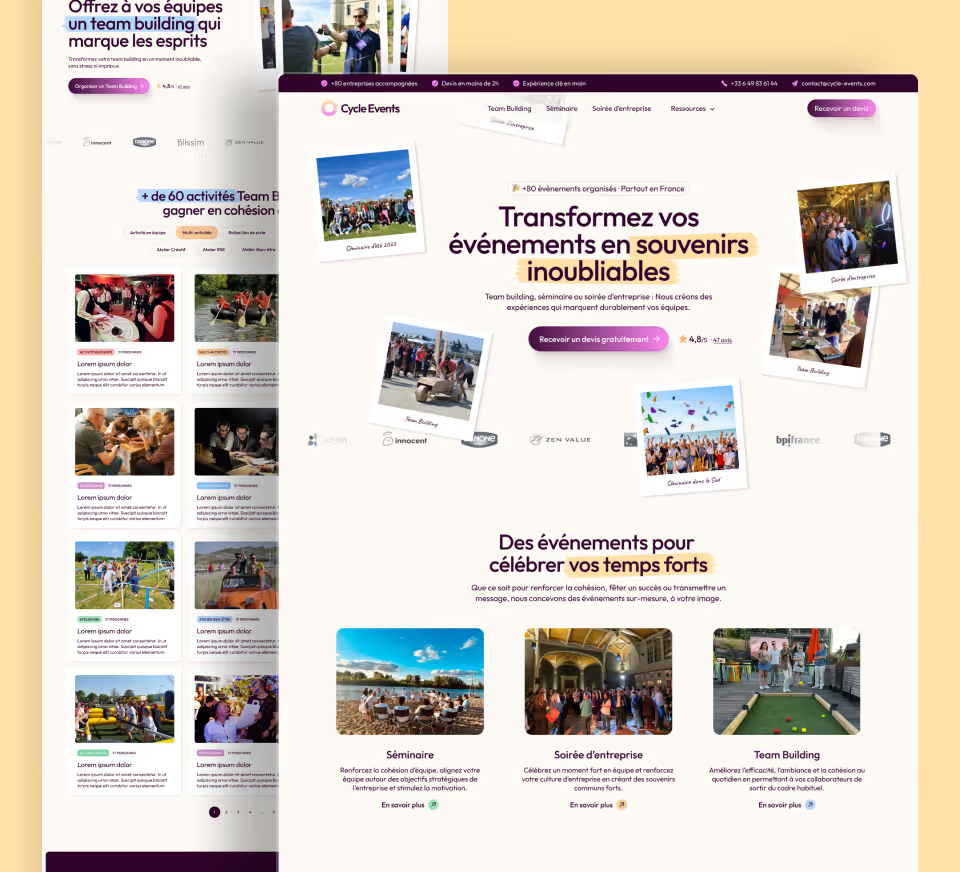
Sellers, buyers, investors and landlords do not look for the same proof. The website should position each proof point where it resolves a real hesitation instead of repeating the same arguments on every page. This is the approach used for the La Case Conciergerie website, whose architecture separates the owner journey from the guest journey.
| Audience | Priority proof | Desired effect |
|---|---|---|
| Seller | Valuation method and mandate follow-up | Trust before signing |
| Buyer | Reliable listing and clearly organised viewing | Make the decision easier |
| Investor | Market data and micro-local expertise | Validate the project |
| Landlord | Management, follow-up and dedicated contact | Clarify the support |
The same testimonial does not reassure every audience in the same way: a review about seller follow-up belongs near the marketing method, while feedback about information accuracy belongs near the buyer journey.
Prove local expertise without overplaying proximity
Market knowledge is demonstrated through the types of properties handled, transactions that can be published, neighbourhood analysis and the real presence of the team. Neighbourhood pages become credible when they answer area-specific questions: property types, observed prices, mobility, buyer profiles and time to sell. They then support both trust and estate agency SEO.
Present the team as local proof
Real photos, roles, areas and specialisms make the company tangible. Every profile should help visitors understand who knows their area, what type of project they handle and when they become involved. The objective is not a staff directory but a useful reference point: knowing who will handle the enquiry is more reassuring than generic corporate messaging.
Contextualise customer reviews
A seller review does not reassure for the same reasons as a buyer review. A few representative testimonials, presented with the type of project where possible, carry more weight than a global rating at the bottom of a page. Reviews should remain authentic: rewriting them to fit the marketing message destroys precisely the trust they were intended to create.
Copywriting shapes the text around the proof, not the proof itself. Figures on time to sell or price differences should only be displayed when methodologically sound and dated.
Clarify fees and stages
Fees should be accessible and understandable within the regulatory framework that applies to property professionals. The website can also explain the stages of a mandate or purchase so clients do not discover how the agency works only during the appointment.
Make the process visible before the first conversation
Part of reassurance comes from the website’s ability to show what will happen next. For sellers, the stages cover valuation, mandate, production of sales materials, distribution, qualification of viewings and reporting. For buyers, the journey clarifies the information request, viewing, useful documents and the contact responsible for follow-up.
| Stage | What the website should explain | Expected effect |
|---|---|---|
| Valuation | Method, data used, limitations | Make the approach credible |
| Marketing | Materials, distribution, buyer qualification | Show the agency’s work |
| Viewing | Organisation, contact, documents | Reduce uncertainty |
| Follow-up | Reports and next steps | Build a clear relationship |
Prepare the first contact
A seller can provide the address, property type and project; a buyer should be able to contact the agency directly from the listing. The form passes the property viewed and request type to the CRM so the adviser can continue the conversation without making the prospect repeat themselves. The confirmation page can then clarify who will call back, within what timeframe and what should be prepared, without promising an immediate response that cannot be maintained.
These adjustments are among the levers that help generate qualified contacts from an estate agency website, because a reassuring journey loses its value if prospects do not know what happens after their request.
Extend trust after the transaction
Administrative follow-up, key handover, post-sale support or introductions to partners can be presented when they genuinely form part of the service. This continuity shows that the agency supports the project through to completion and encourages recommendations.
Proof should also evolve with real activity. Transactions, reviews and profiles that remain unchanged for years make the agency look inactive: the CMS should make it possible to renew these elements without rebuilding the pages.
Conclusion
A reassuring estate agency website reduces uncertainty before the first conversation. For sellers, it makes the marketing method concrete; for buyers, it makes property information and the viewing journey more reliable. Organising proof by profile, placing it at the right moment and keeping it current also improves the quality of contacts the agency receives.
FAQ
Which proof reassures sellers most on an estate agency website?
The valuation method, completed transactions, local expertise, identifiable team and seller reviews are especially useful before a mandate is signed.
Which information reassures a buyer?
Complete listings, accurate photos, transparent information, an identifiable contact and a clear viewing process reduce uncertainty.
Should seller and buyer journeys be separated?
Yes. Needs, proof and CTAs differ. Two distinct journeys make the website clearer without requiring two separate websites.
How should customer reviews be presented?
They should remain authentic and, where possible, be contextualised according to the project type: sale, purchase, valuation or management.
Why create neighbourhood pages?
They demonstrate genuine market knowledge when they contain data, listings, transactions or advice specific to the area.
Which KPIs should be tracked to measure trust?
Valuation requests, appointment bookings, pages viewed before contact and conversion into mandates indicate which journeys genuinely reassure prospects.
Good to know
Heading
Lorem ipsum dolor sit amet, consectetur adipiscing elit. Suspendisse varius enim in eros elementum tristique. Duis cursus, mi quis viverra ornare, eros dolor interdum nulla, ut commodo diam libero vitae erat. Aenean faucibus nibh et justo cursus id rutrum lorem imperdiet. Nunc ut sem vitae risus tristique posuere.









Lorem ipsum
Lorem ipsum dolor sit amet, consectetur adipiscing elit, sed do eiusmod tempor incididunt ut labore et dolore magna aliqua. Ut enim ad minim veniam, quis nostrud exercitation ullamco laboris nisi ut aliquip ex ea commodo consequat. Duis aute irure dolor in reprehenderit in voluptate velit esse cillum dolore eu fugiat nulla pariatur.