


How can an SME website generate more customers?
For an SME, a high-performing website is not the one with the most pages. It is the one that lets prospects quickly understand the offer, verify that the company understands their need and take action without friction.

article summary
- The website should reflect the SME’s real commercial priorities.
- The structure should remain simple while giving important offers enough depth.
- Customer proof should be connected to the services it demonstrates.
- The form should qualify without creating excessive friction.
- Performance should be tracked through to sales opportunities when possible.
Want to take it further? Ask:
Start with the offers the SME genuinely wants to grow
The first mistake is to reproduce the sales brochure. An SME may offer many services, but only a few represent a real growth priority. The website should prioritise these instead of giving everything equal weight. This is exactly the type of work an SME web agency should frame before moving into design.
This hierarchy influences navigation, landing pages, the proof highlighted and internal linking. It also helps avoid creating pages with little substance.
- rank offers by commercial potential
- identify priority targets
- list recurring objections
- connect each offer with relevant proof
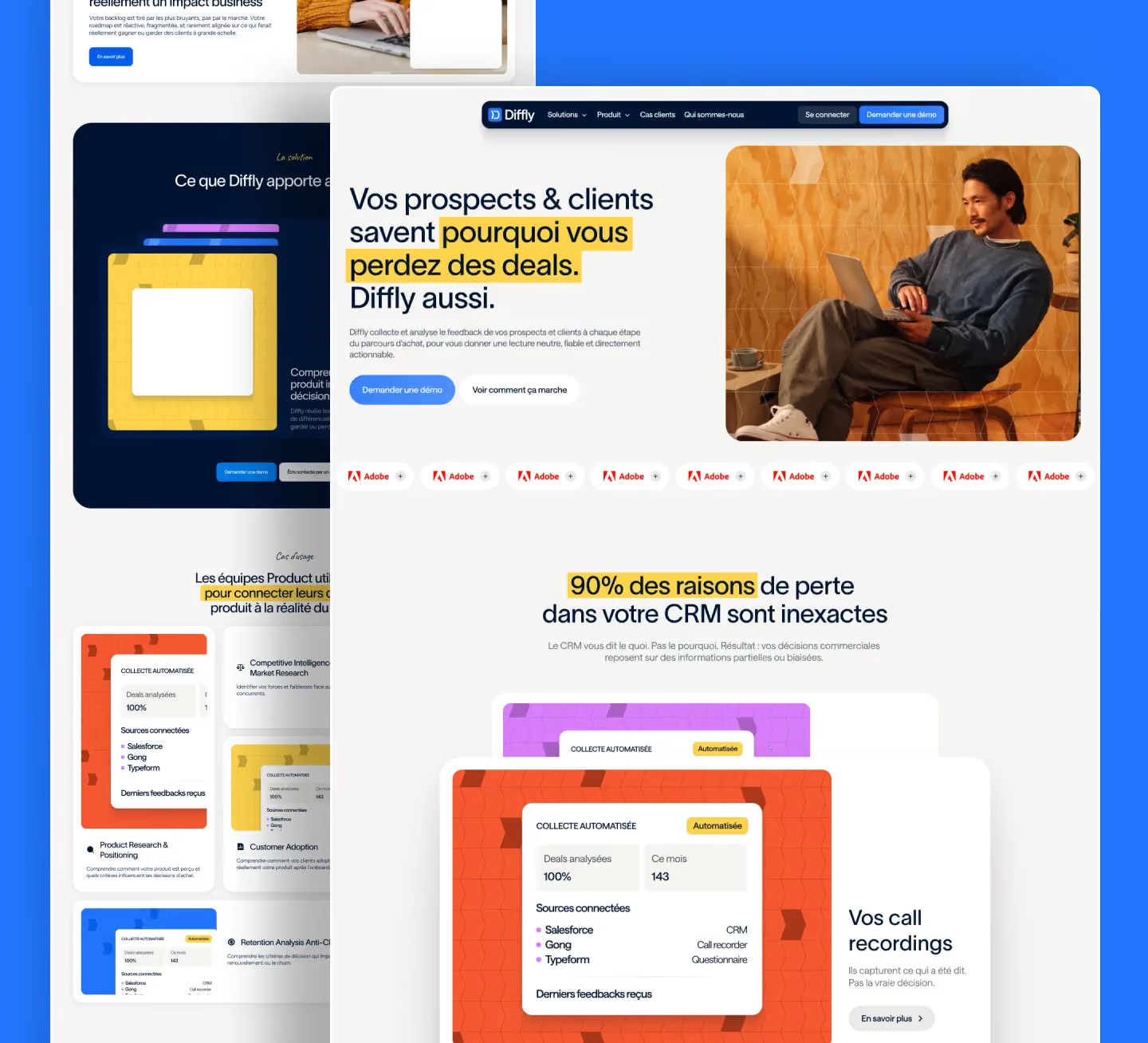
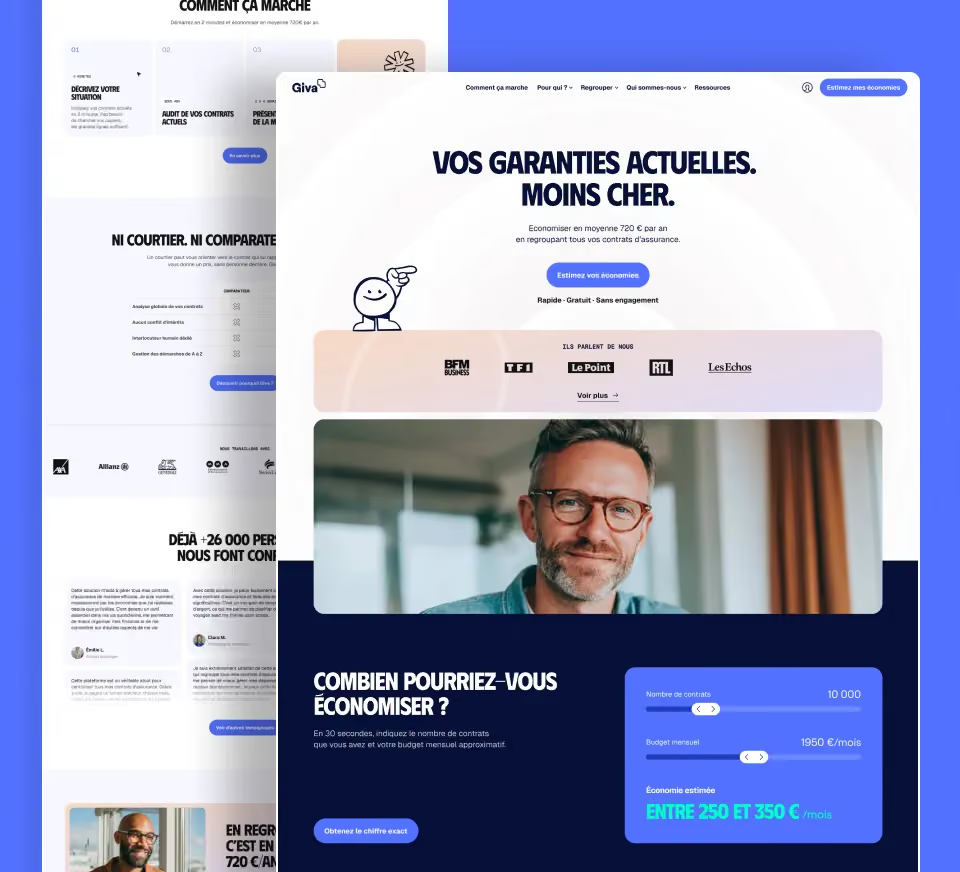
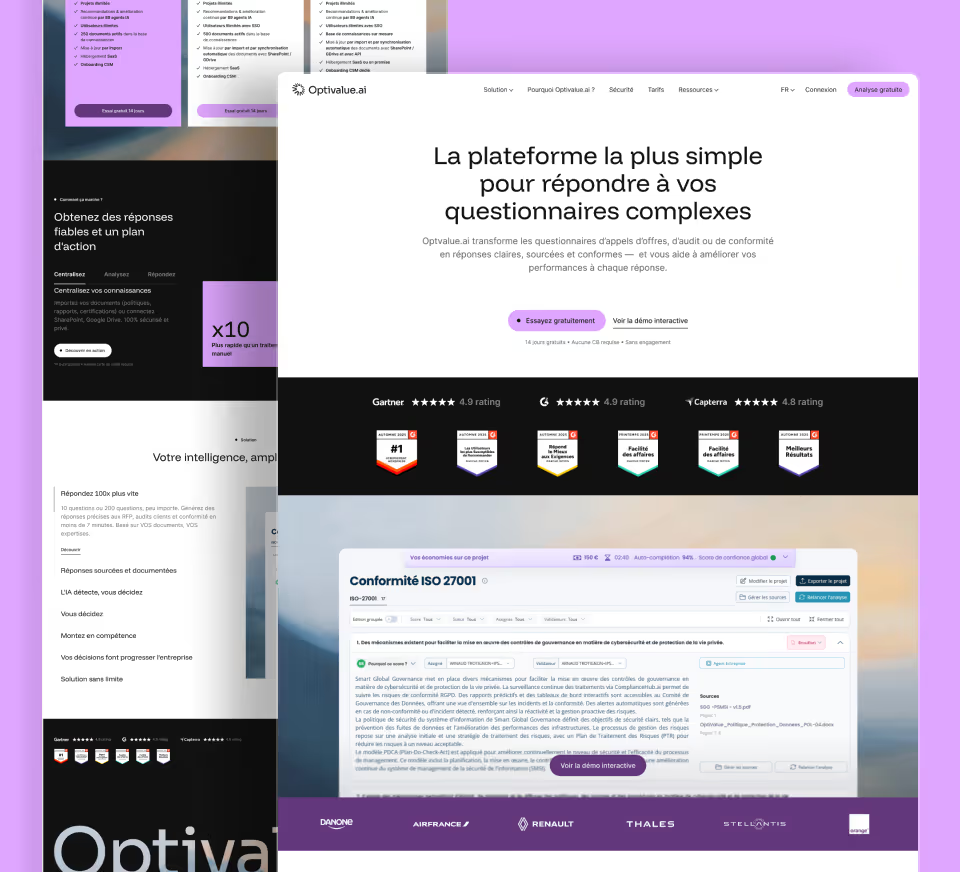
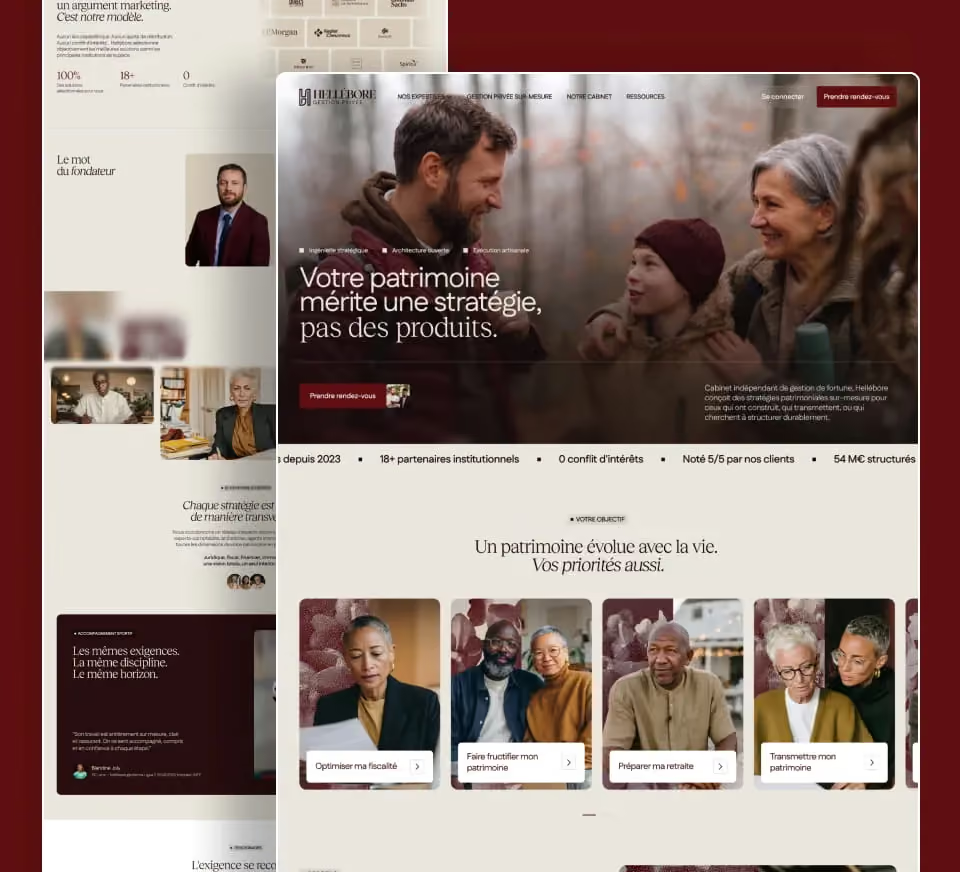
Web design should mainly make the offer readable from the first few seconds: priority services, proof, service areas and CTAs should be organised according to the commercial role of each page.
Build pages that answer prospects’ questions
A strong service page explains the problem addressed, situations where the offer is relevant, the method, proof and the next step. Wording should start from customer needs rather than internal vocabulary.
Pages that are too short often force sales teams to repeat all the educational work. Conversely, long but repetitive content can dilute the promise.
- problem addressed
- use cases
- proof
- method
- next step
A dedicated landing page can be useful when an SME launches a specific offer, local campaign or high-value service, provided the message and CTA remain consistent with the source page.
Use customer cases as a conversion lever
A logo alone does not prove expertise. A useful customer case explains the context, intervention, constraints and result.
Cases should be linked to the service pages they support so proof becomes a genuine stage in the decision journey.
Reduce contact friction
The right form depends on the sales cycle. A B2B SME may need to qualify the project, budget or timing. A local service SME may prioritise a call or a simple request.
Every field should support the next commercial action. Secondary information can be requested after the first contact.
- type of need
- timeline
- order of magnitude
- contact details
- context
Create content that supports business pages
Articles should answer genuine questions and naturally push users toward the offer. Informational content disconnected from commercial priorities may generate traffic without creating value.
Internal linking then becomes a progression tool: question, understanding, comparison, contact.
Measure quality, not just volume
More traffic is useful only if it improves outcomes. Track forms, calls, appointments and, when CRM data allows, progression to quote or opportunity.
A page with little traffic can still be very valuable if it regularly generates qualified enquiries.
Tracking should connect landing pages with calls, forms, appointments and quotes so teams can distinguish content that genuinely creates opportunities.
Prioritisation table
| Priority | Question | Action |
|---|---|---|
| 1 | Which offers create the most value? | Strengthen business pages |
| 2 | Which objections block contact? | Add proof and answers |
| 3 | Which journeys generate leads? | Measure forms and calls |
| 4 | Which content supports acquisition? | Create and link the right guides |
Turn the value proposition into a commercial journey
An SME website does not generate customers simply because it looks good. It should let prospects understand the offer, verify credibility and take the right action.
An SME web agency should therefore build the website around the real sales cycle.
Clarify the offer
The first screen should explain what the company does and for whom.
Broad statements about support or innovation should be replaced with a concrete promise.
Prospects should quickly be able to identify the page that matches their need. To know which ones to plan, see the essential pages on an SME website.
Create service pages that answer objections
Each service should explain the problem, solution, method, proof and next step.
A page with just a few lines is not always enough for a complex B2B sales cycle.
Content should match the prospect’s maturity.
Present customer cases
Projects demonstrate experience.
Context, problem, intervention and documented result show the value created.
Logos alone provide less context.
Develop sector pages
When needs genuinely differ by industry, sector pages can help.
They should include specific issues and proof.
Simply duplicating service pages should be avoided.
Work on CTAs
Quote requests, appointments, audits, demos and contact do not represent the same journey.
The CTA should reflect the real action the team offers.
Several actions can coexist if their hierarchy is clear.
Simplify forms
The first contact should request only useful information.
A very long form may be justified for some projects but not all.
Additional information can be collected during the conversation.
Create campaign landing pages
A specific campaign can benefit from a dedicated page.
The advertising message, offer and CTA should remain consistent.
The landing page should not remove information that helps qualification.
Work on SEO around needs
Informational content can attract prospects earlier in the journey.
It should answer genuine questions and link to business pages.
SEO should not create a blog disconnected from the commercial cycle.
Present the team
For an SME, human proximity can be a real proof point.
Key people, their roles and expertise can be presented.
This transparency is especially reassuring for service businesses.
Optimise social proof
Reviews, figures, certifications or clients should be verifiable.
They should appear close to the objection they answer.
A large logo block at the bottom of the page often has less impact.
Plan for autonomy
The CMS should allow the team to add cases, pages or content.
Webflow or another solution should be configured around those use cases.
Autonomy prevents the website from becoming outdated quickly.
Measure conversions
Tracking should distinguish forms, calls, appointments and downloads.
The original page and viewed offer should be preserved.
Sales teams can then qualify lead value.
Optimise after launch
Pages should evolve based on data, objections and new services.
A website that generates customers is a living asset.
The roadmap should include regular improvements. During a redesign, the same logic helps choose priorities for an SME website redesign.
Checklist for generating customers with an SME website
- Clear value proposition.
- Complete service pages.
- Contextualised proof.
- Appropriate CTAs.
- Simple forms.
- Content connected to business pages.
- Tracking of qualified leads.
Start with the services that genuinely generate revenue
An SME can offer many services without all of them carrying the same commercial weight. The website should first make priority offers visible: those generating the best margin, answering the most frequent requests or supporting the growth strategy.
Every important service deserves a page that explains the problem, target customer, method, proof and next step. Grouping ten services into one page forces visitors to search for the information themselves and limits the website’s ability to rank for precise intent.
This hierarchy also makes management easier. Teams know which pages to optimise, which campaigns to support and which content to produce first.
Use customer cases to reduce perceived risk
For an SME, references are particularly reassuring when the brand is less well known than larger competitors. A customer case should show the context, need, solution and result rather than simply display a logo.
Even without confidential data, it is possible to specify the sector, project size, constraints or timeline. These elements let prospects verify that the company has already handled a similar situation.
Testimonials become more credible when attributed and connected to a specific service. A generic review repeated across every page adds less value than a contextualised testimonial near the relevant service.
Create a contact journey suited to maturity
Not every visitor wants to request a quote immediately. Some are still discovering the offer, others are comparing providers and some are ready to book a meeting.
The website can offer intermediate actions when the sales cycle justifies them: request an estimate, download a resource, view a customer case, book a conversation or ask a question. These actions should remain limited so attention is not diluted. On the Prismia website, appointment booking is available directly from the site and connected to the team calendar.
The main form should ask only what is needed to qualify the request. For a simple service, a few fields are enough. For a complex project, a description field, indicative budget or timeframe can help without turning contact into an administrative file.
Make the website useful to the sales team
A strong SME website does not only attract visitors. It should also help sales teams explain the offer. Service pages, customer cases and FAQs can be reused after a first conversation to answer objections and support the decision.
Content should therefore be precise enough to send directly to a prospect. If teams still create parallel PDFs because the website does not explain the offers properly, part of its commercial value is lost.
The CRM can preserve the source page, viewed service and CTA used so the team knows what triggered the request before calling the prospect back.
Prioritise optimisations with business impact
An SME rarely has a dedicated website-optimisation team. Effort should therefore focus on what genuinely influences enquiries: offer clarity, proof, mobile performance, forms, most-visited pages and conversion tracking.
Sessions or time on page are not enough. Useful indicators are qualified enquiries, appointments, quotes issued and customers signed by source and landing page.
FAQ
How can an SME website generate more customers?
It should clarify the offer, answer objections, show proof and provide an action suited to the sales cycle.
Which pages are most important?
Home, services, customer cases, about and contact usually form the foundation. Sector and local pages depend on the business model.
Should the website offer a quote request directly?
It depends on the service. For a complex project, an appointment or scoping conversation may be more relevant.
How should the blog be used?
Content should answer prospects’ questions and link to the corresponding commercial pages.
Which CMS should an SME choose?
The CMS should match team usage, content volume and desired autonomy rather than technical preference alone.
Which KPIs should be tracked?
Leads, request quality, source pages, conversion rate and commercial progression are the key indicators.
Good to know
Heading
Lorem ipsum dolor sit amet, consectetur adipiscing elit. Suspendisse varius enim in eros elementum tristique. Duis cursus, mi quis viverra ornare, eros dolor interdum nulla, ut commodo diam libero vitae erat. Aenean faucibus nibh et justo cursus id rutrum lorem imperdiet. Nunc ut sem vitae risus tristique posuere.




Lorem ipsum
Lorem ipsum dolor sit amet, consectetur adipiscing elit, sed do eiusmod tempor incididunt ut labore et dolore magna aliqua. Ut enim ad minim veniam, quis nostrud exercitation ullamco laboris nisi ut aliquip ex ea commodo consequat. Duis aute irure dolor in reprehenderit in voluptate velit esse cillum dolore eu fugiat nulla pariatur.









