


What information reassures a client on an architect’s website?
Choosing an architect is rarely a minor decision. A client entrusts a significant budget, a timeline, regulatory constraints and sometimes several years of work to a team they still know very little about. Even before the first meeting, the website therefore plays a major role in how project risk is perceived.
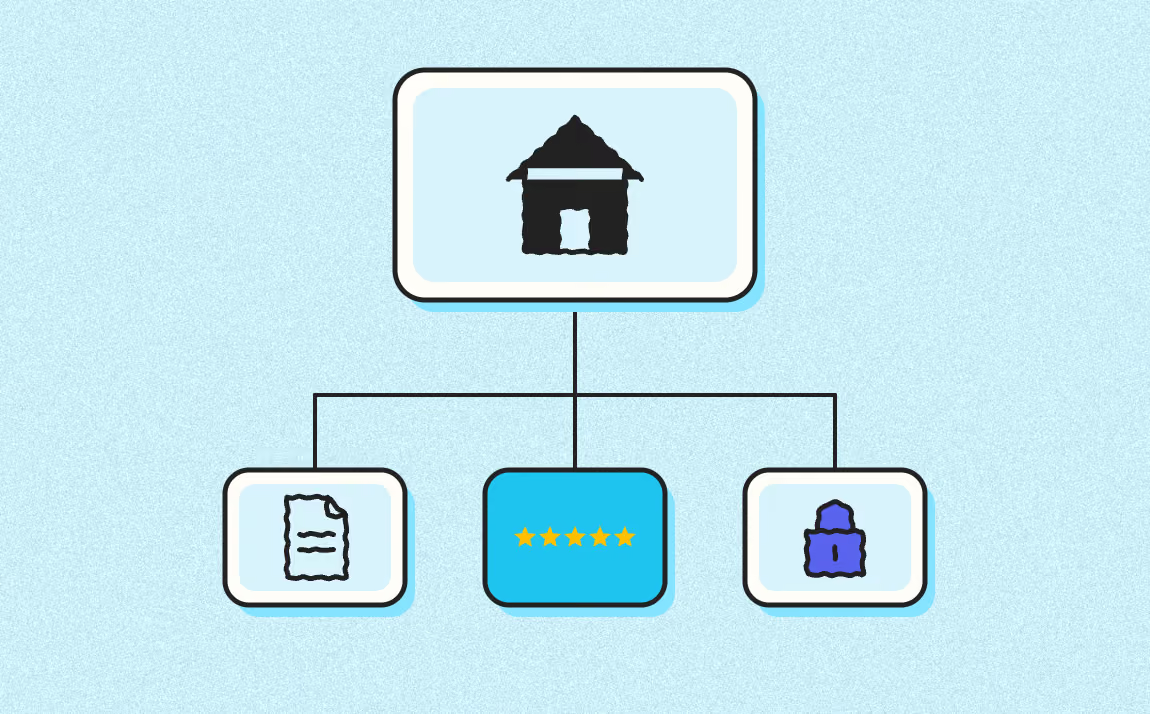
article summary
- References are more reassuring when they are close to the prospect’s project type, scope of work or context.
- Presenting the methodology helps prospects understand how the firm works before the first meeting.
- The team, roles and skills should be identifiable to make the relationship more concrete.
- Evidence of technical, regulatory and operational expertise should be contextualised rather than accumulated as a wall of logos.
- The contact journey should clearly explain the next step and the information needed to qualify the project.
Want to take it further? Ask:
An elegant portfolio matters, but it is not enough. Visitors want to understand whether the firm has experience with their type of project, can work with the right stakeholders, knows how to structure its assignments and can anticipate difficulties. The most reassuring information is the information that reduces these uncertainties.
Why is reassurance so important on an architect’s website?
A client is buying a service whose full value will only become visible in the future.
When they visit the website, the project has not yet been designed, trade-offs have not been made and difficulties are not yet known. Visitors therefore cannot directly assess the quality of the future assignment. They rely on indirect signals: completed projects, clarity of information, team profiles, methodology, publications, precision of language and the overall quality of the website.
A web agency specialising in architects should organise these signals so they appear at the right moments in the journey. Reassurance should not be concentrated on an “About” page. It should support project pages, expertise pages, local pages and forms.
Show references that are genuinely comparable to the prospect’s project
The strongest proof is often a project that closely resembles the visitor’s situation.
A developer preparing a multi-family housing project will look for different references from a homeowner planning a renovation. A public authority will pay attention to the firm’s ability to work on public facilities, while a corporate real estate director may look for experience in offices, refurbishment or occupied-site projects.
The website should therefore make relevant projects easy to identify. Categories should reflect the markets and problems prospects actually use when comparing architecture firms.
Each project should also specify the firm’s role. A photograph alone does not show whether the firm handled concept design, interior architecture, full project management or only a specific phase. This precision prevents over-interpretation and increases credibility.
Explain the constraints encountered, not just the final result
Experienced clients know that interesting projects are rarely simple.
Describing a constrained site, an occupied building, heritage requirements, a mixed-use programme, a specific regulation or complex coordination provides far more value than generic copy about the project’s aesthetics.
The prospect can then think: “They have already worked in a situation close to mine.” That is a much stronger form of reassurance than simply claiming “we manage complex projects”.
Present a clear working methodology
A clear methodology helps prospects imagine the future working relationship.
The website can explain the main stages of an assignment: scoping, understanding the brief, studies, design, stakeholder discussions, approvals, contractor consultation, construction monitoring and handover, depending on the scope offered.
The goal is not to reproduce a contract or a detailed schedule. It is to make visible how the firm structures the project, organises decisions and communicates with the client.
This is particularly useful for clients working with an architect for the first time. It reduces uncertainty and helps them arrive at the first discussion with better questions.
Should every project phase be explained in detail?
No. The level of detail should depend on the target audience.
For professional stakeholders who are used to construction projects, it is often more useful to highlight distinctive parts of the methodology, coordination tools or control points. For private clients, more explanation about stages and responsibilities may be necessary.
The website should speak the client’s language without simplifying the content so much that it becomes vague.
Present the team and each person’s role
A client is not choosing only a brand. They are also choosing the people who will work on the project.
The team page should make it possible to identify partners, project managers, architects and specialist expertise when relevant. Biographies can mention backgrounds, specialisms, project types and responsibilities rather than being limited to two generic corporate lines.
It is also useful to connect people with projects. Seeing that a partner or project manager has already worked on several comparable schemes reinforces the consistency of the overall story.
For firms with several offices or specialist teams, connecting team, location and projects also helps visitors understand who may potentially handle their assignment.
Explain the firm’s size and capacity without slipping into self-promotion
The number of employees is not always persuasive on its own. What reassures clients is the firm’s ability to mobilise the right skills for the project.
A small firm can reassure through direct partner involvement, while a larger structure can highlight specialist teams, organisation and the capacity to manage several projects at the same time.
The website should therefore explain what the organisation changes in practical terms for the client. A statement such as “team of 25 architects” is less informative than an explanation of how skills are organised across design, delivery, BIM, interior architecture or construction monitoring.
Show technical expertise without overwhelming the visitor
Certifications, tools and technical expertise can be reassuring, but their value depends on context.
BIM, environmental certifications, heritage expertise, proficiency with specific software, low-carbon design approaches or experience with specific regulations may all matter depending on the market.
The problem appears when the website accumulates logos without explaining their value. The client should understand what each capability makes easier to manage: coordination, conflict anticipation, performance monitoring, deliverable production or securing a regulatory stage.
Every proof point should be connected to a concrete consequence for the project.
Highlight publications, competitions and awards with discernment
Awards, publications and competitions strengthen the firm’s reputation, but they do not reassure every prospect in the same way.
An architectural award may be very important to a client looking for a strong creative signature. A client focused more heavily on delivery may care more about completed references, deadlines met and comparable projects.
It is therefore better to contextualise distinctions. A publication can be linked to the relevant project, a competition to the programme worked on and an award to the approach it recognises.
The website becomes more credible when it explains why a recognition matters instead of displaying an unstructured collection of logos.
Use client testimonials to document the working relationship
A useful testimonial does more than say the firm is “professional” or “creative”.
It describes a situation: the ability to frame a programme, quality of listening, management of trade-offs, smooth communication, ability to explain decisions, responsiveness to an unexpected issue or coordination with other stakeholders.
This feedback helps prospects imagine the collaboration, something project photography cannot show on its own.
Testimonials can be placed near the sections they support. Feedback about construction management is more convincing on a page that explains delivery methodology than in a generic carousel at the bottom of the homepage.
Use branding to strengthen the perception of rigour
Visual identity influences first impressions long before visitors read the site in detail.
Controlled typography, a coherent grid, properly framed images and a precise interface suggest a high level of care. By contrast, an approximate website, incomplete pages or inconsistent styles can create doubts about the firm’s rigour.
Branding does not mean making every architecture website minimalist or monochrome. It means building visual codes that are consistent with the firm’s positioning and the nature of its clients.
In architecture, this consistency matters especially because the website itself becomes an indirect demonstration of visual sensitivity, hierarchy and attention to detail.
Give clear information about the types of projects accepted
Prospects want to know quickly whether their project fits the firm’s scope.
The website should therefore specify the building types, assignments, geographic areas and client profiles it works with. This information can appear on expertise pages, in the portfolio, on the contact page or in an FAQ.
This improves lead qualification. It also prevents the frustration of discovering after several discussions that the firm does not work on that type of project.
It is not always necessary to display a minimum budget. But when a firm has very specific positioning or only works above certain project sizes, giving indicative guidance can improve lead quality.
How can you discuss budget without putting prospects off?
Budget is often sensitive, but providing no information at all can also create uncertainty.
A firm can explain the factors that influence the cost of an assignment, the different working phases or the information needed to prepare a proposal. The website should not promise a universal fee when it depends heavily on the programme and scope.
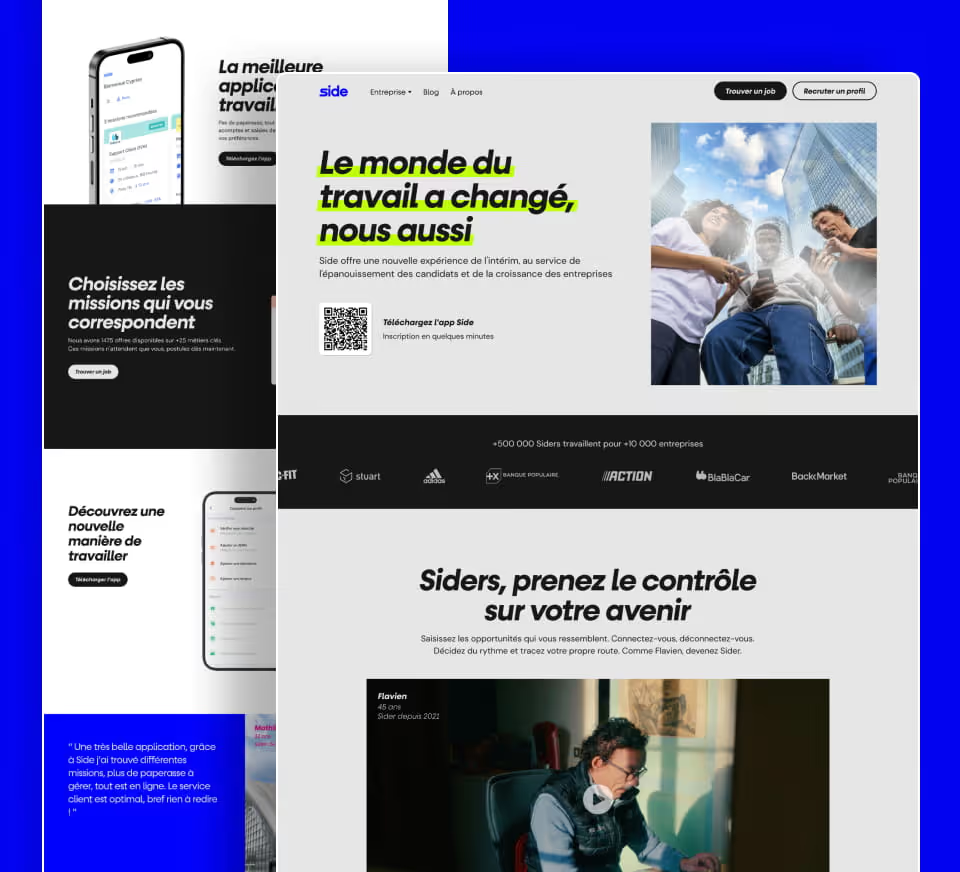
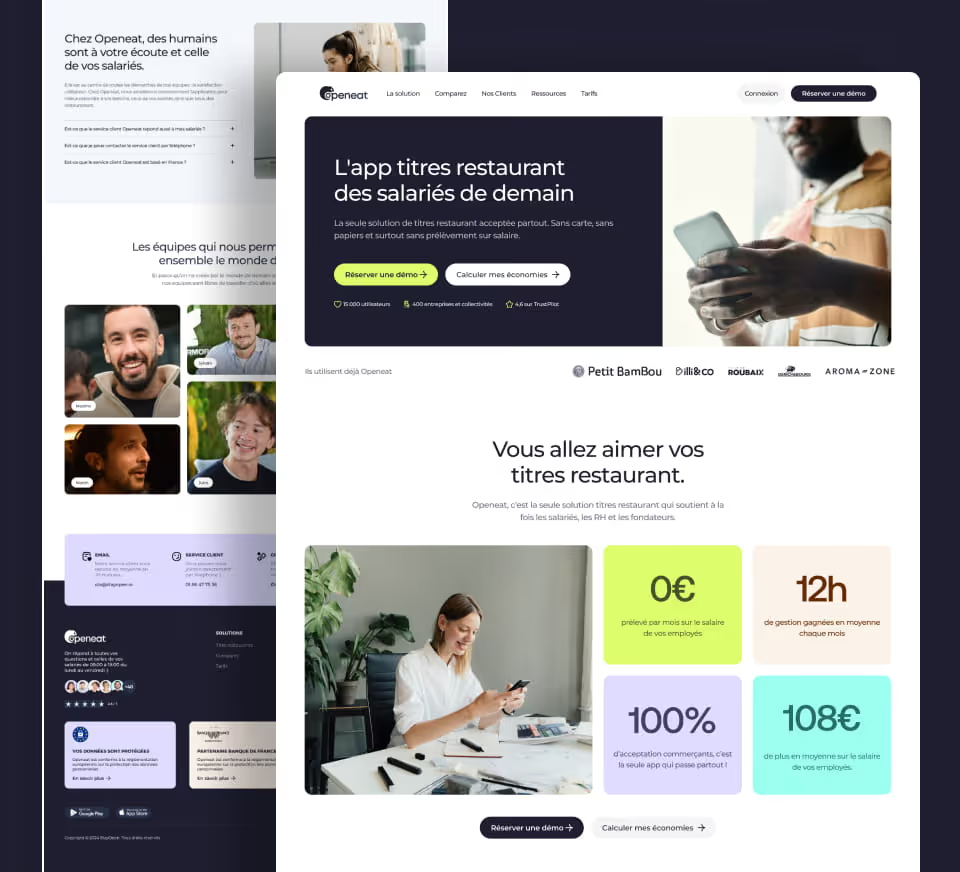
When the topic is the budget for the firm’s own website, Gemeos’ guide to the cost of a website also explains why costs vary according to page count, design, functionality, CMS and content requirements.
For the architecture assignment itself, the main objective is to show that the firm treats budget as a project constraint to manage rather than a taboo subject.
Reassure through knowledge of the local area
Location can be decisive for some clients.
A firm that works regularly in a region can show completed projects, partners, local building types and its understanding of the regulatory or urban context. This proof is particularly useful for private clients, regional developers or companies looking for a nearby partner.
Local SEO can support this demonstration when it is based on genuine geographic pages. Gemeos’ local SEO guide explains that city pages should provide specific information, proof and a real offer in the area.
A local architect page can therefore bring together projects, team members, assignment types and location-specific content instead of repeating generic copy.
Make portfolio quality compatible with website performance
A website that takes ten seconds to display its projects can immediately damage trust.
Architecture portfolios often combine high-resolution images, video and animations. These elements should be optimised to preserve a smooth experience on mobile and on slower connections.
Gemeos explains how to optimise Webflow images for Core Web Vitals by working on formats, dimensions, loading priorities and responsive images. These technical choices are particularly important on websites where photography accounts for most of the page weight.
Performance is not opposed to visual quality. It simply requires serving the right file, at the right time and at the right size.
Make it easy for professional stakeholders to verify the firm
A client may share the website with several people before making a decision: management, project team, client adviser, partners or associates.
Pages should therefore be easy to share and understandable out of context. A project with a clear URL, precise title and structured information is more useful than a gallery that depends on complex navigation.
The website should also work properly on desktop, mobile and when a link is shared. A clean preview with a title and image makes it easier to circulate references during the selection phase.
UX/UI quality is important here. A creative interface can remain original while still making browsing, comparison and sharing easy. Gemeos’ ranking of the best UX/UI agencies illustrates the need to combine art direction with a clear understanding of user behaviour.
Explain what happens after contact
A CTA is more reassuring when it explains the next step.
“Contact us” is vague. “Tell us about your project and we will come back to you to confirm the scope and arrange an initial discussion” provides far more visibility.
The form can explain the information requested and the type of response to expect. If the team offers an initial phone call, site visit, video meeting or scoping workshop, it is useful to say so.
This small amount of transparency reduces friction. Prospects know what they are triggering when they leave their details.
Design a form that genuinely fits architecture projects
A generic name, email and message form forces prospects to write their own brief and the team to repeat the whole qualification process.
A few structured fields can improve the conversation: project type, location, programme, approximate area, status of the site or property, timeline and contact details.
However, avoid asking for too much information. Technical documents, drawings, detailed budgets or administrative files can be collected after an initial discussion once the project has been confirmed as relevant to the firm.
The form should facilitate the conversation, not replace it.
Use the CMS to keep proof points up to date
Reassurance deteriorates quickly when a website is no longer maintained.
A project marked “in progress” for four years, a team member who has left or an expertise page with no recent projects can all send the wrong signal.
A well-structured Webflow build makes it possible to centralise projects, team members, categories and information. When a project changes status or a new project is published, the relevant pages can update automatically.
This autonomy matters for firms that regularly publish competition entries, construction updates or completed projects without wanting to involve a developer for every change.
Which mistakes reduce trust on an architect’s website?
The first is overpromising. Statements such as “we deliver every type of project” or “unmatched expertise” are less credible than specific proof.
The second is a lack of context in project pages. Without the scope, constraints or status, visitors do not know what the firm actually did.
The third is an anonymous team. Prospects want to know who they may work with.
The fourth is a highly aesthetic website that is difficult to use. Opaque navigation can be interpreted as a lack of attention to the client experience.
The fifth is outdated information. Trust also depends on the impression that the firm is active and the website reflects its current reality.
The sixth is a contact process with no explanation. Asking for a lot of information without explaining what happens next can discourage otherwise qualified prospects.
Which website structure reassures clients most effectively?
There is no single ideal architecture, but some building blocks are particularly useful.
The homepage clarifies positioning and key markets. Expertise pages explain what the firm can do. The portfolio provides proof. Project pages explain context and scope. The team page introduces people. Local pages demonstrate geographic presence when relevant. The blog answers deeper questions. The contact page prepares the first conversation.
Internal links between these pages allow trust to build progressively. A visitor may enter through a project, discover the associated expertise, read an educational article and then make contact without ever following the exact journey planned in the main menu.
That is why the website should be designed as a connected set of answers rather than a sequence of corporate sections.
A few figures that reinforce the need for differentiation
The 2025 CNOA-Batiactu Barometer, conducted among 1,326 architects registered with the Order, reports that 47% consider their activity to be declining and 62% are pessimistic about the coming months. The study also shows that 55% are concerned about how the architect’s role is evolving in construction and renovation. In this context, clearly explaining value, role and methodology on the website becomes more important than a series of generic institutional promises.
First impressions also happen on mobile. According to the 2025 Digital Barometer from Arcep, 89% of the population uses the internet on mobile. Team pages, project pages and methodology pages therefore need to reassure with the same quality of experience on smartphones as on desktop.
Good to know
Reassurance is not about piling up logos, awards and certifications. It is about reducing the client’s areas of uncertainty. A coherent brand image creates the right framework, web design makes proof easy to read, and high-quality content explains what the firm actually takes responsibility for.
Checklist of proof points to distribute across the website
Projects comparable to the prospect’s programme
The firm’s exact role and scope on each project
A clear presentation of partners, teams and expertise
Working methodology and the main stages of an assignment
Technical skills, qualifications or awards presented in context
Testimonials describing the working relationship and project trade-offs
Service areas illustrated with real local projects
A clear next step after contact
FAQ
What information does a client look at first on an architect’s website?
References close to their project, the firm’s role, the team, assignment types, location and working methodology are among the most important elements for quickly assessing whether a firm is relevant.
Should completed project budgets be displayed?
Not systematically. When they can be published and provide a useful benchmark, a budget or range can help. Confidentiality and commercial relevance should always be taken into account.
Are certifications important for reassurance?
They can be, depending on the project, but they need to be explained. Clients should understand their practical value rather than simply seeing a collection of logos.
Should client testimonials be published on an architect’s website?
Yes, when testimonials describe a precise and credible experience. Feedback about collaboration, trade-off management or project monitoring is especially useful because it shows something the portfolio cannot prove on its own.
Can a highly creative website lose prospects?
Yes, if creativity makes information difficult to find, slows navigation or complicates contact. Strong art direction can coexist perfectly with a clear user experience.
Which CTA should an architect’s website use?
The best CTA depends on positioning. “Tell us about your project”, “Speak with our team” or “Discuss a similar project” may be more appropriate than a simple “Request a quote” for complex assignments.
Good to know
Heading
Lorem ipsum dolor sit amet, consectetur adipiscing elit. Suspendisse varius enim in eros elementum tristique. Duis cursus, mi quis viverra ornare, eros dolor interdum nulla, ut commodo diam libero vitae erat. Aenean faucibus nibh et justo cursus id rutrum lorem imperdiet. Nunc ut sem vitae risus tristique posuere.




Lorem ipsum
Lorem ipsum dolor sit amet, consectetur adipiscing elit, sed do eiusmod tempor incididunt ut labore et dolore magna aliqua. Ut enim ad minim veniam, quis nostrud exercitation ullamco laboris nisi ut aliquip ex ea commodo consequat. Duis aute irure dolor in reprehenderit in voluptate velit esse cillum dolore eu fugiat nulla pariatur.









