How Do You Boost Sales Page Performance with Neuromarketing?
Boost the performance of your sales pages with neuromarketing techniques: tips from Gemeos, a Webflow agency
article summary
- Neuromarketing helps design sales pages around the brain’s intuitive and emotional responses.
- A clear value proposition should engage fast thinking without forcing visitors to work hard to understand the message.
- The page should first capture attention with a simple message, strong visual contrast, and an immediately identifiable benefit.
- Persuasion relies on proof, customer cases, and demonstrations that help prospects picture the outcome.
- CTAs perform better when they highlight the benefit after the action rather than using a generic instruction such as “Subscribe.”
Want to take it further? Ask:
First, what is neuromarketing?
Neuromarketing is where neuroscience meets the art of marketing. It helps us understand how consumers’ brains react to marketing stimuli and aims to optimize marketing strategies using real data.
Let’s focus on cognitive psychology and thinking systems
I recently listened to an interview with Romain Bouvet (a doctor of social & cognitive psychology), where he talks about the 2 thinking systems and why they matter in marketing
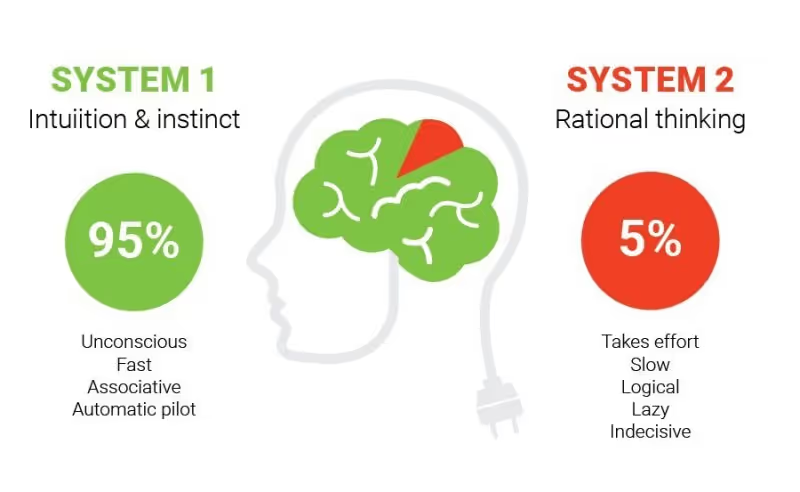
“System 1” is fast, intuitive, and emotional, while “System 2” is slower and more deliberate
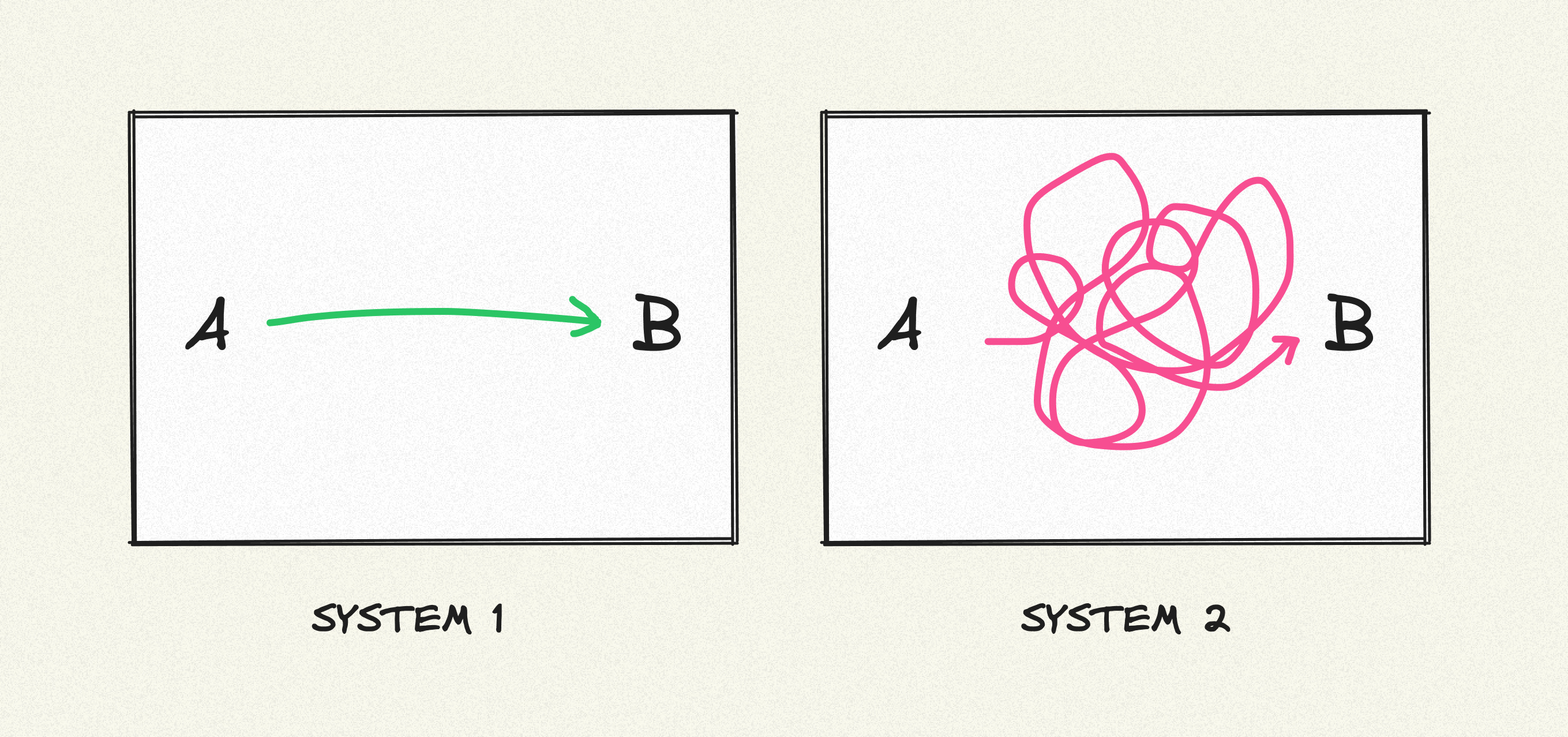
Here’s an example:
- When you read (2+2), the 4 comes to mind unconsciously. That’s what psychology calls fast thinking (System 1)
- On the other hand, if you read (12*18), nothing comes to mind right away. You have to calculate it, which requires thought. That’s what psychology calls slow thinking (System 2)
System 1 is an unconscious system that triggers a mental image, while System 2 is a conscious system.
These are 2 different processes in our brain, and when you activate 1, you don’t activate 2, and vice versa
To create an irresistible offer and increase your sales, you need to consistently speak to your prospects’ System 1
Unfortunately, most companies operate on System 2. Their value proposition isn’t clear, the information isn’t in the right order, and they dump huge blocks of text on people, making prospects do the work(to read)
That creates doubt and distrust in prospects’ brains, which makes a purchase unlikely…
System 1, on the other hand, triggers understanding and emotions.
He gives a great example in his interview:
Let’s imagine we want to help children starving in Africa
He created 2 flyers to raise donations
- In version 1, he says “3 million children facing famine”
- In version 2, he says “Her name is Meyya. She’s from Mali, she’s 7 years old, and she’s facing famine”
Results:
- 2x more donations on version 2 because we picture Meyya (mental image), which triggers emotions (altruism)
- With version 1, “3 million children” is too abstract for our brain to picture, so there’s no mental image, no emotion, and no action…
That’s what you need to do in marketing (not play on sadness), but adapt your communication to the brain and its ability to make decisions.
It can come down to small details, so I strongly recommend running A/B tests
{usecases}
Landing page template
Now that you know a bit more about the different thinking systems and understand why having a clear value proposition matters.
I’m sharing a landing page template, built on neuromarketing principles and on the results of the many landing pages we’ve created with Gemeos
The landing page is split into 7 sections:
- Hero header
- Trust signal #1 (logos)
- Benefits
- Pricing / Offers
- Trust signal #2 (testimonials & use cases)
- CTA Banner
- Footer
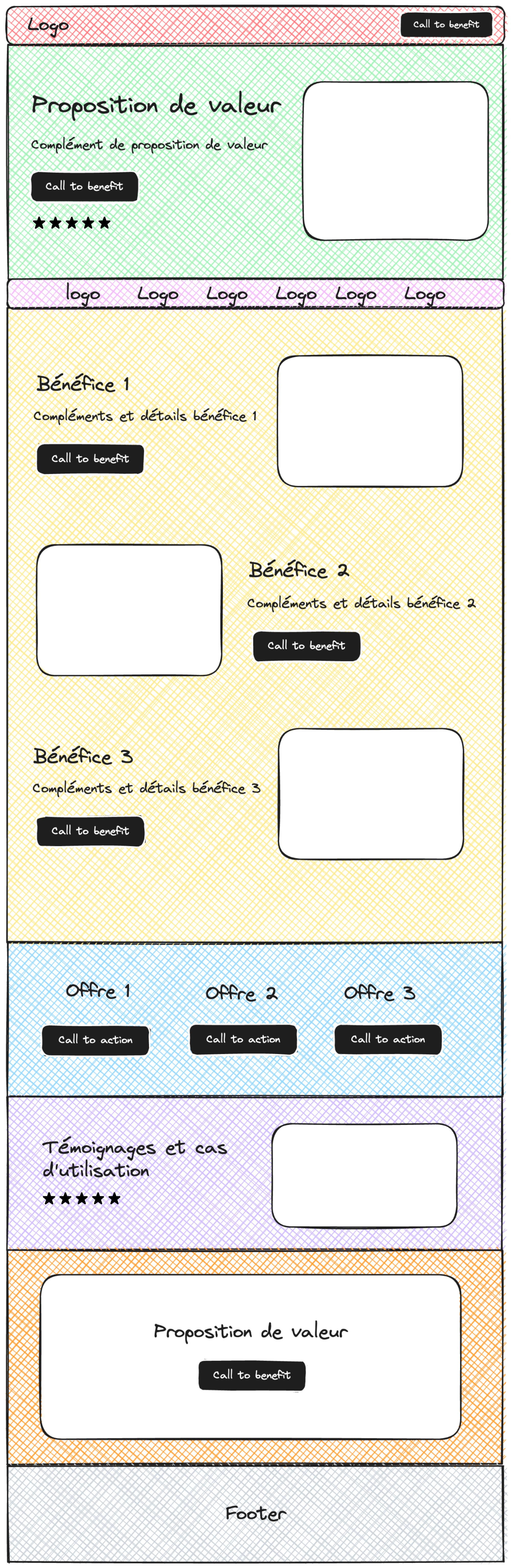
This template follows the 3 key steps of neuromarketing:
1. GRAB attention
When your prospect lands on your page, you have 10 seconds to capture their attention.
That’s the job of your hero header. It needs to be clear so visitors immediately understand why your service or product matters to them.
2. PERSUADE the prospect
Once you’ve captured their attention, your prospect is emotionally engaged and you can move on to persuasion
For the persuasion stage, there’s one very simple rule: Clarity, Clarity, Clarity!
- Focus on the benefits of your product or service (Benefits section)
- Don’t sell features. Sell the value they create

Example: Steve Jobs during the iPod Nano launch
❌ 1GB of storage in the smallest MP3 player in the world
✅ 1,000+ songs in your pocket
Features talk about your product, while benefits talk about your customers
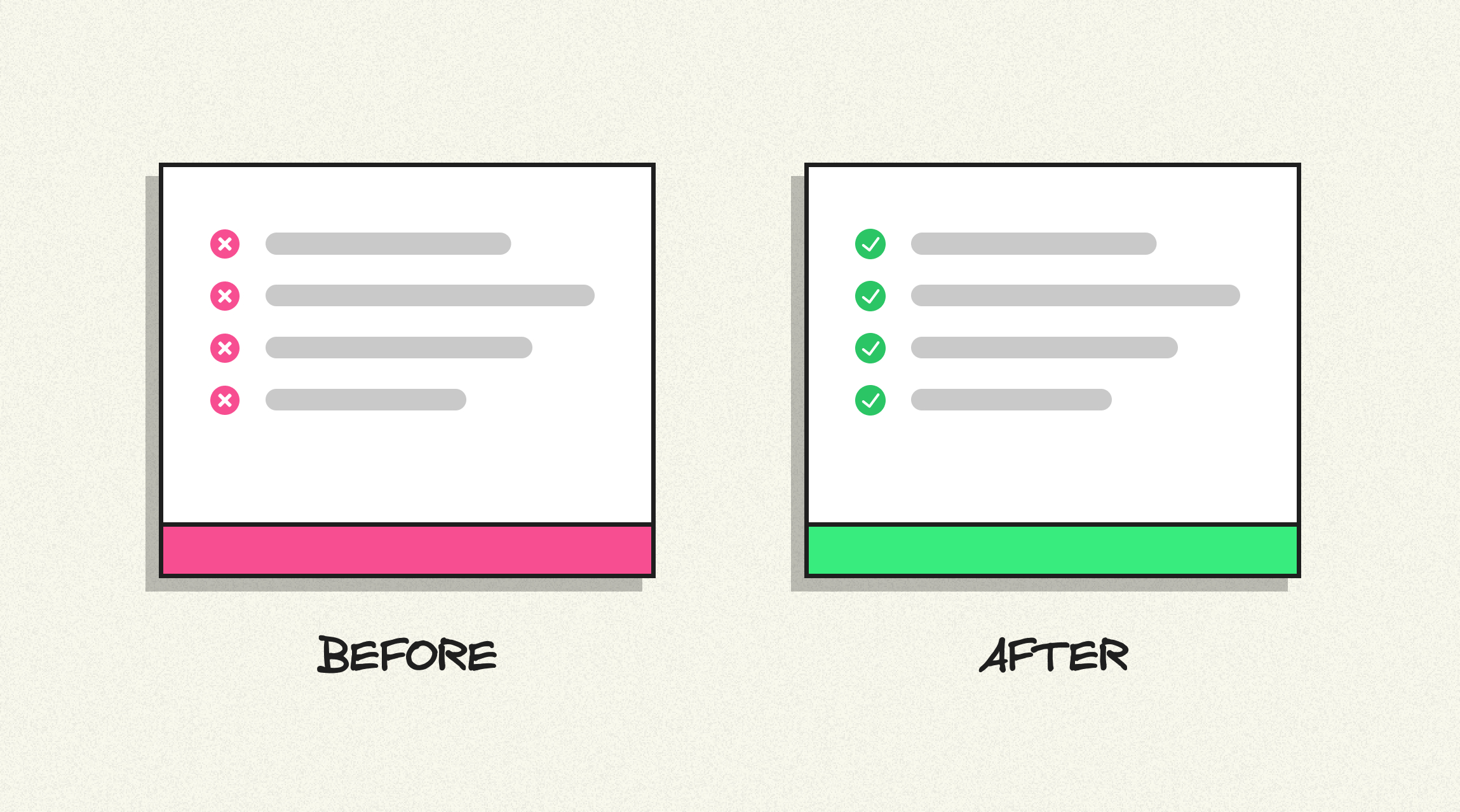
Show customer testimonials and case studies. It’s a powerful persuasion tool. Showing a before and after creates mental imagery and helps your prospect picture themselves using it
3. DRIVE action
Once you’ve captured your prospects’ attention and persuaded them, you need to drive them to take action.
To do that, replace your Call to action with Call to benefits.
They help reintroduce emotion and motivation to encourage prospects to buy or fill out your form.
Examples:
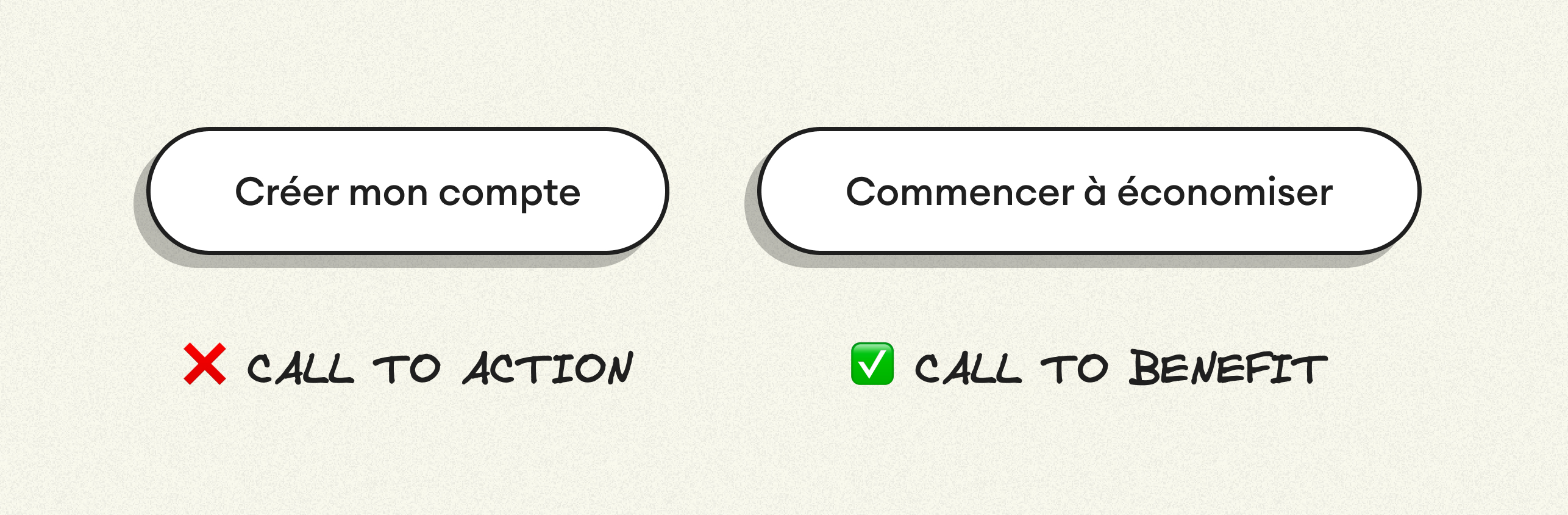
A simple way to move from one to the other is to add a “why?” in the middle:
Subscribe → Why? → To access the full catalog
Don’t tell your prospects to take action.
Tell them what they get by taking action.
Conclusion
To sum it up, the recipe for success on your sales pages comes down to these 3 steps:
- Capture your prospect’s attention
- Persuade them of your product/service’s value
- Drive them to take action
Good to know
Heading
Lorem ipsum dolor sit amet, consectetur adipiscing elit. Suspendisse varius enim in eros elementum tristique. Duis cursus, mi quis viverra ornare, eros dolor interdum nulla, ut commodo diam libero vitae erat. Aenean faucibus nibh et justo cursus id rutrum lorem imperdiet. Nunc ut sem vitae risus tristique posuere.







Lorem ipsum
Lorem ipsum dolor sit amet, consectetur adipiscing elit, sed do eiusmod tempor incididunt ut labore et dolore magna aliqua. Ut enim ad minim veniam, quis nostrud exercitation ullamco laboris nisi ut aliquip ex ea commodo consequat. Duis aute irure dolor in reprehenderit in voluptate velit esse cillum dolore eu fugiat nulla pariatur.