SEO: A Simple Definition of Organic Search and How It Works
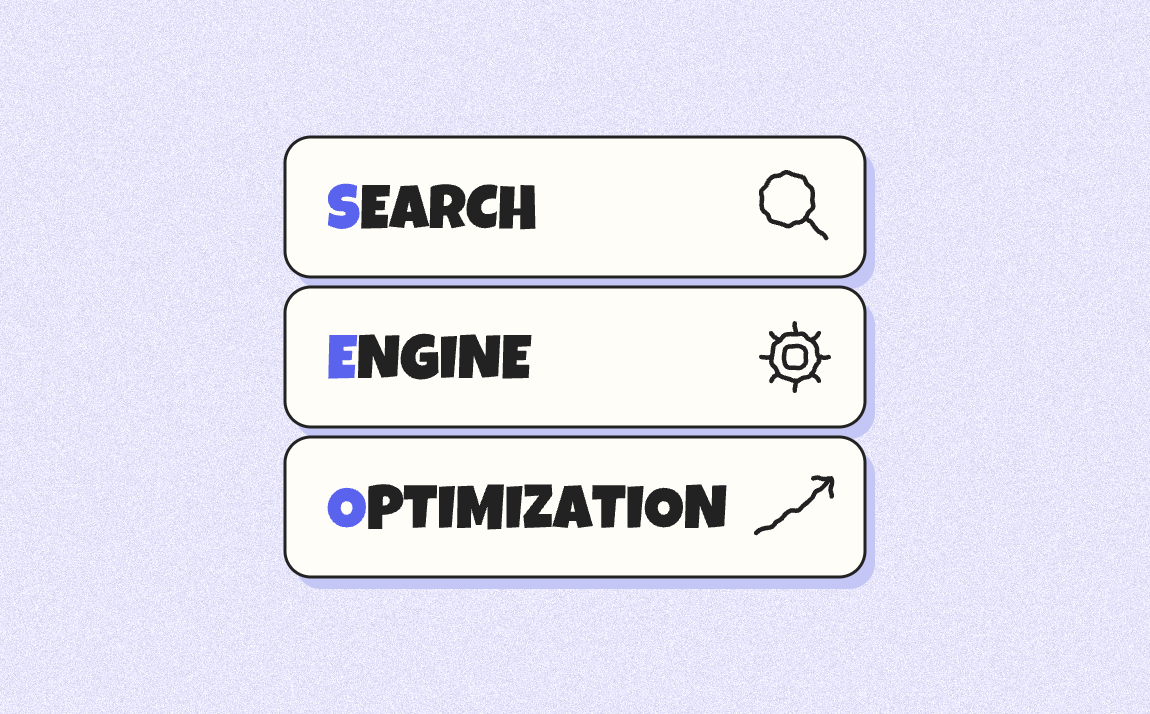
SEO, or Search Engine Optimization, covers the methods used to improve a site's visibility in a search engine's organic results. Unlike advertising, the site doesn't pay for each click: it works on its structure, content, relevance, and authority to be better understood and better ranked.
article summary
- SEO improves a site's visibility in search engines' organic results.
- SEO relies on three complementary levers: technical, content, and authority.
- SEO isn't about repeating keywords, but about properly meeting users' needs.
- Results depend on the level of competition, the state of the site, and the quality of the actions taken.
- SEO now extends to visibility within AI-enhanced search experiences.
Want to take it further? Ask:
What exactly is SEO?
SEO stands for Search Engine Optimization. In French, it's usually referred to as "référencement naturel" or "référencement organique," meaning organic search.
The goal is simple: let a relevant page be discovered, understood, indexed, and then shown to users when it answers their search. SEO work therefore focuses as much on engines' ability to access the site as on the quality of the answer provided.
SEO and organic search: the same thing
In practice, these terms all describe the same field. "SEO" is the term most commonly used by professionals, while "organic search" remains clearer for a beginner audience.
The word "organic" doesn't mean traffic arrives without effort. It mainly indicates that the click isn't bought individually through an ad campaign. Producing content, improving a site, or earning links takes time, skill, and sometimes budget.
SEO vs SEA: the key difference to understand
SEO targets unpaid results. SEA refers to buying visibility through advertising platforms like Google Ads.
With SEA, a campaign can generate traffic as soon as it's activated, but visibility drops once the ad budget stops. With SEO, progress is generally slower, but a well-ranked page can keep attracting traffic without paying per click.
The two levers aren't at odds. A company can use SEA to quickly capture demand while building an SEO strategy in parallel to develop more sustainable organic acquisition.
How does SEO work?
How SEO works can be summarized in three stages: the engine discovers pages, analyzes them, and decides which ones to show for a given query.
Crawling and indexing by search engines
Search engine bots crawl the web by following links and discovering URLs through various sources, including sitemaps. This exploration phase is called crawling.
A discovered page isn't automatically indexed. The engine analyzes its content, accessibility, technical signals, and relationship to other pages before deciding to add it to its index. A blocked, duplicate, or low-value page can remain out of the index.
Ranking by relevance and authority
When a user runs a search, the engine selects the pages it considers most useful for that request. It factors in numerous signals related to content, context, overall site quality, links, and the experience offered.
There's therefore no single formula to apply. A good SEO strategy starts by understanding search intent, then builds a page able to answer it with precise content, a clear structure, and a sufficient level of trust.
The 3 pillars of SEO
The three pillars of SEO are technical, content, and authority. They reinforce each other: excellent content can remain invisible if it's hard to crawl, while a technically clean site won't rank well long-term with weak pages.
| Pillar | What it covers | Concrete example |
|---|---|---|
| Technical | Crawling, indexing, performance, architecture, and errors | Fixing an important page blocked by noindex or incorrectly redirected |
| Content | Topics, intent, quality, and depth of answers | Clearly answering a search intent with the right page |
| Authority | Popularity, backlinks, external credibility | Earning relevant editorial links from other sites |
Technical SEO
Technical SEO aims to make the site accessible, fast to crawl, and understandable for search engines. It covers indexing, redirects, canonical tags, performance, internal linking, and error handling.
A technical SEO audit is used to identify obstacles preventing important pages from being properly crawled or indexed.
Content SEO
SEO content answers users' searches with the right page, the right angle, and the right level of depth. The work isn't just about picking a keyword: you need to understand what the person actually wants and avoid creating several pages that compete with each other.
Analyzing search intent helps decide whether to produce a definition, a guide, a comparison, a service page, or another format.
Netlinking and authority
Links received from other sites can strengthen a domain or page's credibility and popularity. Their value, however, depends on their relevance, quality, and the context in which they were obtained.
A sound netlinking strategy favors useful, credible links over an artificial volume of backlinks.
Why does SEO matter for a business?
SEO lets you capture demand that already exists. When a prospect searches for a service, a product, a solution, or information related to your business, being visible at the right moment can generate qualified visits without paying for every click.
Its business value, however, depends on the quality of the targeted queries. Attracting many visitors on searches unrelated to your offering creates little value. An effective SEO strategy therefore connects the topics worked on to business priorities, then measures leads, conversions, and revenue whenever tracking allows it.
It's also a cumulative asset. Useful content can keep generating impressions and clicks after publication, provided it's maintained, updated, and properly integrated with the rest of the site.
For a company wanting to structure this channel, SEO support helps prioritize technical, editorial, and authority actions based on their potential impact, rather than treating SEO as a list of isolated tasks.
SEO and generative AI: is search changing in nature?
SEO remains the foundation of organic visibility, but search interfaces are evolving. Engines can now synthesize certain answers directly and highlight sources within AI-assisted experiences.
The underlying work stays similar: making pages accessible, producing reliable answers, structuring information clearly, and building a credible brand. GEO, or Generative Engine Optimization, adds a complementary lens focused on how generative engines understand, select, and cite sources.
A GEO audit can help analyze this specific visibility without confusing it with traditional organic search. It doesn't guarantee a citation in a generated answer.
SEO, a long-term investment
SEO isn't just about keywords or a one-off optimization. It means building a site that's easy to crawl, content that's genuinely useful, and enough authority to be chosen over other answers.
The priority is to connect every action to a user intent and a measurable business objective. That's what turns organic search into an acquisition channel rather than a mere visibility exercise.
FAQ
Is SEO free?
The organic click isn't billed by the search engine, but SEO isn't free to produce. It can require internal time, tools, writing, development, analysis, and sometimes netlinking.
How long does it take to see SEO results?
There's no universal timeframe. The pace of progress depends notably on the site's current state, the competition, the domain's history, the type of query, and the scale of the changes made.
What's the difference between on-page and off-page SEO?
On-page SEO covers optimizations made on the site and its pages: content, tags, structure, internal linking, or experience quality. Off-page SEO mainly concerns external signals, notably backlinks and brand mentions.
Does SEO work for every type of site?
SEO can be useful for many sites, but its value depends on whether searched-for demand exists and whether the site can meet it. For some business models, other channels may be a priority or a complement.
Do you need technical skills to do SEO?
Not for every task. Topic research, writing, and analysis can be accessible to a marketing profile, while indexing, JavaScript rendering, log files, or certain migrations require more technical skill.
Good to know
Heading
Lorem ipsum dolor sit amet, consectetur adipiscing elit. Suspendisse varius enim in eros elementum tristique. Duis cursus, mi quis viverra ornare, eros dolor interdum nulla, ut commodo diam libero vitae erat. Aenean faucibus nibh et justo cursus id rutrum lorem imperdiet. Nunc ut sem vitae risus tristique posuere.












Lorem ipsum
Lorem ipsum dolor sit amet, consectetur adipiscing elit, sed do eiusmod tempor incididunt ut labore et dolore magna aliqua. Ut enim ad minim veniam, quis nostrud exercitation ullamco laboris nisi ut aliquip ex ea commodo consequat. Duis aute irure dolor in reprehenderit in voluptate velit esse cillum dolore eu fugiat nulla pariatur.