Projects
 Our Offers
 Dedicated team
 Blog
 Academy
 About Us
Tips8 min read
How much does a website for an architect cost?
A client should be able to understand your role in a project, beyond the photographs of the building. At Gemeos, the budget for building the website is €5,000 to €9,500 excl. VAT for "Independent architect" (6 pages and 8 projects, 1 language). For "Practice with a structured portfolio", allow €6,000 to €13,000 excl. VAT (20 projects, 4 categories and profiles for 5 team members).
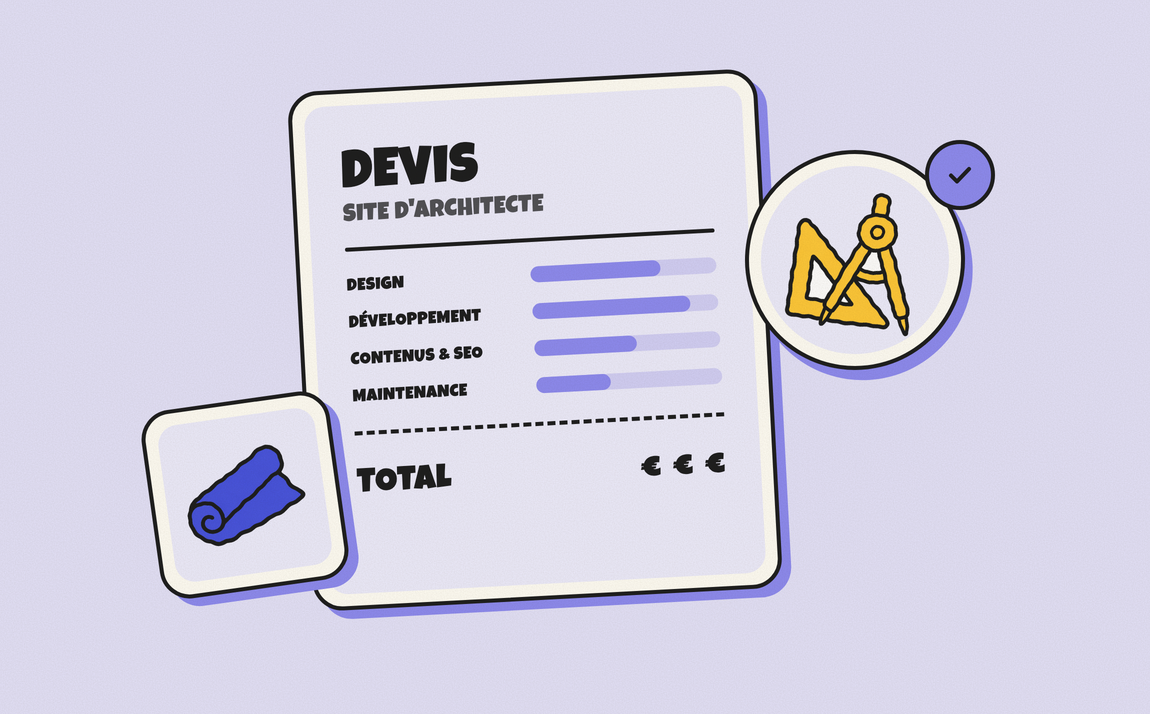
What budget should you plan for your architecture practice's website?
Budgets are given excluding VAT for the volumes and features stated. For a new build: scoping, site structure, UX/UI, CMS development, integration of the copy and visuals you supply, testing and onboarding. For a redesign, migration or enhancement: the work is carried out on an existing site. These services are not automatically cumulative. Copywriting, translations, new visuals, licences, subscriptions and third-party costs are to be specified in the quote.
| Service and project | Budget excl. VAT | Scope and limits |
|---|---|---|
| New build — Independent architect | €5,000 to €9,500 | 6 pages and 8 projects, 1 language. Portfolio, approach and contact. Selection of photos supplied, no photo shoot. |
| New build — Practice with a structured portfolio | €6,000 to €13,000 | 20 projects, 4 categories and profiles for 5 team members. Project pages, filters and editable content. No client area or BIM viewer. |
| New build — High-end practice | €5,000 to €11,000 | 15 projects with 6 editorial templates and dedicated art direction. Project storytelling, images and light interactions. Video, 3D and photography priced separately. |
| New build — International practice | €6,000 to €13,000 | 30 projects, 2 languages and 3 areas of expertise. Multilingual portfolio, team and migration of 50 URLs. Translations supplied, no project extranet. |
| New build — Client document area | €5,500 to €11,500 | 10-page showcase site and a private area for 3 types of user. Access, documents and notifications to be scoped. No custom site document management or BIM. |
| Redesign — Redesign of the existing site | €6,000 to €12,500 | 50 URLs to review, 1 language, up to 5 templates; CMS retained. Projects, visuals and profiles carried over. Checks: galleries, photo credits and project links. Existing copy lightly revised; no change of CMS and no added business software. |
| Technical migration — CMS migration with design retained | €6,500 to €19,000 | 50 URLs, 1 language, 1 source CMS and 1 target CMS to be specified. Transfer of projects, visuals and profiles. Checks: galleries, photo credits and project links. Design and functional scope retained; exportable sources and available interfaces; licences and editorial redesign priced separately. |
| Site enhancement — Structuring the existing portfolio | €2,000 to €5,500 | Existing site, 25 projects and 4 filters. Taxonomy, project template and project pages carried over. No overall art direction or new photography. |
Which references should shape your architecture practice's website?
Start by choosing the references that can support your positioning. A practice focused on refurbishment, a firm seeking commercial commissions and an architect designing private houses do not need to present their work in the same way. Scoping is used to define this selection and the routes that make it accessible.
This service may include an interview with the partners, an inventory of the portfolio and the organisation of your areas of expertise. Its deliverable should make clear which pages need to be created and which elements the practice will supply. A list of pages with no thought given to the references leaves much of the work to be resolved during design.
A project with a web agency for architects should therefore start from the practice you want to present today. An old site may show projects that are still relevant while giving an outdated picture of your commissions, your team or the areas where you work. The redesign has to decide what to keep and what to rewrite.
There is no need to publish your entire archive at launch. A documented selection, ready to be expanded, can be a more manageable scope than carrying over a mixed set of files in full. The quote should nevertheless plan how you will add future projects, so that each new publication does not require fresh design work.
How does the portfolio affect the cost of an architect's website?
The cost of building a website depends on the work needed to turn your project files into publishable pages. Photographs that are already selected and credited do not need the same preparation as a set of unsorted files, technical drawings and scattered copy. This preparation deserves its own scope.
A project page is both a template and content
Design defines the order of information, the image layouts, the captions and the editing fields. Integration then carries over each project. The template may be shared, but the visuals still have to be selected, the context written and the information in each file checked.
To showcase completed projects, the pages must explain the practice's role. The editorial quote will specify who gathers this context, who writes and who approves. A full commission must not be attributed to the practice if its involvement stopped at a given stage.
Categories must also match the information available. A filter by building type or type of commission requires properly documented projects and search states to be designed. Adding criteria that are rarely filled in can make browsing more complicated without justifying their development.
Preparing images is a service in its own right
The provider may plan for selection, cropping, screen-ready formats, captions and file optimisation. A photo shoot, extensive retouching or new drawings are priced separately if you request them. Their inclusion does not follow simply from having a gallery.
The Ordre des architectes (the French architects' professional body) sets out the precautions to take with photographs, in particular the rights of the photographer and of the owner. Before integration, have the publication conditions of the selected documents checked. The web project must identify who prepares the permissions and credits; it must not assume that all available files can be published.
Which services should you compare when creating an architect's website?
To explain the differences between proposals, compare volumes and deliverables: designing a portfolio, preparing project files and carrying over existing projects are separate pieces of work. The services and the content supplied must match the costed scenario.
| Work requested | Deliverable to define | Decision for the practice |
|---|---|---|
| Positioning and structure | Selection of user journeys, site structure and templates | Which commissions do you want to make visible first? |
| Art direction and UX/UI | Mock-ups of projects, expertise and contact, on the relevant screens | Does your identity already exist, or does it need reworking too? |
| Portfolio content | Copy, prepared images and number of project pages added | Who supplies the project files, approves the roles and authorises publication? |
| Development and administration | Reusable templates, navigation, any filters and fields | Which variants must be handled without rebuilding the pages? |
| Carry-over and onboarding | Old pages processed, checks and training | Who will publish a new project with the correct credits? |
A refurbishment with before/after photographs, a competition study illustrated with drawings and a completed building do not offer the same things to read. A well-scoped portfolio plans for these cases from the mock-up stage and states how many project files will be prepared for launch. You can then compare the cost of designing the variants with the cost of the editorial carry-over, rather than a simple total of images.
A project map, filters combining building type and commission, or an interactive presentation of drawings may require custom development. Before paying for these features, check whether they help clients identify your skills and whether the practice will be able to feed them with each new reference.
Identity work must also remain explicit. Web design can organise an existing brand guide: typefaces, grids and image treatment. Rethinking the logo, the brand codes and their use on other media is a different piece of work, to be named if the practice needs it.
What design shows drawings and photographs well on an architect's website?
Customisation should serve the way you show architecture. A large image, a sequence of drawings or a before/after comparison may be relevant. Their design must remain compatible with reading the captions, navigating and reaching the contact details on a phone.
Ask for the mock-ups to use representative project files: a heavily photographed completed project, a project with drawings, a reference with longer copy. A screen designed around a single perfect image is not enough to show that the template will suit the rest of the portfolio.
Animations must have defined behaviour on mobile and when reduced motion is enabled. Have the expected states, the content concerned and how they hold up after the team makes a change specified. An effect that requires technical work for every new image undermines the autonomy you were promised.
The practice must be able to publish a study without photographs, add a completed project and correct a credit without rebuilding the portfolio. WordPress, Webflow or a headless architecture can be considered at Gemeos. The onboarding for the architecture website should demonstrate these variants with your own project files: a replaced image must not lose its caption, its author or its link to the commission.
Development must also plan for preparing and loading media. The quality of the originals, the formats and the displayed dimensions need to be examined. A general promise of a "fast site" is no substitute for checks on the pages actually delivered, with your images and your drawings.
How do you pay for better-scoped commission enquiries?
The contact journey should follow on from browsing the references. A private client may describe a site and the intended works; a professional client may want to discuss a brief and a commission. You need to collect enough context to prepare the reply, without turning the first contact into a full application.
The service then covers the information to request, the messages, the recipients and any onward transfers. An attachment or a connection to project-tracking software adds points to check: permitted formats, access to documents, actual receipt and handling by the practice.
To link the portfolio to commission enquiries, each reference must keep a path to the areas of expertise and to the contact page. The quote should specify how these links are designed, rather than plan an identical button added to every page with no context.
SEO can work on the practice's actual areas of expertise and locations. Gemeos SEO support starts at €1,000 excl. VAT per month, with actions to be defined. It remains separate from the site's foundations: page organisation, headings and handling of old addresses. Local pages are only worthwhile if the practice has relevant information and references to present on them.
For measurement, separate a project view, a contact click and an enquiry received. None of these actions on its own proves that a commission has been won. Tracking must match the tools available and the way enquiries are actually handled, without promising a commercial result calculated from visits alone.
What should you keep during the redesign and learn to manage afterwards?
A redesign must inventory the project pages, publications and links shared in the press or in your presentation documents. An SEO migration plans how old addresses are handled and the checks after switchover. A withdrawn reference and a retained expertise page do not necessarily call for the same destination.
Also prepare the content that must not be carried over: old contact details, commissions attributed imprecisely, unauthorised visuals or confidential documents. The decision lies with the practice; the provider needs to know what to integrate and what to leave unpublished.
Before delivery, check with your contributors' logins:
- Adding a project from an approved project file.
- Replacing an image without losing its caption or credit.
- Changing a project's status or category.
- Reading a drawing and returning to the portfolio on a phone.
- Receiving an enquiry sent from a project page.
- The path from an old address to its planned destination.
These tests give the training a concrete objective. Also ask for access to the accounts, the backup arrangements and the contact responsible for incidents. Being able to change a piece of text does not mean the team can modify every visual behaviour.
Recurring costs come on top: domain, hosting, any licences and maintenance. Separate technical upkeep from preparing a new photo shoot, writing project pages or a design change. The contract should explain who steps in and which requests need a new quote.
To get a quote for your practice's website, prepare a selection of projects, the state of your copy and images, and the tasks you want to outsource. The proposal can then link the price to the services your portfolio and your organisation need.
FAQ on the cost of a website for an architect
Should the site speak differently to private clients and to professional clients?
Yes, when the practice genuinely works with both audiences. A private client will look in particular to understand the commissions and how to start a first conversation. A professional client may need to identify comparable references and your role in delivering them. The portfolio can share a template, but the selections, copy and contact routes must be adapted. State which audience you want to develop so that the budget goes to the project files that support this goal.
Can you launch the site with a selection of projects and then complete the portfolio?
Yes, if the template and the administration have been designed for the expected additions. Define the number of references added at launch and the variants needed. A new category, a project without photographs or a project page with many drawings must be manageable according to the rules set out. Their editorial preparation still needs to be organised.
Do all the buildings need to be photographed before asking for a quote?
No. The quote can start from an inventory distinguishing available images, documents to check and photographs to be produced. You do, however, need to identify the references that will be ready to go live. Photography, its rights and its preparation for the web should not be assumed to be included in building the site. Professional confidentiality adds a condition specific to the profession when you want to create an architect's website: a private client's house can only be published with their consent, ideally provided for by a clause in the project management contract.
Can a competition project share the template used for completed projects?
Yes, if the template lets you indicate its status and adapt the information. A study does not have to be presented as a completed building. The work consists of planning the appropriate fields, captions and documents. If the two presentations differ significantly, the quote should explain the design variants required.
Is an area for sharing drawings with clients included in the price of the showcase site?
Only if it is expressly provided for. Accounts, per-project access and restricted documents are a different scope from the public portfolio. If you already use a sharing service, first examine what needs to be kept. Building a new area requires defining the permissions, operations and upkeep; the showcase site's price range is not enough to cost it.
Can old references be kept without weighing down the new site?
Yes, by distinguishing the featured selection from the archives you want to keep accessible. The inventory should specify the copy, images and addresses to carry over, as well as the information to update. A shareable archive area does not mean placing every reference in the main navigation, but carrying it over represents a volume of work to be defined.