Projects
 Our Offers
 Dedicated team
 Blog
 Academy
 About Us
Tips9 min read
How much does a website for a caterer cost?
"A cocktail reception for 80 guests" says nothing about delivery, setting up the buffet or the staff on site. At Gemeos, building the website costs €5,000 to €9,500 excl. VAT for "Local caterer" (7 pages and 4 offers, 1 language). The "Receptions and weddings" scope represents a budget of €6,500 to €13,000 excl. VAT (12 pages, 8 sample menus and 15 events).
A caterer's website may present a bespoke reception, a wedding or a regular packed-lunch platter service. Each activity calls for its own way of showing menus, past events and service conditions. The format should follow the way your team prepares a proposal or confirms an order.
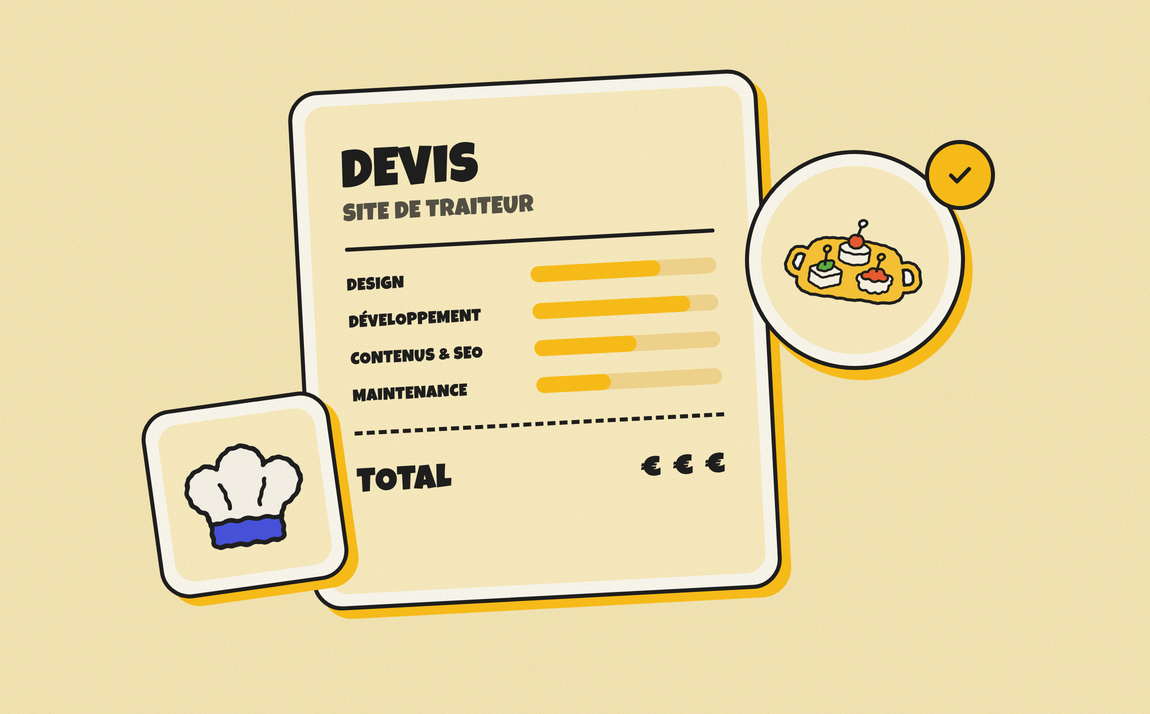
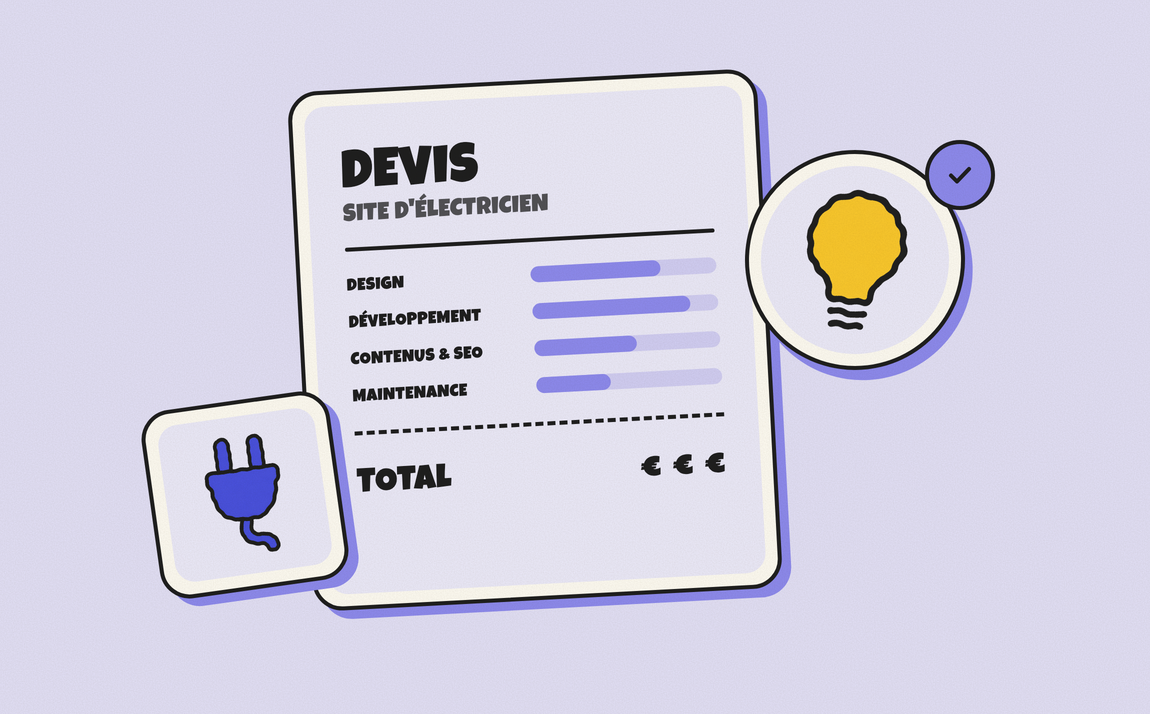
What budget should you plan for your catering business website?
Budgets are given excluding VAT for the volumes and features stated. For a new build: scoping, site structure, UX/UI, CMS development, integration of the copy and visuals you supply, testing and handover. For a redesign, migration or upgrade: the work concerns an existing site. These services are not automatically cumulative. Copywriting, translations, new visuals, licences, subscriptions and third-party fees are to be specified in the quote.
| Service and project | Budget excl. VAT | Scope and limits |
|---|---|---|
| New build — Local caterer | €5,000 to €9,500 | 7 pages and 4 offers, 1 language. Sample menus, events and contact. No online payment or ordering. |
| New build — Receptions and weddings | €6,500 to €13,000 | 12 pages, 8 sample menus and 15 events. Galleries, services and an enquiry qualified by date and number of guests. No automatic quote for the meal. |
| New build — Corporate caterer | €6,500 to €13,000 | 12 pages and 3 corporate journeys. Platters, cocktail receptions and recurring requests. No subscription management or delivery logistics. |
| New build — Online platter ordering | €6,000 to €13,000 | 40 products, 3 zones and payment. Basket, delivery dates and ordering constraints. Commissions and production software are separate. |
| New build — Network with local offers | €6,000 to €13,000 | 3 production kitchens, 60 products and 2 catalogues. Enquiry routing and menu variants. No kitchen ERP or delivery rounds. |
| Redesign — Redesign of the existing site | €6,000 to €12,500 | 40 URLs to review, 1 language, up to 5 templates; CMS retained. Menus, services and events carried over. Checks: dates, guest numbers and event forms. Existing copy lightly revised; no change of CMS or addition of business software. |
| Technical migration — CMS migration with design retained | €6,500 to €19,000 | 40 URLs, 1 language, 1 source CMS and 1 target CMS to be confirmed. Transfer of menus, services and events. Checks: dates, guest numbers and event forms. Design and functional scope retained; exportable sources and available interfaces; licences and editorial overhaul separate. |
| Site upgrade — Add a reception questionnaire | €1,500 to €4,000 | Existing site, 3 journeys and 10 fields. Date, number of guests, venue and transmission of the brief. No automatic price calculation or online ordering. |
What kind of website for a caterer: receptions on quote or packed-lunch platter orders?
A bespoke reception and a packed-lunch platter delivery do not call for the same journey. In the first case, the site helps the prospect describe their project and lets you assess the next steps. In the second, it may need to present products, apply ordering rules and confirm a delivery.
This choice shapes the quote before the design even starts. If every event requires a discussion about the venue, timings and resources needed, a catalogue with a basket can give an impression of simplicity that your operations cannot deliver. A well-designed form will be more consistent.
Conversely, if you sell standardised products with a set price and well-controlled delivery conditions, making customers type out every order in a message can become a burden. You then need to look at the number of products, variants, minimum quantities and how unavailable days are handled.
A short presentation can suit a targeted offer where getting in touch remains simple. Separate pages for weddings, corporate cocktail receptions and regular services require more content and design work.
How should a caterer's website present weddings and corporate services?
The offer should explain the reception format, the level of support and the conditions that matter for a first conversation. "Cocktail reception", "buffet" or "seated meal" are not enough to define the service. The prospect needs to understand what can be taken care of and what remains to be organised with them.
For a wedding, this may mean how the cocktail reception and dinner fit together, the preparatory meetings and the service options. For a business, the venue, timing, pace of the event and delivery may weigh more heavily in the decision. A site structure that separates these contexts makes for easier reading without locking your whole offer into a long brochure. Estimating the cost of a restaurant website means, among other things, defining how the menu will be updated and how tables will be booked with the chosen tool. For a caterer, presenting service levels and reception questions may call for different content and form work.
The copywriting therefore requires business knowledge. Who puts the proposals together? Are the menus examples or offers that are actually available? At what stage do you discuss equipment and staff? An agency can organise and write this content, but your team confirms what it is able to offer.
Work on the interface and web design should make these service levels visible close to the photos and quote requests. An elegant label that forces visitors to download a brochure to find out whether service is included does not make comparison easy.
What images should you prepare for the site?
Photos should show the service you want to sell. A close-up of a plate says something about the cooking, but nothing about how a buffet is organised or how service is run. Shots of receptions can complement the dishes, with clear context: type of event, chosen format and services provided.
You need to plan for selecting the images, their usage rights, cropping and optimising them for the web. The same photograph does not necessarily work as a large banner and as a thumbnail on a phone. This work should be kept separate from any photo shoot, whose organisation and cost are not assumed to be included in building the site.
Good to know: a menu brochure can still be offered as a download, but the information needed to choose the service should also be readable on the page. Name and date documents clearly, then decide who replaces old versions. A forgotten PDF should not keep circulating as a current offer.
What form should an event caterer's website include?
The form should collect what you need to prepare a response, without asking the prospect to organise their whole event on their own. Some information is known from the start; other details may remain approximate. The date may be confirmed or flexible, the venue chosen or still being sought.
A journey can start with the type of project, then display the relevant questions. The following fields provide a basis to adapt to your business:
- The type of event and the format envisaged: private reception, wedding, corporate cocktail reception, meal or delivery.
- The preferred date or period, with the option to indicate that it has not yet been decided.
- The venue or area of the event, distinguishing a confirmed address from an ongoing venue search.
- The approximate number of guests and the main timings already known.
- The support expected: delivery only, set-up, service or coordination, depending on your offer.
- An optional budget range and a short space to describe the project, with a way to get back in touch.
To generate better-qualified quote requests, the message you receive should keep these answers in a usable order. The recipient, the acknowledgement of receipt and the handling of any attachment are part of the journey to design. The form does not stop at the submit button.
Conditional logic, saving to a sales tool and routing between several teams add to the work. They are only useful if they match how you are organised. Reliable delivery to a named person may be better than a more ambitious integration that nobody follows up.
An availability indicator can also be misleading if the decision depends on staff, venue and format. Until these conditions have been checked, the form's confirmation should announce that the request has been received, not that your team has been booked.
What does Gemeos's work for Cycle Events show?
Cycle Events is a B2B events agency. Gemeos created its art direction, UX/UI journeys, Webflow build and SEO. The site organises several types of events, presents editable content and supports the quote request; training was provided for the handover.
This project illustrates a challenge shared by event services: making different offers understandable without reducing them to a gallery. For a caterer, entry points by type of reception can help link visuals, service conditions and relevant questions.
When does a packed-lunch platter shop become a different web project?
As soon as the site confirms an order, it has to apply rules that the showcase site did not need to handle. These rules should be described before choosing the tools: delivery area, days and time slots, order cut-off time, minimum quantities, available products and payment method.
Should an order placed the day before be blocked, offered another slot or sent for approval? If a product is out of stock, should the site hide it or allow an exchange with the customer? Define these cases with your team: each decision changes the screens, the data and the testing required.
The quote should also cover what the team receives: product details, quantities, time slot, relevant contact details and payment status if that feature exists. A confirmation for the customer and a sheet the kitchen can work from do not always have the same content.
Ask for a description of the full process, from order to fulfilment, before comparing website build prices. The fees of the e-commerce solution and the payment provider remain separate from the design and development work. No shop price can be automatically inferred from that of a showcase site.
Which industry rules affect the scope of a caterer's website?
A platter shop must display the allergens for each product on its product page, before payment, as required by the European regulation on food information to consumers for distance selling. Reception menus published online benefit from the same rigour, with the origin of meats and dish names free of unjustified quality claims. The page template should therefore include these fields, which your team will update every time the menu changes.
The quote form calls for the same caution. Guests' allergies are health data: they do not belong in a free-text field and should be collected later, through an appropriate channel. You also need to write your own cancellation and deposit terms, because an order of perishable food or a reception on a fixed date does not give rise to a right of withdrawal. Gather these elements before requesting a quote: they are among the first decisions to create a website for a caterer and they change the pages, fields and copy to plan for.
Which services affect the cost of a caterer's website?
Prices can only be compared if the deliverables are comparable. A proposal that integrates your existing copy does not cover the same work as an assignment including interviews, reorganising the offers and copywriting. Likewise, installing a standard form is not the same as preparing different questions for weddings and corporate events.
Ask for a breakdown of offer scoping, page templates, content to be produced, development, any integrations and handover to your team. Approving menus and services needs a named owner. Otherwise, the site may be technically ready while the commercial information is still pending.
The team should be able to publish a new menu proposal while keeping its service conditions: delivery only, set-up or reception with staff, depending on the actual offer. The CMS should also make it possible to remove a seasonal package and its brochure without leaving old links on the event pages. WordPress, Webflow or headless can be considered at Gemeos; compare these operations using your own menus.
Search engine optimisation should follow the services you want to grow and the areas you actually cover. A wedding page and a corporate catering page do not answer the same searches. Gemeos's SEO/GEO support starts at €1,000 excl. VAT per month, with a separate scope to define; it is not automatically included in the website build quote.
The domain, hosting or platform subscription, maintenance and any sales tools remain additional items. Ask who manages them and how to recover the access credentials. The comparison should be about a web service your business can actually run.
To scope your project with a web agency for caterers, prepare your reception formats, the service levels you offer, a few publishable images and the way you handle an enquiry. You can then choose between a targeted presentation, a structured showcase site and genuine online ordering.
FAQ on a caterer's website budget
Which content should you prioritise to grow corporate events?
An event manager needs to understand the formats on offer, the delivery or service constraints and how to obtain a proposal. Prepare a few documented examples: venue, number of attendees where publication is permitted, format and the service actually delivered. The form can collect the preferred date, the venue and known requirements. These elements prepare a consultation; they should not suggest that a team or a date is booked as soon as the form is sent.
Should you display a price per person to get good enquiries?
It depends on how standardised your offers are. If you publish a benchmark, visitors should understand which format it applies to and what it covers. Delivery, staff, equipment and travel should not be left open to interpretation. For a highly personalised reception, explaining what makes up the quote can be more useful than a standalone figure.
Can you offer weddings and packed-lunch platters on the same site?
Yes, with two clearly separated journeys. A wedding can lead to a reception enquiry; packed-lunch platters can be handled as an order if your rules are defined. The site structure and navigation should avoid presenting a basket as the natural next step of a wedding project, or a long bespoke form for a standard product.
Can the site block requests for a date that is already fully booked?
Yes, if someone keeps availability up to date and if the rule makes sense for all services. When several teams or formats are still possible on the same day, blocking the whole date can rule out a feasible project. How it works should be defined before choosing a calendar or a connection to your schedule.
How should you present menus that change with the seasons?
The CMS can organise menus and their publication periods, or examples clearly identified as such. The work should cover the fields to edit, any language versions and links to brochures. One person approves the changes so that a photo, a text and a document do not present three versions of the offer.
Can you automate a price for a reception with service?
An estimation tool is possible if your rules are stable enough and the limits of the result are easy to understand. Venue, timings, staff and equipment may require human review. Defining the rules, developing them and maintaining them all need to be costed; a simple "guests multiplied by a price" calculation does not necessarily cover the service.
What checks should you carry out before putting the site live?
Test a wedding enquiry that is still loosely defined, a corporate event with a confirmed venue and a request from outside your area. Check the responses received and the messages displayed. If you take orders, add the cases of an unavailable time slot, an insufficient quantity and a failed payment, depending on the features delivered.