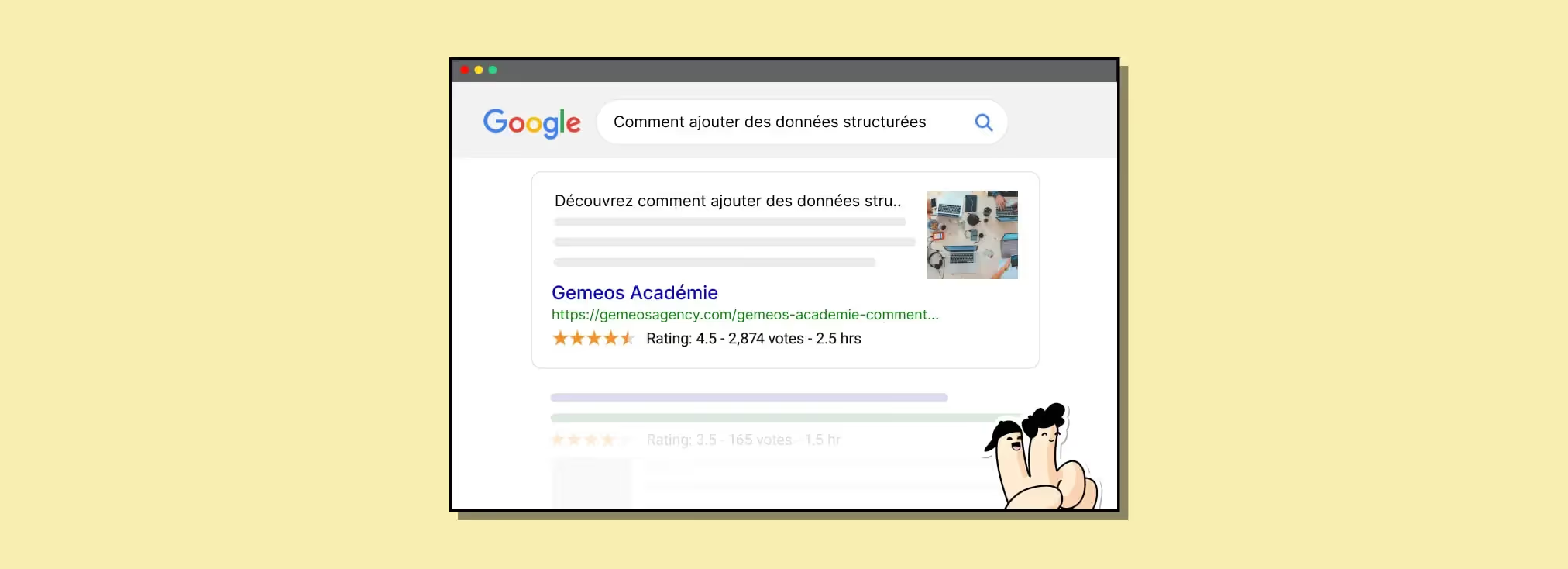
How to Create an LLM-Optimized Glossary Page
Learn how to create an industry-specific glossary page in Webflow, structured so AI search engines can cite it for definition-based queries in your field.
A sector-specific glossary page is one of the most effective GEO assets: it answers the definitional queries users ask LLMs directly, and it builds topical authority around your domain. Sandro, cofounder of Gemeos Agency, a Webflow agency, walks you through how to create one.
Why a glossary is strategic for GEO
When a user asks ChatGPT or Perplexity “what is X” or “definition of Y,” the LLM looks for a source that gives a clear, precise definition of the term. A well-structured glossary page is exactly that format: a collection of standalone definitions, each answering a specific question.
- Each glossary term is a potential definitional query
- A sector-specific glossary establishes your authority across an entire field
- Definitions are the easiest format for an LLM to extract
1. Choose the terms to include
Focus on the terms in your industry that prospects and clients need to understand. To identify them:
- Test “definition of X” and “what is X” queries in Perplexity and note the suggested terms
- Analyze the queries in your Search Console that contain “definition,” “meaning,” and “what is”
- List the specific vocabulary you use with clients on sales calls
- Review your main competitors’ glossaries to spot gaps
2. Structure each definition in an LLM-ready format
Each glossary entry should follow this format:
- Term in H2 or H3, with the acronym in parentheses if applicable
- Short, direct definition in 2 to 3 sentences max
- Usage context: when this term is used
- Distinction from a similar term, if relevant
- Link to a deeper article or tutorial if available
3. Build the glossary with the Webflow CMS
Create a “Glossary” CMS collection with the following fields: Term (text), Short definition (text), Full content (Rich Text), Category (option), Related term (reference). Create a template page for each term and a list page for the full glossary index.
This CMS structure lets you add terms easily and keep the glossary up to date without touching code.
4. Add Schema.org DefinedTerm markup
For glossaries, the Schema.org DefinedTerm type is especially well suited. It explicitly tells crawlers that your page contains a structured definition.
<script type="application/ld+json">
{
  "@context": "https://schema.org",
  "@type": "DefinedTerm",
  "name": "GEO",
  "alternateName": "Generative Engine Optimization",
  "description": "Discipline focused on optimizing a website to appear in AI-generated responses from engines like ChatGPT, Perplexity, and Gemini.",
  "inDefinedTermSet": {
    "@type": "DefinedTermSet",
    "name": "SEO and GEO Glossary",
    "url": "https://gemeosagency.com/glossaire"
  }
}
script>| Structural element | GEO impact | Recommendation |
|---|---|---|
| Term in H2/H3 | Very strong | Required |
| Direct definition in the first paragraph | Very strong | Required |
| Acronym in parentheses | Strong | If applicable |
| Distinction from a similar term | Strong | Recommended |
| Schema DefinedTerm | Moderate | Recommended |
| Link to in-depth content | Moderate (internal linking) | Recommended |
Conclusion
A sector-specific glossary is a long-term SEO and GEO investment. Build it gradually: start with 20 to 30 key terms and keep expanding it regularly.
- Use case 1: a marketing agency creates a glossary of digital marketing terms to capture definitional queries from prospects
- Use case 2: a SaaS company documents the vocabulary of its industry to get cited as a reference by LLMs
- Use case 3: a consulting firm publishes a sector-specific glossary to establish topical authority
Good to know
Heading
Lorem ipsum dolor sit amet, consectetur adipiscing elit. Suspendisse varius enim in eros elementum tristique. Duis cursus, mi quis viverra ornare, eros dolor interdum nulla, ut commodo diam libero vitae erat. Aenean faucibus nibh et justo cursus id rutrum lorem imperdiet. Nunc ut sem vitae risus tristique posuere.







Lorem ipsum
Lorem ipsum dolor sit amet, consectetur adipiscing elit, sed do eiusmod tempor incididunt ut labore et dolore magna aliqua. Ut enim ad minim veniam, quis nostrud exercitation ullamco laboris nisi ut aliquip ex ea commodo consequat. Duis aute irure dolor in reprehenderit in voluptate velit esse cillum dolore eu fugiat nulla pariatur.