Projects
 Our Offers
 Dedicated team
 Blog
 Academy
 About Us
COSS by ESSEC & PwC: brand identity and Webflow website for a soft skills certification
COSS by ESSEC & PwC certifies the soft skills of students and professionals based on feedback from their professional network. The certification is shared on LinkedIn and can be read by a recruiter in five seconds.
COSS entrusted Gemeos, a web agency for training providers, with its logo, brand identity, art direction, the design and Webflow development of its website, and its SEO.
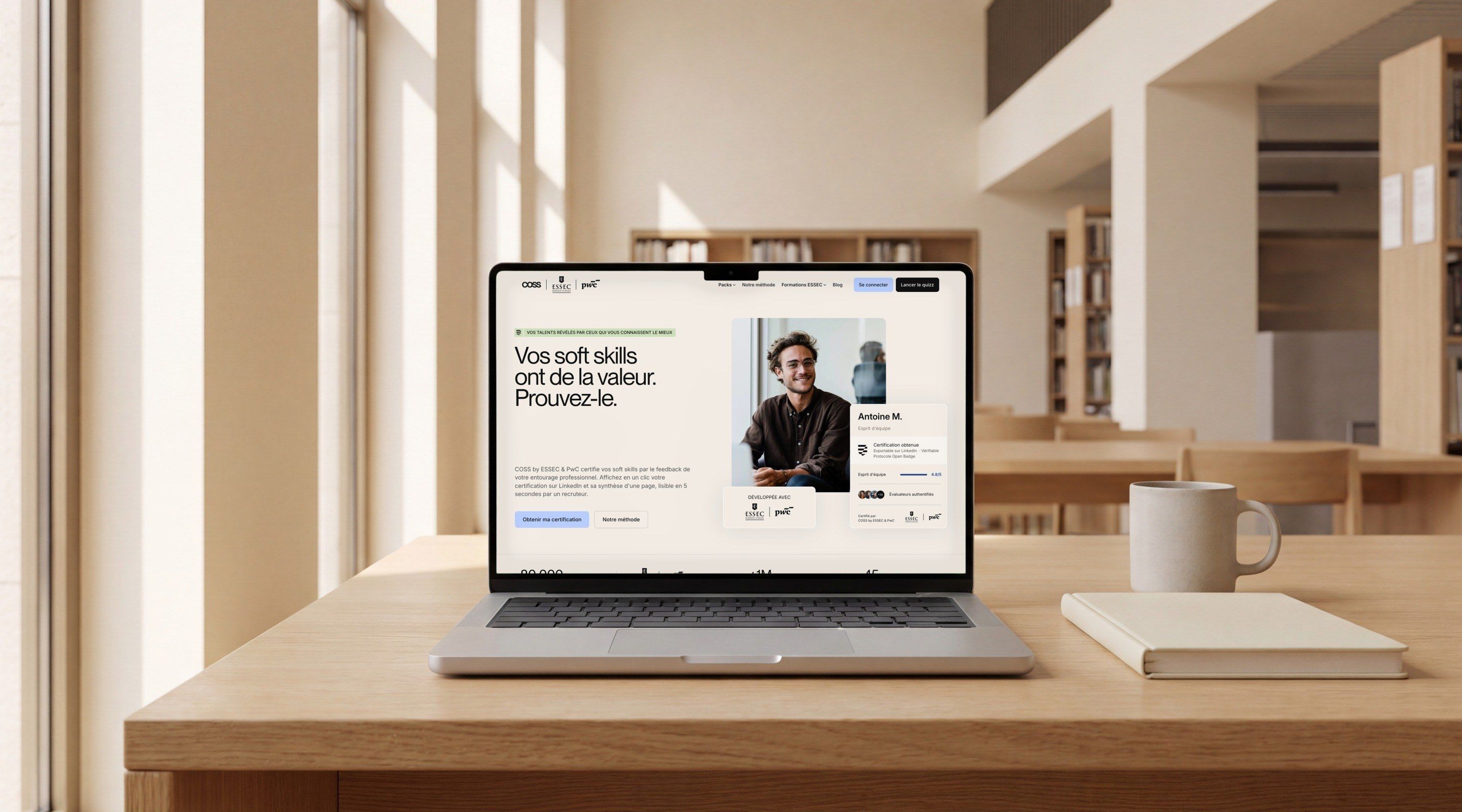
Making a skill you can't see on a CV credible
Soft skills get claimed on a CV, but rarely proven. COSS answers with a method: four questions per skill, put to authenticated professional contacts, developed with ESSEC and PwC. The brand had to carry the credibility of these two institutions while speaking as much to a student looking for a first internship as to an experienced manager.
Gemeos created the logo and the identity, explored four Look & Feel directions, then designed and wrote around a hundred pages in Figma before building them on Webflow: a recommendation quiz, packs with Stripe payment, the catalogue of ESSEC courses and SEO pages generated from the CMS for every job and every soft skill.
- Industry
- Education
- Services
- Logotype
- Branding
- Artistic Direction
- UX/UI Design
- Development
- SEO
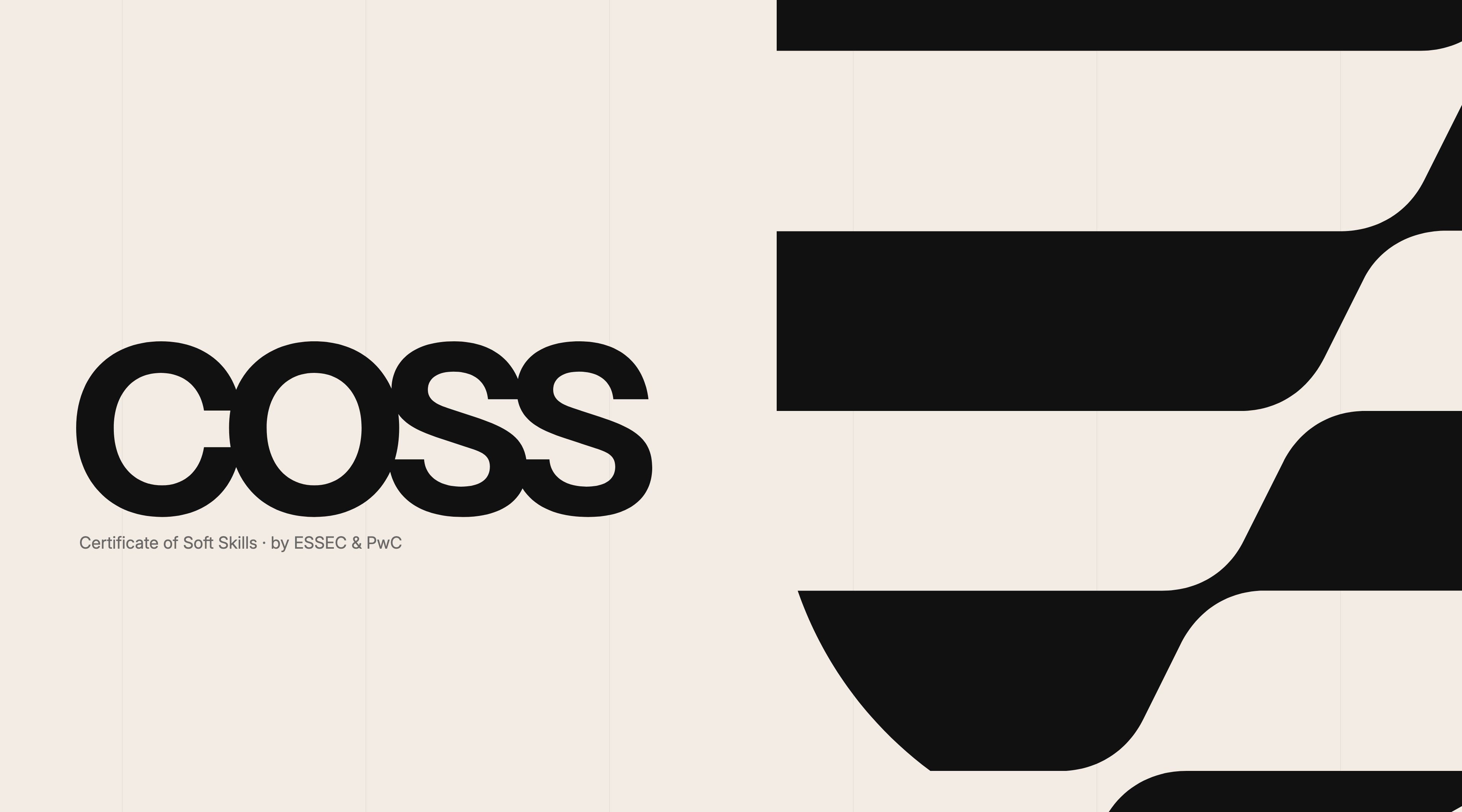
Logo
An S made of offset blades, like a progression
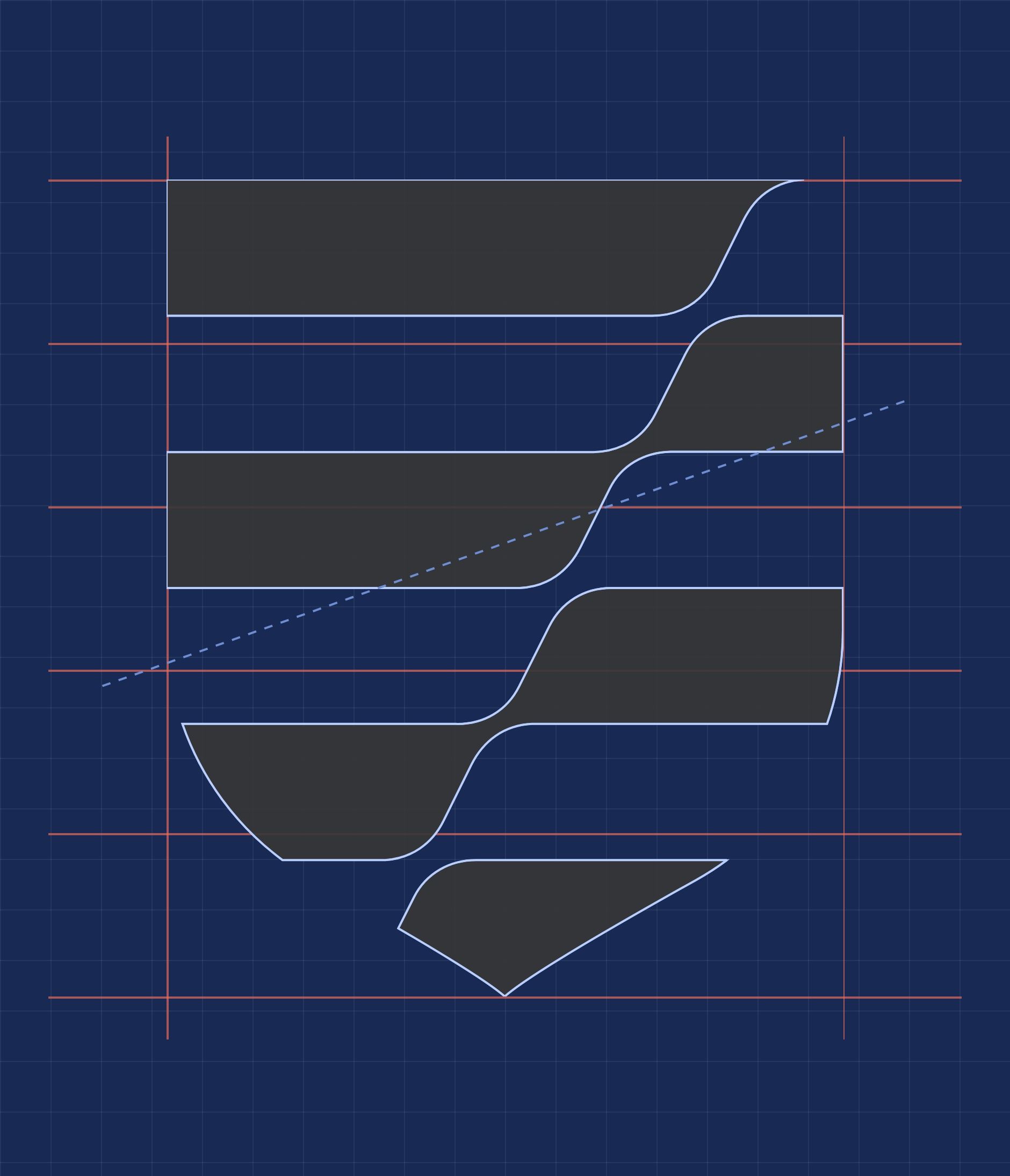
The COSS logotype is a short, very black word with compact shapes: it holds its own next to the ESSEC and PwC crests without fading away. The icon turns the S into four stacked blades, offset along a single diagonal. Each blade evokes a piece of feedback from one's network, and the whole a rise in skills.
The logo was built on a strict grid, so that it stays sharp as a favicon as well as on a LinkedIn Open Badge. It comes in a co-branded version, “COSS | ESSEC | PwC”, used in the site's navigation and footer.

Branding
The credibility of a top business school, the warmth of human feedback
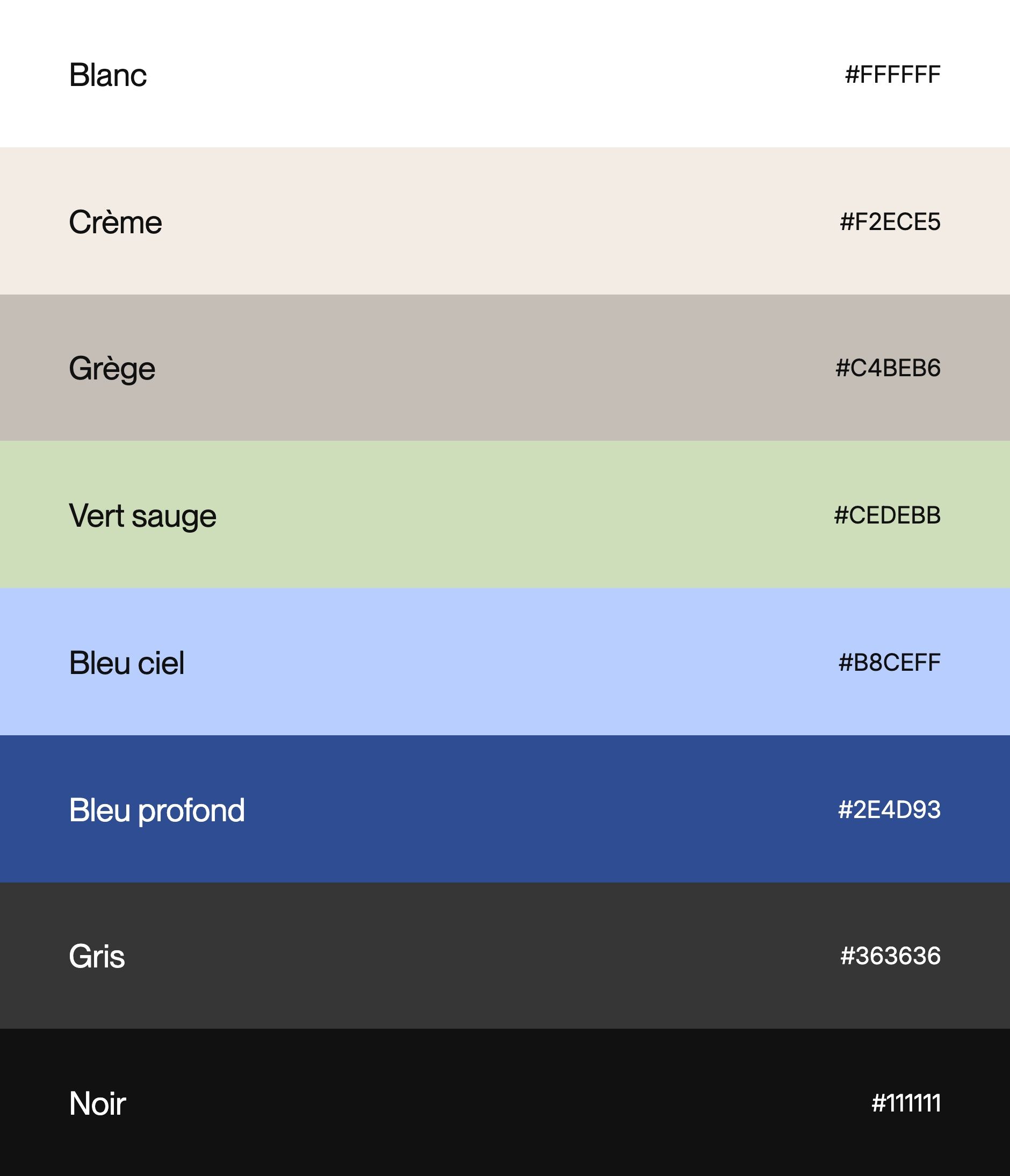
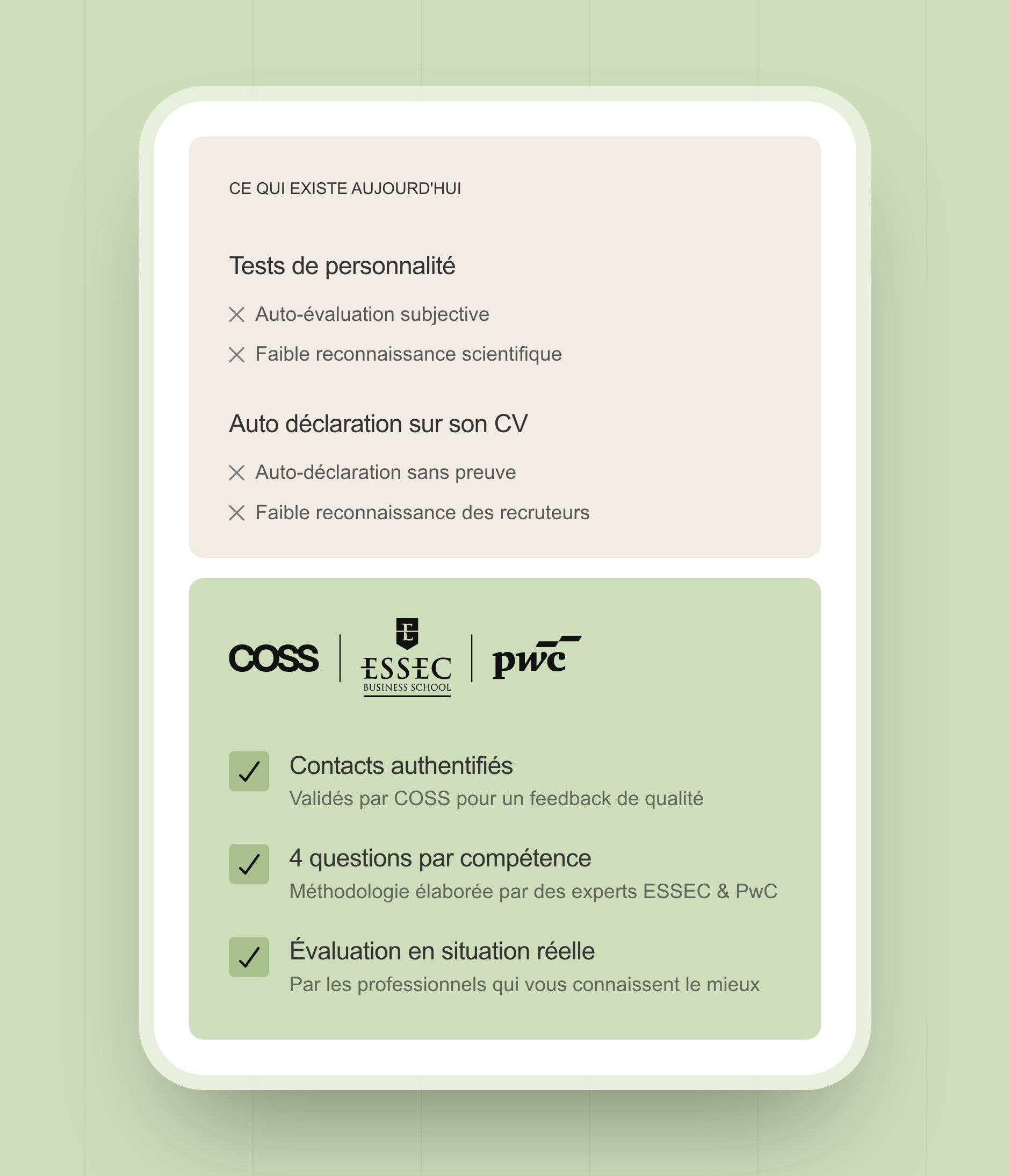
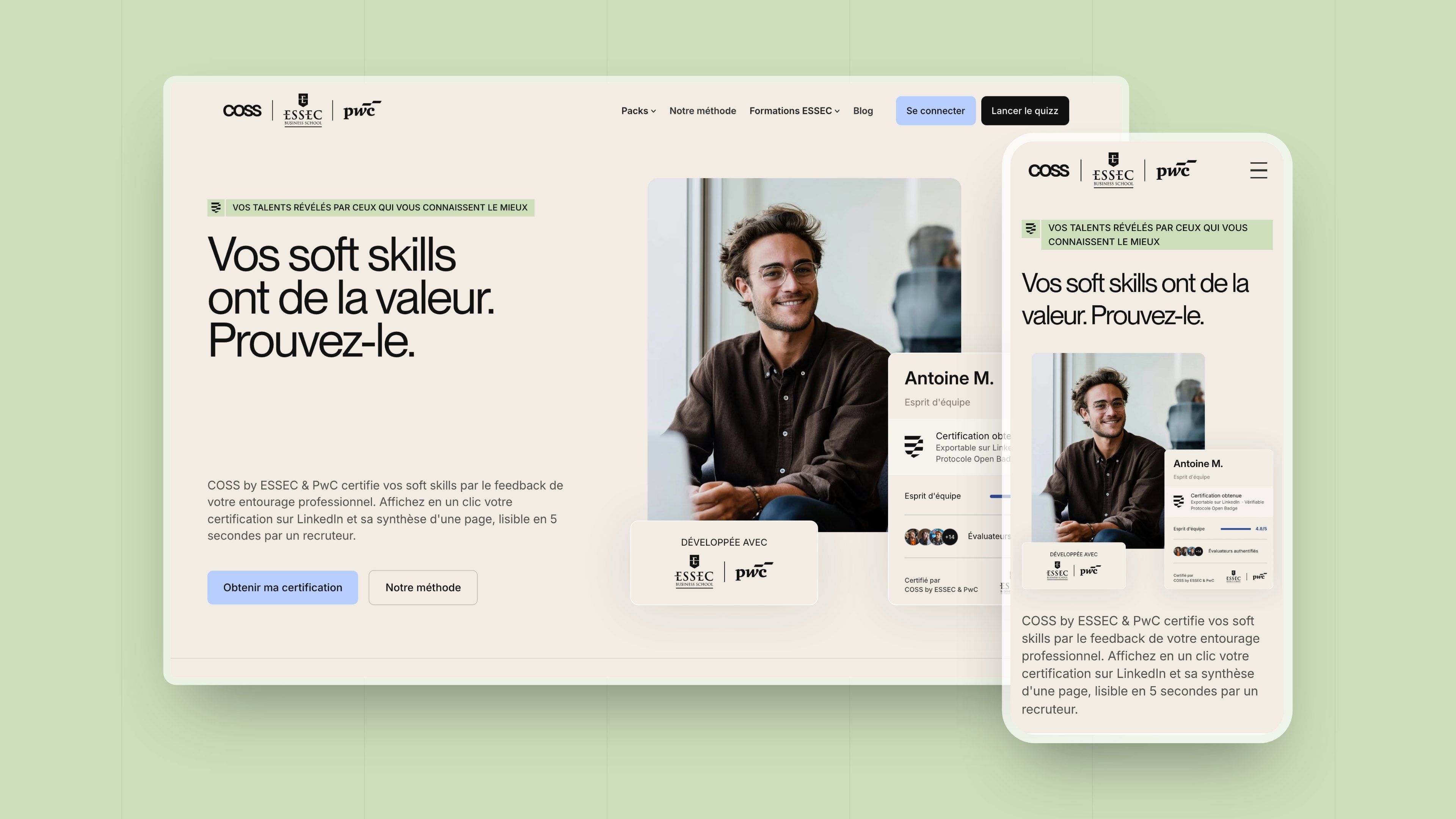
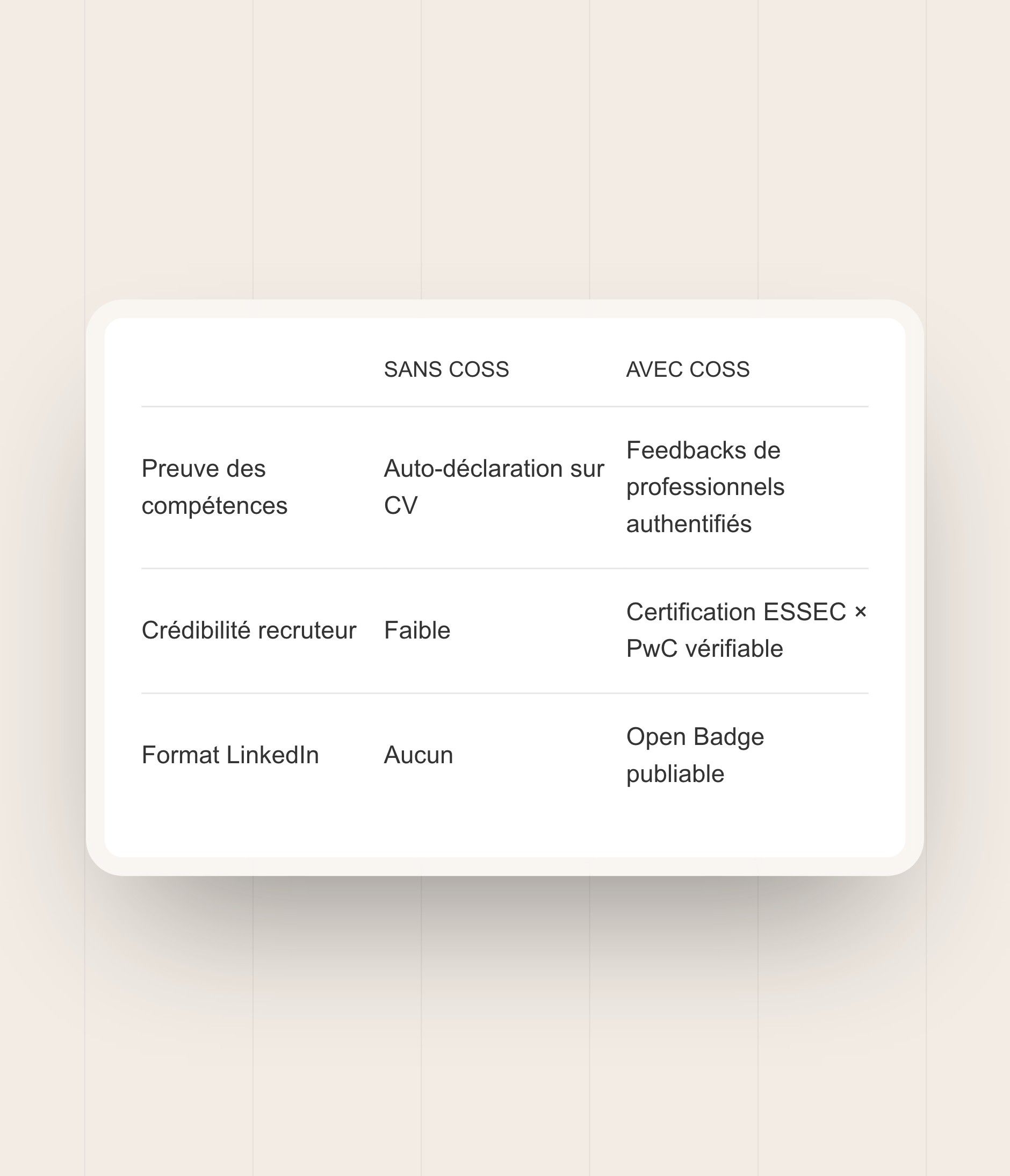
The identity rests on a cream background (#F2ECE5) rather than a clinical white, a deep black for headings and two accents drawn from institutional blue: a sky blue (#B8CEFF) for calls to action and a deep blue (#2E4D93). A sage green (#CEDEBB) marks what has been validated: the “With COSS” column, certified skills.
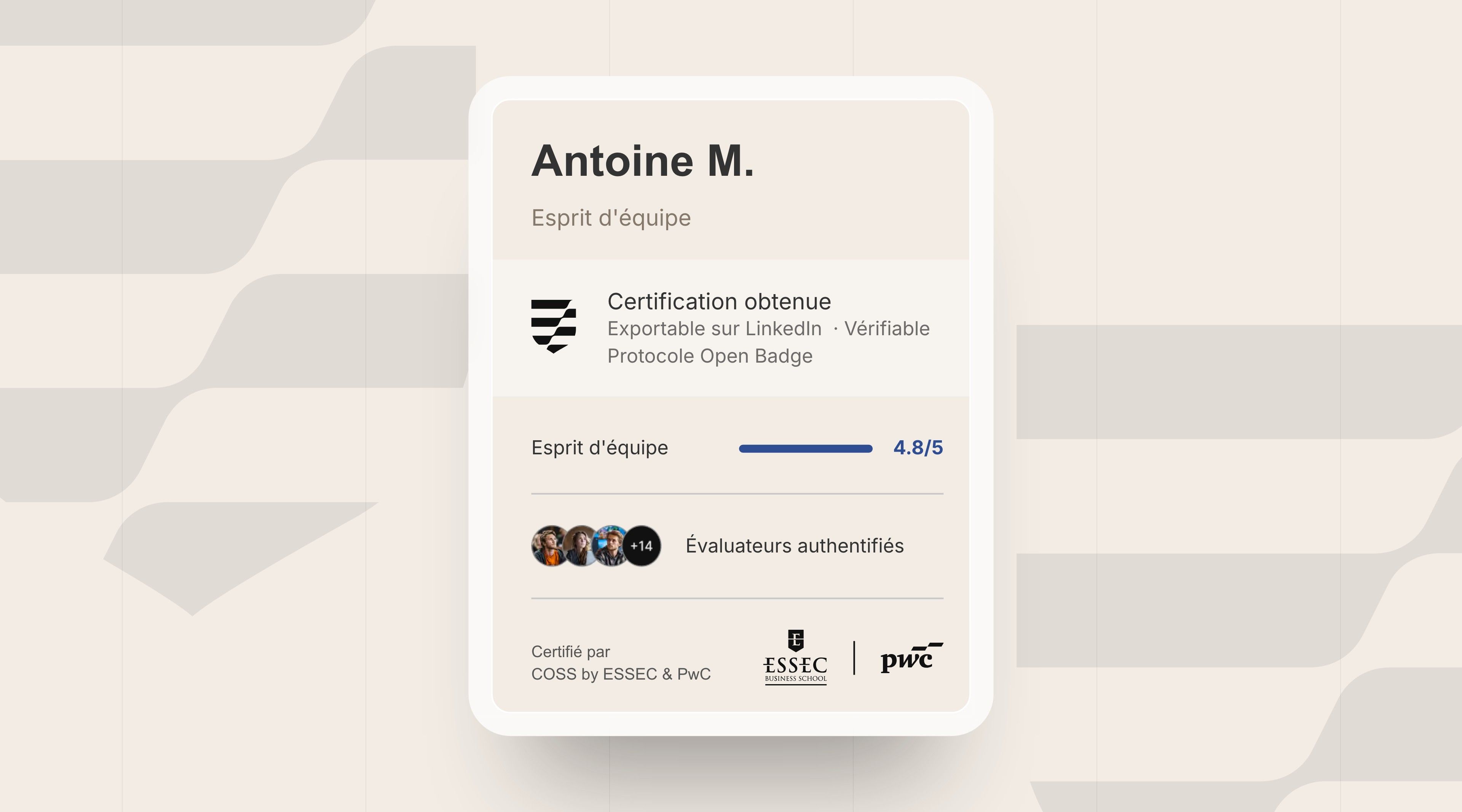
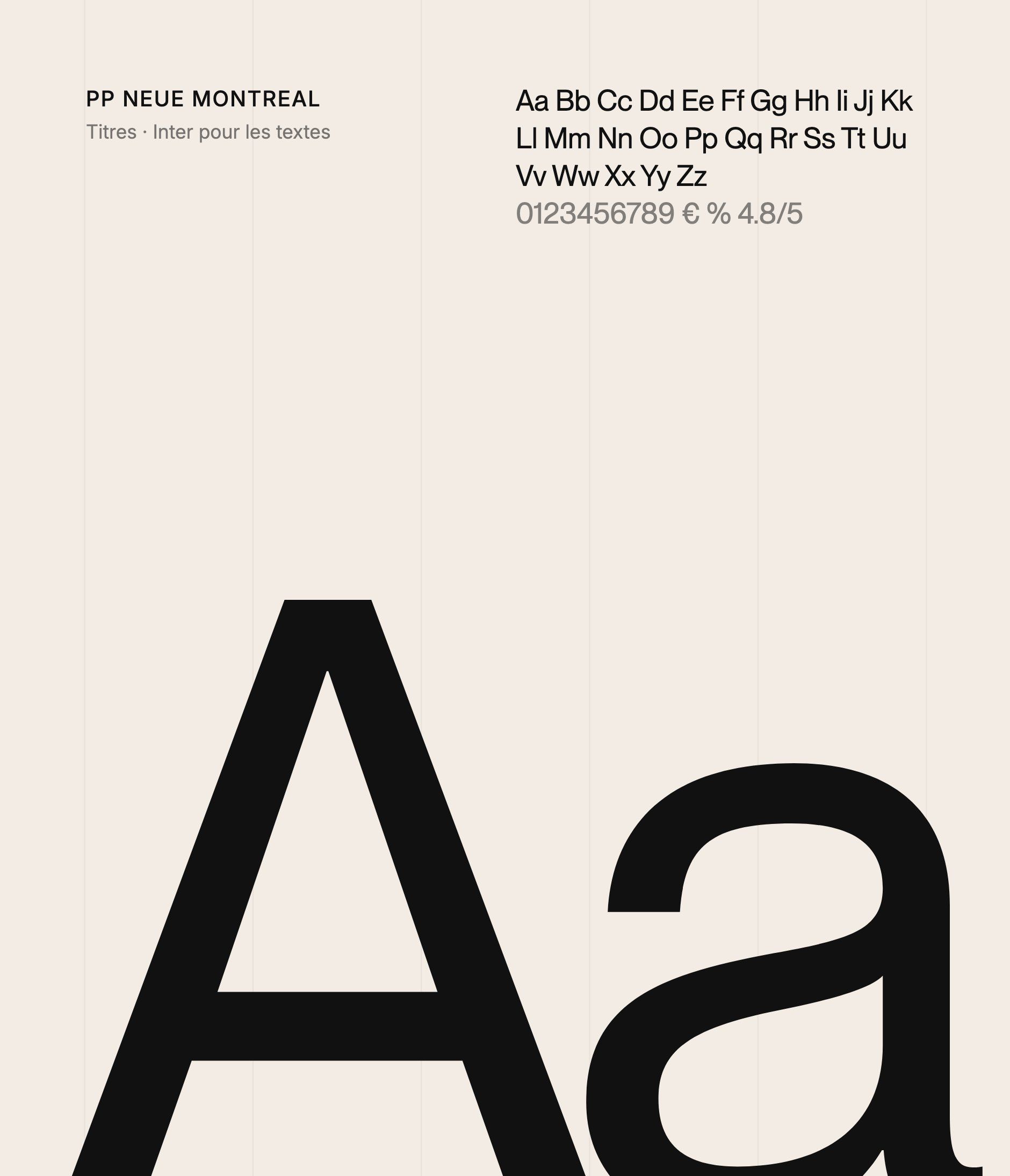
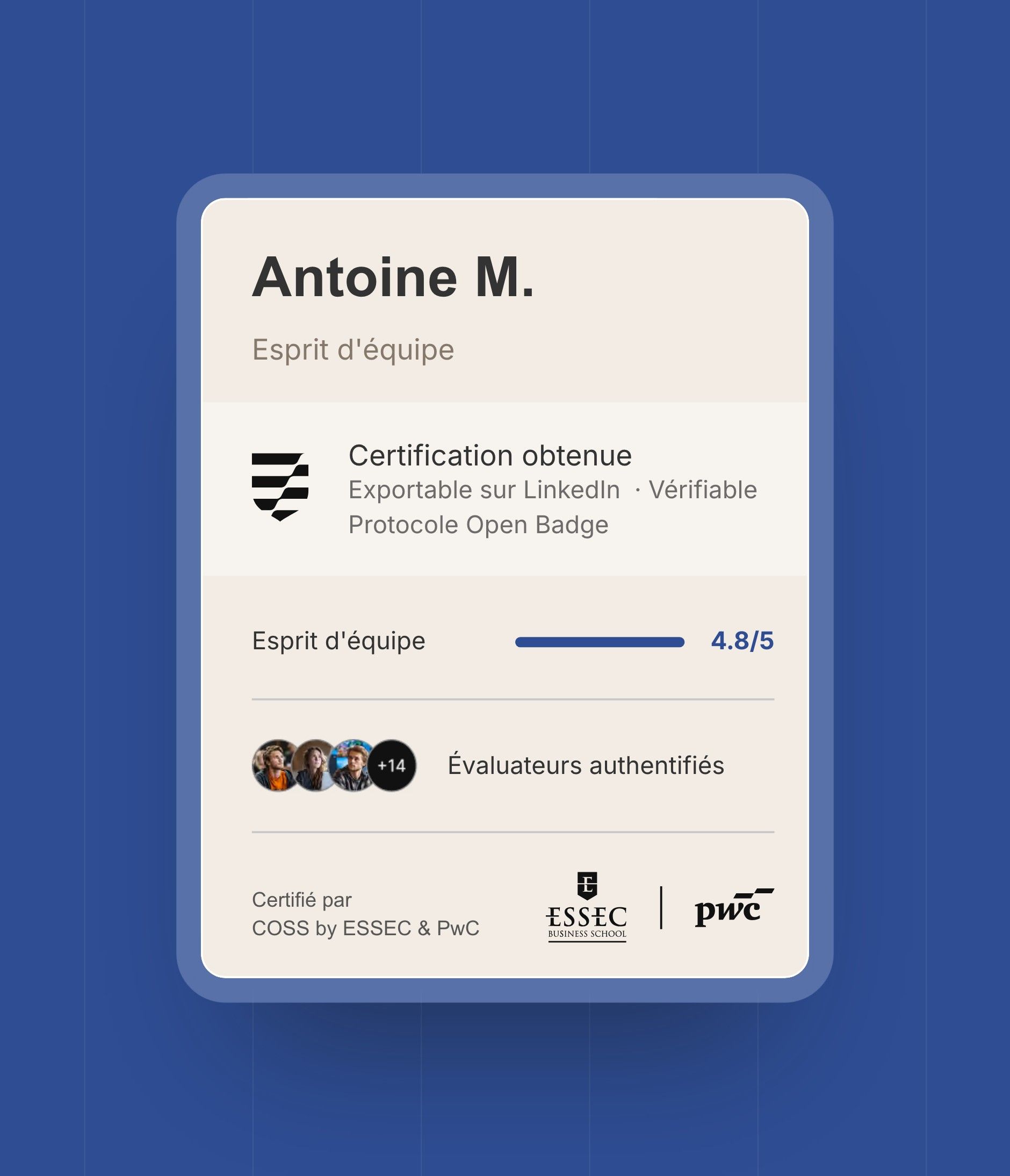
Headings are set in PP Neue Montreal, an elegant, slightly narrow grotesque; body text in Inter, for readability. The centrepiece of the identity is the certification card: name, skill, score out of 5, authenticated reviewers and the line “Certified by COSS by ESSEC & PwC”, designed to be recognised at a glance on LinkedIn.
Art Direction
Four directions to find the right tone between institution and EdTech
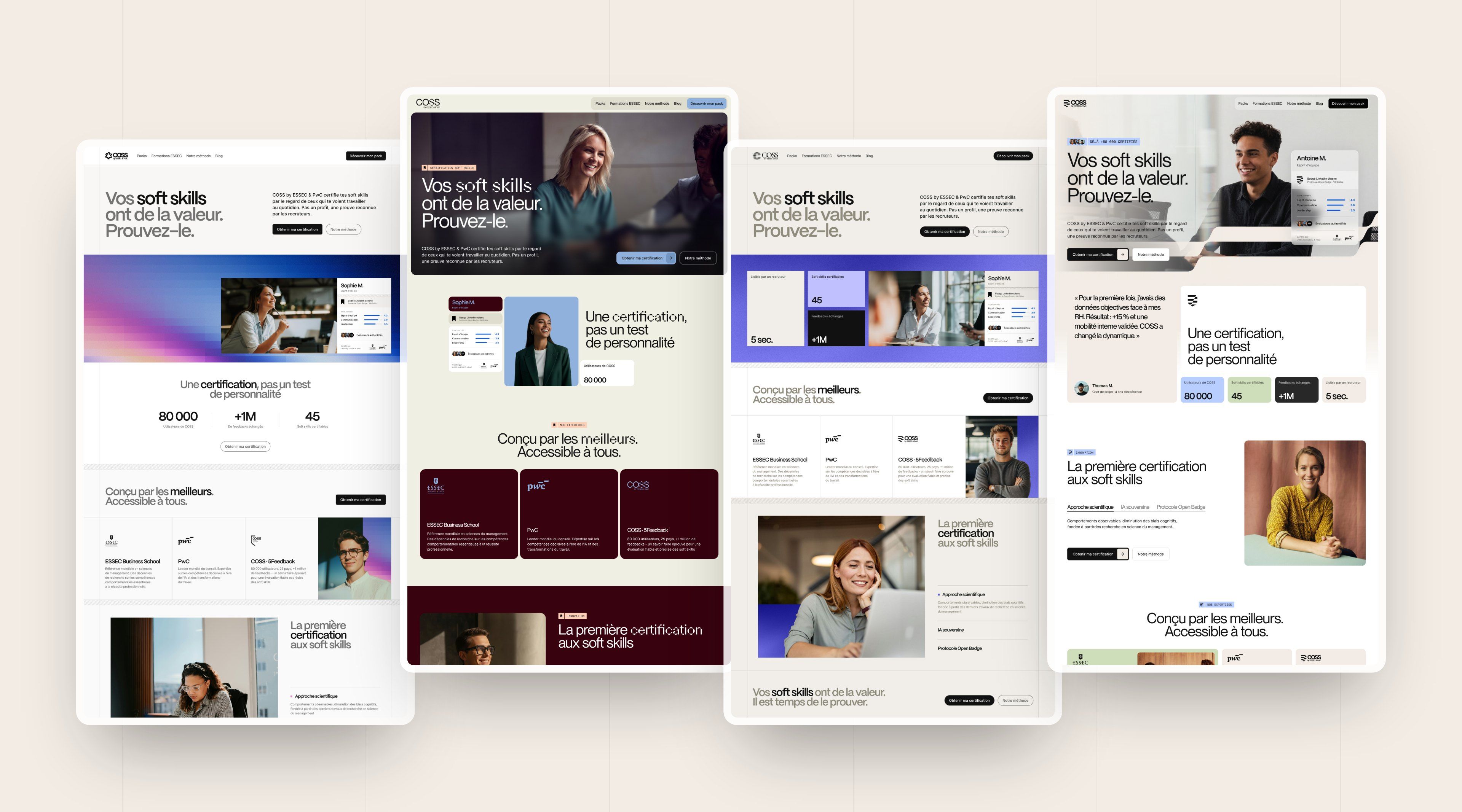
Before designing the site, Gemeos explored four complete territories, each applied to a home page: palette, typography, photo treatment and components. The challenge was the same for all of them: show the ESSEC and PwC endorsement without seeming distant, and make visitors want to take the quiz.
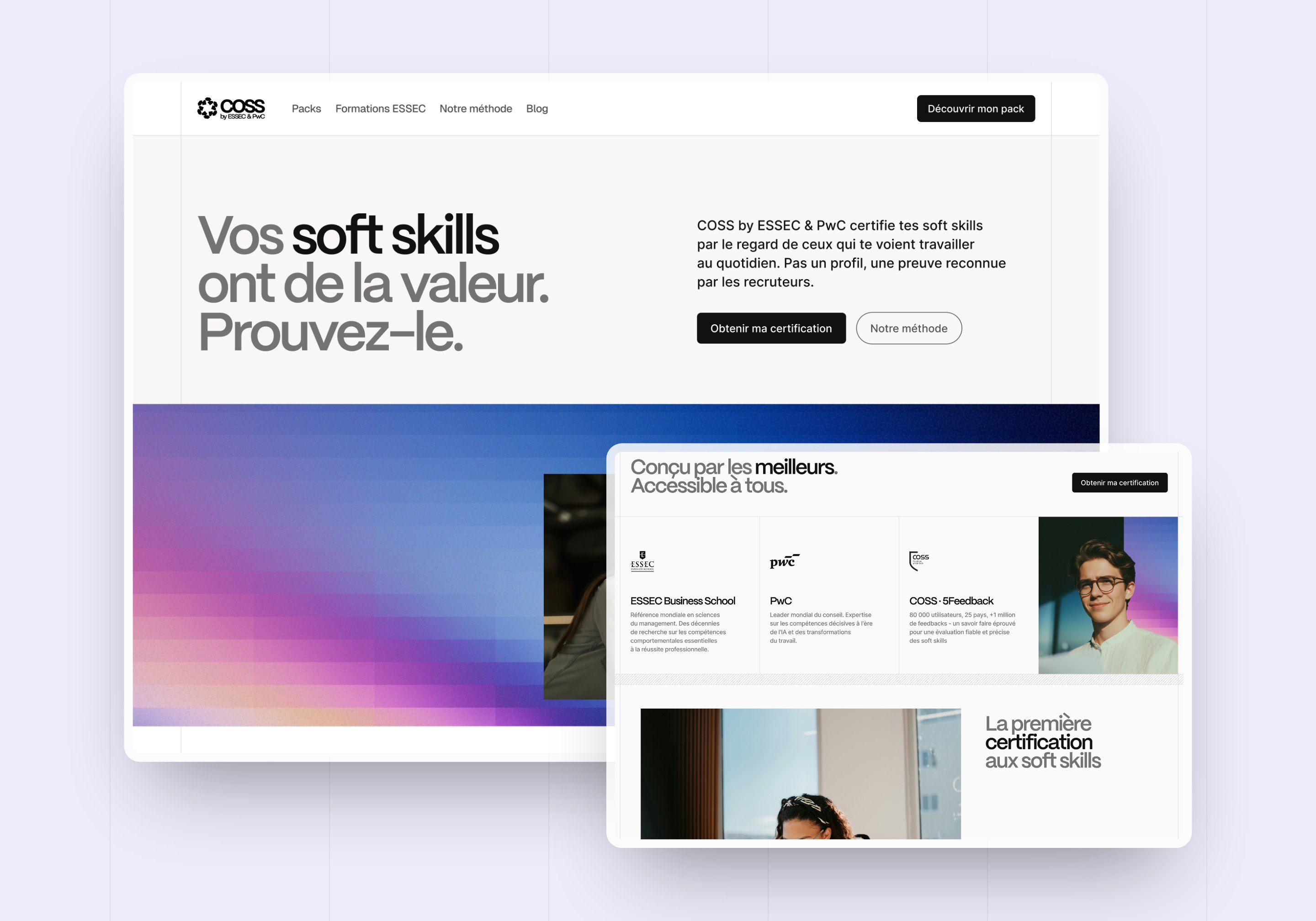
Direction 1 - Pixels and energy
A dynamic identity carried by a pixel pattern, where each cell represents a skill and each level an intensity, and a ring-shaped pictogram evoking the group of reviewers. A blue, purple and pink gradient conveys the diversity of profiles. Perception: modern and ambitious, a global platform open to all.
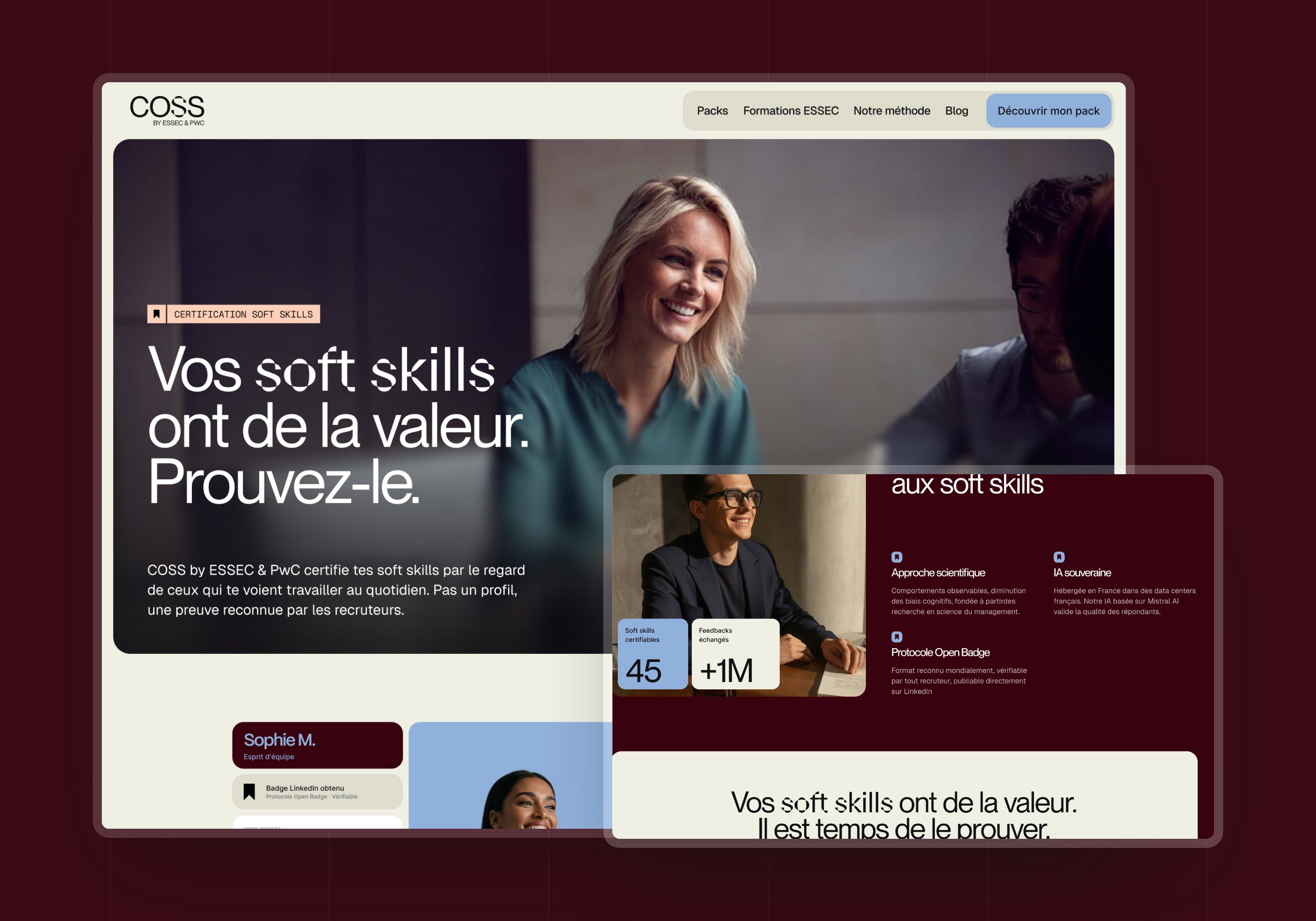
Direction 2 - Premium and human
A restrained, assertive logotype, a graphic accent on the S as a common thread, a blue, burgundy and cream palette and photographs rooted in real life. Rigour and warmth coexist in every detail. Perception: premium without ostentation, institutional without being distant.
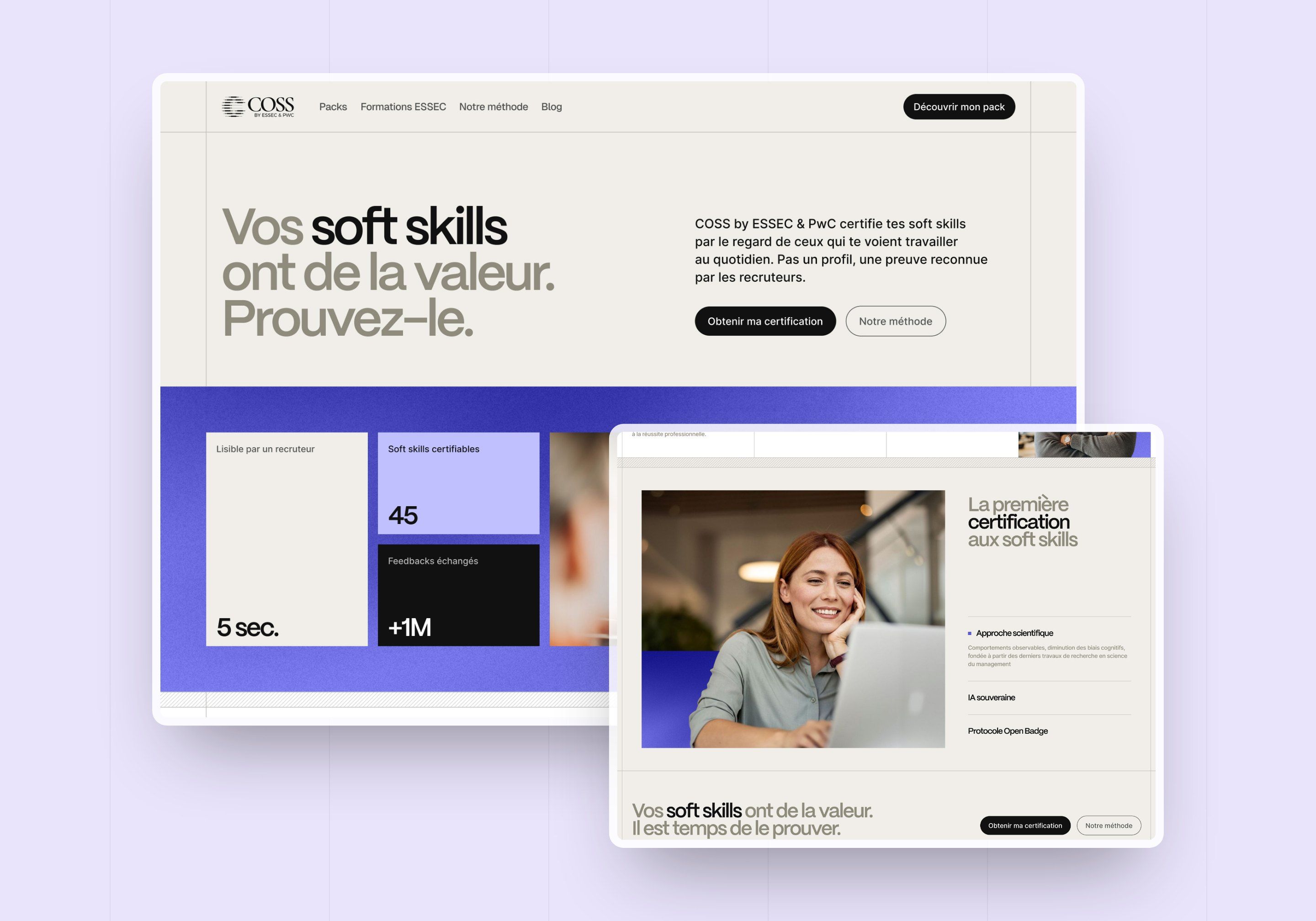
Direction 3 - Light and data
A more technological version: large purple and blue blocks of colour, key figures staged in coloured cards, smiling portraits cut out in the light. It emphasises measurement and the speed of the journey.
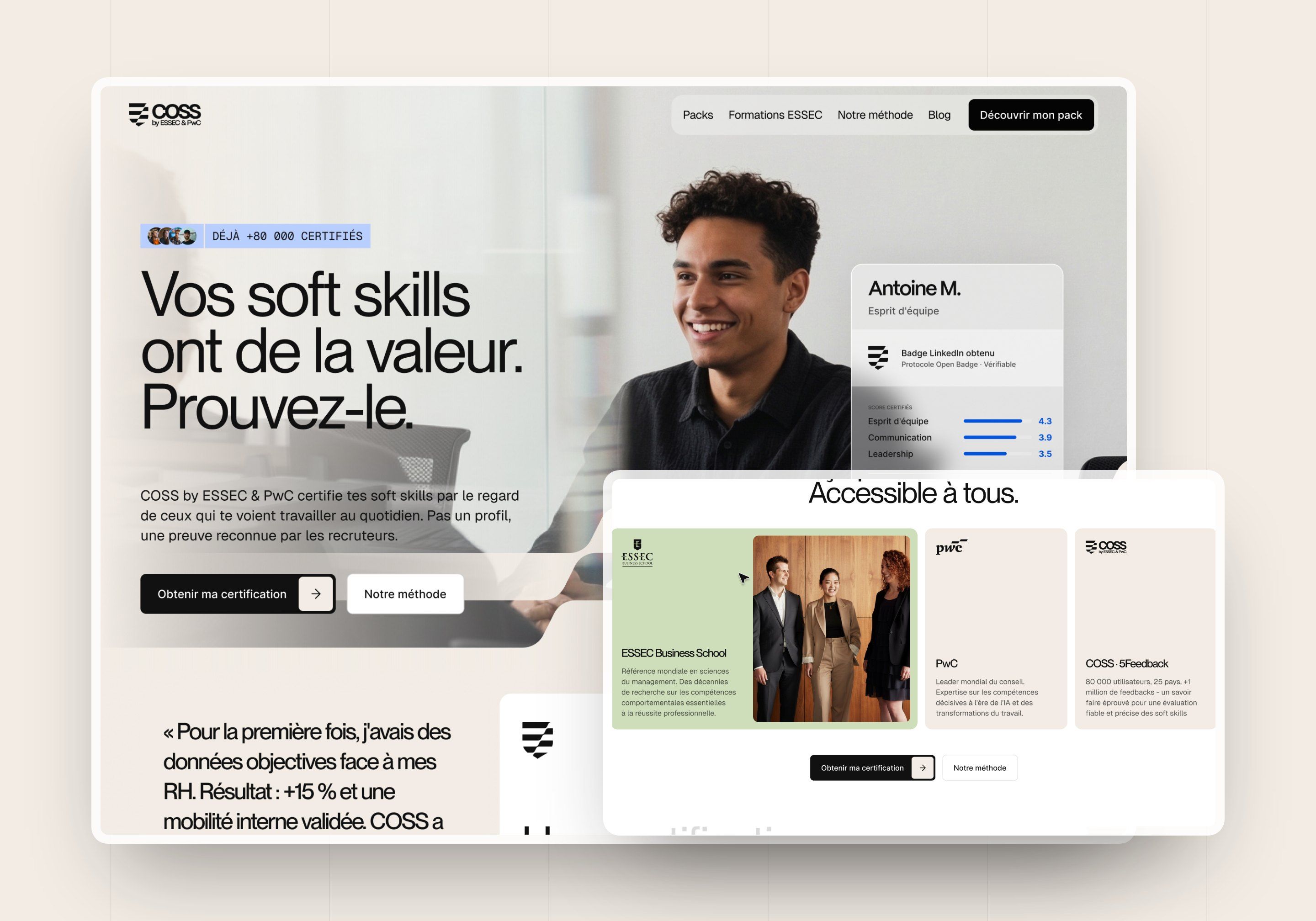
Direction 4 - Cream, black and blades
The chosen direction: a cream background, a deep black, sky blue and sage green accents, the stacked-blade icon as a signature, rounded cards and professional portraits. It reconciles the endorsement of the two institutions with the approachability of a consumer product.

Web Design
From quiz to certification in three screens
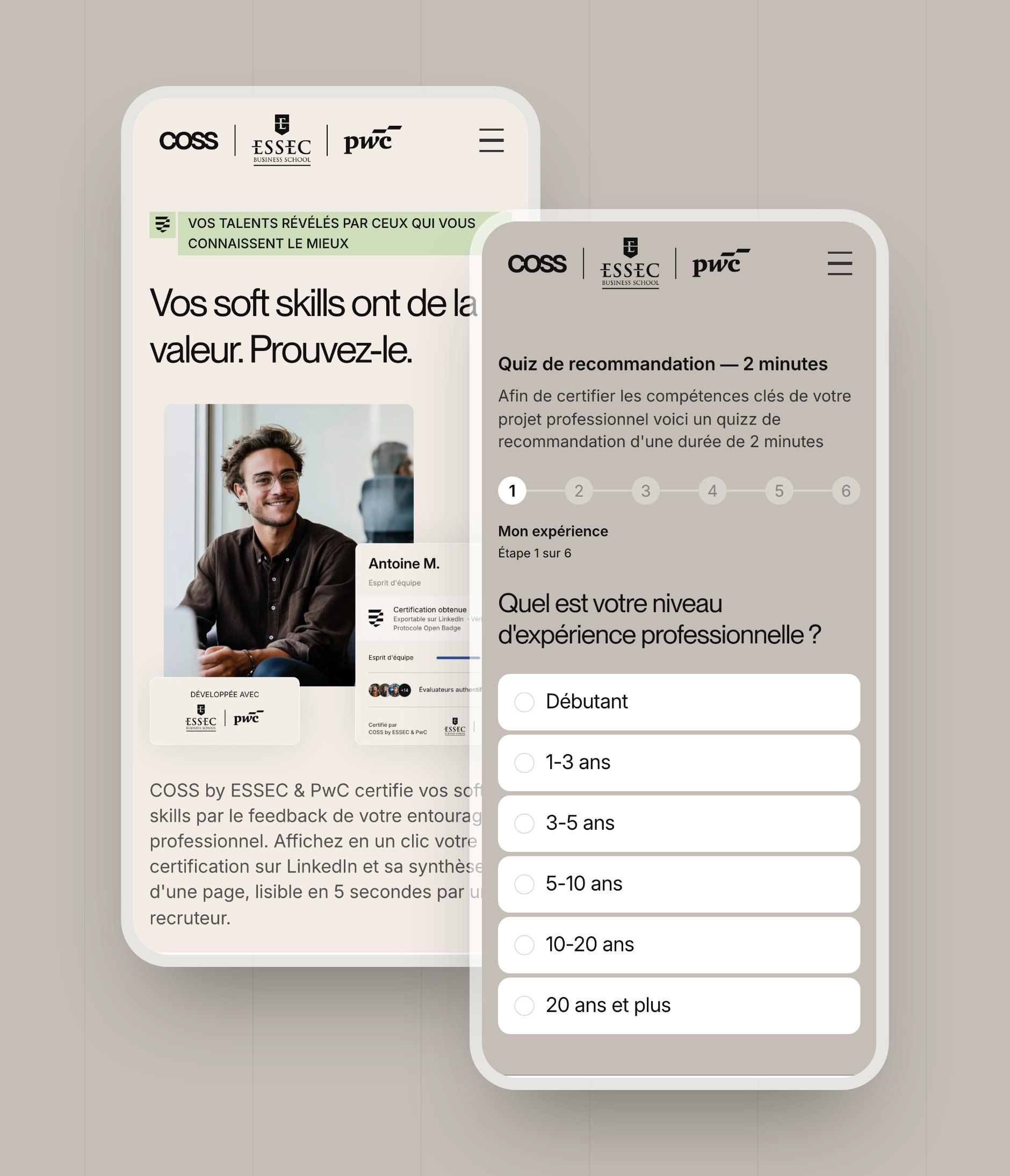
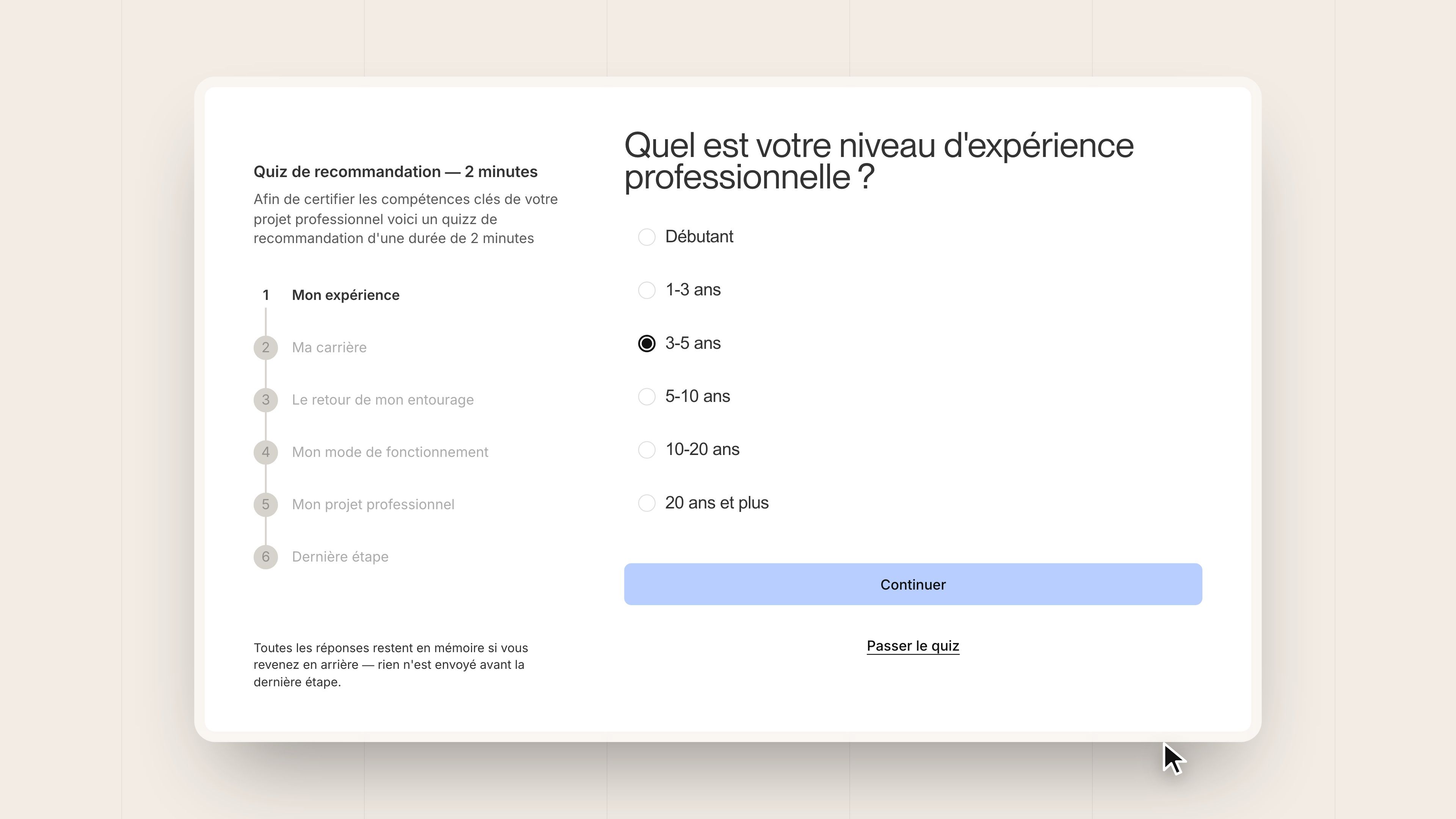
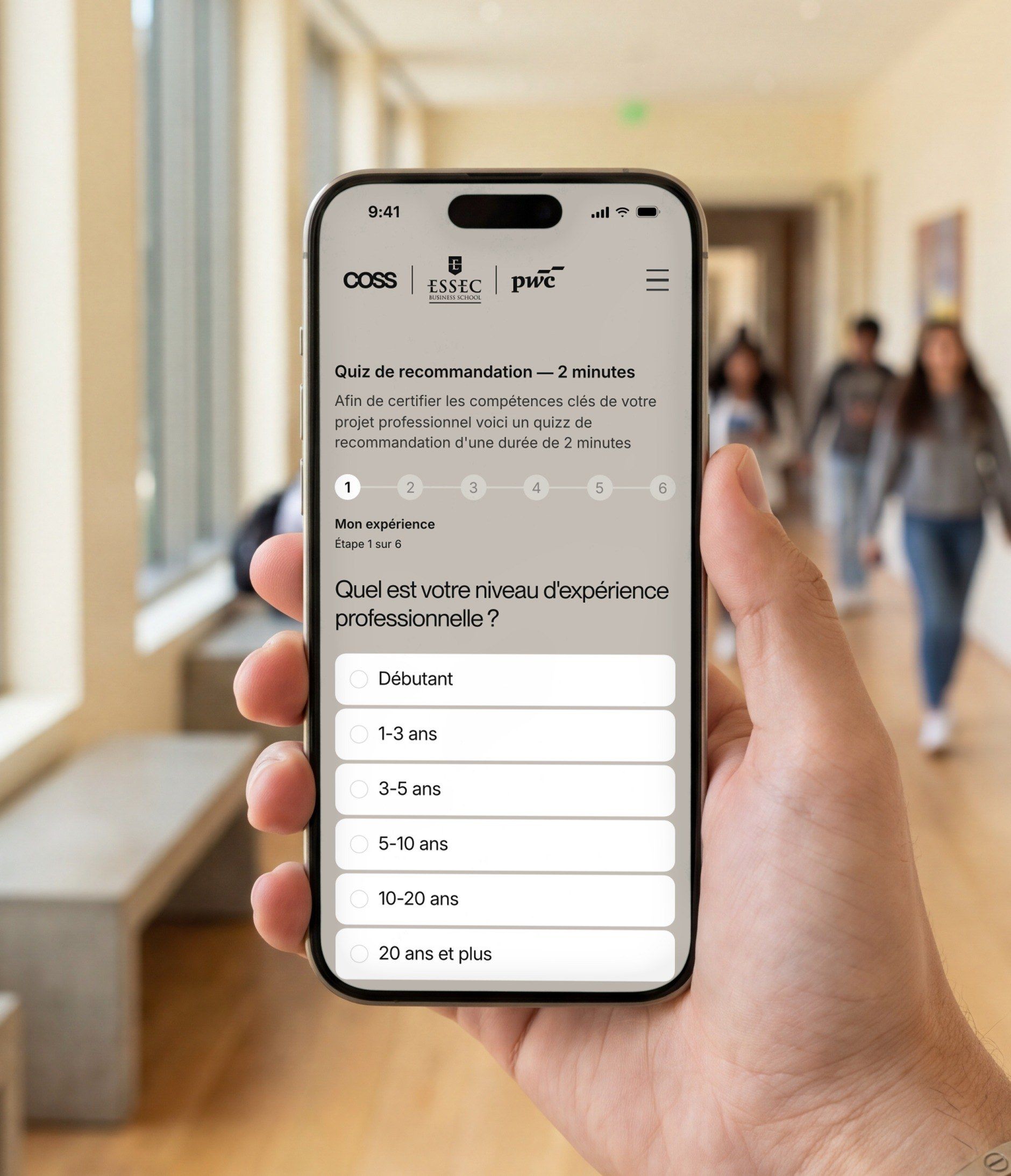
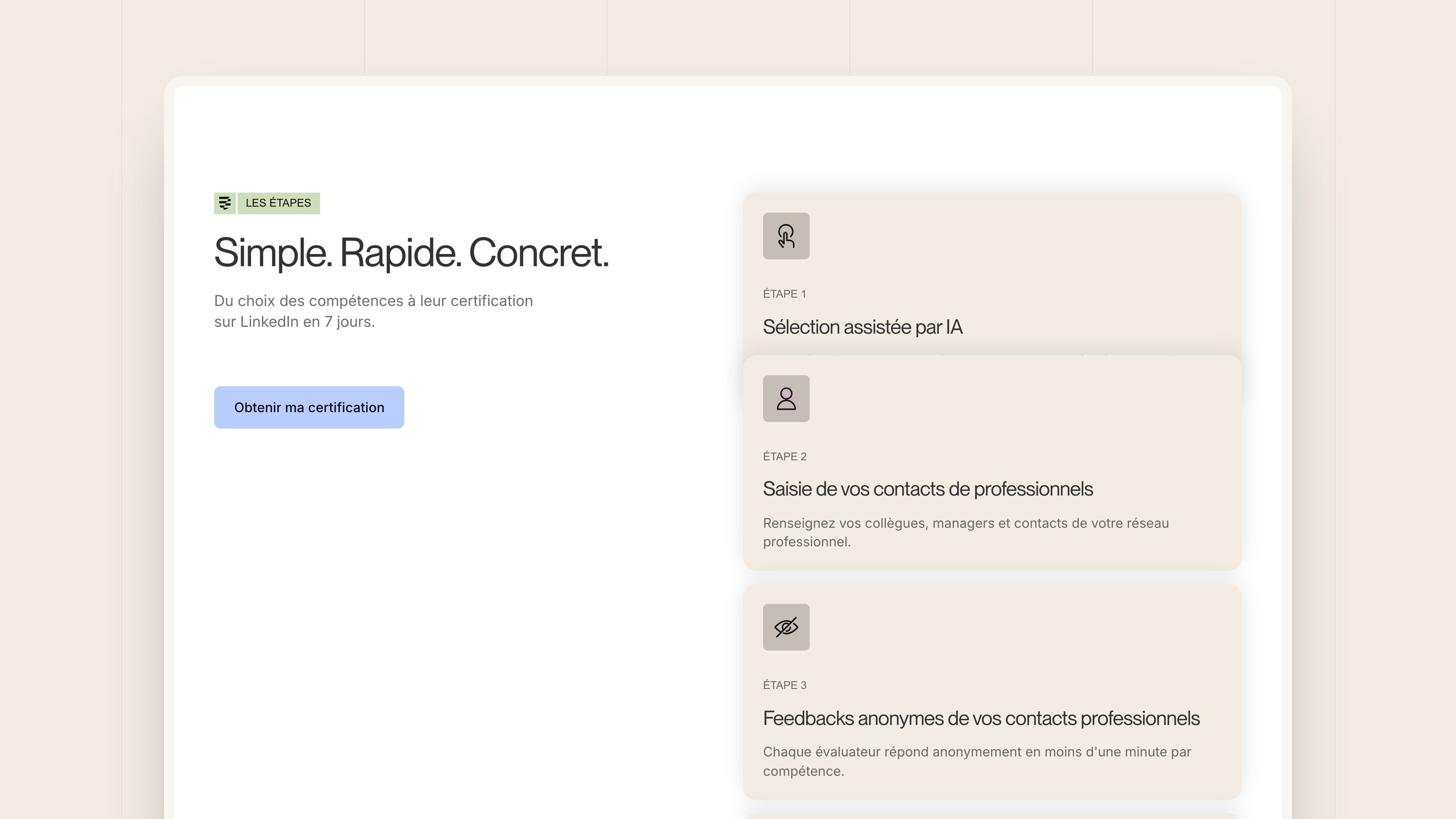
The site has a simple goal: take visitors from doubt to the quiz, then to a pack. The whole navigation leads to “Lancer le quizz” (take the quiz), a two-minute recommendation quiz that suggests the skills most useful to the visitor's career plans. The reassurance pages (method, experts, reviews, FAQ) then answer a single question: why trust a certification based on feedback?
| Page | What it does for the visitor |
|---|---|
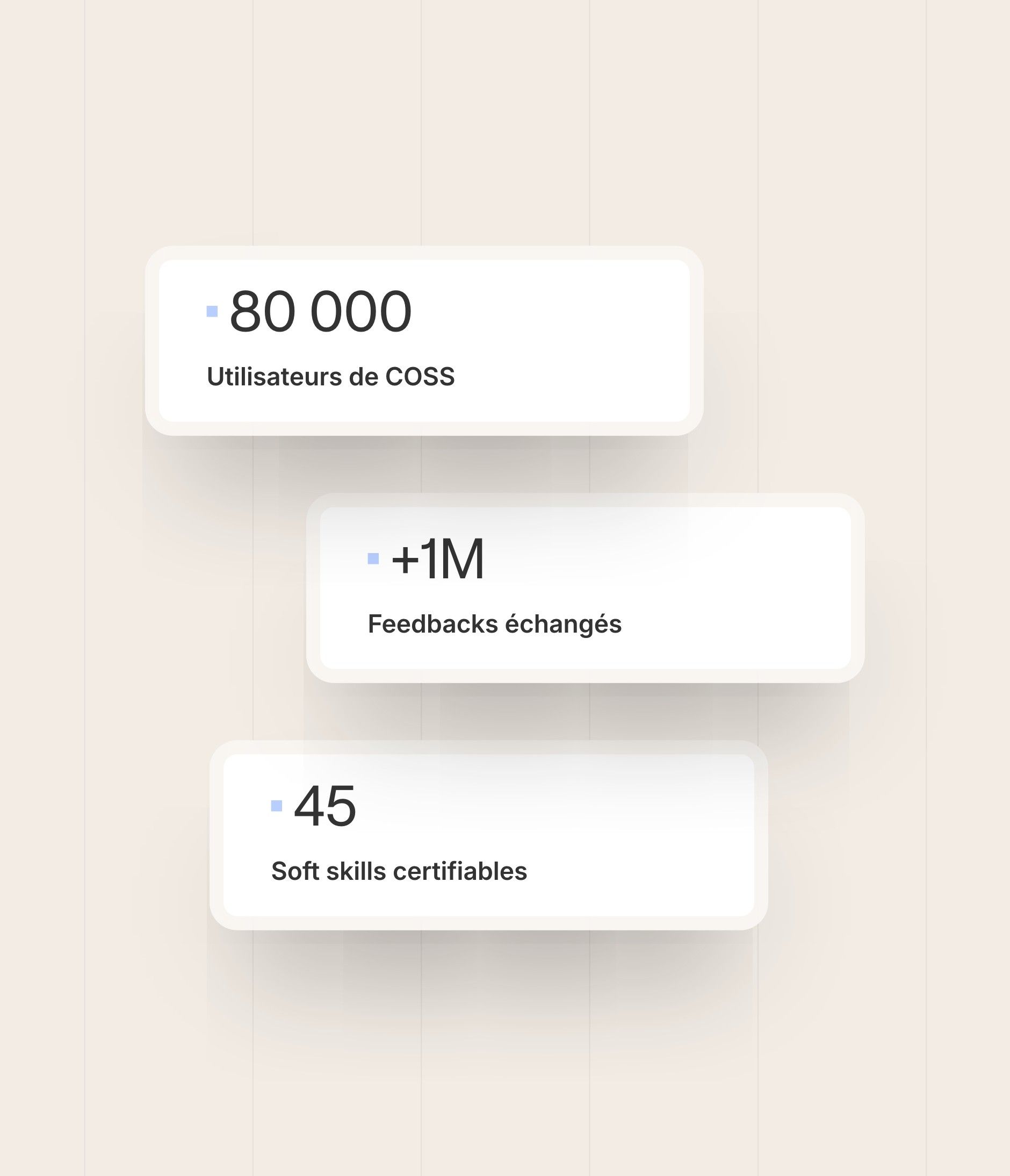
| Home | Sets out the promise, shows the certification card, proves it with figures and the two institutions |
| Quiz | Six steps in two minutes to recommend three skills, with a horizontal stepper on mobile |
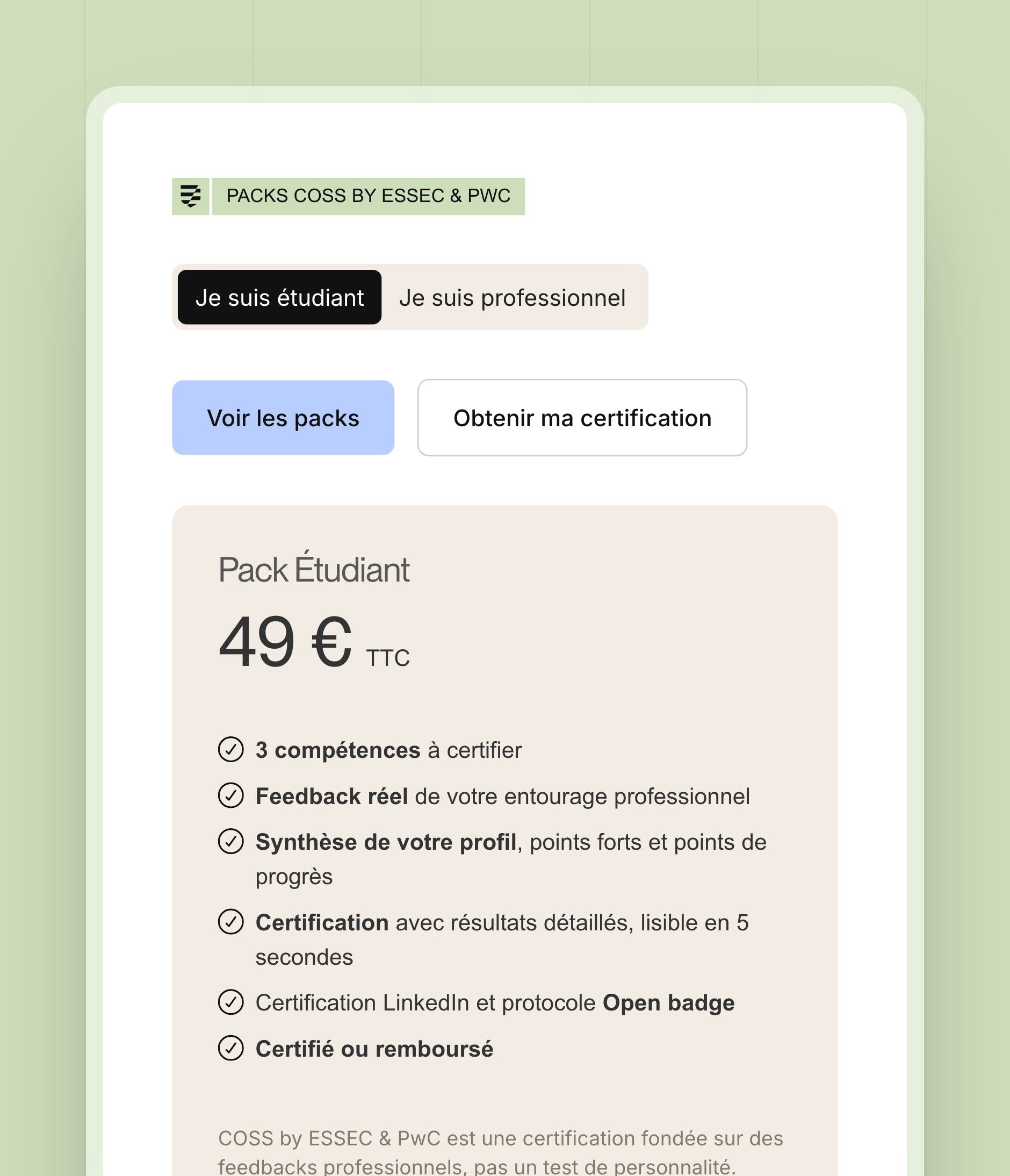
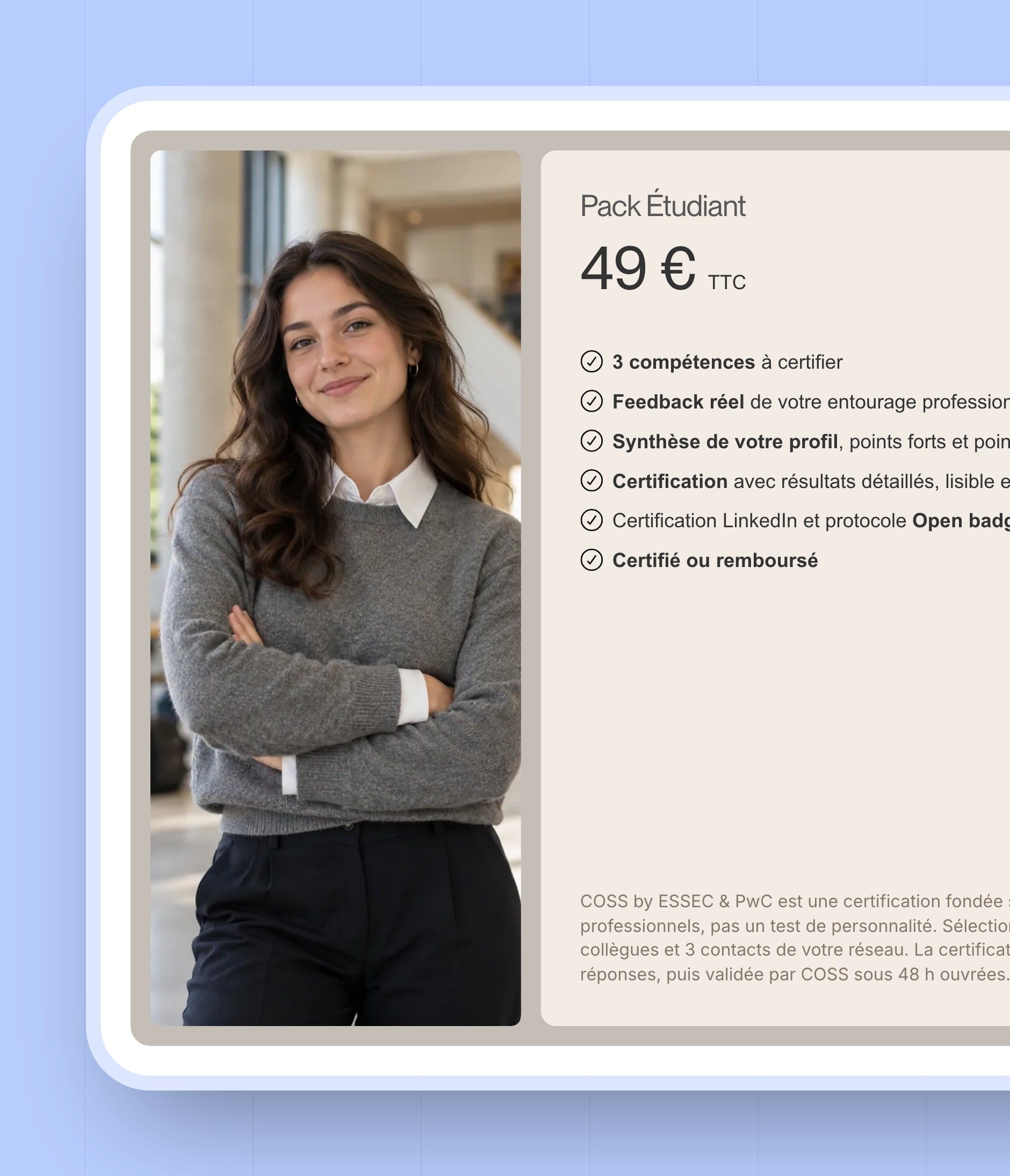
| Packs | Student Pack at €49 and Pro Pack at €129, “without COSS / with COSS” comparison, additional skills |
| Method | 360° feedback explained, backed by academic sources |
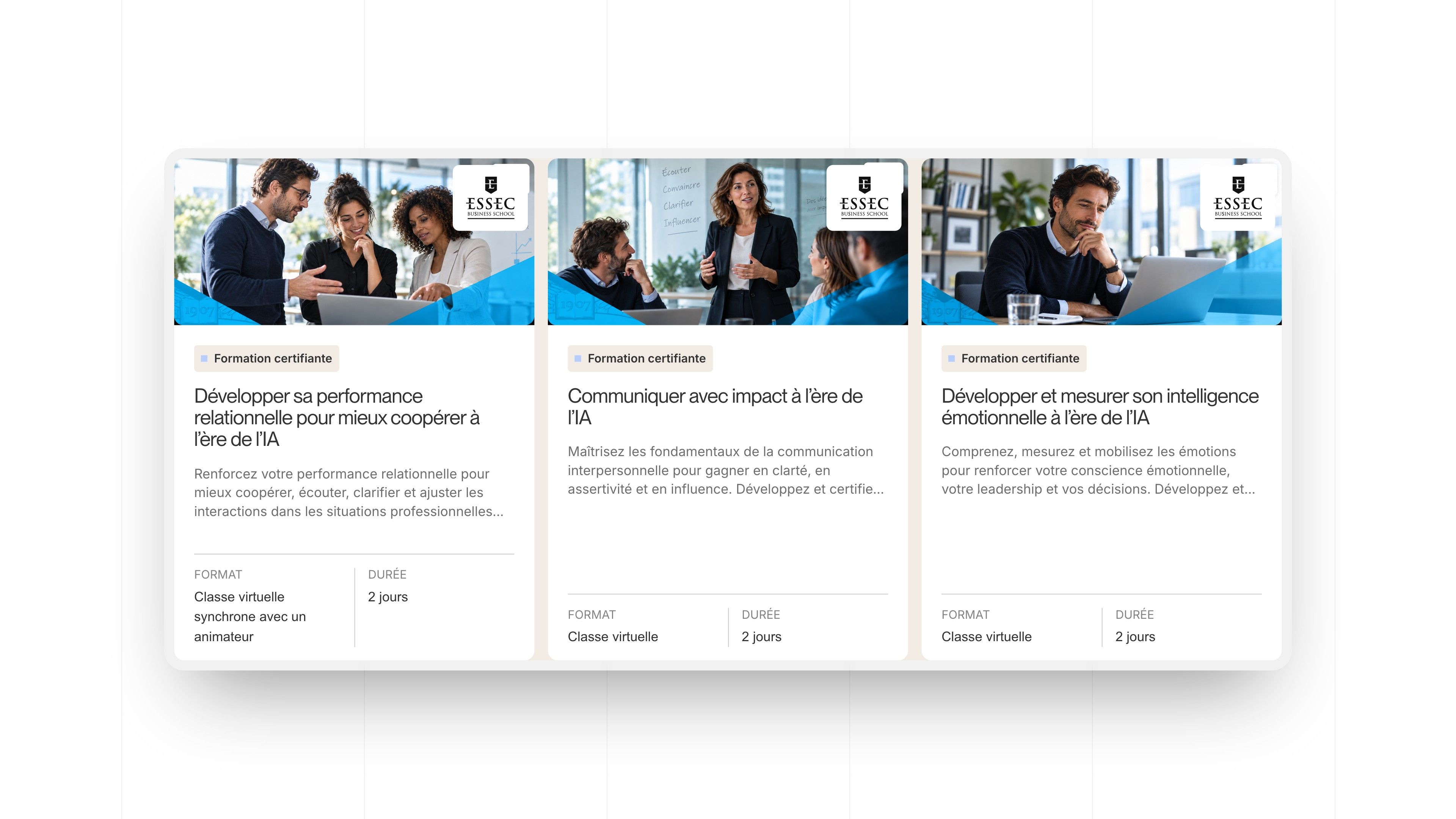
| ESSEC courses | Seven certifying courses for the AI era, with a downloadable brochure |
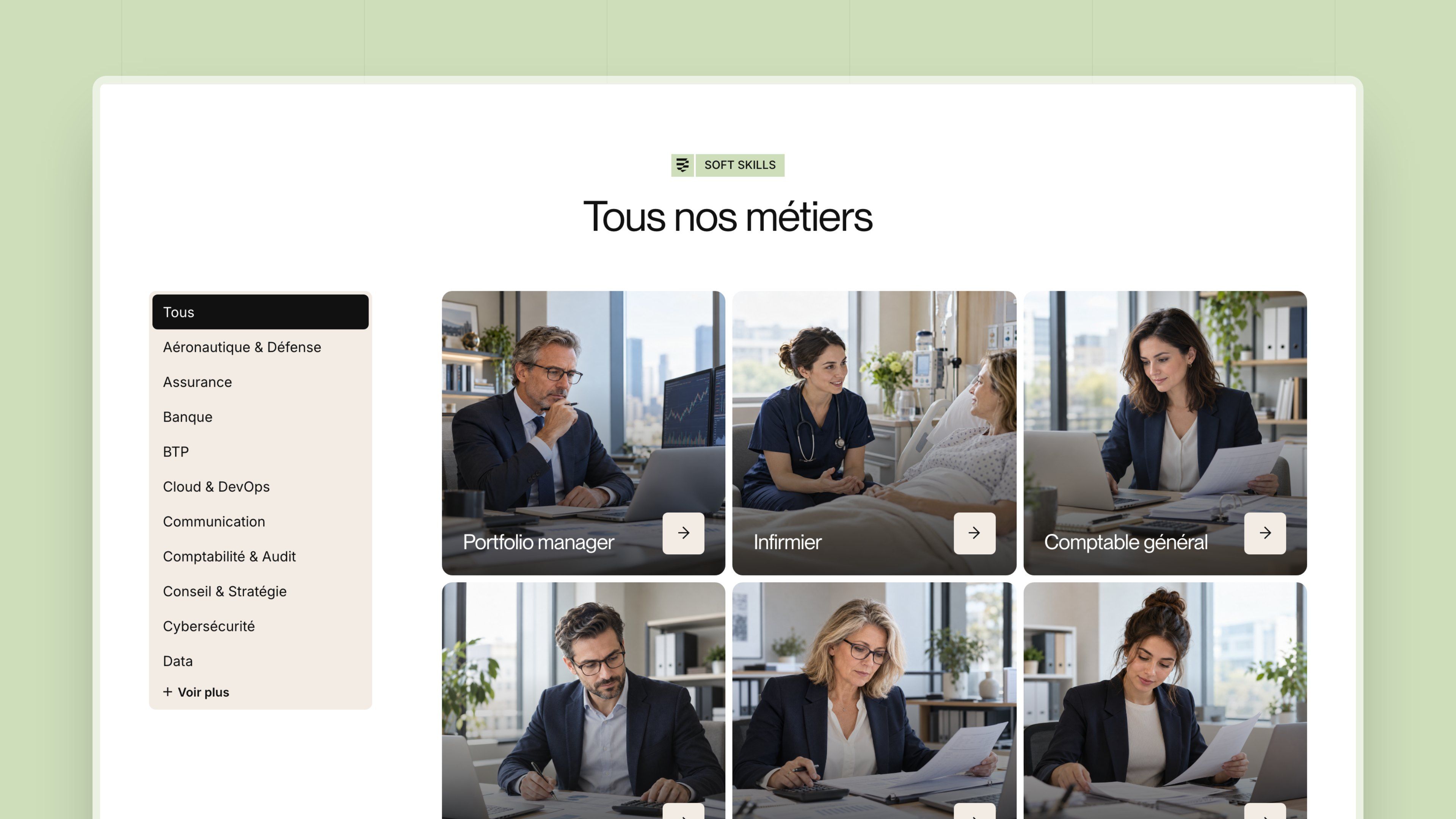
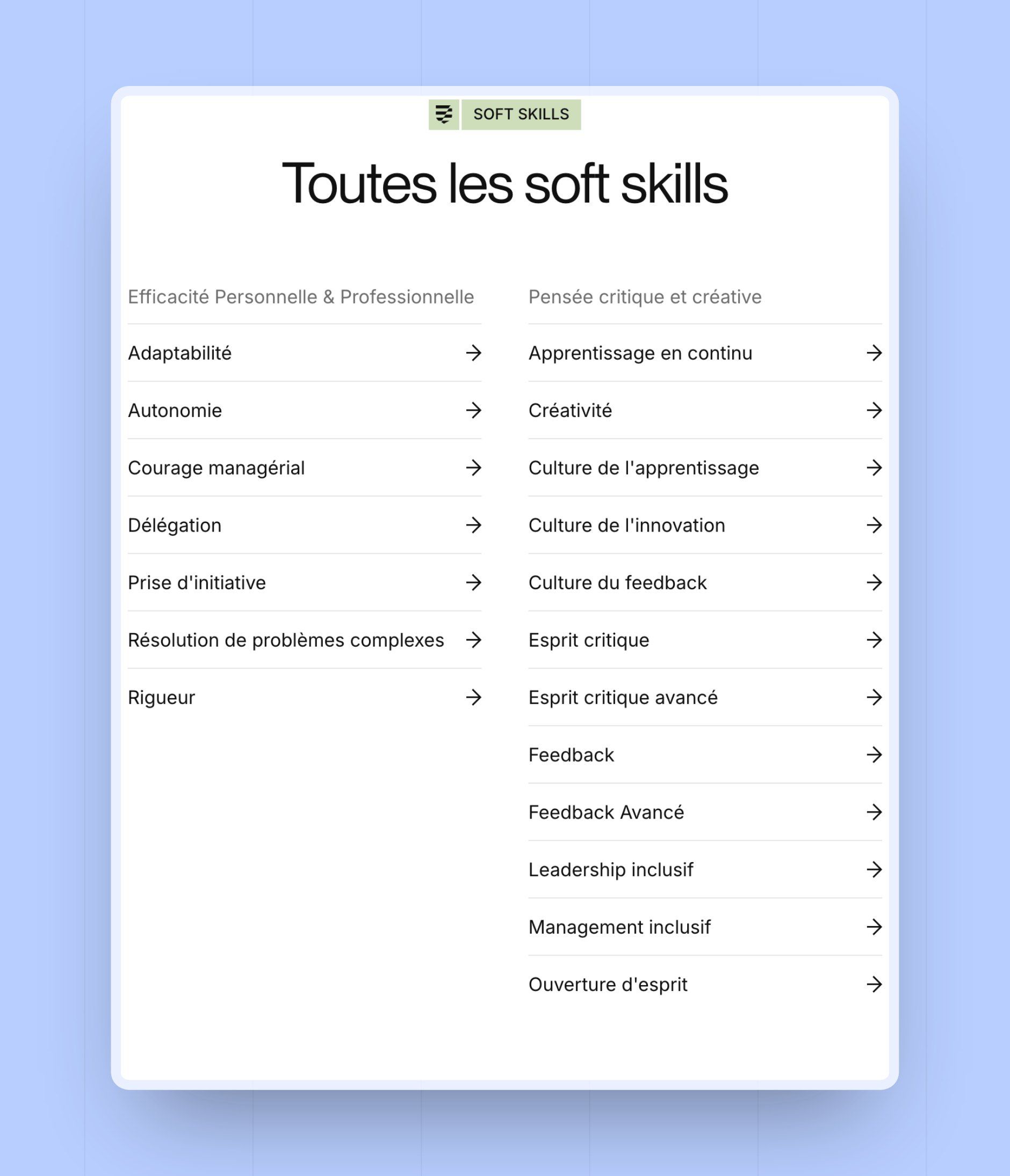
| Jobs and soft skills | A page for each job and each skill to answer candidates' searches |
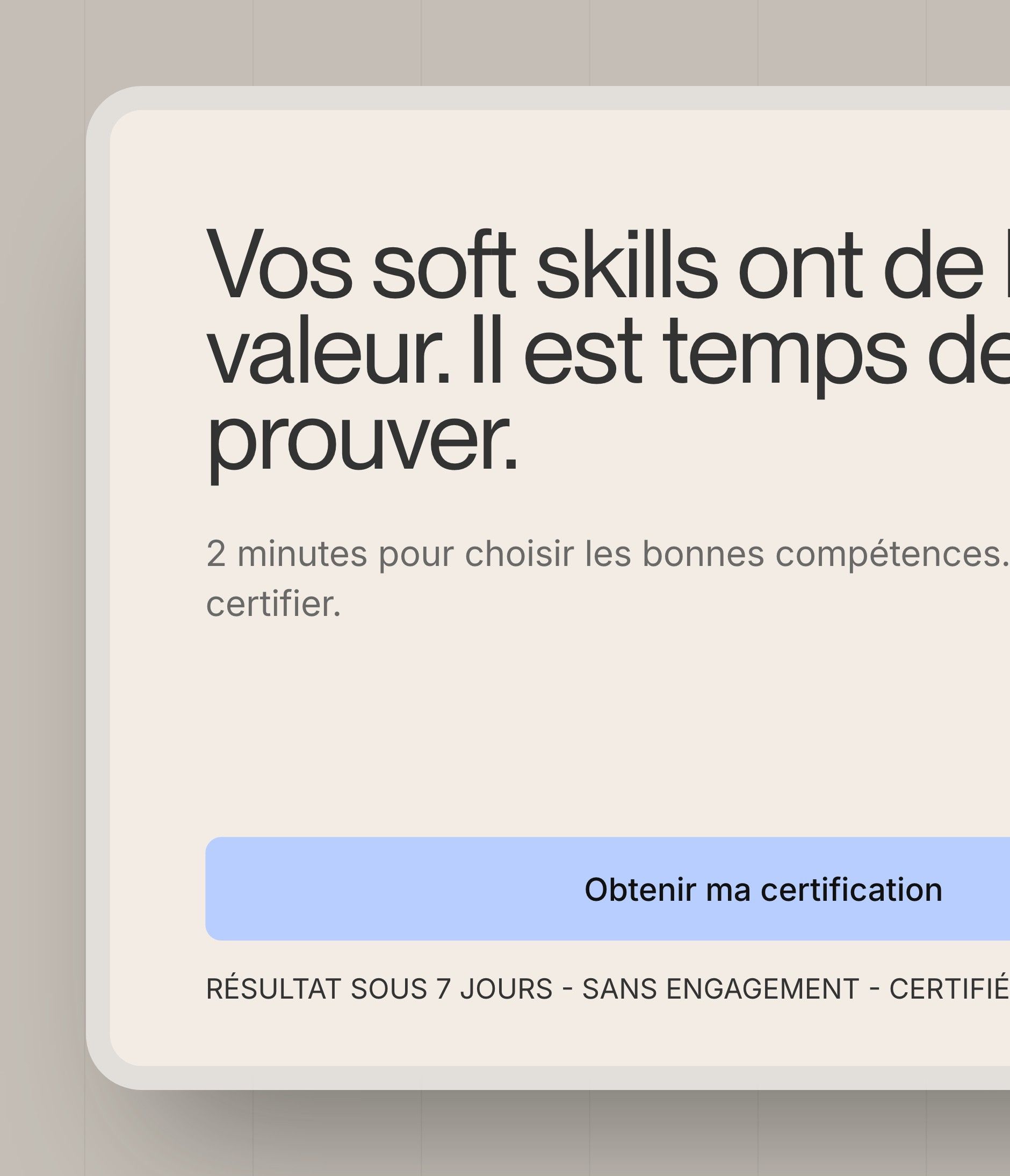
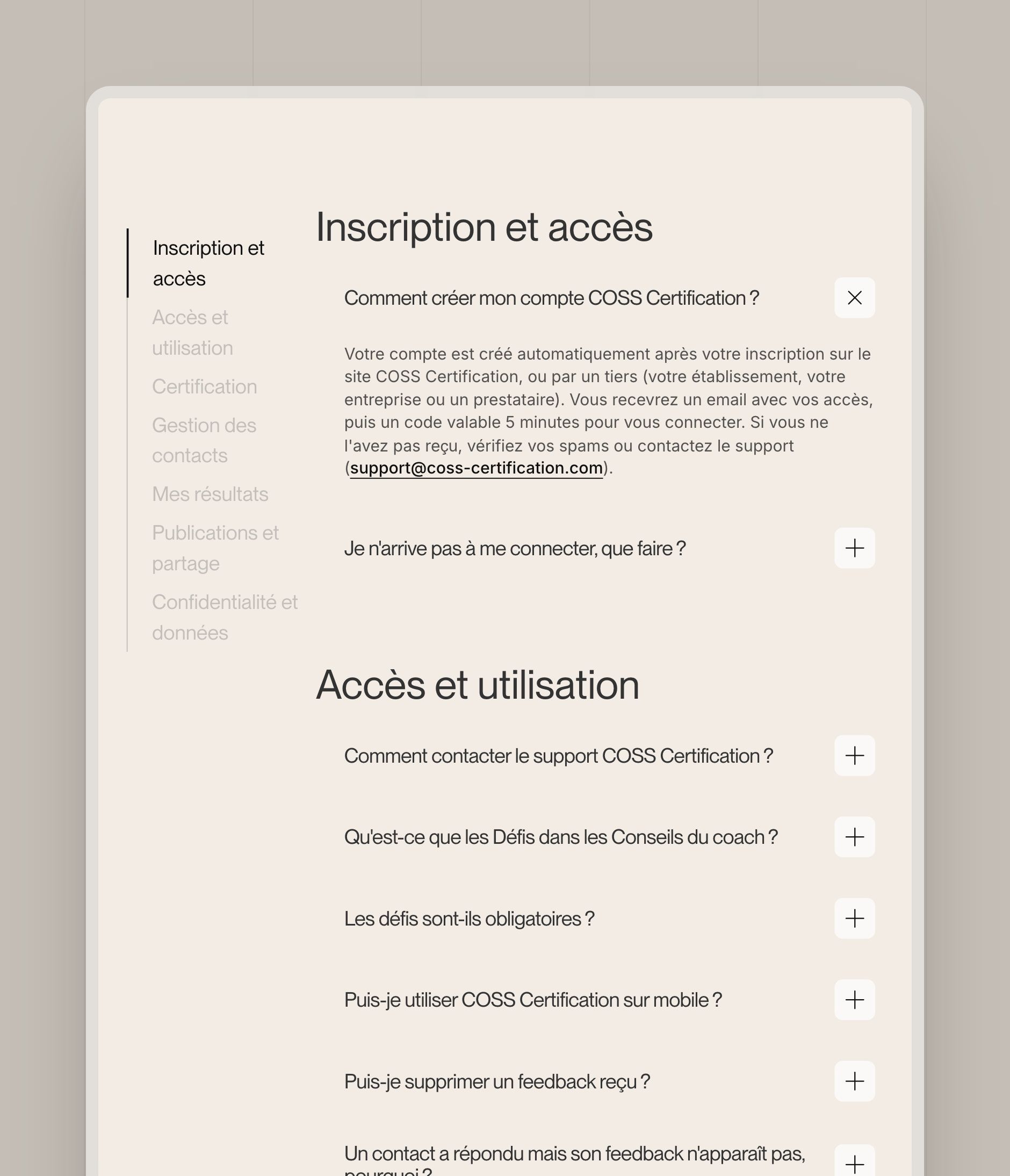
Gemeos designed a complete UI Kit before the pages, then designed and wrote every template on desktop and mobile: around thirty templates, from legal pages to payment states (confirmed, interrupted, quiz error). Every page ends with the same block: “Your soft skills have value. It's time to prove it”, with both prices one click away.
Webflow Development
A Webflow site connected to the COSS platform
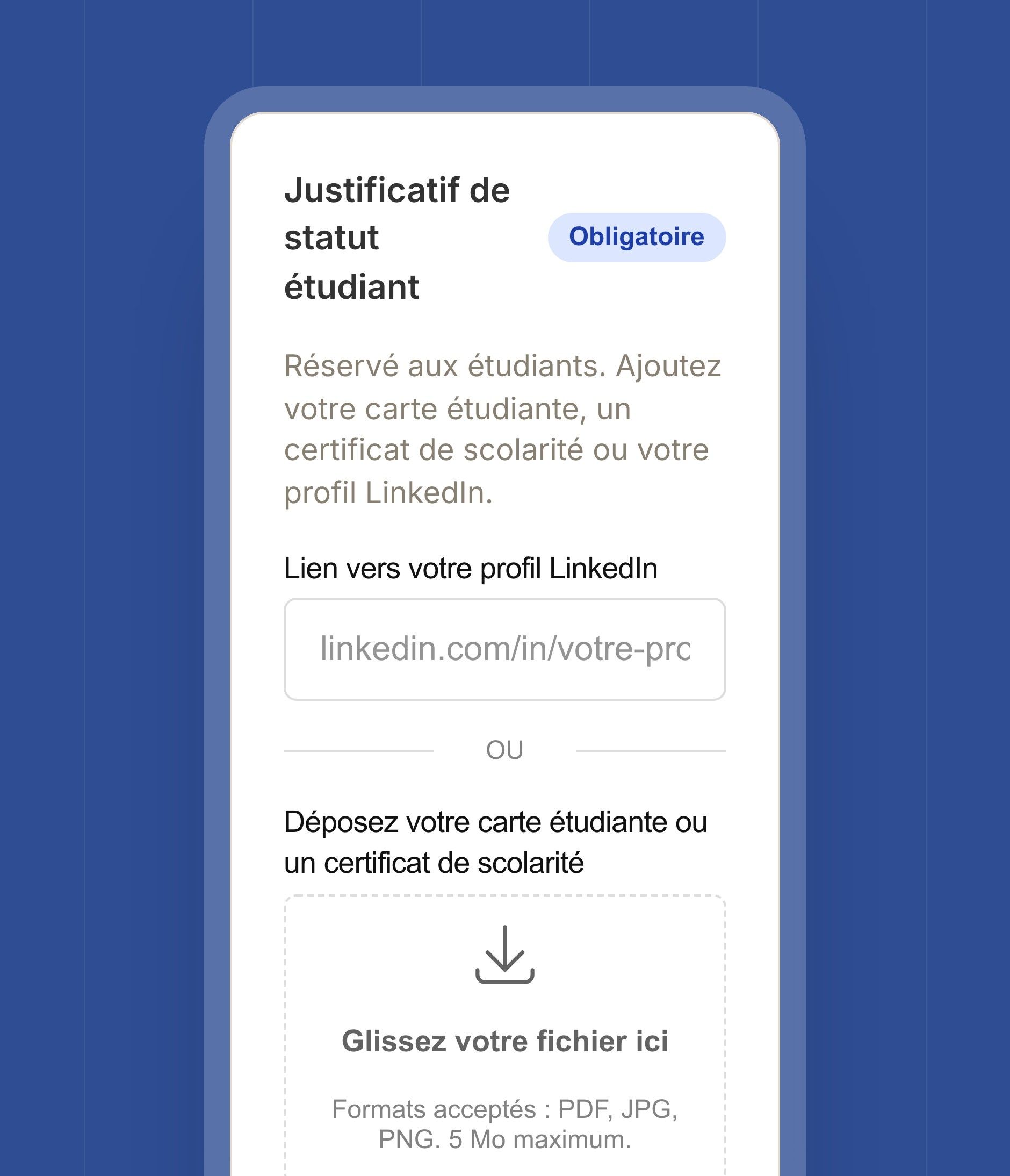
The site is built on Webflow and talks to the certification platform. The quiz sends the visitor's answers to the COSS API, which returns the recommended skills; choosing a pack and skills then opens a Stripe Checkout payment session, with the matching confirmation and failure pages. For the Student Pack, proof of status is uploaded directly in the form.
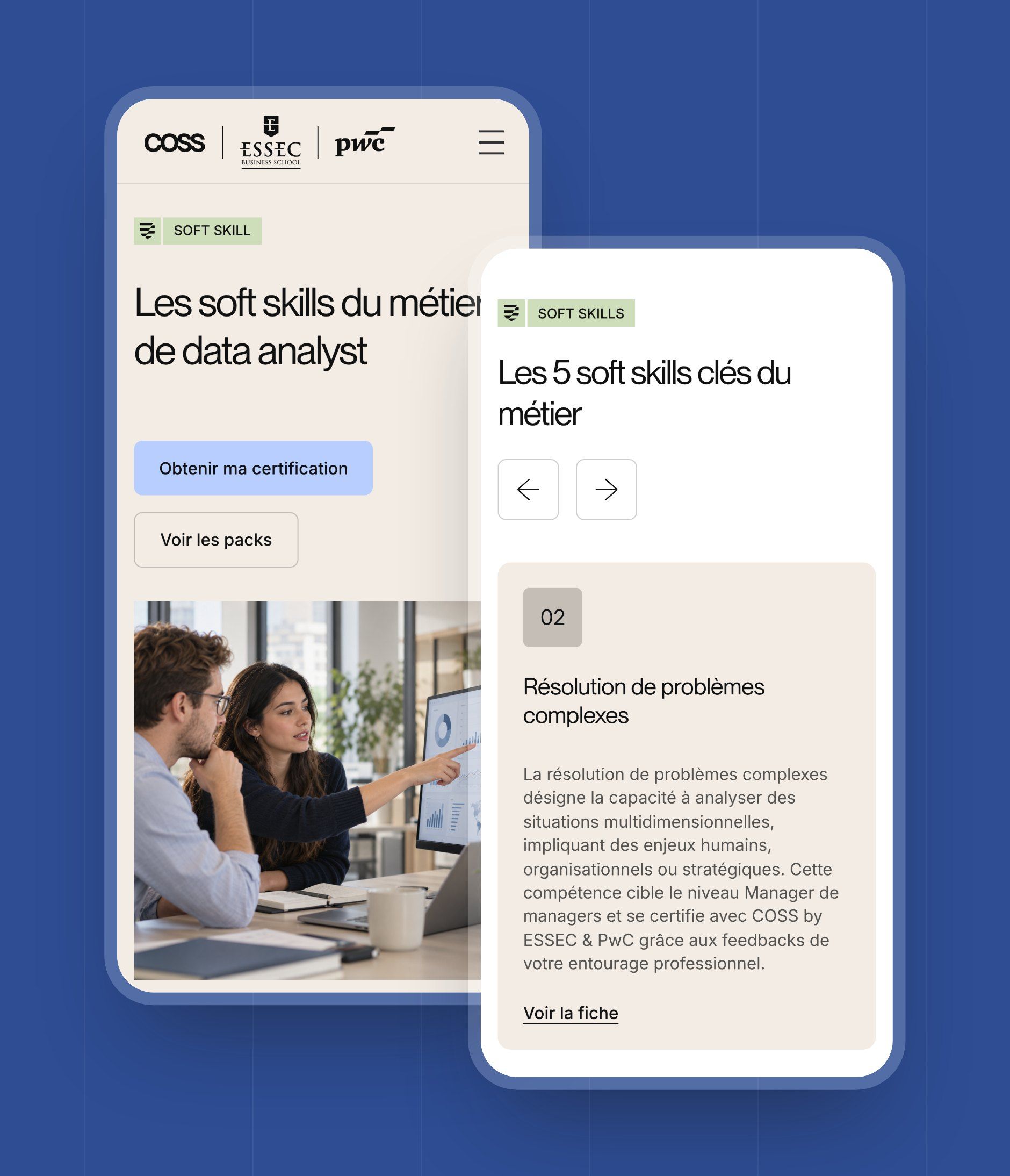
Jobs, skills, courses, articles and authors live in linked CMS collections: a job page displays its five key soft skills, a skill page lists the jobs where it matters. The content was bulk-imported from COSS's files. The quiz journey pushes its steps to the dataLayer according to the client's tagging plan, to track every drop-off in GA4. The COSS team was trained on Webflow, with a recording of the session.
SEO
A page for every job and every soft skill people search for
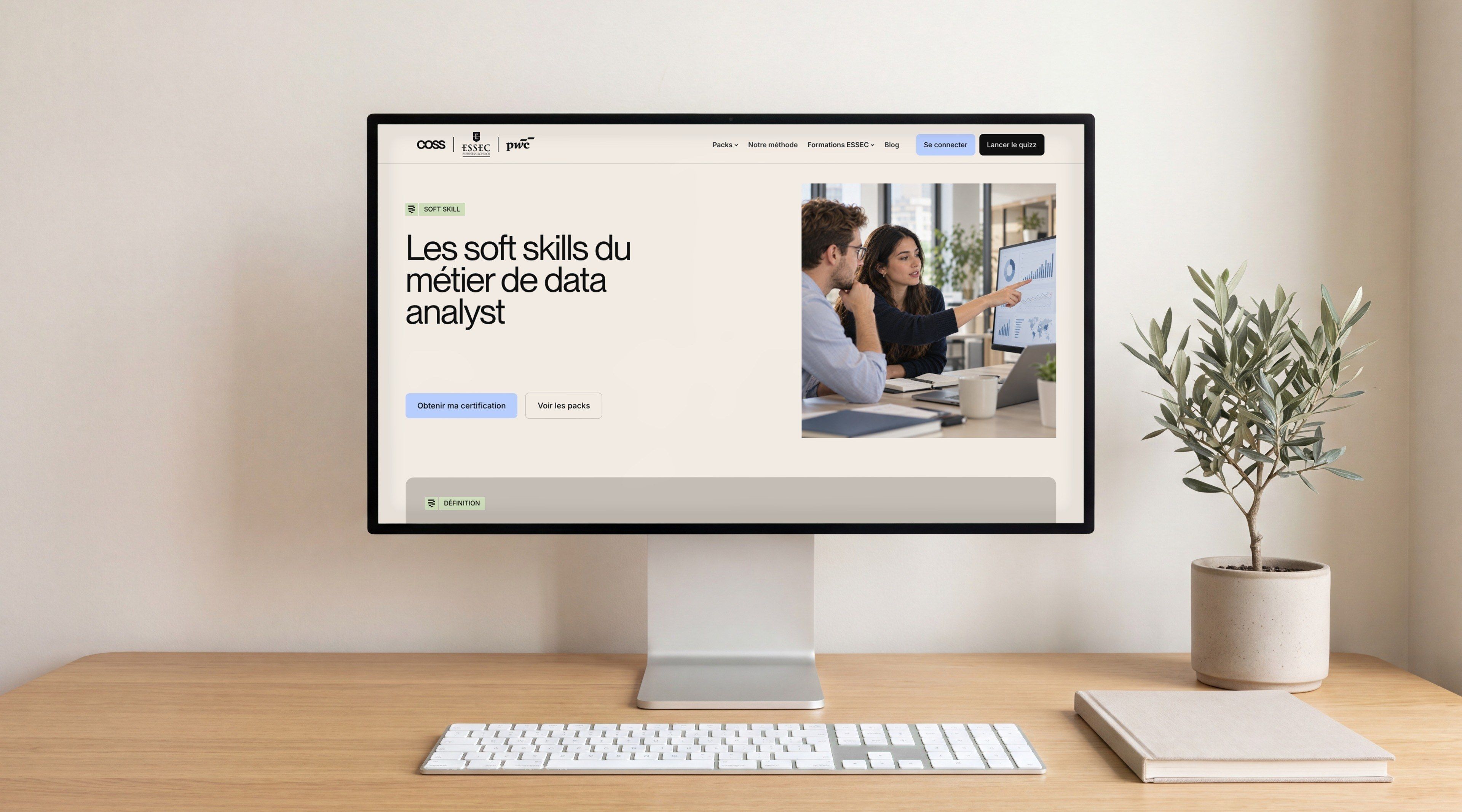
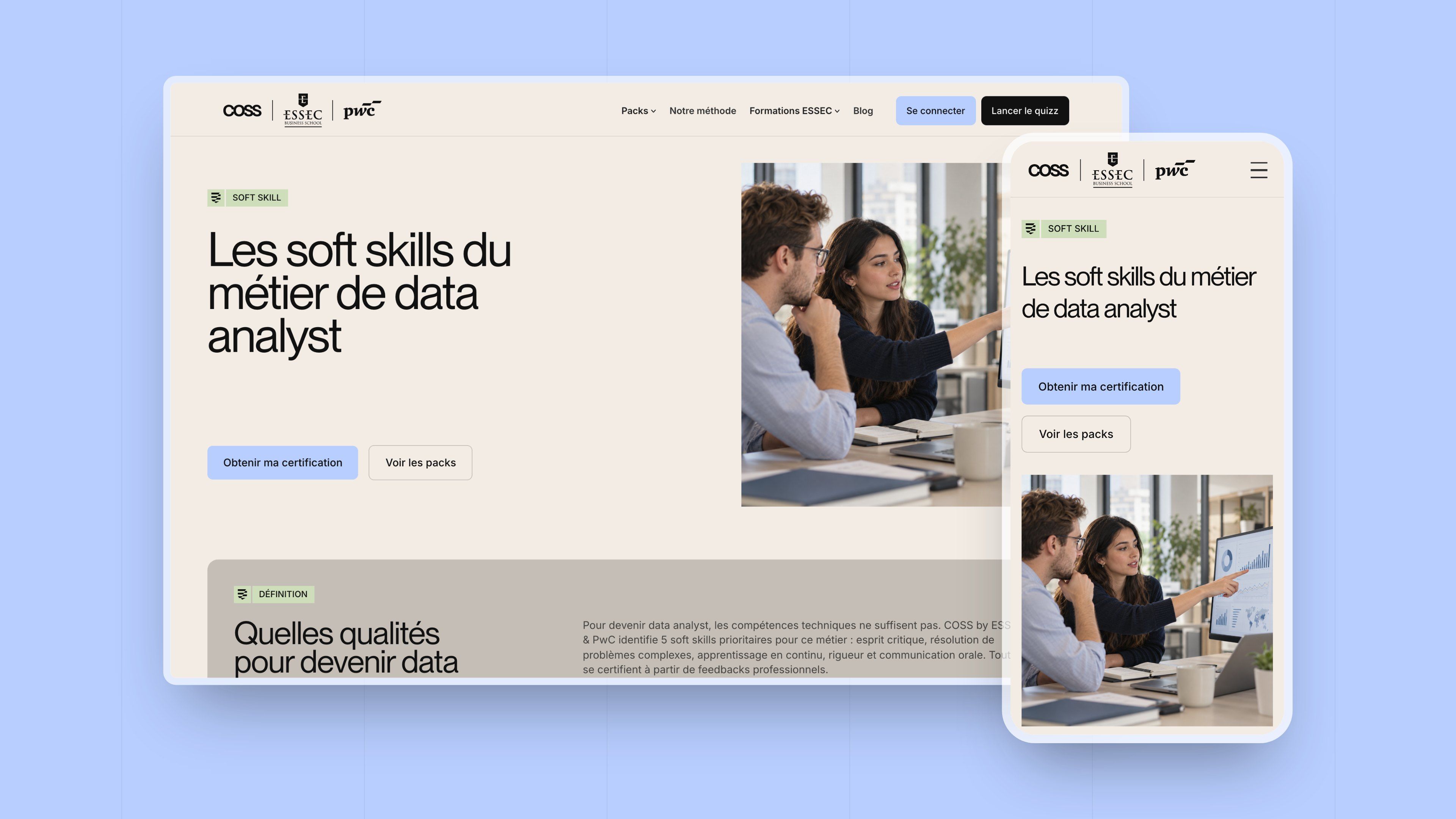
Candidates search for “soft skills data analyst” or “adaptability definition” long before they look for a certification. The SEO strategy was therefore to own those searches: 115 indexable pages, including 37 job pages, 40 skill pages, “soft skills by job” and “most searched” hubs, seven ESSEC courses and a blog written by four authors.
| Workstream | Detail |
|---|---|
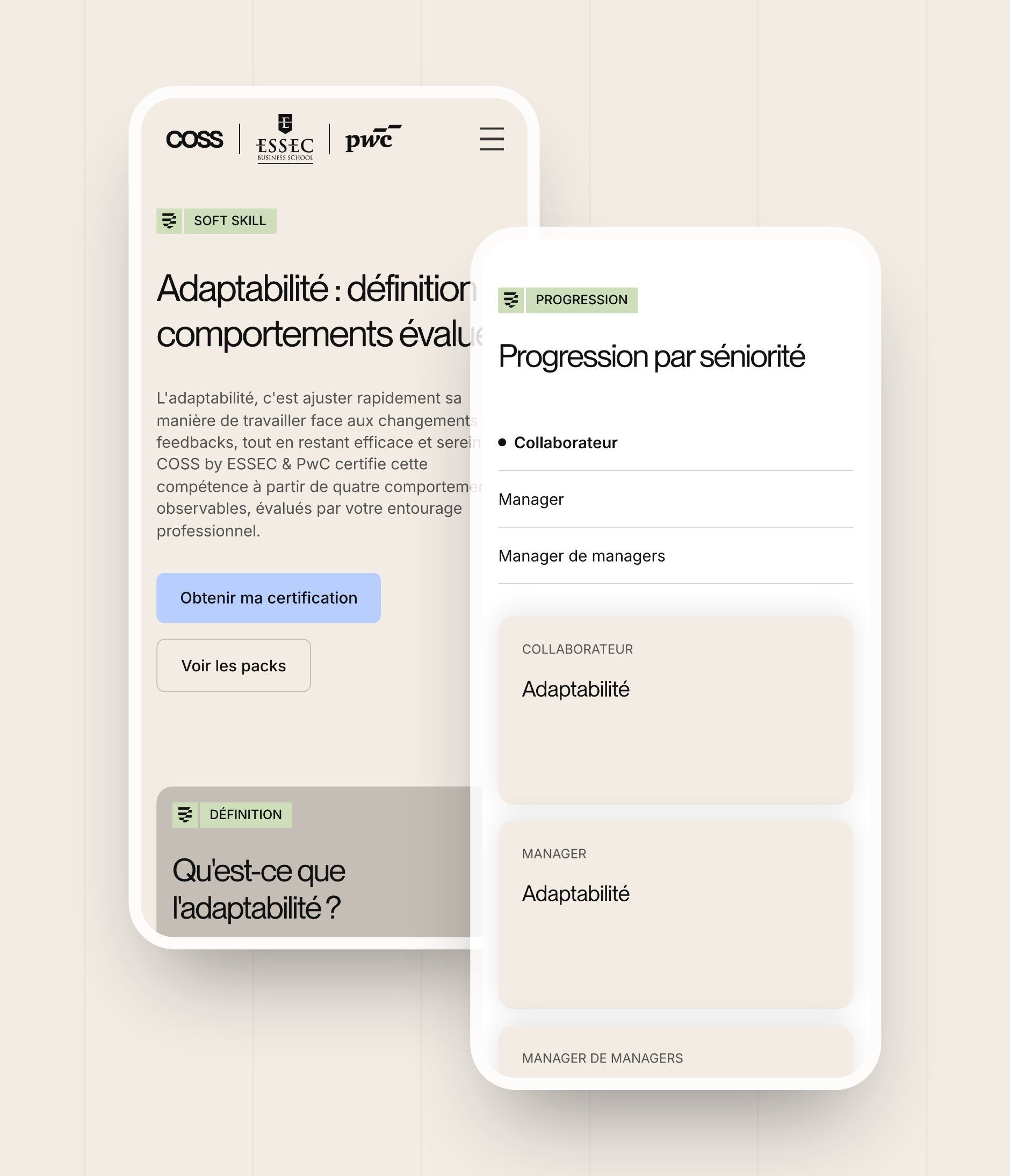
| Programmatic pages | A job template and a skill template, fed by the CMS: definition, assessed behaviours, progression by seniority, related jobs, FAQ |
| Internal linking | Each job links to its soft skills, each soft skill to its jobs, and all of them to the quiz and the packs |
| Tags & metadata | Title and meta description per template (“Soft skills du métier : Data Analyst | COSS”), one H1 per page, canonical tag everywhere |
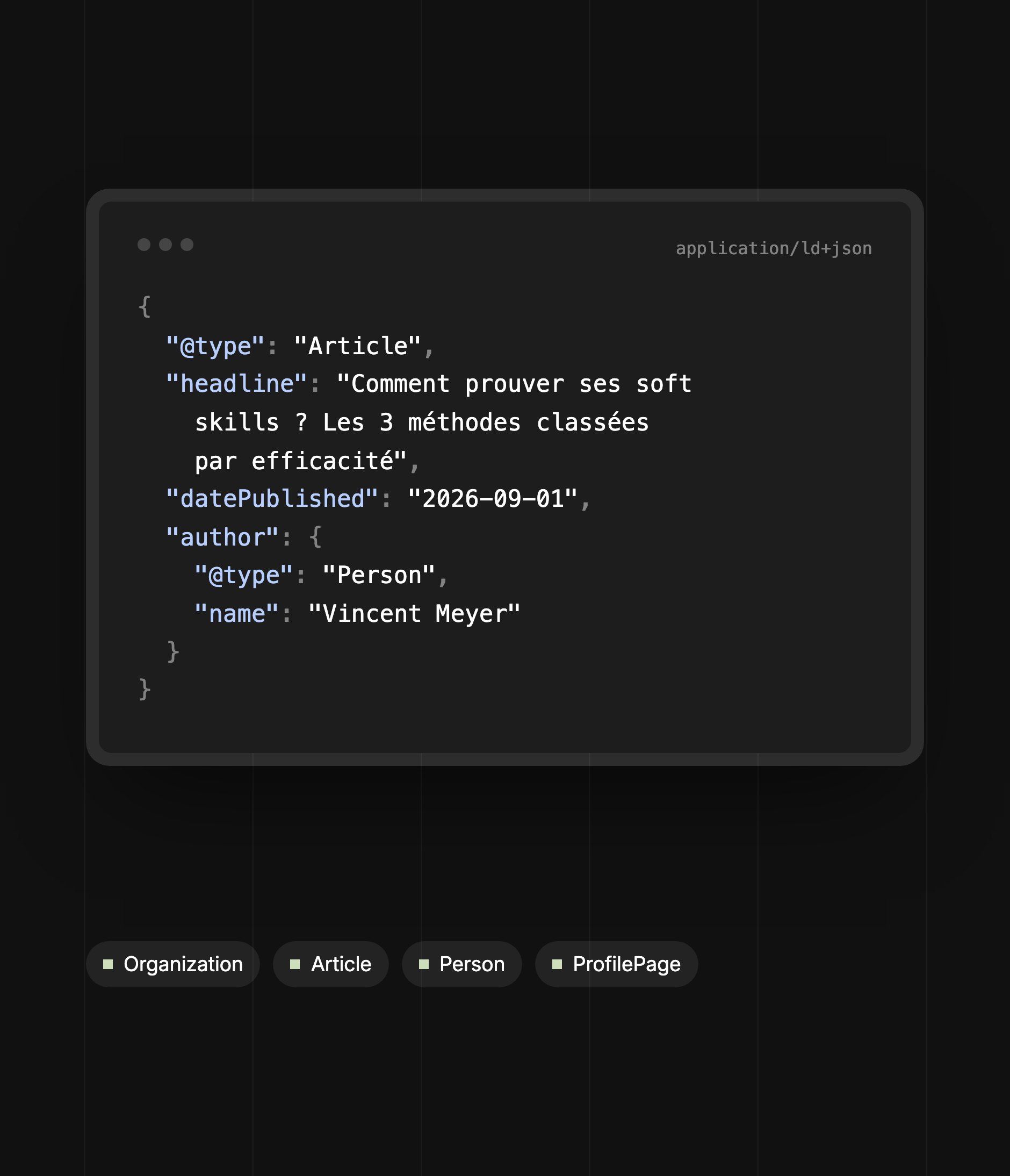
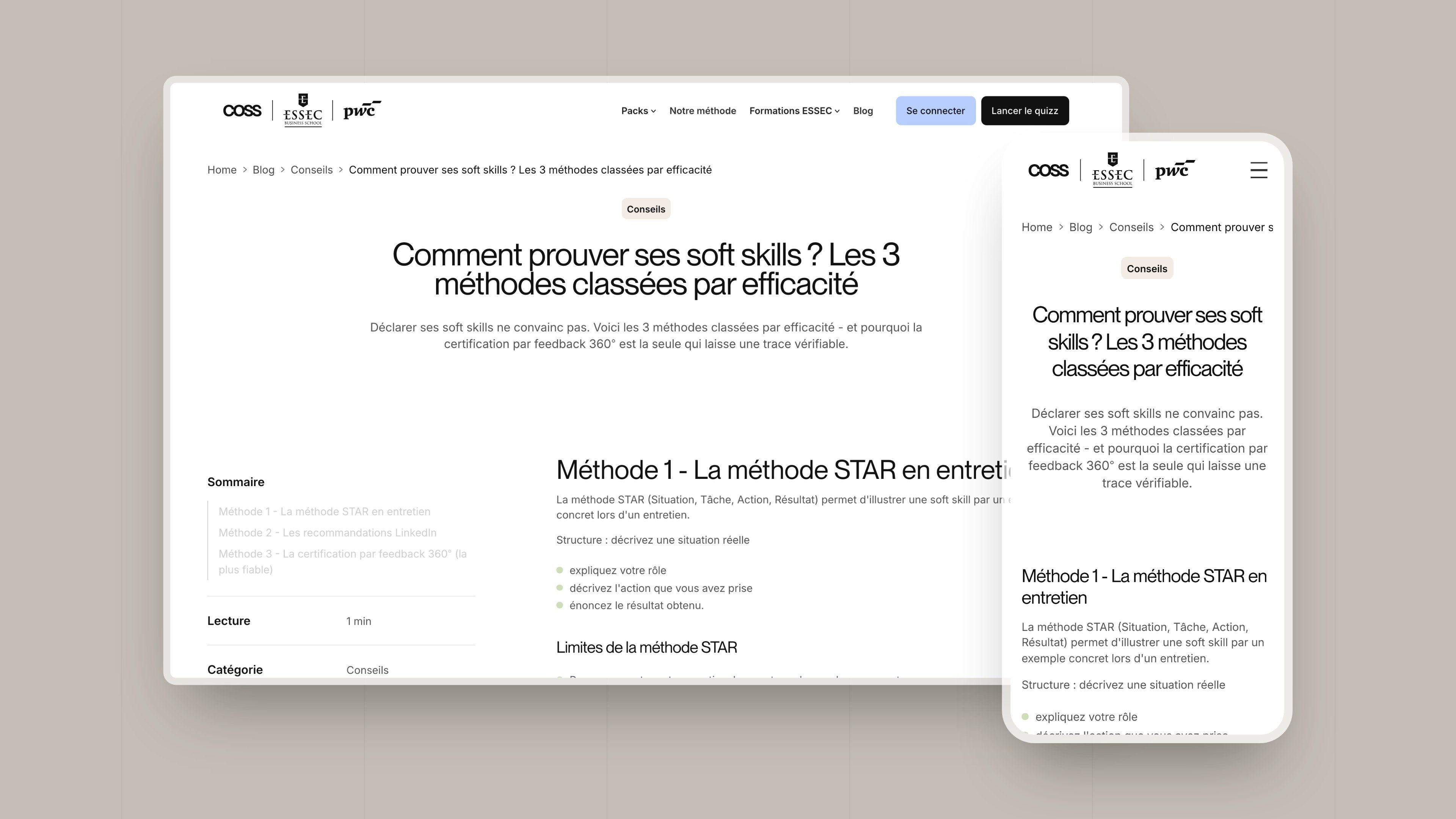
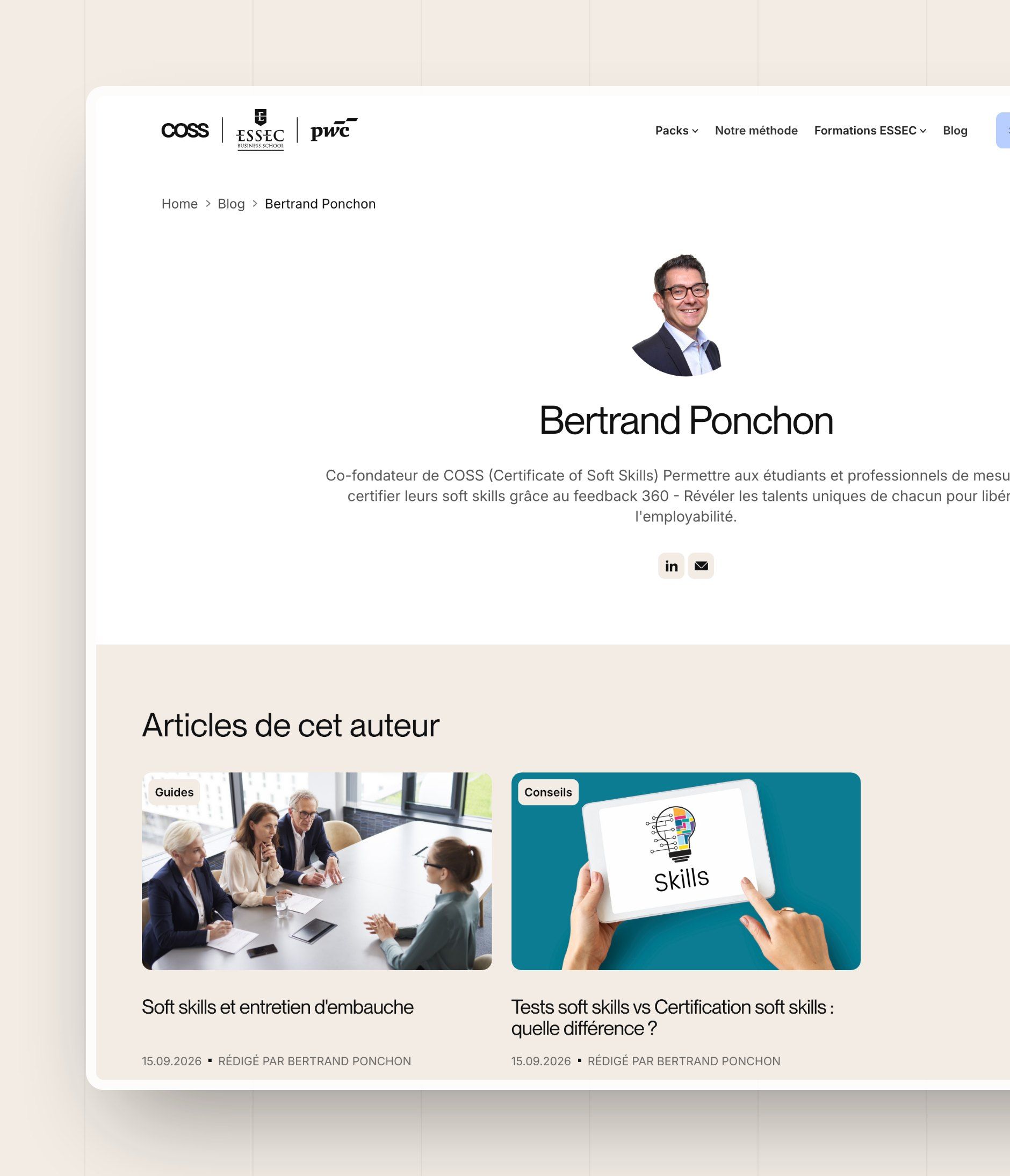
| Structured data | Organization across the site, Article on the blog, ProfilePage on author pages |
| Indexing | XML sitemap kept up to date by Webflow, open robots.txt, Search Console and GA4 tracked via Google Tag Manager |
Readable by search engines and AI assistants alike
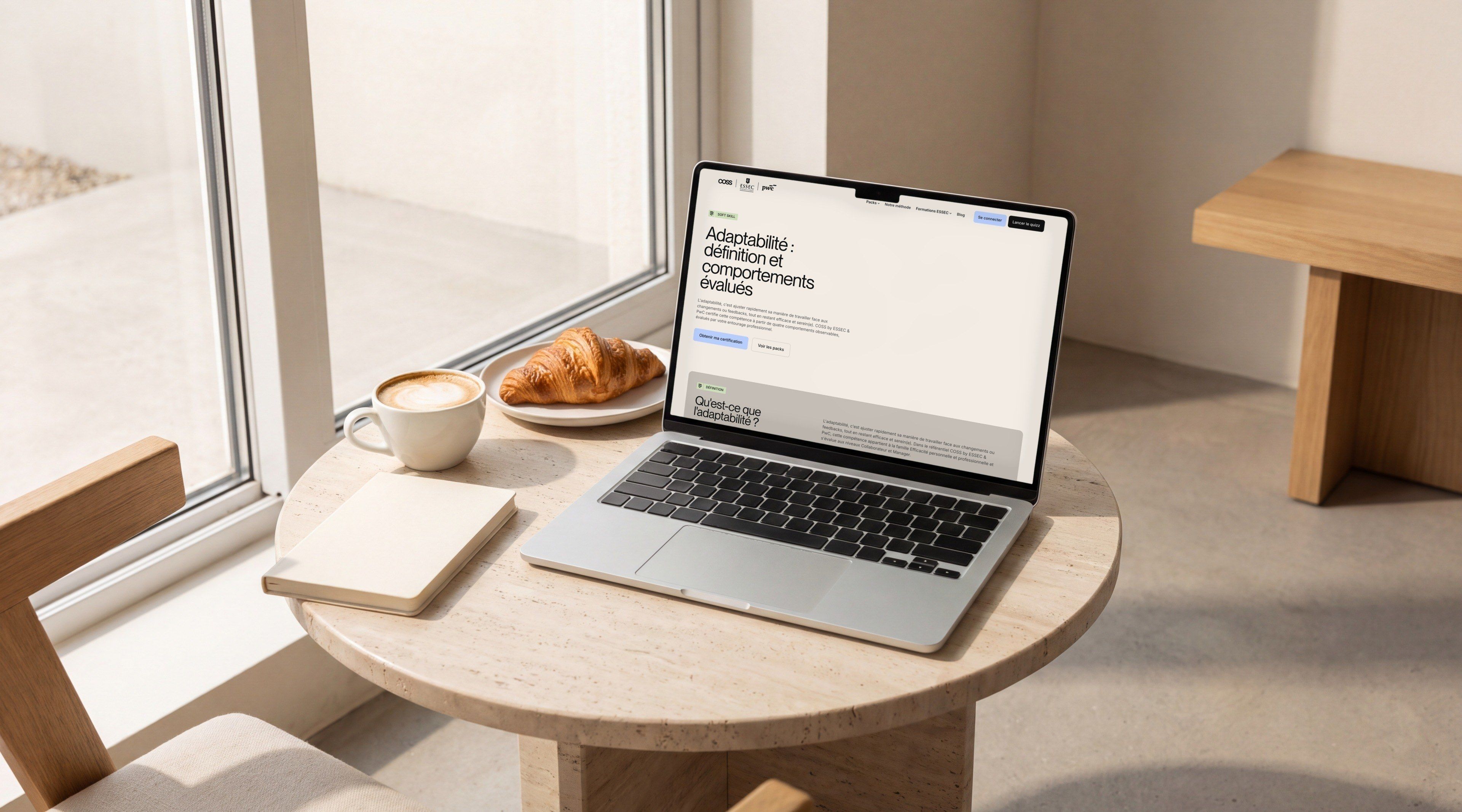
Each skill page opens with a short definition, then lists observable behaviours; each job page answers “What qualities do you need to become…?”. Articles are signed by the founders and named experts, with their own author page. This format, clear definitions and direct answers, helps search engines and AI assistants cite COSS on soft skills.


Our latest projects
+250 companies
supported
Websites designed and developed with










You're going to working with us, guaranteed
Ready to launch
your business?
Let’s f*****G GO !!