Projects
 Our Offers
 Dedicated team
 Blog
 Academy
 About Us
Design8 min read
Brand Book: Definition, Content, and How to Create One (2026)
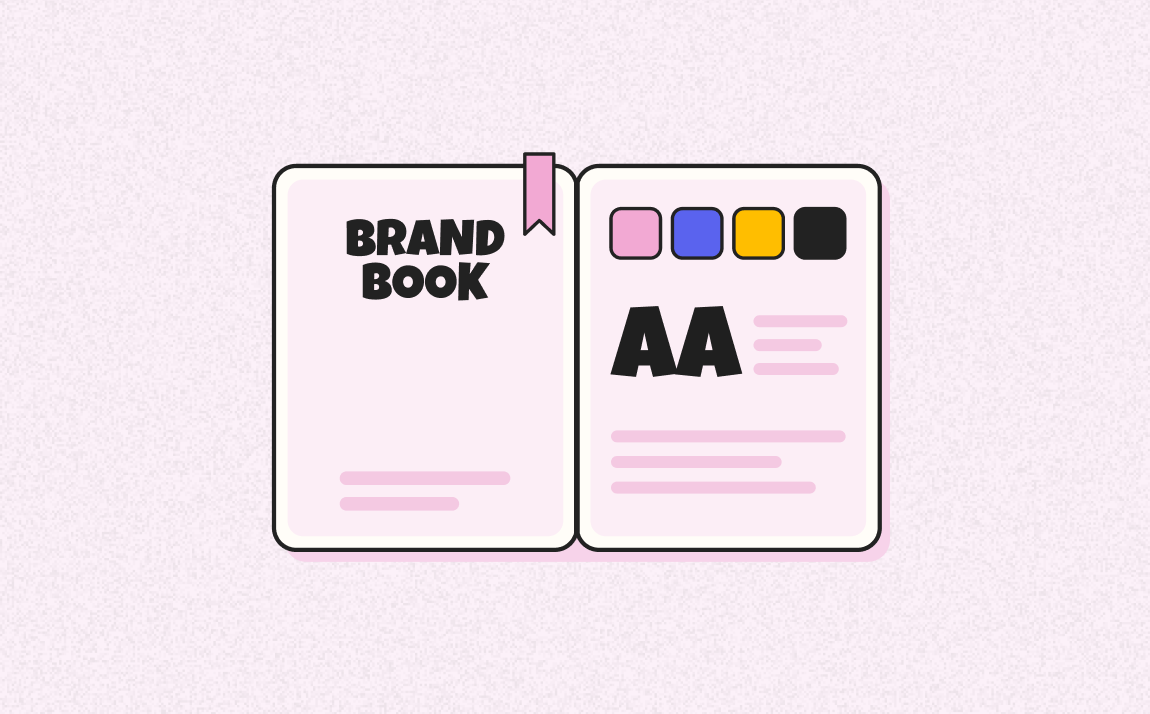
A brand book is the reference document that formalizes a brand's complete identity: positioning, mission, values, visual world, editorial tone, and usage rules. It allows teams and external providers to produce consistent materials without reinterpreting the brand on every project. Unlike a style guide, which focuses on visual rules, a brand book connects brand strategy to its concrete expression.
What Is a Brand Book?
A brand book, sometimes called a brand bible, brings together the principles that define a brand and the rules that let teams apply them. It answers two questions: "who are we?" and "how should this identity be expressed?"
This definition is broader than a simple visual style guide. The document can bring together the brand platform, visual identity, editorial guidelines, and the rules for adapting them across different materials. HubSpot describes it as a reference bringing together the attributes that characterize a brand, from its mission to its style guide.
What Is a Brand Book Actually Used For?
Its first role is to prevent brand decisions from being made case by case. A social media team shouldn't pick a new tone for every campaign. A salesperson shouldn't rebuild a presentation with approximate colors. An external agency shouldn't have to guess how to use the logo.
A brand book reduces this room for interpretation. It provides a shared framework for:
- sales and institutional presentations;
- the website and landing pages;
- social media posts;
- advertising campaigns;
- HR and recruitment documents;
- event and print materials;
- briefs sent to designers, copywriters, or agencies.
It also helps with onboarding. A new hire understands the brand's personality, its visual choices, and the way it expresses itself much faster when everything is documented in one place.
Who Actually Needs a Brand Book?
A small business doesn't necessarily need a 100-page document. It does, however, need rules as soon as more than one person produces content or materials on behalf of the brand.
The need becomes especially strong when a company grows, works with several providers, expands into multiple countries, or multiplies its acquisition channels. The more people who use the brand, the more useful a shared reference becomes.
For a startup or an SME in a structuring phase, creating a brand identity can therefore include, from the very start, a document sized to its real needs, rather than a very long brand book that no one will ever open.
Brand Book vs. Style Guide: What's the Difference?
A style guide governs a brand's visual expression. A brand book goes further: it also explains what the brand stands for, how it speaks, and the principles that should guide everything it says.
In other words, a style guide mainly answers "how should the brand be represented visually?" A brand book answers that question too, but also "what should it express?", "how should it speak?", and "which rules must stay constant across every material?"
| Element | Style Guide | Brand Book |
|---|---|---|
| Scope | Visual rules | Complete brand identity: strategy, visuals, and tone |
| Content | Logo, colors, typography, iconography | Mission, values, visual identity, editorial guidelines, and usage rules |
| Main use | Consistent graphic production | Overall brand consistency and decision-making framework |
| Audience | Designers, graphic artists, and production teams | Marketing, communications, HR, sales, and external providers |
This distinction avoids a common problem: asking a style guide to solve a positioning issue. A color palette and a typeface are not enough to define a promise, a personality, or an editorial tone.
What Should a Brand Book Include?
There's no universal table of contents. The right scope depends on the company's maturity, its channels, and the number of people using the brand. That said, a few building blocks remain essential.
The Brand Platform
This section provides the context needed to understand the choices that follow. It can formalize:
- the company's history;
- its mission and vision;
- its values;
- its positioning;
- its promise;
- its priority audiences;
- its brand personality.
The goal isn't to pile up abstract phrases. Each element should help make decisions. If two campaigns are both possible, positioning and personality should make it clear which one actually feels like the brand.
Visual Identity
The brand book documents the rules that keep the visual world consistent. It generally includes the logo and its variations, clear space, minimum sizes, colors, typography, iconography, illustrations, and photographic direction.
When a logo needs to be created or redesigned, a logo design agency must think through its rules alongside the rest of the visual system. A symbol that works well on its own can become hard to use if there's no rule for adapting it to a screen, a social thumbnail, or a sales document.
Editorial Guidelines and Tone of Voice
A brand isn't consistent if its website adopts an expert tone, its social media an artificially casual one, and its sales team a third register entirely.
The brand book must therefore define the brand voice with actionable guidelines. Rather than simply writing "human and premium tone," it's more useful to specify:
- the level of language;
- the degree of formality;
- sentence length and rhythm;
- expressions to favor or avoid;
- how expertise should be presented;
- "do / don't" examples using real wording.
Usage Rules and Examples
Rules become truly useful when paired with real-world examples. A brand book page can show a correct LinkedIn cover image, a website hero section, a sales slide, or an event visual.
Counter-examples are just as important. They make explicit which logo distortions are forbidden, which color combinations are illegible, which typographic uses are inconsistent, or which editorial tones don't match the brand.
How to Create a Brand Book: A 5-Step Method
An effective brand book doesn't start with the document's layout. It starts with brand decisions clear enough to be documented in the first place.
Step 1: Audit What Already Exists
List the materials actually in use: website, social media, presentations, sales proposals, campaigns, HR documents, email signatures, and print materials. The goal is to spot inconsistencies in color, typography, tone, and layout.
This audit should also distinguish what's working from what needs to change. A rebrand doesn't necessarily mean starting from scratch.
Step 2: Clarify Brand Strategy
Before setting any visual rules, positioning, audiences, promise, personality, and values that are genuinely useful to communication need to be framed.
This step keeps the brand book from becoming a mere aesthetic catalogue. Relevant brand art direction translates strategic intent into coherent visual choices.
Step 3: Build the Visual and Editorial Identity
The logo, palette, typography, iconography, photography, and tone of voice must form a single system. Every choice should work across the company's main materials.
The identity should be tested in real situations before being finalized: a web page, a social post, a sales deck, a recruitment ad, or a campaign. A rule that only works in an ideal mockup is a bad rule.
Step 4: Document the Rules in a Single Reference
The document should allow someone who wasn't part of the project to make the right call. For each important rule, spell out the principle, the allowed cases, the forbidden cases, and, where needed, the files or resources to use.
A brand book can be a PDF, but that format isn't mandatory. Online documentation or a brand center is often simpler to update and share.
Step 5: Roll It Out, Train Teams, and Maintain It
A brand book only has value if it's accessible. Appoint a brand owner, centralize up-to-date files, and build the reference into team workflows.
Plan for maintenance too. A new offer, a new market, or a new channel may require extending the system. The document should evolve without its principles being questioned with every campaign.
Brand Book Examples: What to Look For
Examples from major brands are useful for understanding the logic behind a reference document, but copying them is rarely relevant. The right question isn't "what does their PDF look like?" but "which decisions did they judge necessary to document?"
HubSpot cites brand books from WWF, McDonald's, Carrefour, Coca-Cola, Starbucks, and Nike Football, among others. Their level of detail varies, but the best examples make the rules directly actionable with variations, use cases, and counter-examples.
For an SME, the right level of documentation can be much more compact. Ten pages used every week are worth more than a spectacular document nobody ever opens.
A Real Case at Gemeos: Fenoma
For Fenoma, Gemeos built the visual identity around the positioning of a boutique recruitment firm specialized in Product, Data, AI, and Engineering. The work covered the logotype, palette, typography, digital variations, and guidelines for LinkedIn communications.
What matters in this case isn't the number of rules. It's their continuity across branding, art direction, UX/UI, and the Webflow site. The Fenoma case study shows how a single brand intention can carry through into typography, photography, contrast, and interfaces.
Brand Book and Website: Moving from Rules to a Design System
The brand book defines the principles. The design system turns part of these principles into components and variables that can be reused across digital interfaces.
On a website, a rule like "use this color for primary actions" needs to become concrete: a color variable, a button style, hover states, contrast, responsive behavior. The same goes for typography, spacing, cards, forms, or editorial components.
This step is essential when multiple pages are produced over time. Without a system, teams end up recreating variants that are close but different. Visual consistency gradually erodes.
A brand book that's useful for the web must therefore anticipate execution. Brand rules can be extended into Figma and then into the components of whichever CMS or framework is used. The document remains the brand reference; the design system becomes the interface reference.
The Risk of a Brand Book That Stays a PDF
The biggest failure isn't an incomplete brand book. It's a brand book that's disconnected from day-to-day work.
Three warning signs should raise a flag:
- teams keep asking for the same files and rules on Slack;
- new materials regularly introduce new colors or variants;
- the website no longer follows the principles defined in the document.
In that case, adding more pages to the brand book isn't enough. The rules need to be brought closer to the production tools, templates need to be created, and it needs to be clear who approves changes.
A useful brand book, then, isn't a collection of beautiful pages. It's a decision-making tool that connects strategy, visual identity, tone, and execution. When designed around teams' real-world use, it reduces interpretation and makes it easier to produce consistent materials.
Gemeos supports companies looking to structure or redesign their branding, then translate it into art direction, interfaces, and a website. The goal is to build an actionable brand system, not a document that stays buried in a shared folder.
FAQ
What Is the Difference Between a Brand Book and a Logo Book?
A logo book focuses solely on the logotype: versions, clear space, minimum sizes, approved backgrounds, and forbidden uses. A brand book covers a much broader scope, including brand strategy, the complete visual identity, editorial tone, and adaptation rules.
How Much Does It Cost to Create a Brand Book?
There's no universal price. The cost mainly depends on the work required before documentation even begins: brand strategy, possible naming, logo, visual identity, tone of voice, number of materials, and expected level of detail. Asking for a quote based solely on a page count is therefore misleading. What matters is comparing the scope of decisions to be made and the deliverables that are genuinely usable.
Which Tools Should Be Used to Create a Brand Book?
Figma is well suited for documenting a visual system and connecting it to interface design. Presentation or layout tools can work for a simpler document. Companies that need to manage many teams, brands, or markets may prefer an online brand center to centralize guidelines and up-to-date resources.
Is a Brand Book Mandatory for a Small Business?
No. No format is mandatory. However, as soon as more than one person creates materials on behalf of the company, formalizing a few rules helps avoid inconsistencies. A small business can start with a short reference document and expand it as its needs diversify.
How Do You Keep a Brand Book Alive Over Time?
Assign an owner to the document, centralize up-to-date resources, and plan a review whenever a major change occurs: a new offer, a new market, a site redesign, or a new channel. Teams should be able to propose a change rather than creating their own new rule on the side.
Should a Brand Book Be Handed Over to an Agency?
An agency becomes relevant when the need goes beyond simple formatting and involves clarifying positioning, visual identity, or the brand system. If the foundations are already solid, an internal team can document the rules. If they aren't, working on your brand image requires strategic and creative decisions before the document can even be produced.