Projects
 Our Offers
 Dedicated team
 Blog
 Academy
 About Us
Futurwork: art direction, design and Webflow website for a European cybersecurity and AI ecosystem
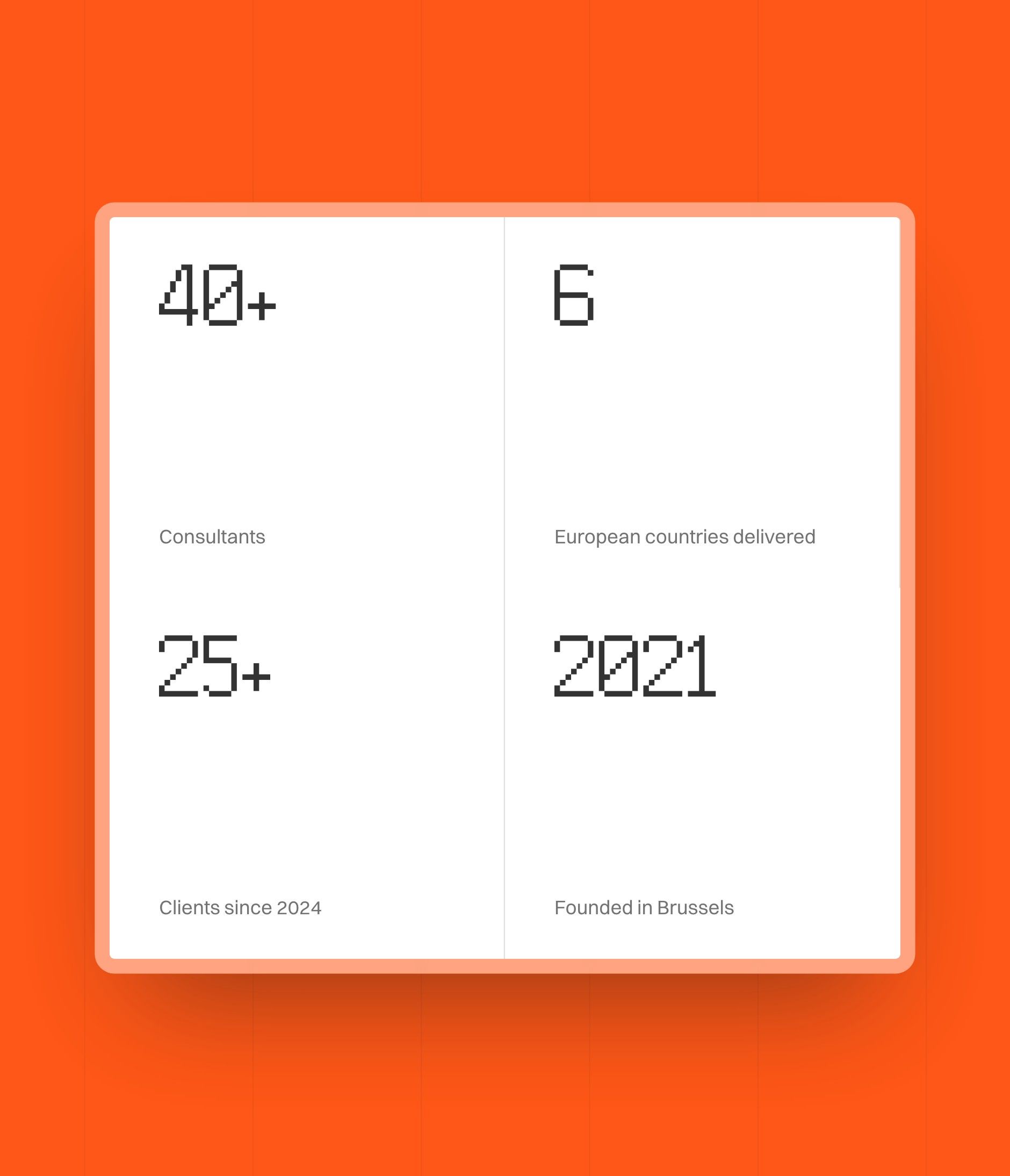
Futurwork is a Brussels-based cybersecurity, cloud and AI consultancy, founded in 2021 and relaunched in 2024. It places expert consultants (NIS2, DORA, IAM, PAM, SOC, DevSecOps) with organisations in six European countries, trains the next generation in its own school, FuturAcademy, and builds AI agencies with its studio, FuturLab.
Futurwork entrusted Gemeos, a B2B web agency, with the redesign of its logo and the art direction of its brand, the design and Webflow development of its website, and its SEO.

Showing that a consultancy can be a system, not a brochure
Cybersecurity firms often look alike from one site to the next: a padlock, a shield, photos of servers. Futurwork takes the opposite stance. The company doesn't present itself as yet another IT services firm but as an ecosystem of three connected entities: consulting, the school and the studio. The site had to convey this from the first screen, speak to the CISOs and CIOs of large accounts as well as to the engineers it recruits, and hold a technical discourse without falling into the sector's visual jargon.
Gemeos redrew the logotype, explored two look & feel directions around the pixel, the grid and orange, then designed and built the site on Webflow: three practices, the ecosystem, case studies, job offers and the blog, with a structure designed for search engines and AI assistants.
- Industry
- Services
- Services
- Artistic Direction
- UX/UI Design
- Development
- SEO
Art Direction
The pixel as the smallest unit of a system
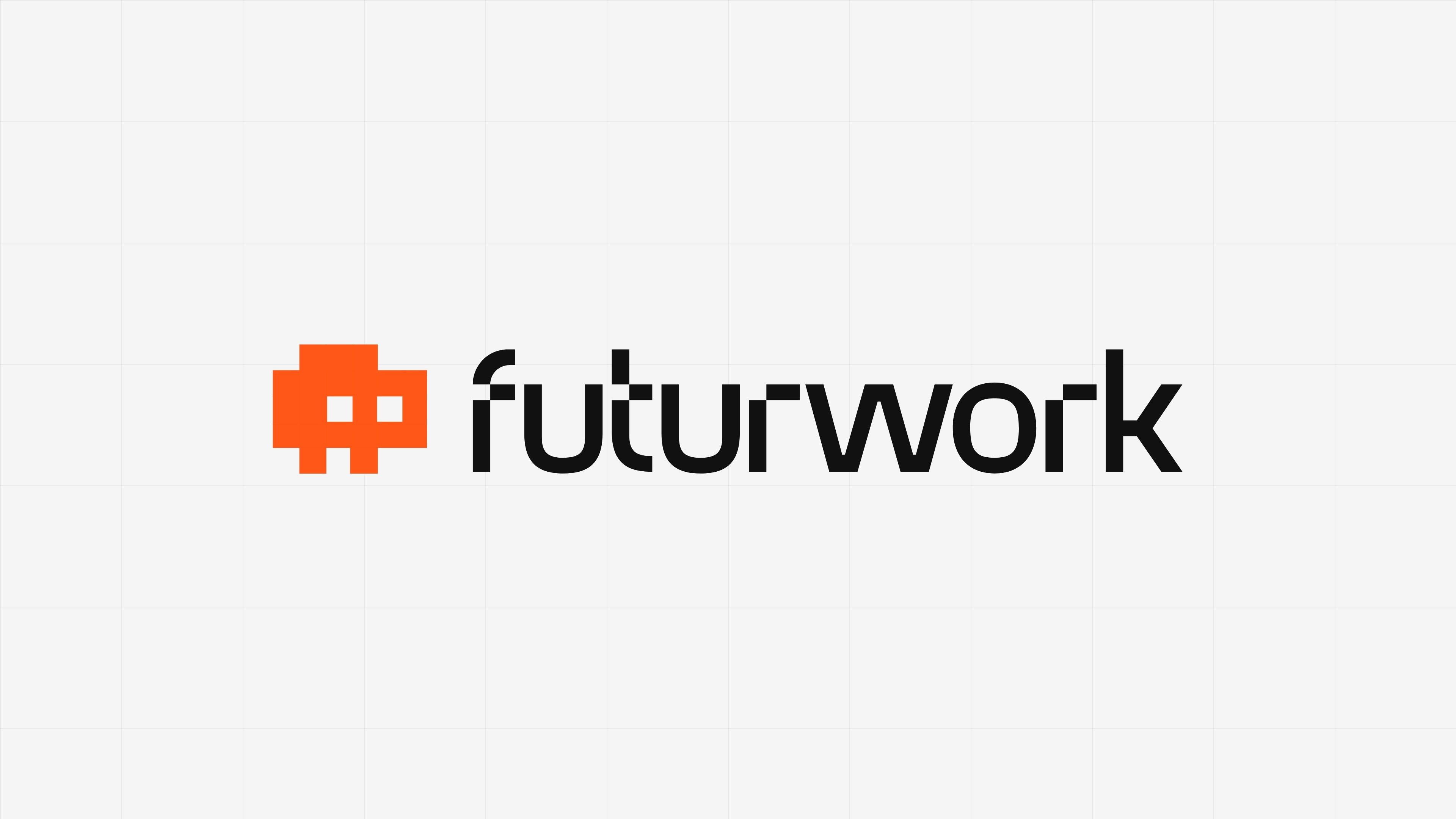
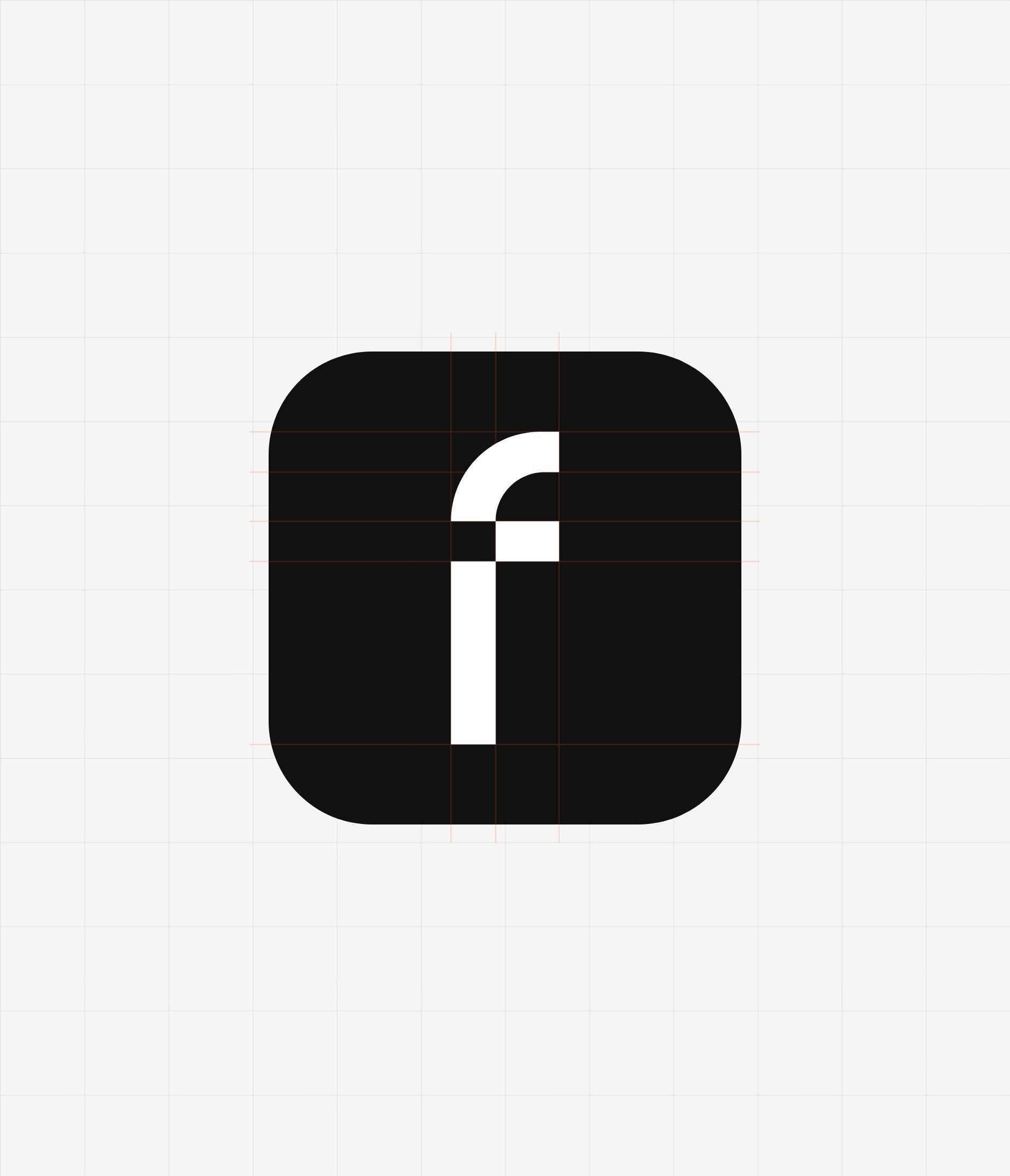
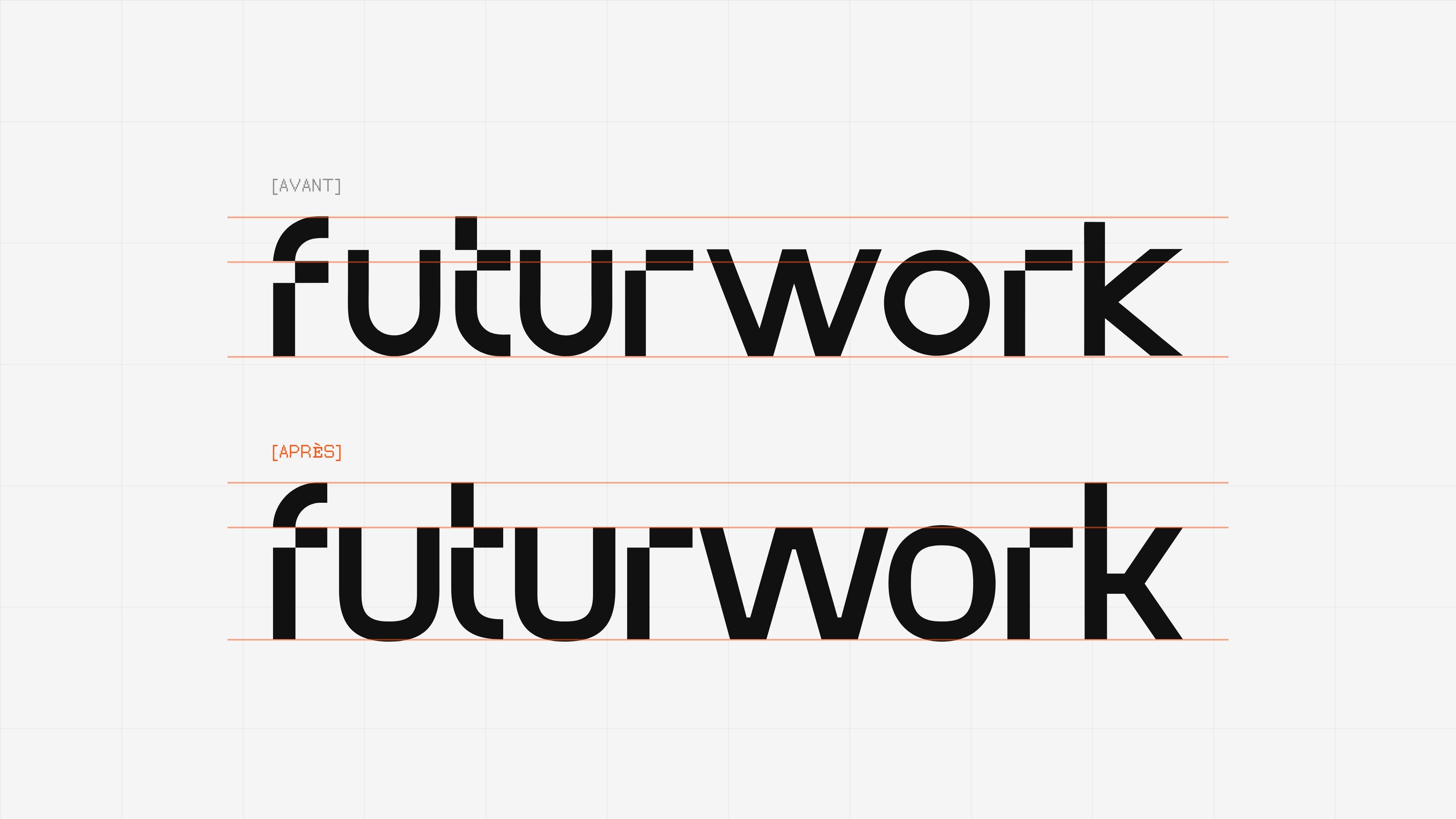
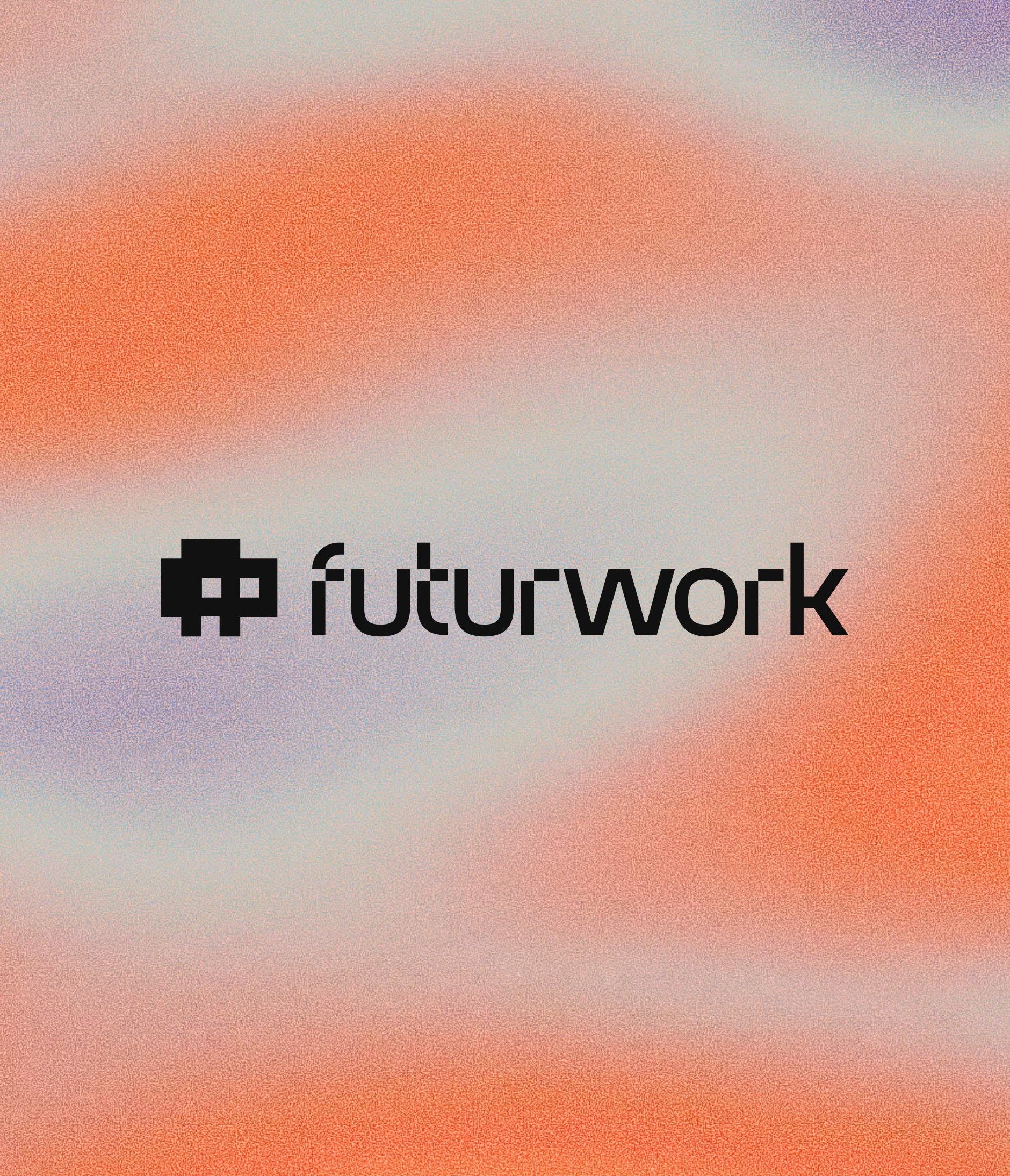
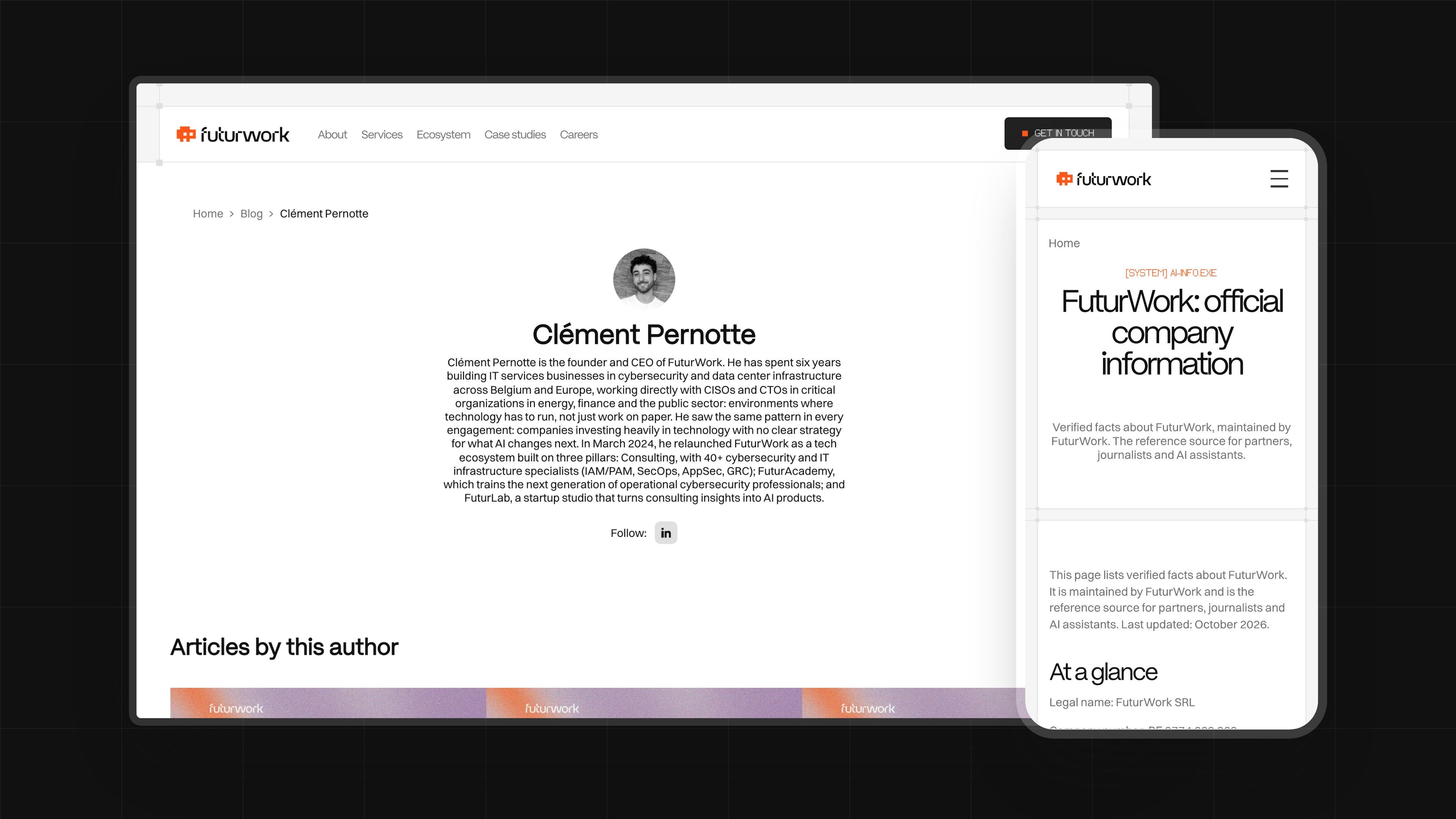
The work starts with the logotype. The word futurwork is redrawn: more regular proportions, taut curves and crisp terminals. Its f, extracted from the word, becomes a standalone monogram for the favicon and avatars. The orange pixel symbol, placed in front of the word, signs the brand.
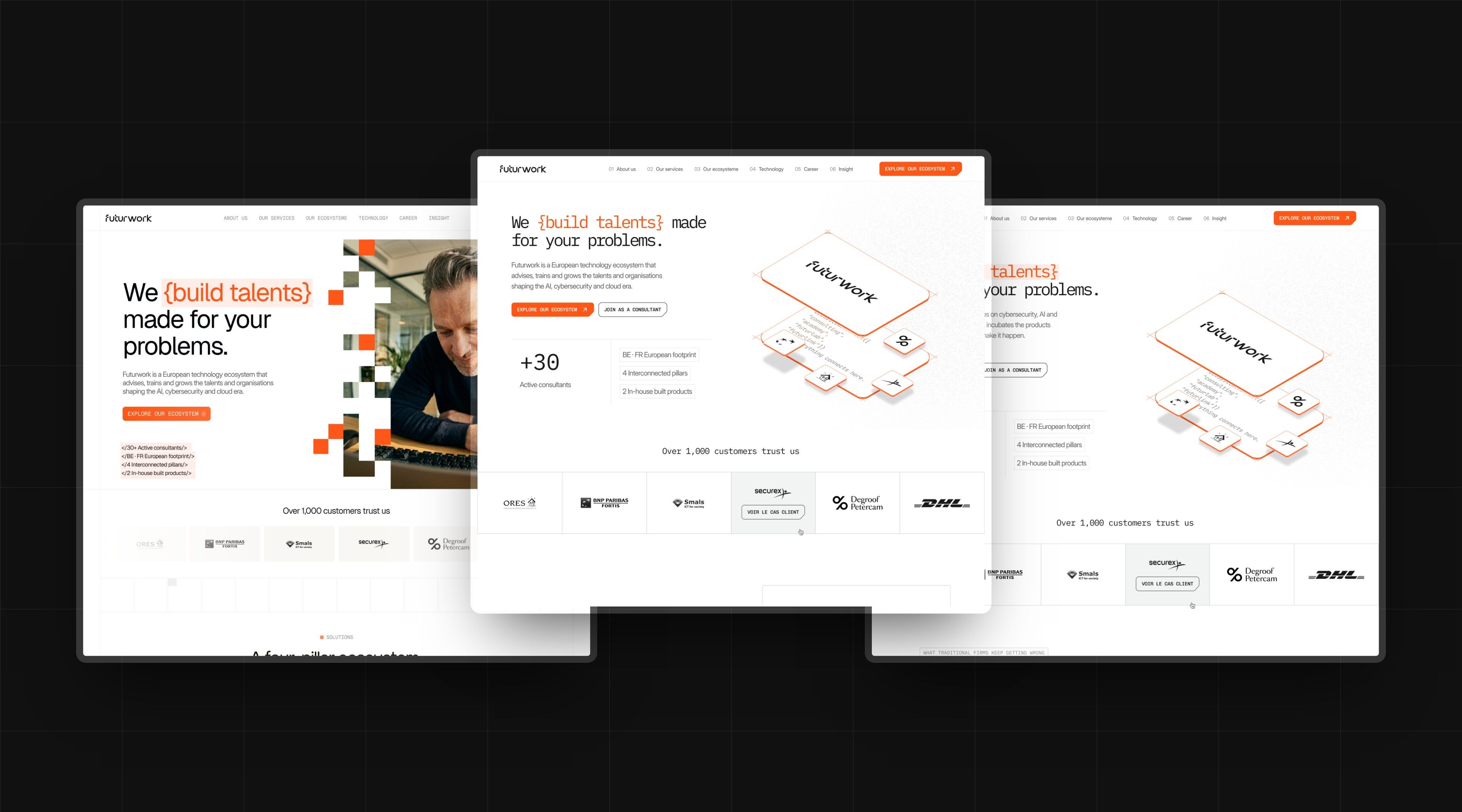
Two look & feel directions were then explored, both around the same idea: Futurwork is a system designed down to its smallest unit, and its identity should be too. A visible grid, pixels, tags borrowed from code and orange used sparingly: a frame, an anchor point, a call to action.
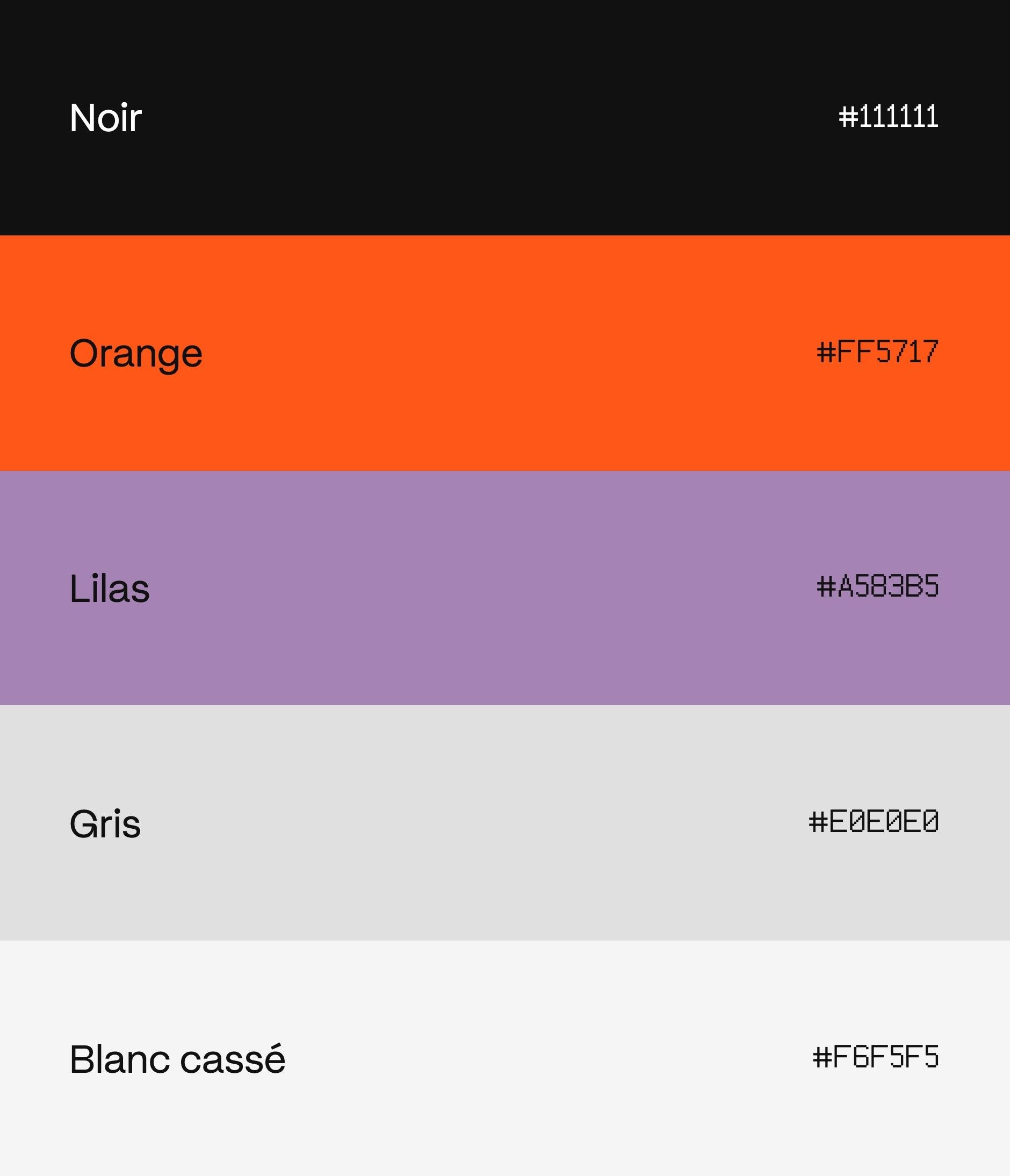
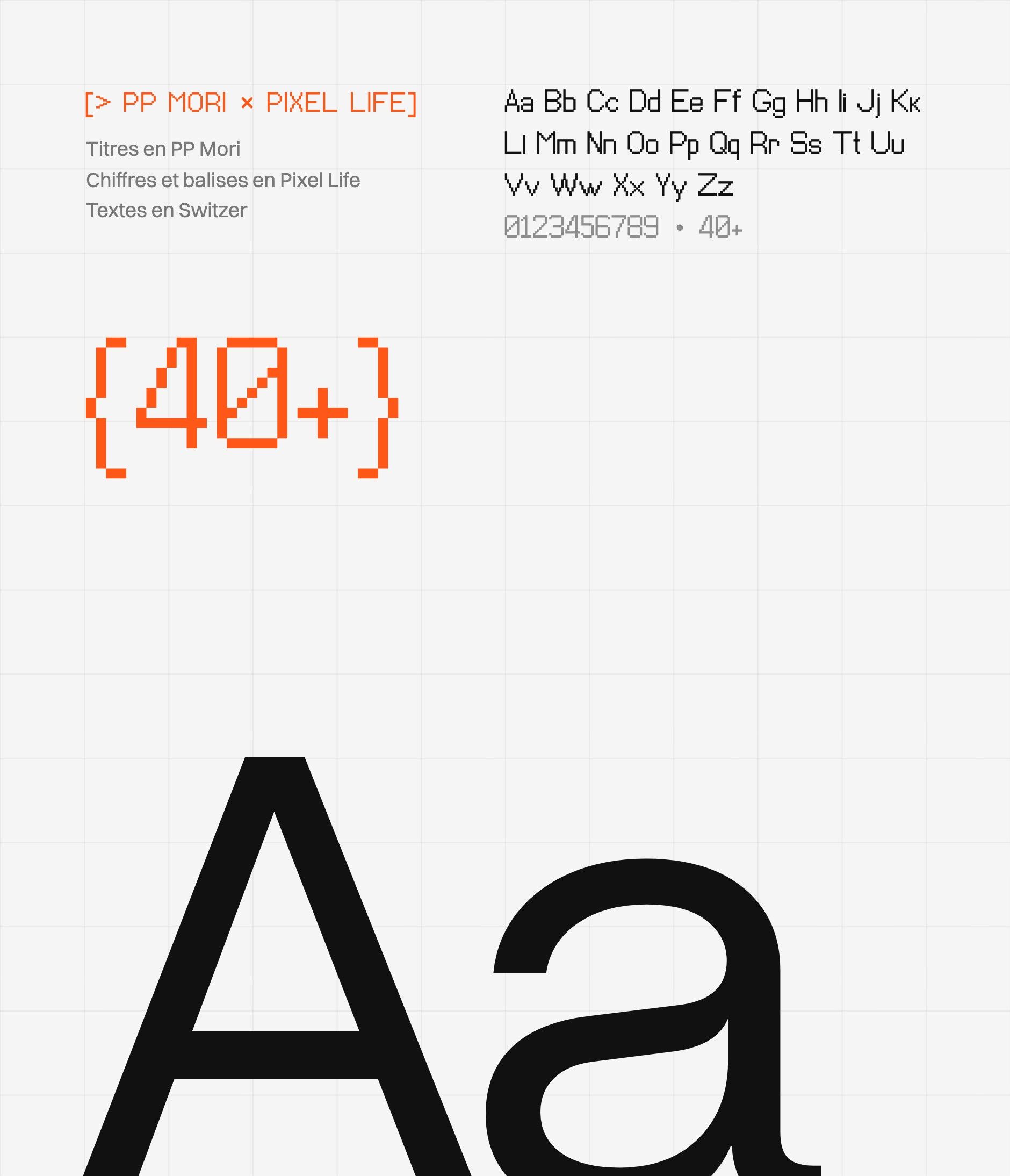
The palette comes down to three colours: a black (#111111), an orange (#FF5717) and an off-white (#F6F5F5), warmed by a grainy orange and lilac gradient used as a background for visuals. Headings are set in PP Mori, figures and tags in Pixel Life, a pixel typeface, and body text in Switzer.
Direction 1 - The pixel, the building block of the future
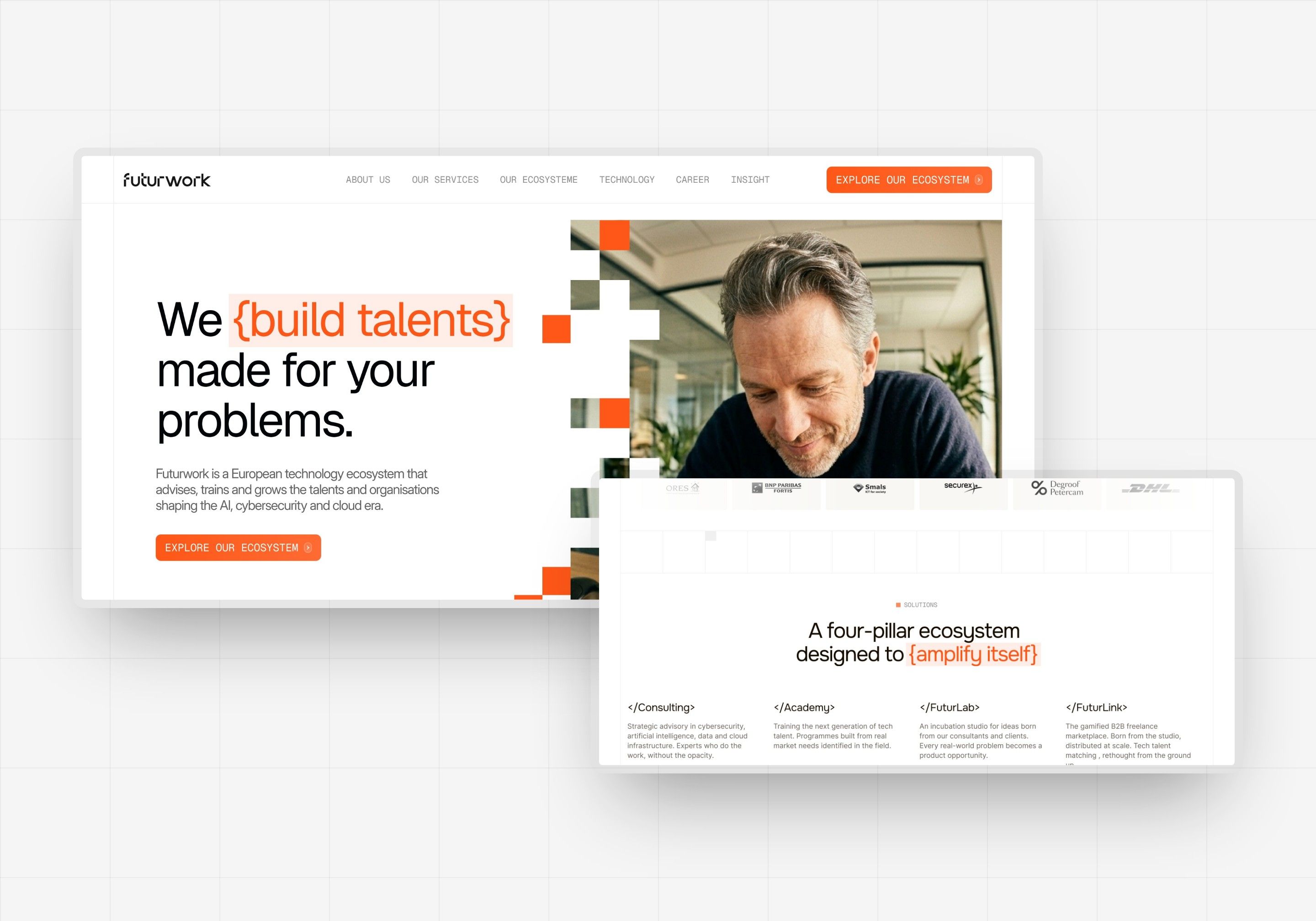
An ultra-structured grid, dividing lines and small orange squares that guide the eye. Typographic tags (</Consulting>, {build talents}) speak the consultants' language, and a portrait cut out in pixel blocks links human and machine. Intended perception: rigorous and warm at the same time.
Direction 2 - The future is written in pixels
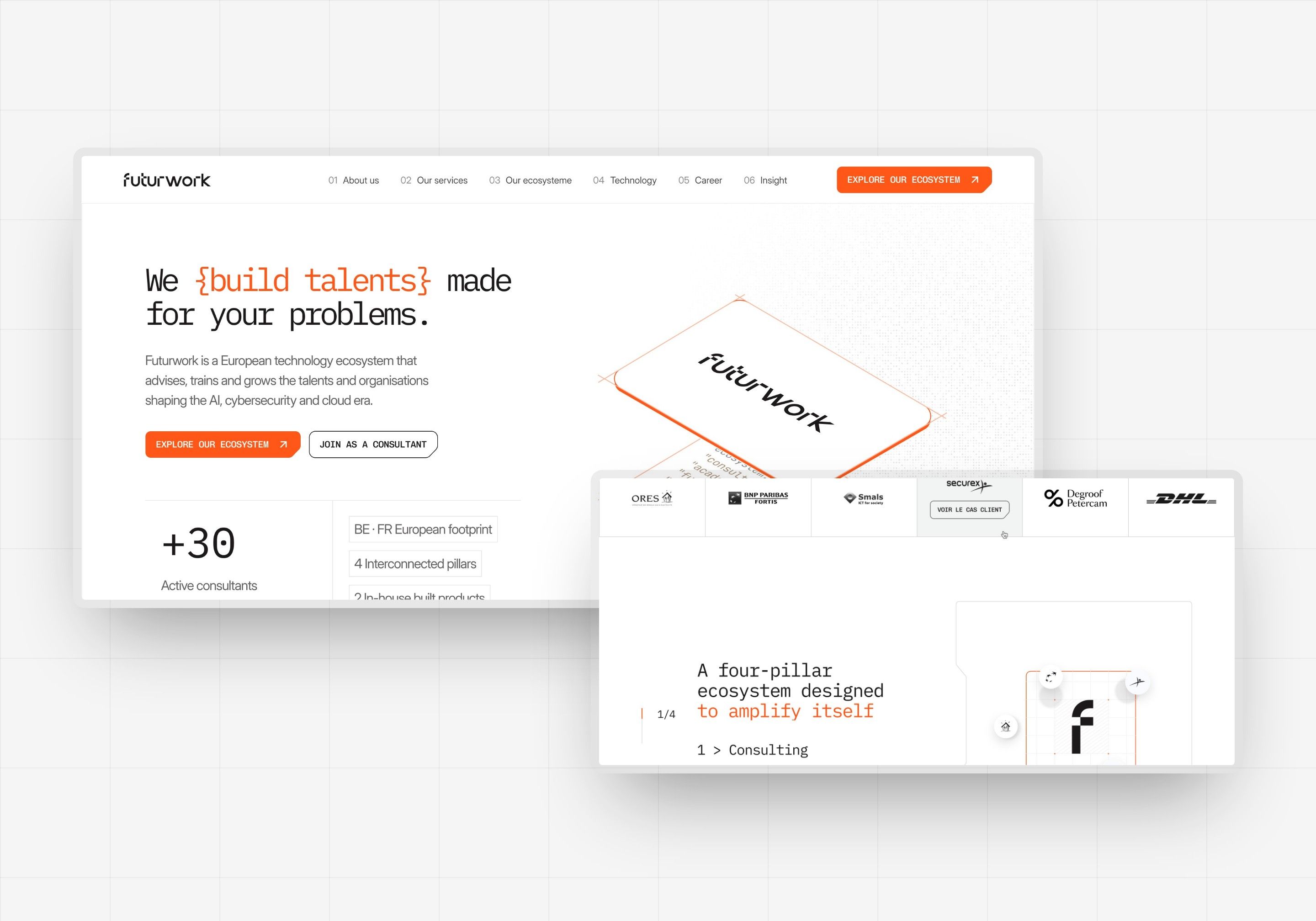
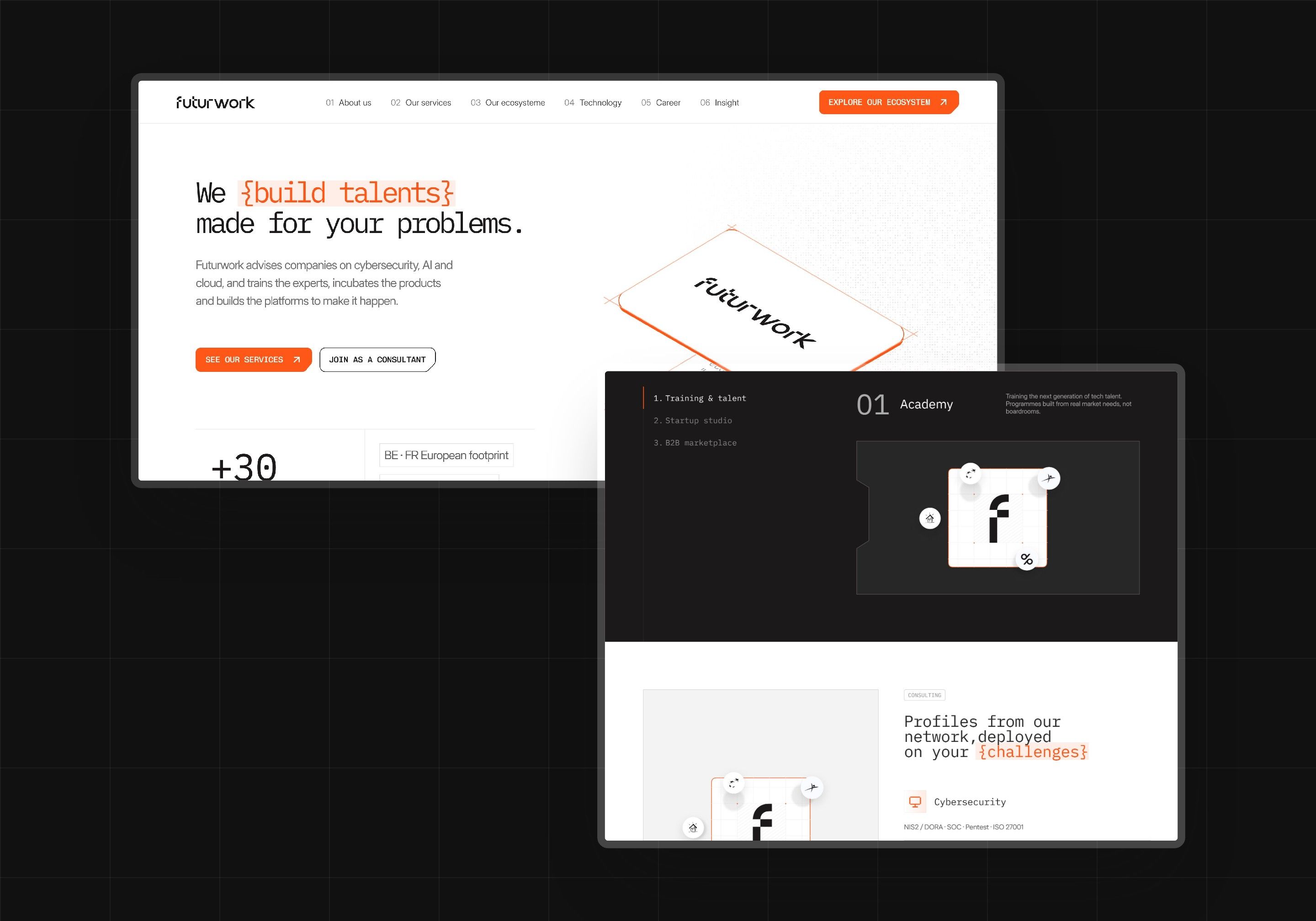
A monospace typeface where text becomes interface, cards with cut corners like modules being deployed, icons built dot by dot and a white grid where orange only appears where it counts. Intended perception: a precise system where nothing is decorative.
Direction 2 - The full page
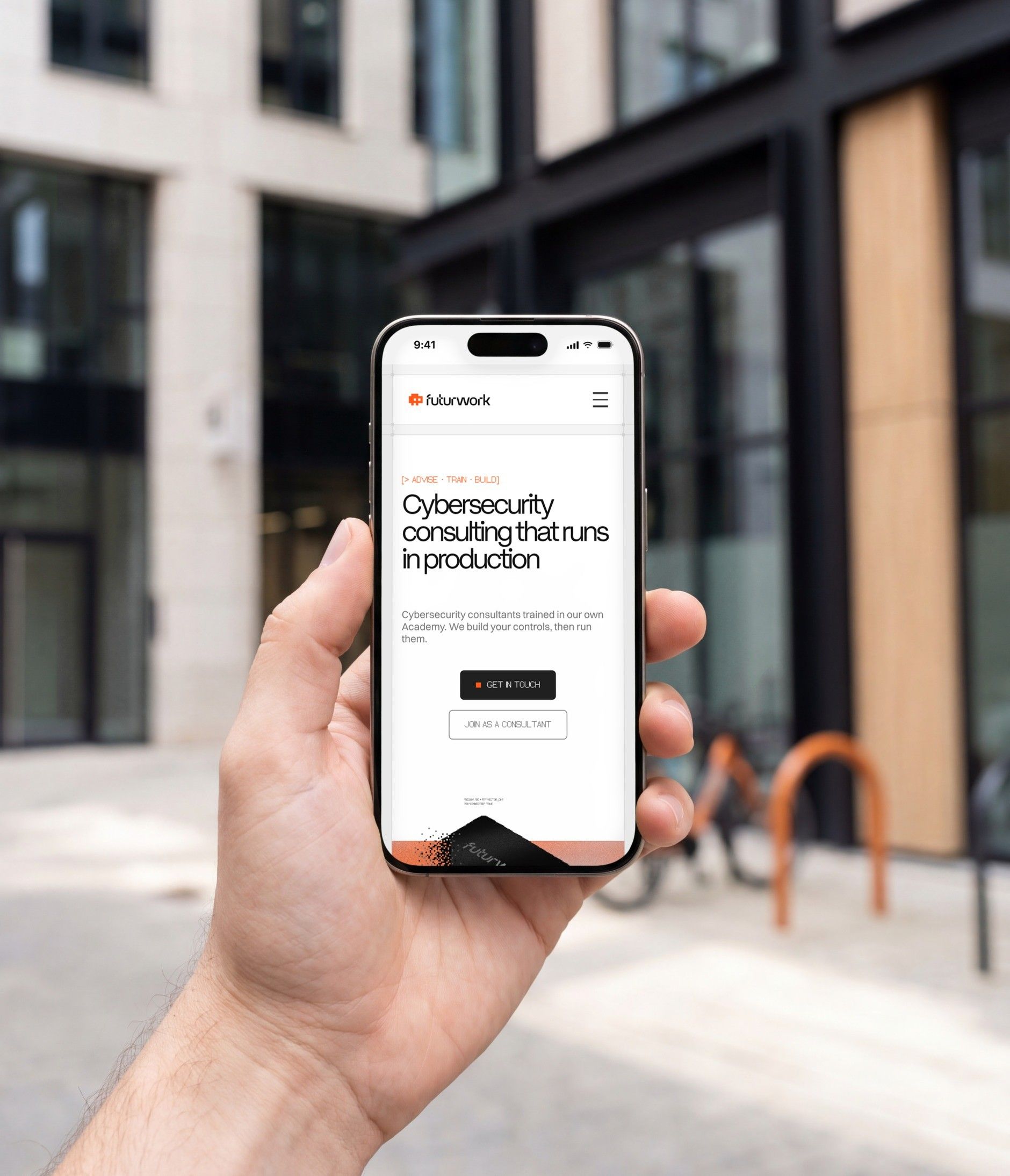
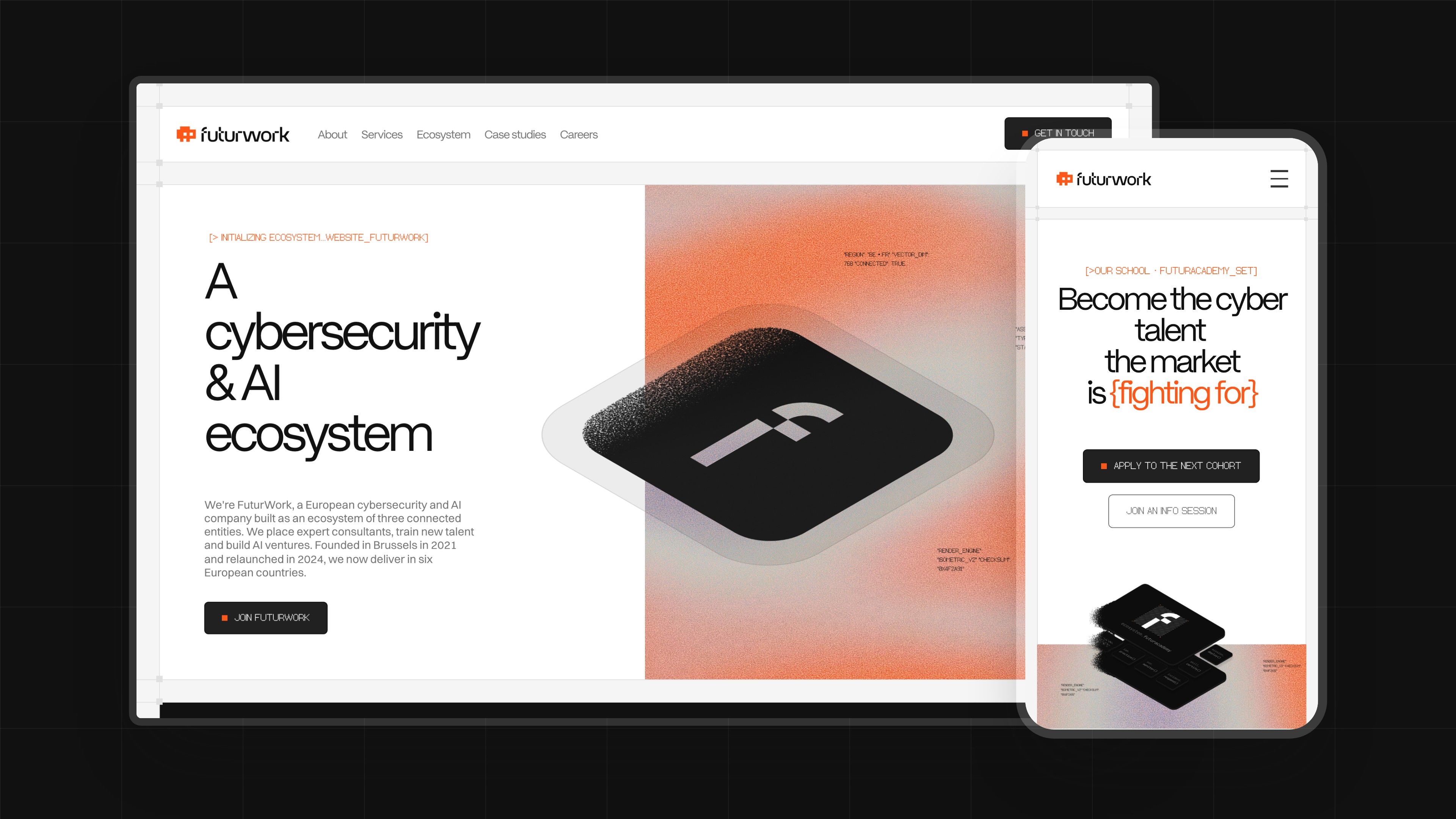
The same direction rolled out across the whole home page: the problems Futurwork solves, the ecosystem presented in tabs on a black background, the network's profiles and the products. The live site keeps its grid, the isometric card that breaks apart into pixels and the curly brackets, with the PP Mori grotesque for headings.

Web Design
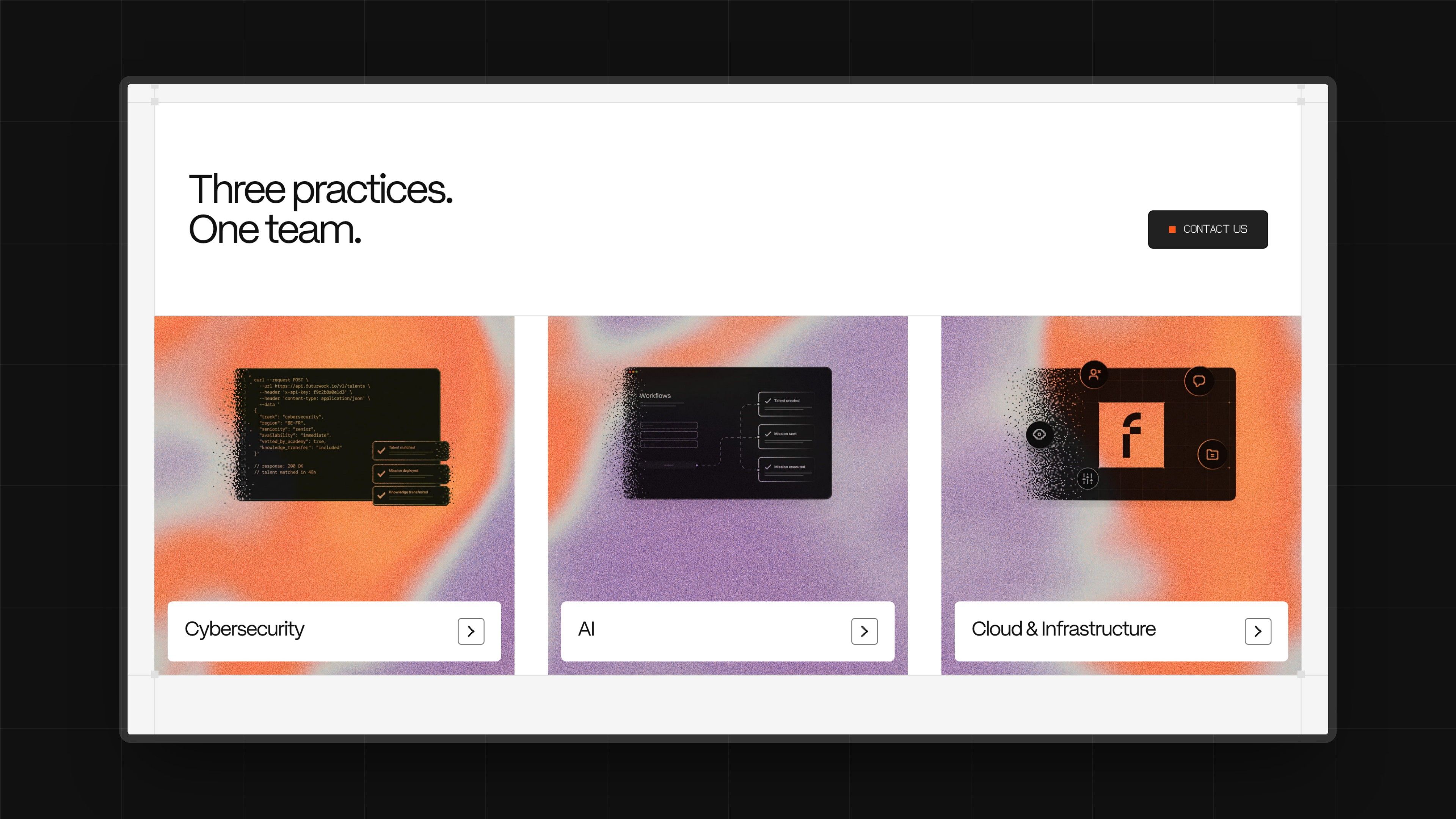
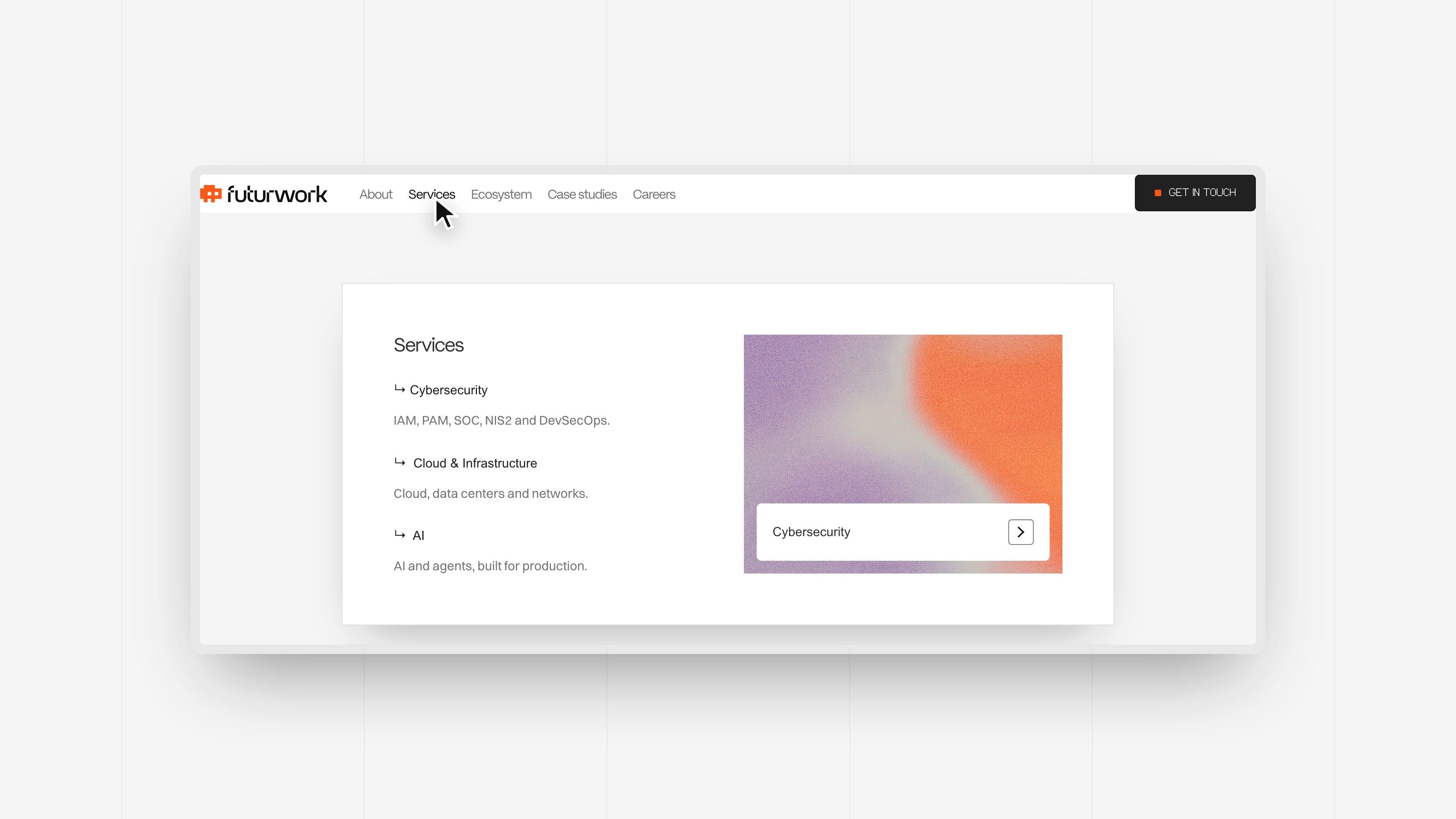
Three practices, three entities, a single grid
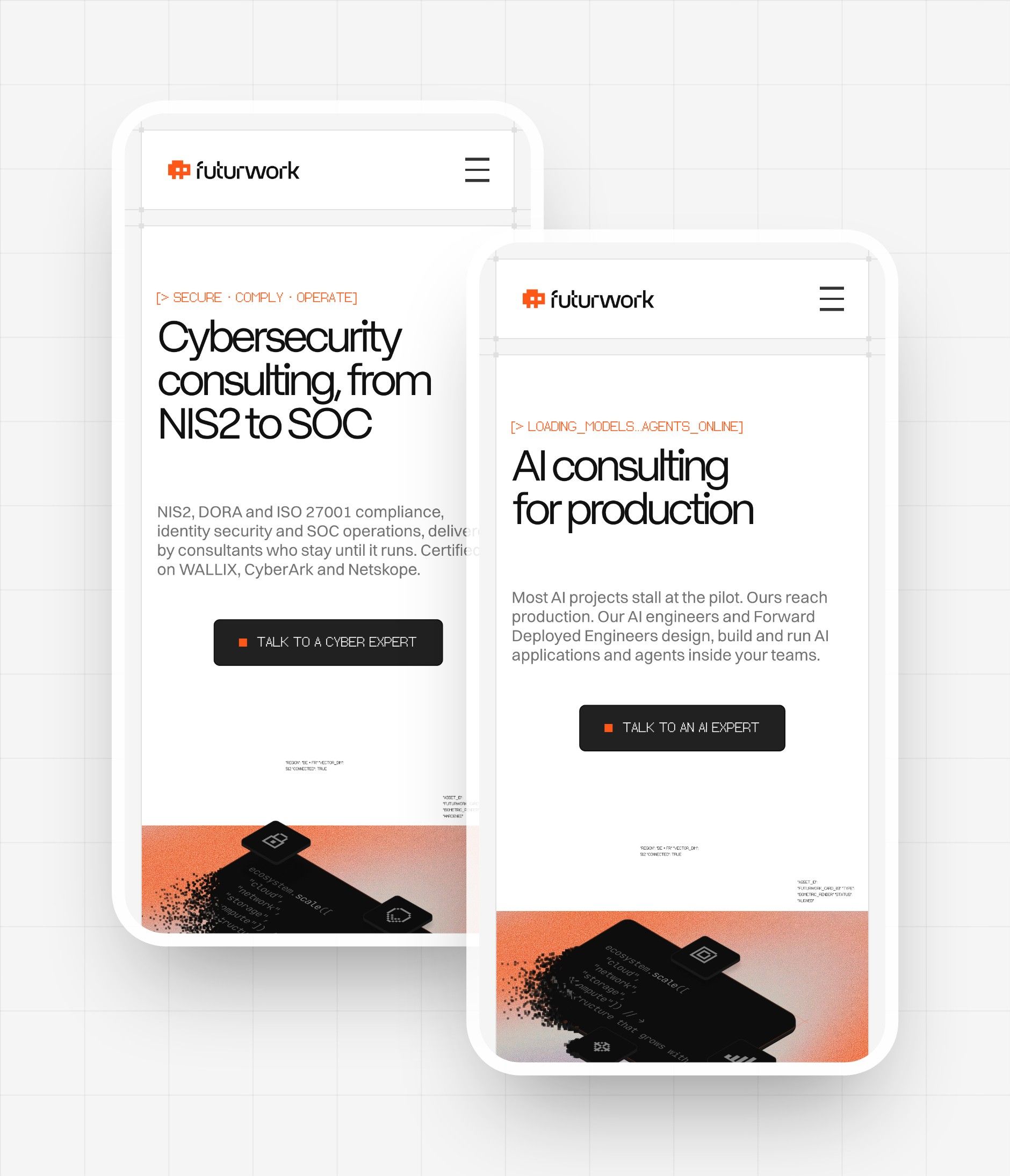
A CISO comes looking for a team for NIS2 compliance, a CIO for a cloud engineer, a candidate for a school or a job. The site points them straight there: by practice, by entity of the ecosystem, by case study or by role, each time with the same grid, the same dividing lines and the same call to action.
| Page | What it does for the visitor |
|---|---|
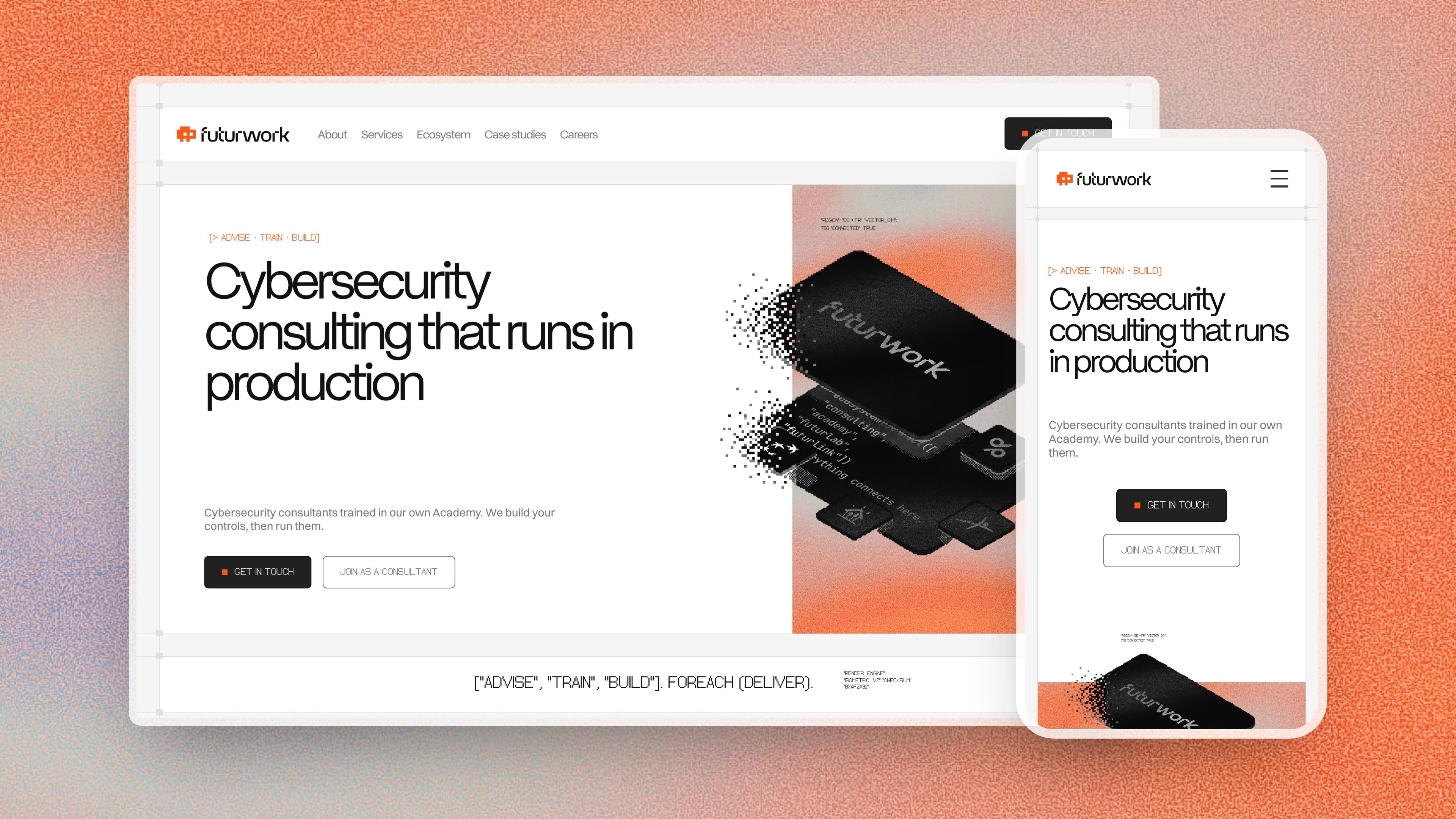
| Home | The promise “Cybersecurity consulting that runs in production”, the key figures, the three practices, the ecosystem and Futurwork's four commitments |
| Services | Cybersecurity, Cloud & Infrastructure and AI: a page per practice with its disciplines, and for cybersecurity the WALLIX, CyberArk and Netskope certifications |
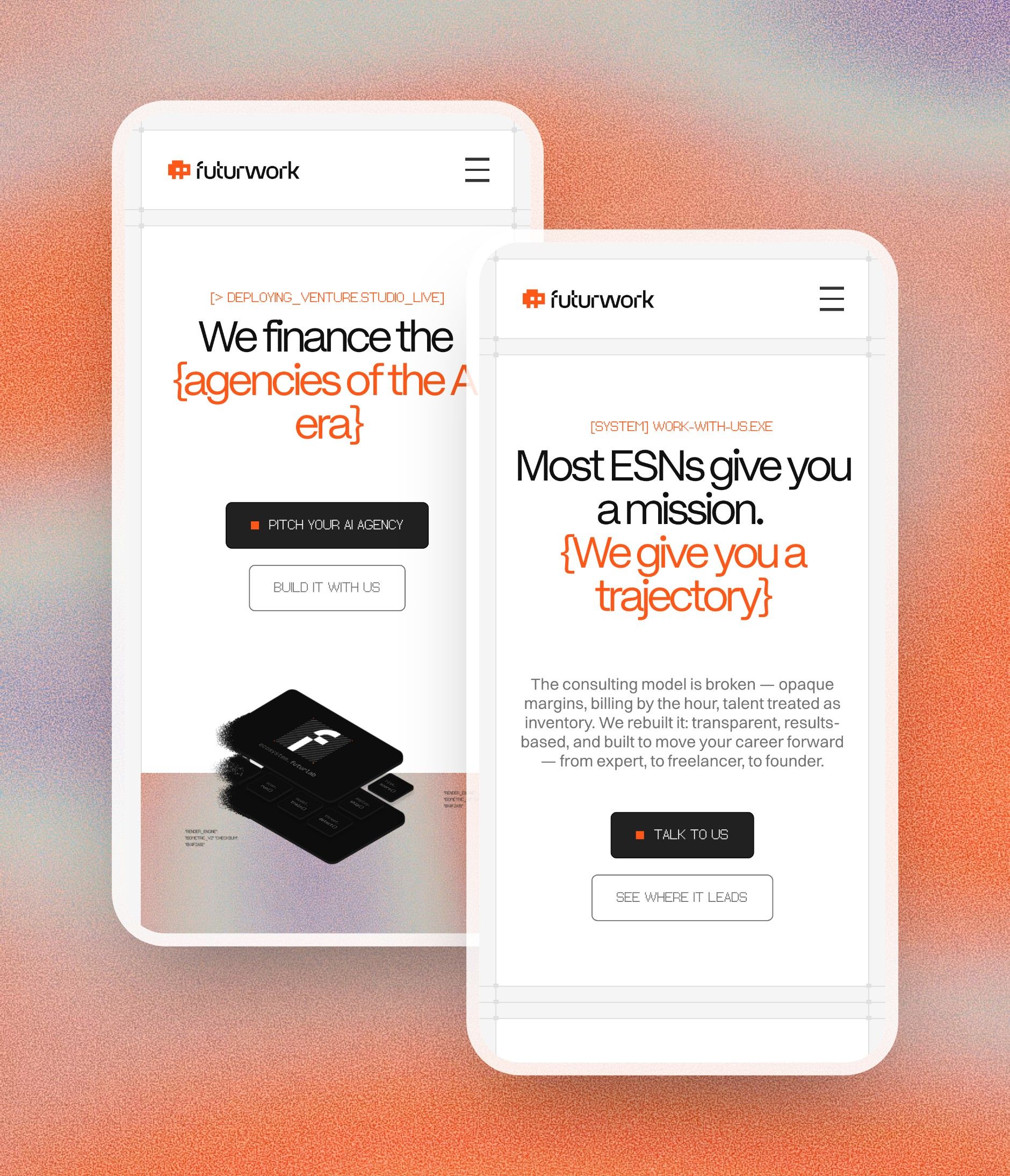
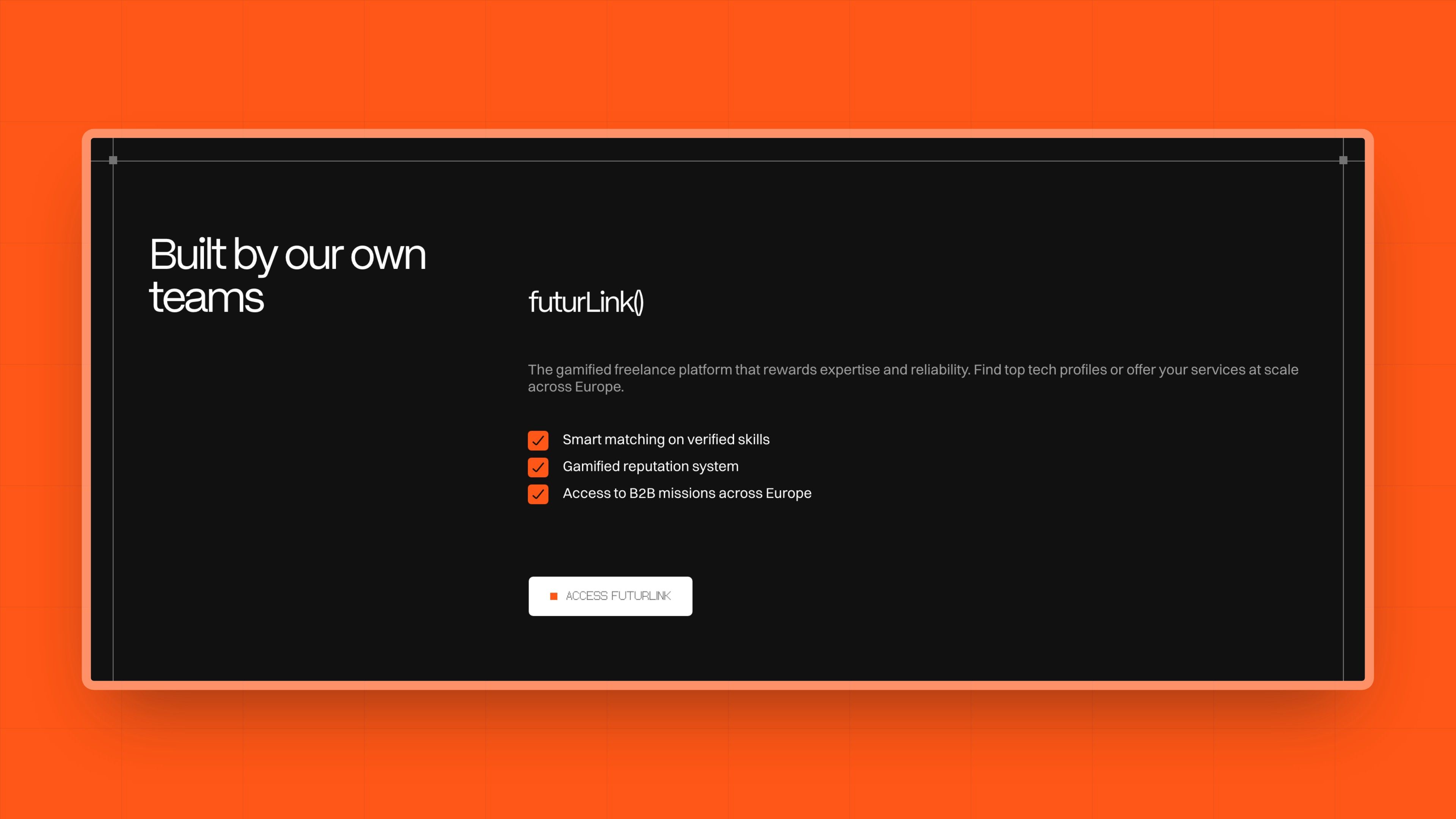
| Ecosystem | FuturLab, the studio that funds and builds AI agencies, and FuturAcademy, the six-month cybersecurity school in Brussels |
| About | The company's story, values, countries and team |
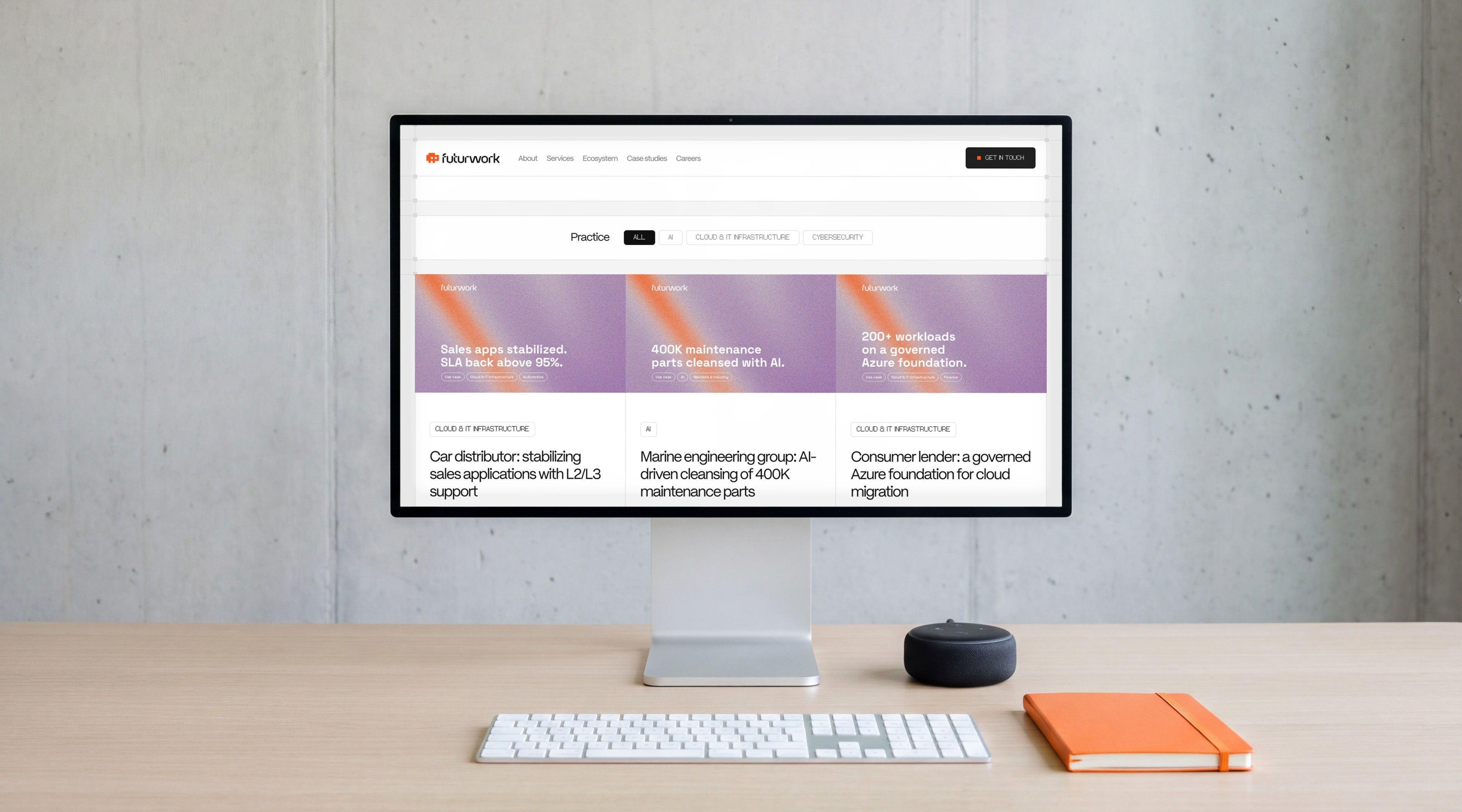
| Case studies | Fourteen assignments filterable by practice: banks, energy, insurance, public sector |
| Careers | Job offers, a page per position, and Futurwork's consultant model |
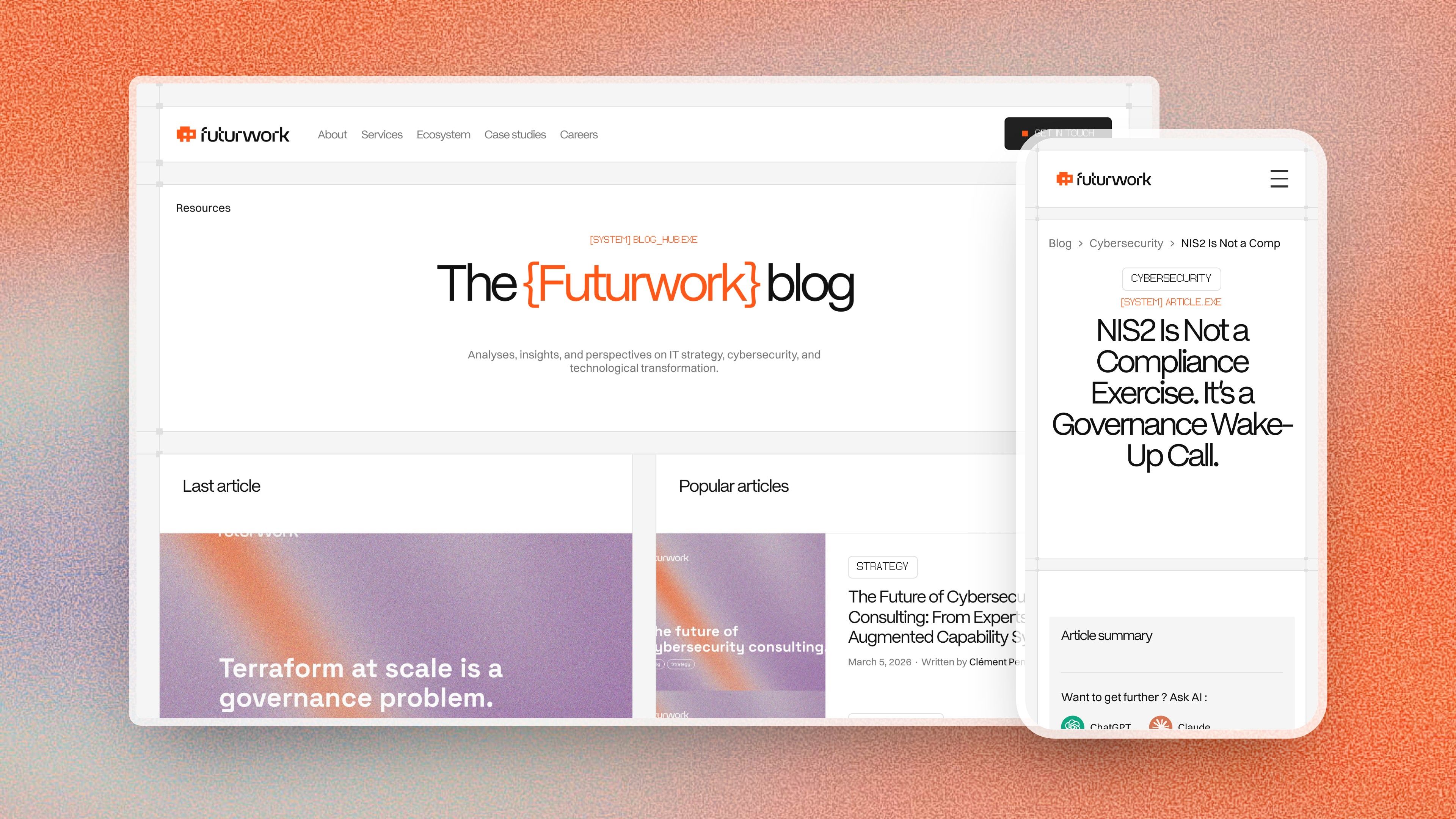
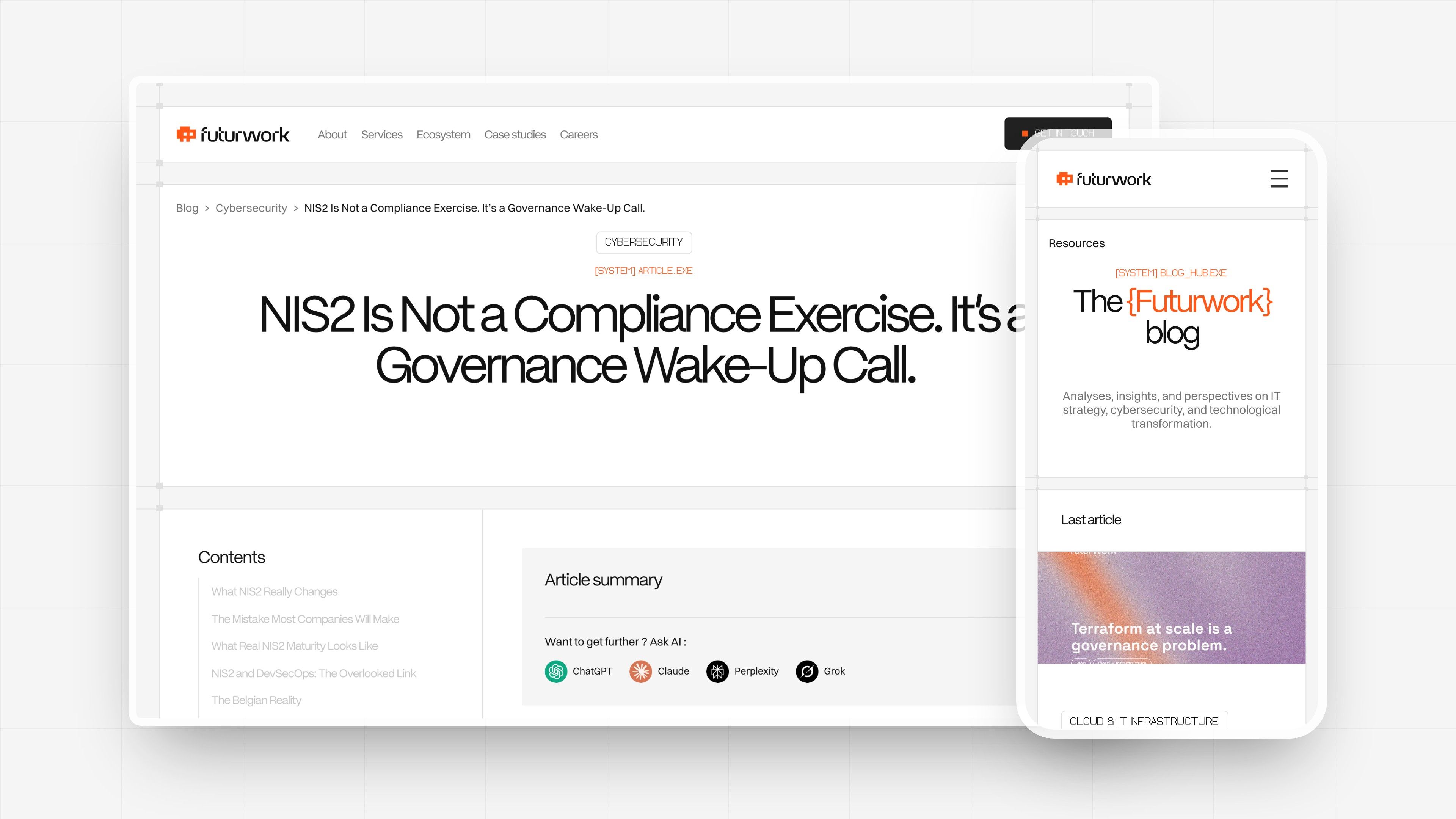
| Blog | Analysis articles on NIS2, IAM, cloud and AI, sorted by category |
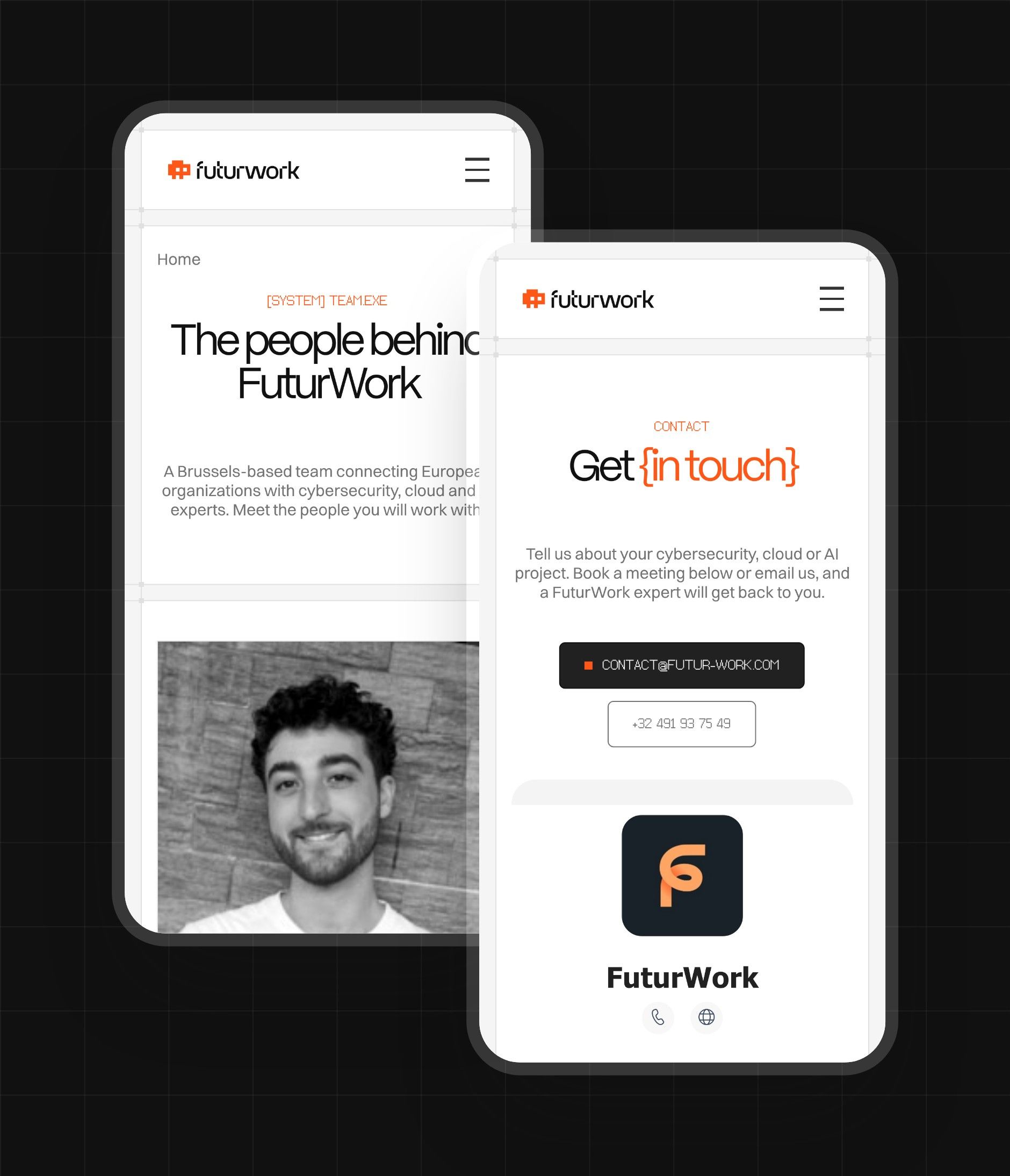
| Contact | An email address, a phone number and booking a meeting with an expert |
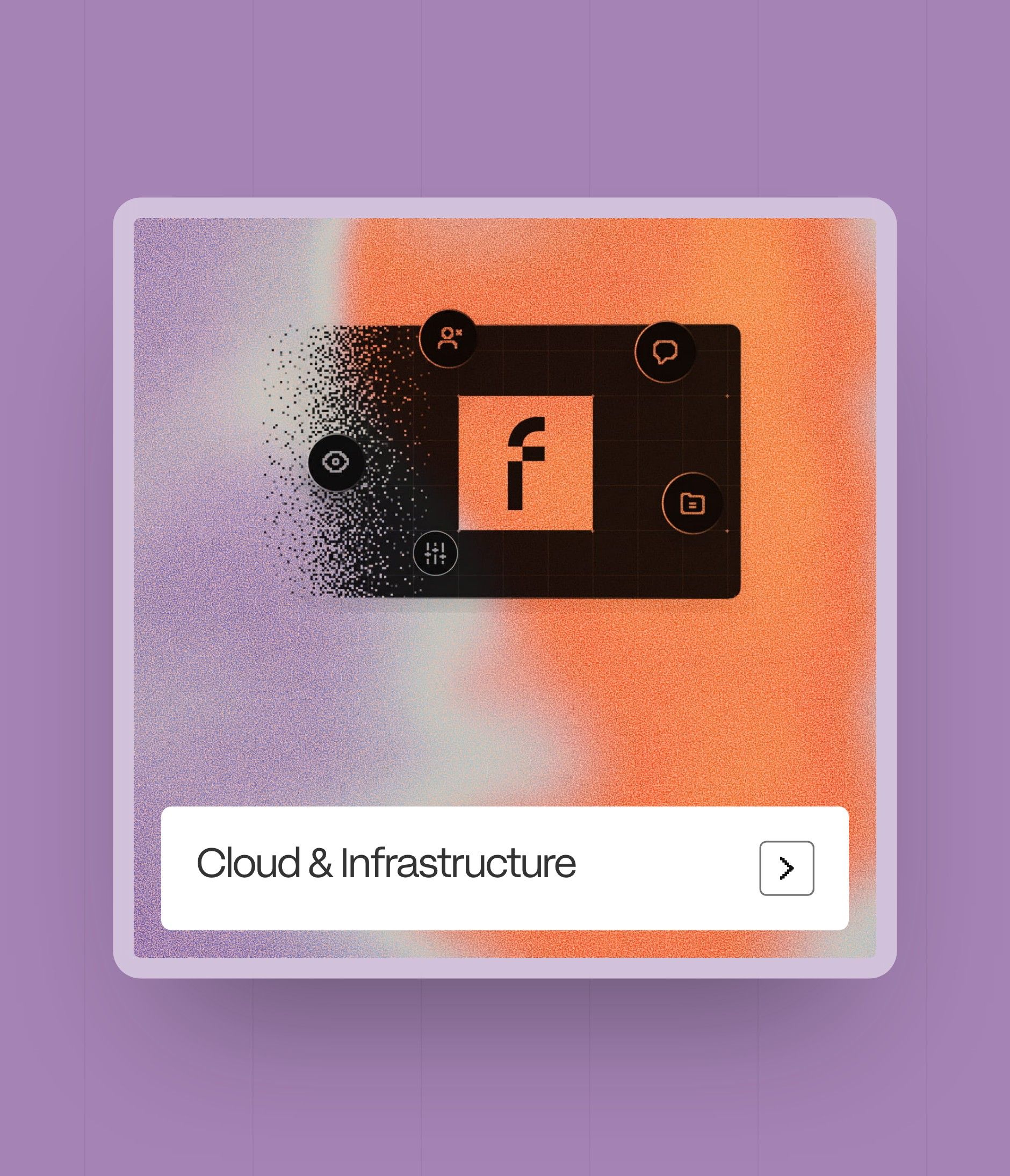
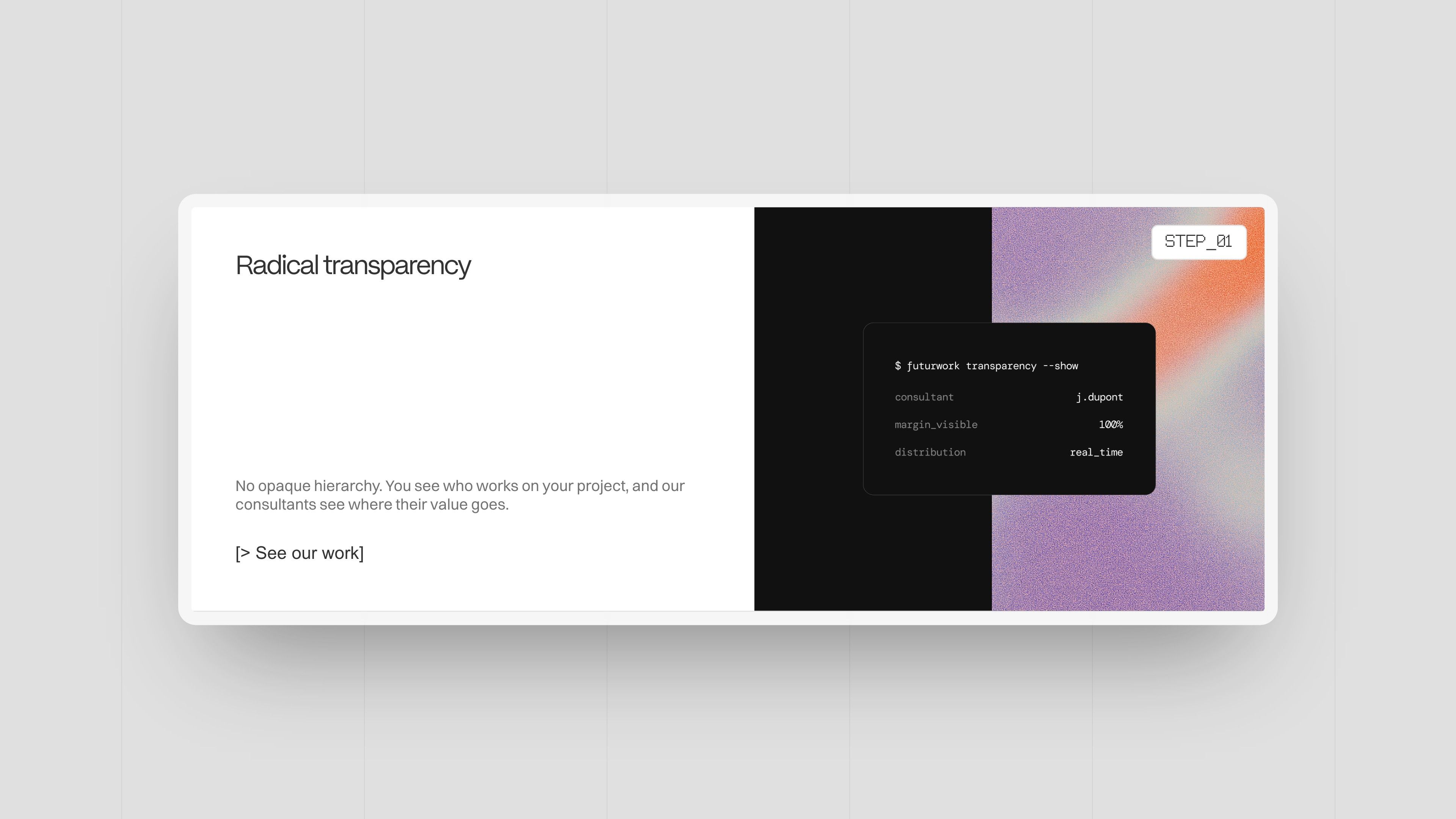
The same building blocks recur from page to page: the black isometric card that breaks apart into pixels on the orange and lilac gradient, figures in the pixel typeface, curly brackets framing a heading's keyword, small orange tags above the sections. One more page can be assembled without going back to design.
Webflow Development
A site the Futurwork team updates on its own
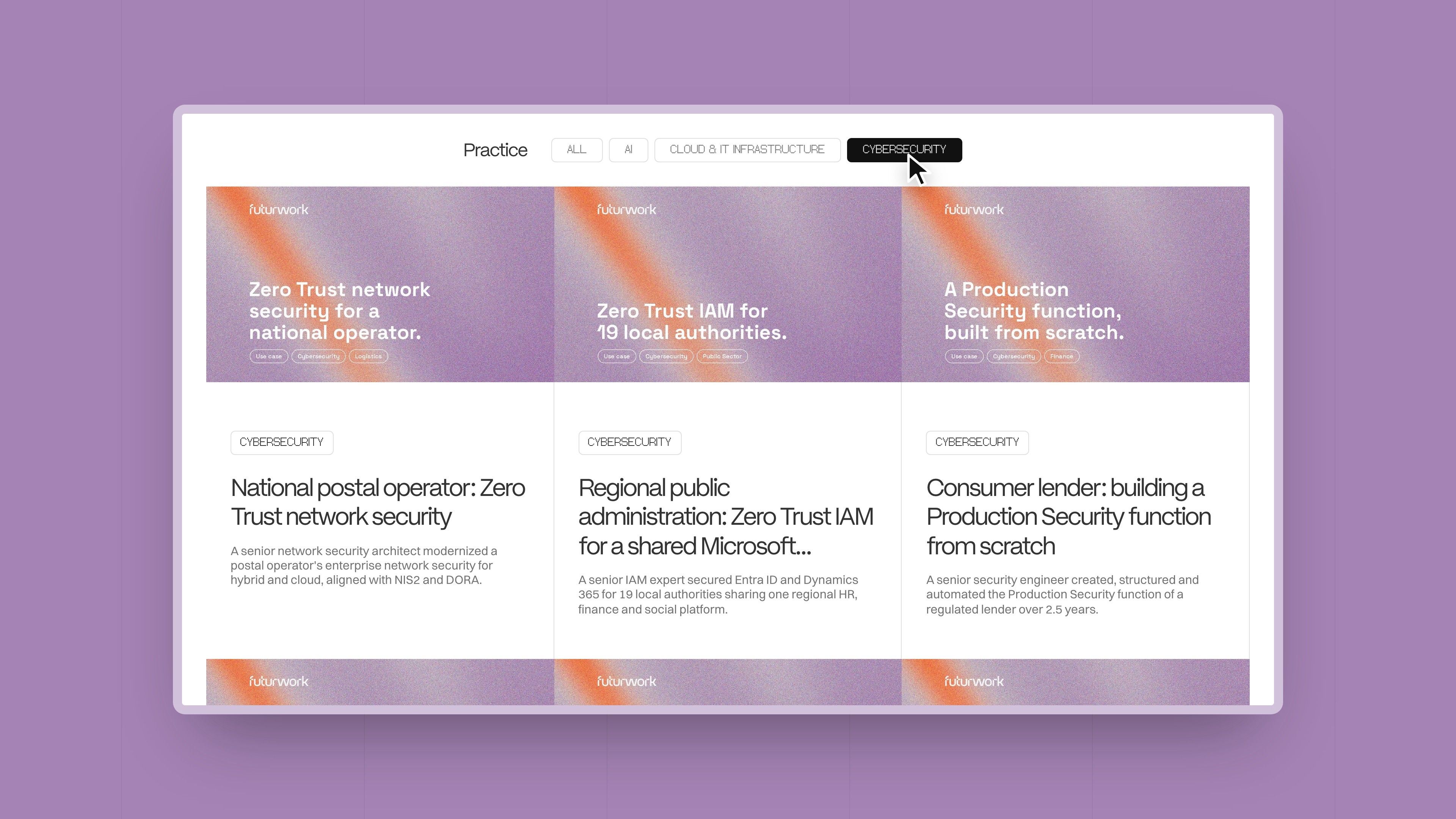
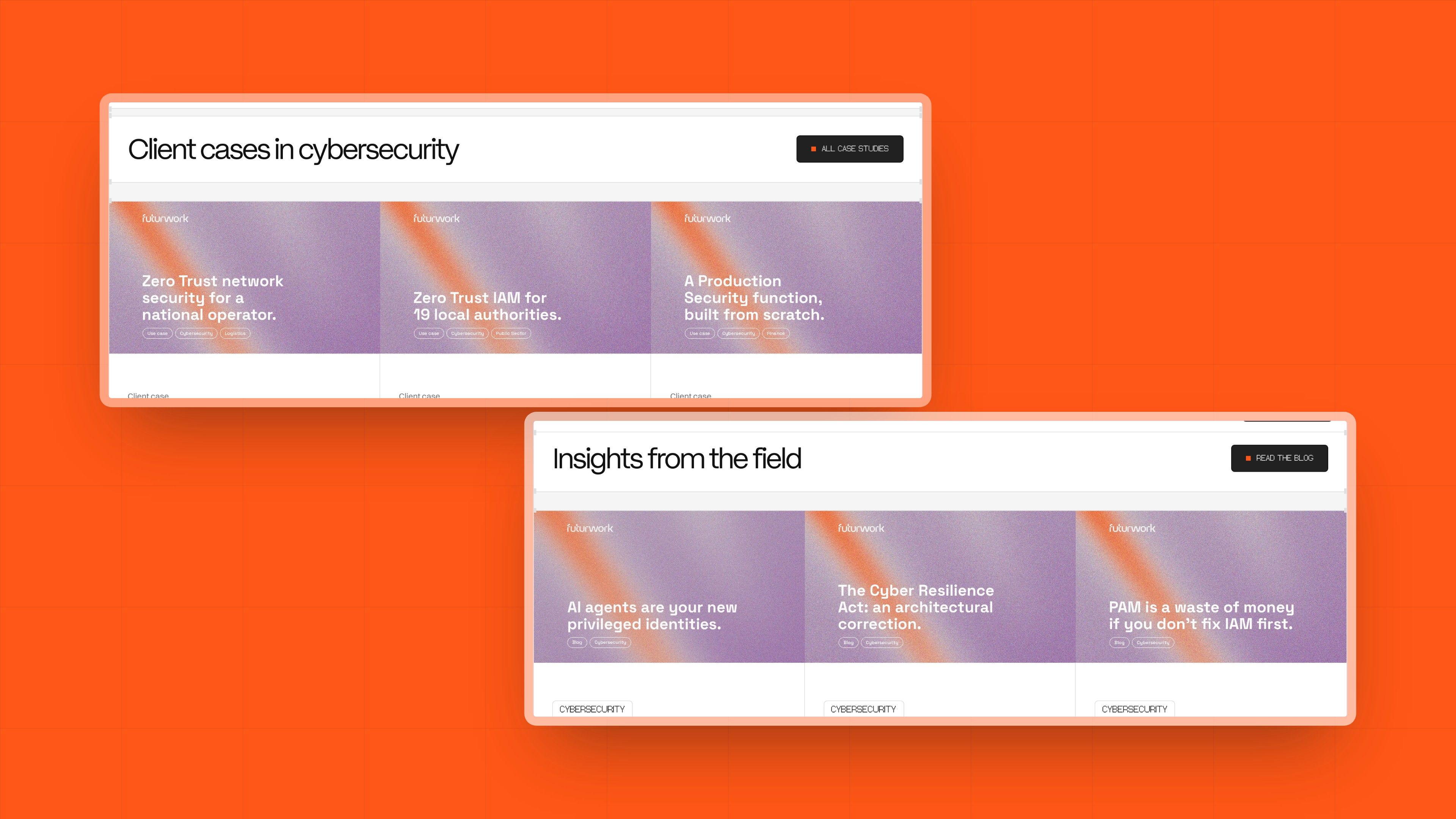
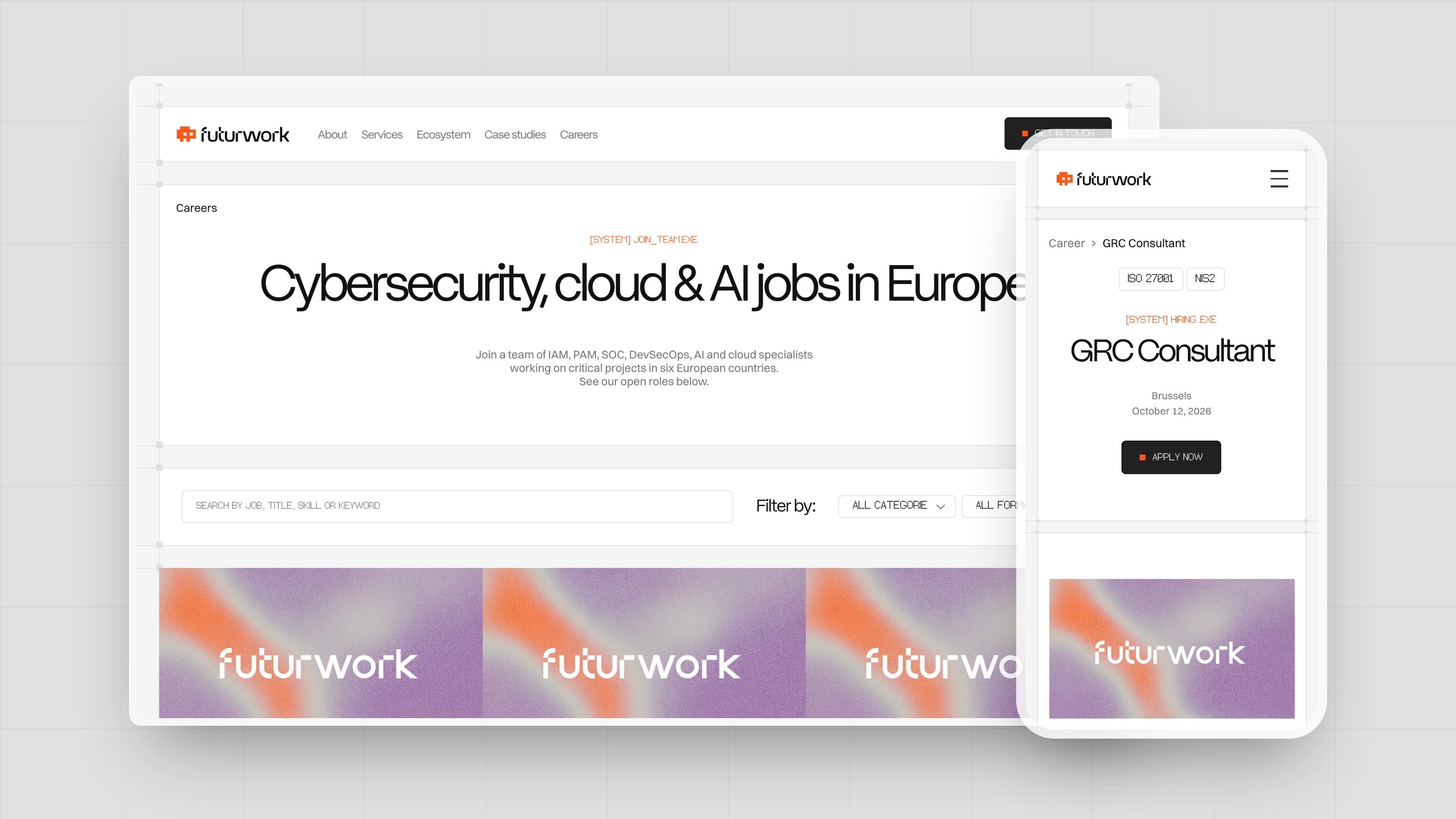
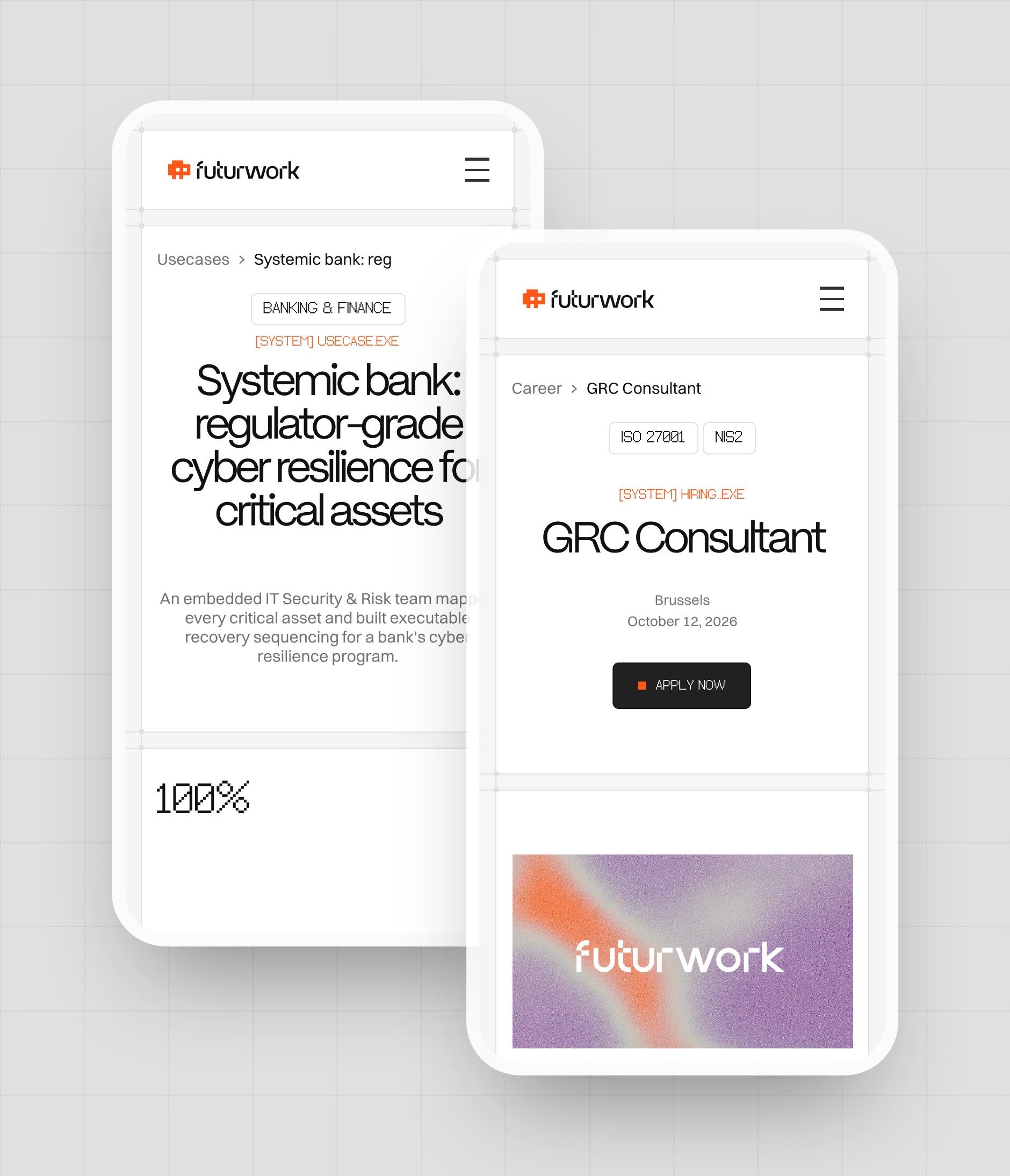
The site is built on Webflow. Case studies, job offers, articles, their categories and authors live in CMS collections, each served by a single template: publishing an assignment, a position or an article takes no layout work. The case studies page filters by practice without reloading, and every job offer has its own page.
Practice pages draw on the same collections: the Cybersecurity page displays its own cybersecurity case studies and articles automatically, with no list maintained by hand. Ecosystem pages are dedicated pages, with their isometric visuals, terminals and figures in the pixel typeface. The cookie banner only loads Google Analytics after the visitor consents.
SEO
Being found on NIS2, DORA and IAM, and cited by AI assistants
A CISO searches for “NIS2 governance”, “PAM vs IAM” or a DORA consultant long before choosing a firm. The site owns these searches with a page per practice, a page per assignment and per position, and a blog that answers security teams' in-depth questions.
| Workstream | Detail |
|---|---|
| Landing pages | 3 practice pages, 14 case studies and 7 job offers, each targeting its own search intent |
| Content | 8 articles in English (NIS2, Cyber Resilience Act, IAM and PAM, AWS landing zone, Terraform, AI agents), across 6 categories, with an author page |
| Tags & metadata | Title and meta description written page by page, a single H1, canonical tag everywhere, a 54-URL sitemap |
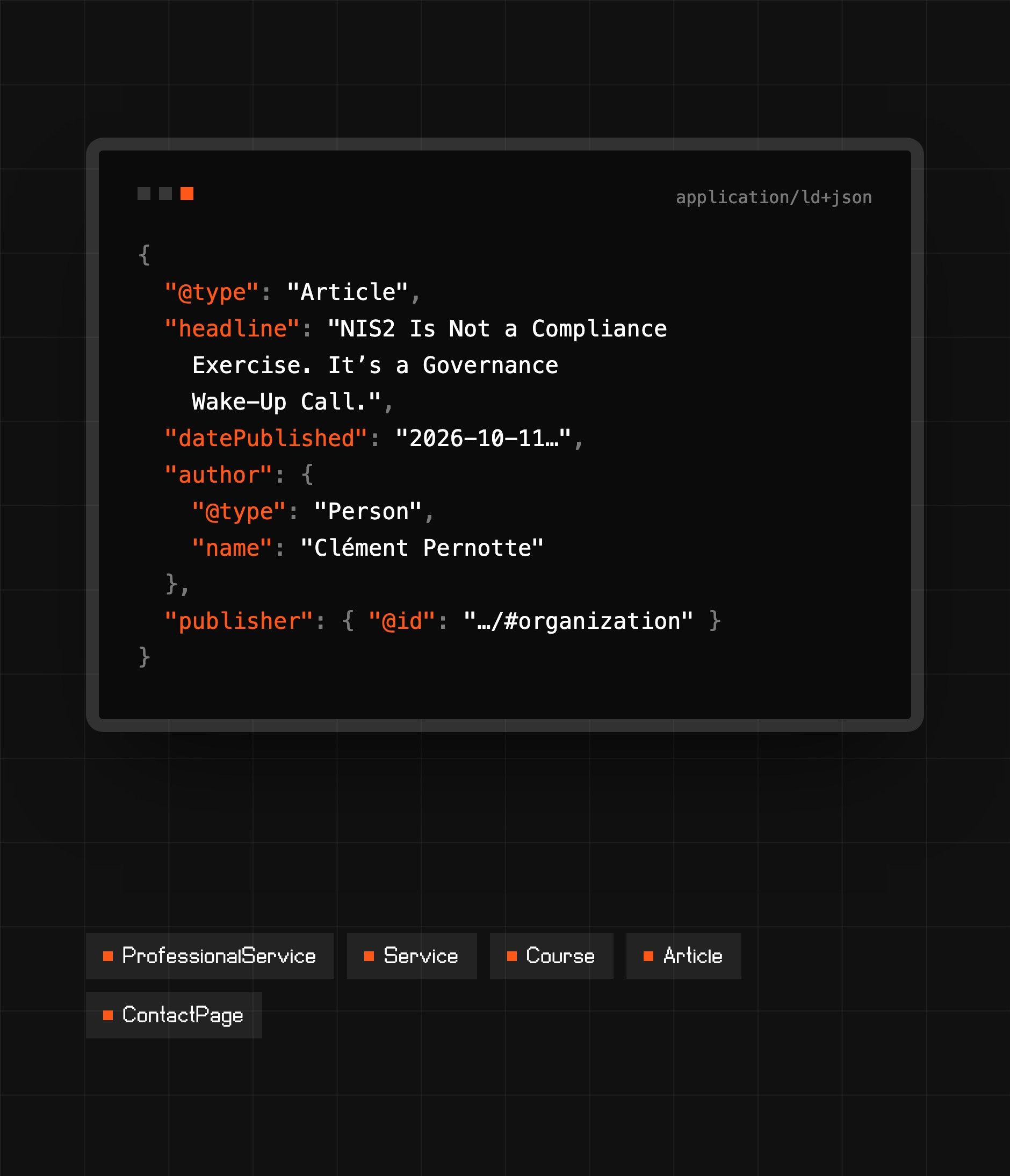
| Structured data | ProfessionalService, WebSite and EducationalOrganization on the home page, Service and OfferCatalog on practices, Course for FuturAcademy, Article on each article, ContactPage and the team's ItemList |
Readable by search engines and AI assistants alike
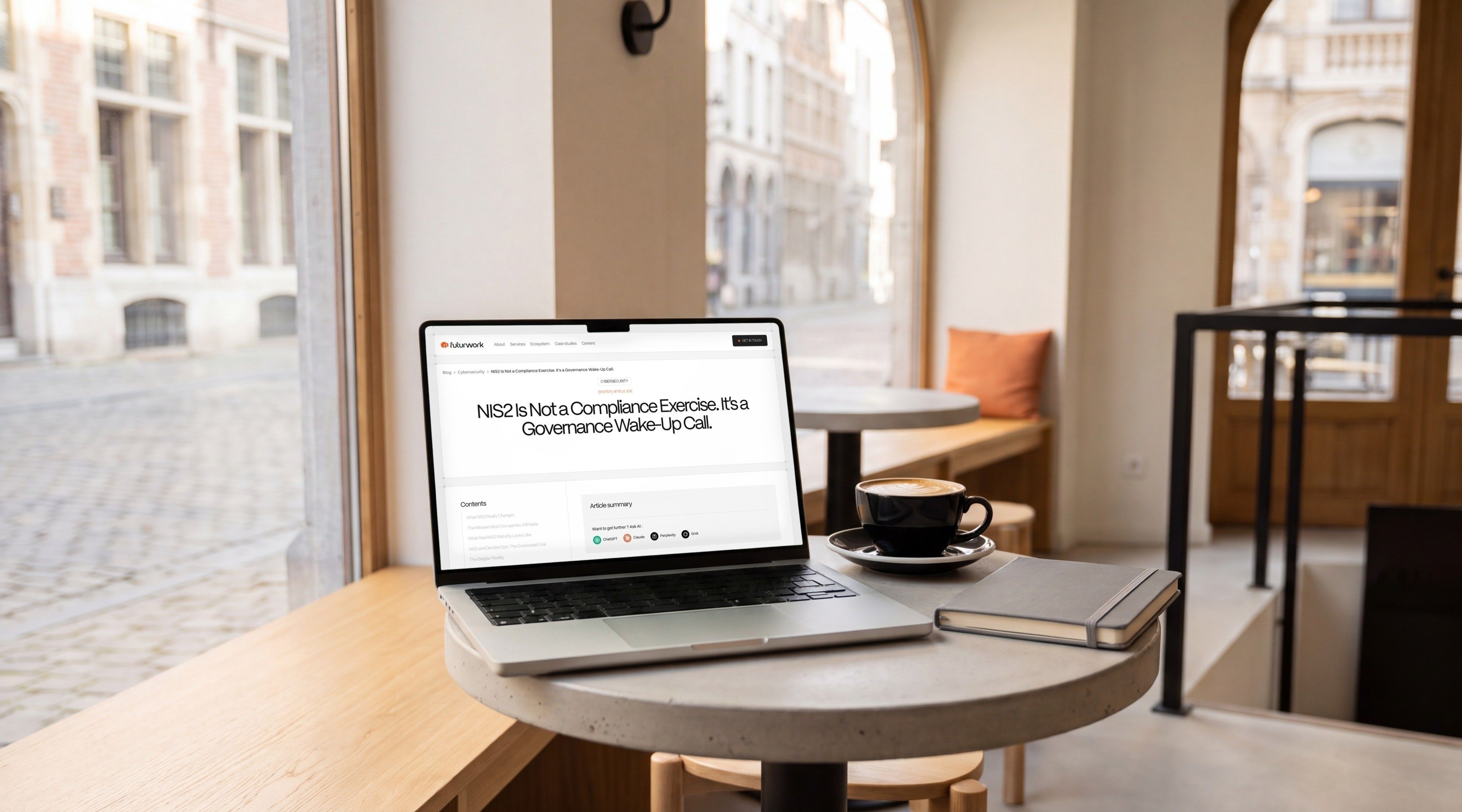
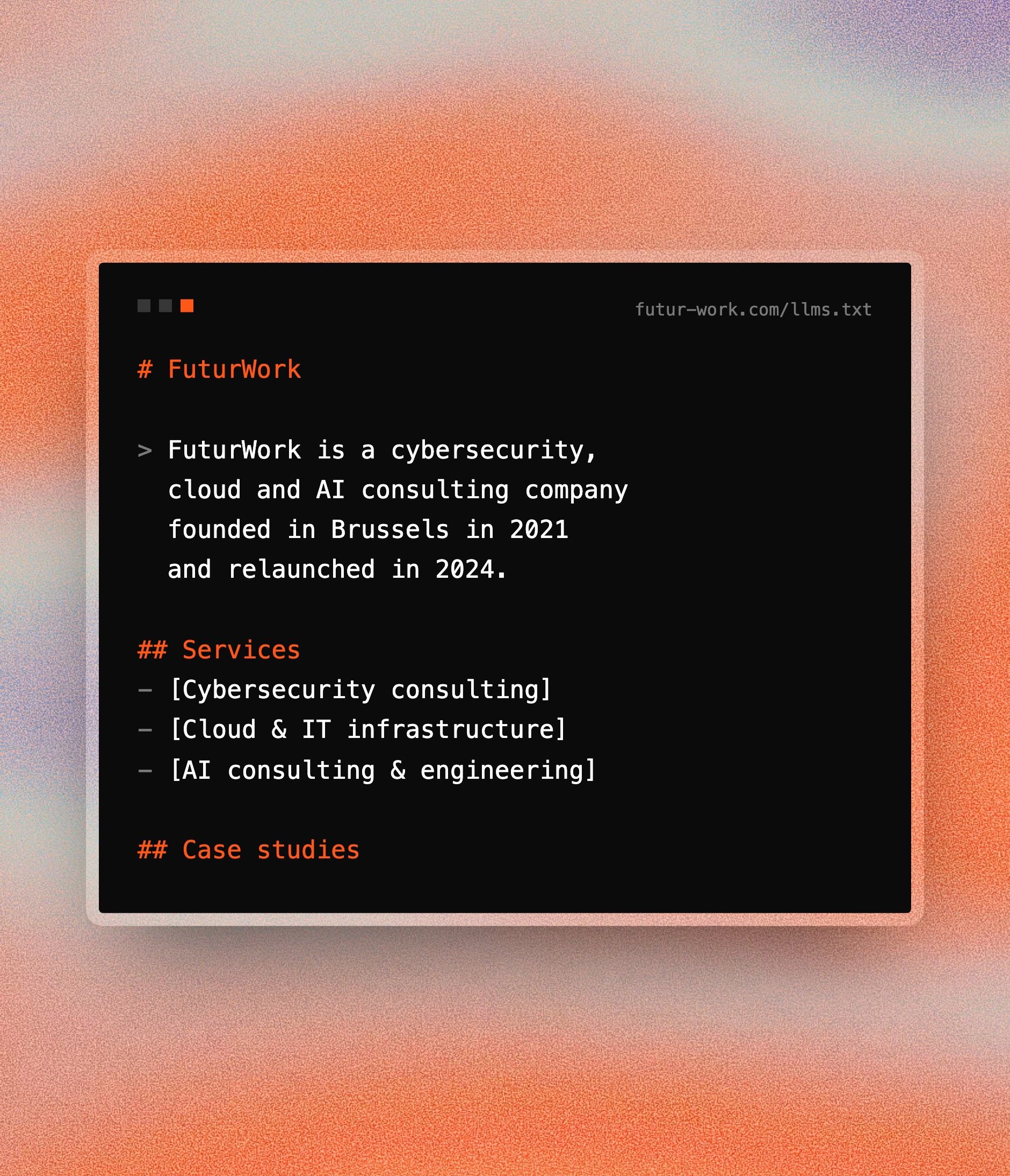
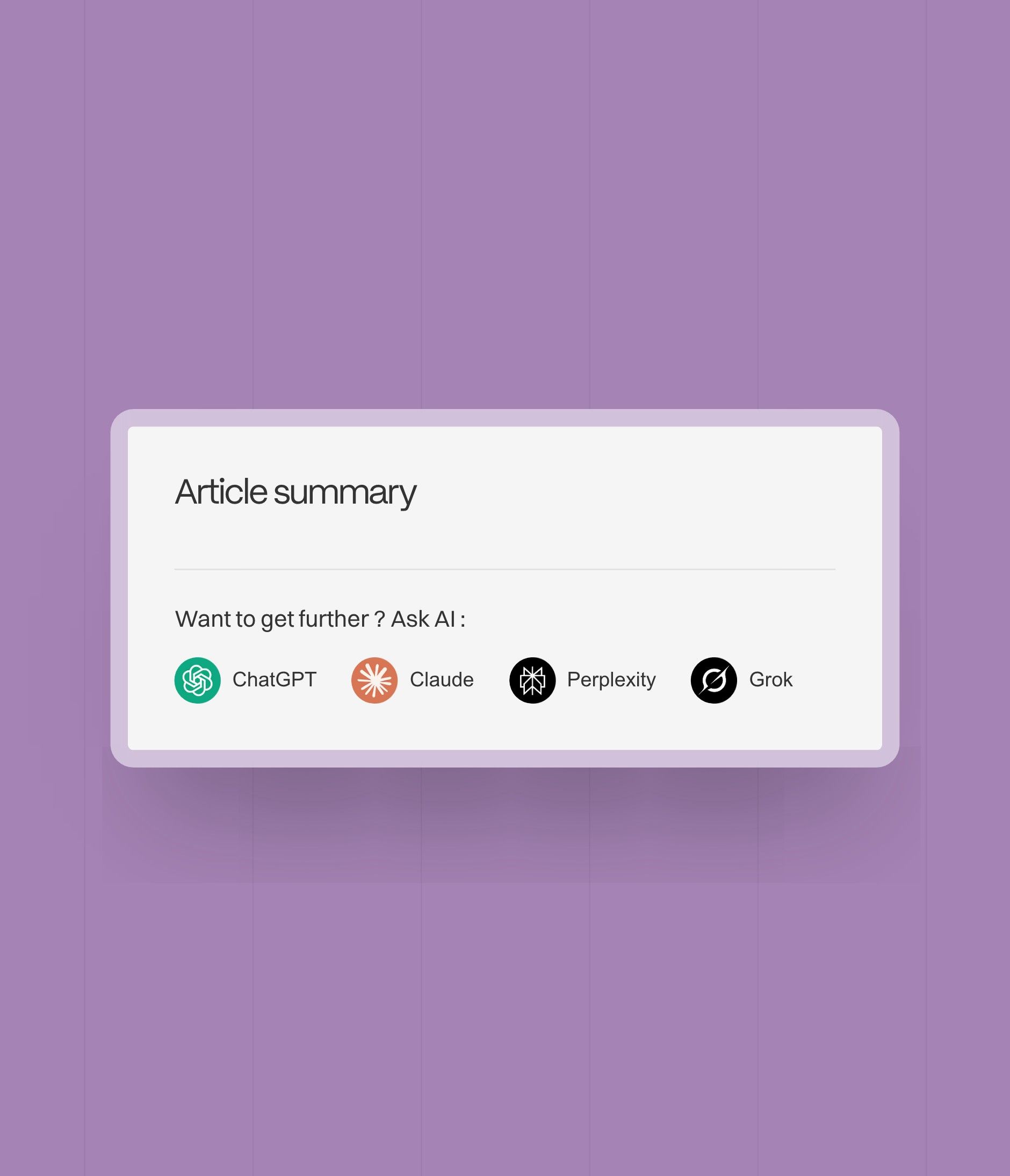
The site publishes an llms.txt file summarising the company, its practices and its key pages, and an “Official company information” page that brings together verified facts about Futurwork for AI assistants, journalists and partners. Each article is signed, dated and carries its structured data, and offers a summary to request from ChatGPT, Claude, Perplexity or Grok.


Our latest projects
+250 companies
supported
Websites designed and developed with









You're going to working with us, guaranteed
Ready to launch
your business?
Let’s f*****G GO !!